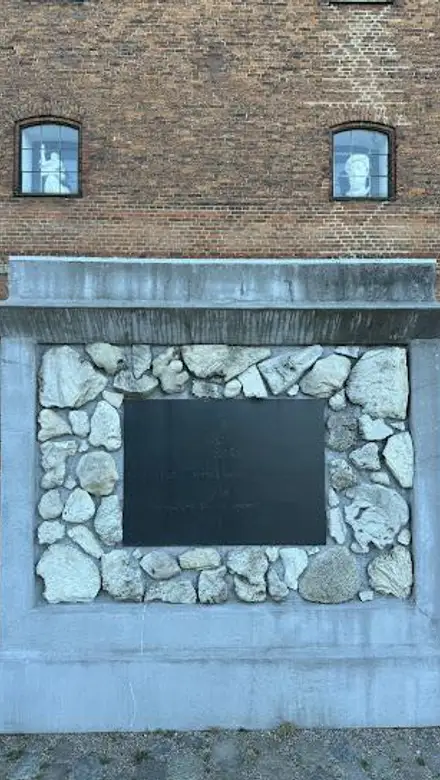
I am Queen Mary, Køge Travel Guide
Free Guide: A defiant monument honoring Caribbean resistance to Danish colonialism, challenging Europe's colonial narratives.


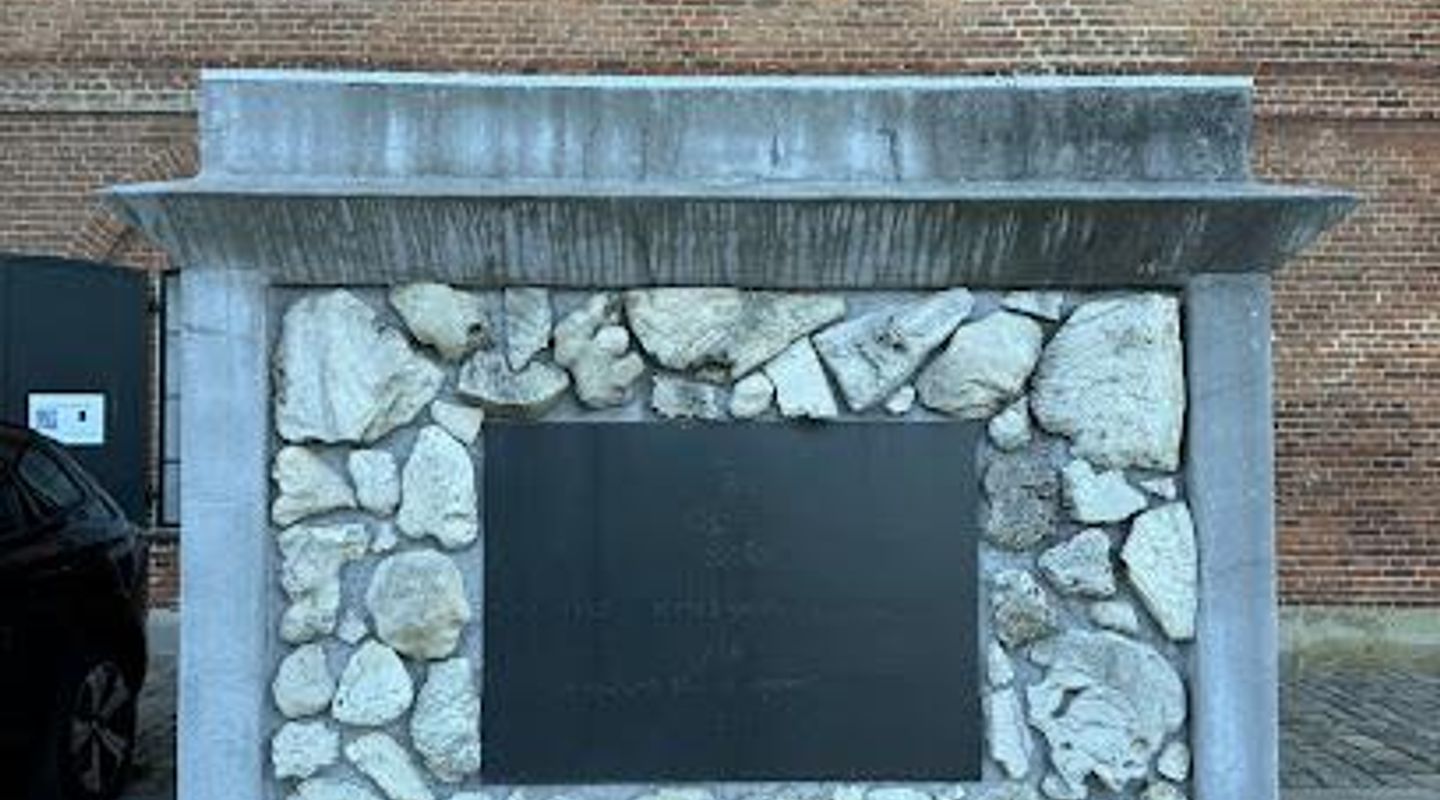
A brief summary of I am Queen Mary
A defiant monument honoring Caribbean resistance to Danish colonialism, challenging Europe's colonial narratives.
A powerful public monument at Vestindisk Pakhus commemorating Mary Thomas, a leader of the 1878 rebellion against Danish colonial rule in the Caribbean. Created by artists La Vaughn Belle and Jeannette Ehlers, this sculpture stands in front of a historic 18th-century warehouse that once stored goods from Denmark's colonial empire. The work challenges Denmark's narrative of benevolent colonialism and honors the resistance of enslaved and formerly enslaved people in the Danish West Indies.
On-site amenities
 Seating areas
 Information boards
 Drink options
 Food options
Opening hours
- Every dayOpen 24 hours
Opening hours as listed on the venue’s Google Business Profile. Hours can change for services and special events, so check with the venue before you go.
- Address
- Vestindisk Pakhus, Toldbodgade 40, 1253 København
- Website
Getting there
Metro and Walking
Bicycle
Bus
Walking from Nyhavn
Discover more about I am Queen Mary
A Monument to Resistance and Reclaimed History
I Am Queen Mary stands as Denmark's first public monument dedicated to those who resisted Danish colonialism. Unveiled on March 31, 2019—Transfer Day, marking the anniversary of Denmark's sale of the Danish West Indies to the United States in 1917—this sculpture represents a watershed moment in how Copenhagen acknowledges its colonial past. Created by American artist La Vaughn Belle and Danish artist Jeannette Ehlers, the work honors Mary Thomas, one of four women who led the 1878 rebellion of plantation workers on the island of St. Croix. In the Caribbean context, "queen" was an honorary title bestowed on the formidable women who led social and political life on the plantations, and Mary Thomas earned this distinction through her courage and leadership.
The Story of Mary Thomas and the 1878 Rebellion
Mary Leticia Thomas emerged as a pivotal figure in the struggle for dignity and freedom in the Danish West Indies. In 1878, decades after the formal abolition of slavery in 1848, conditions on the plantations remained brutal and exploitative. The rebellion she helped lead, known as the Fireburn, devastated the colonial economy—half of Frederiksted burned, and numerous plantations were destroyed. The Danish authorities responded with ruthless suppression, imprisoning the four female leaders. Mary Thomas and her co-leaders were sent to a women's prison in Copenhagen, where they remained until 1887, when they were transferred back to St. Croix to serve the remainder of their life sentences. Their sacrifice and defiance became legendary in the Caribbean, yet remained largely unknown in Denmark until this monument's creation.
Confronting Denmark's Colonial Legacy
The placement of this sculpture directly in front of Vestindisk Pakhus—a warehouse built between 1781 and 1783 to store goods from Denmark's colonial enterprises—is deliberately confrontational. The building itself is a tangible reminder of the wealth Denmark accumulated through the triangular trade: exporting firearms and manufactured goods to Africa, transporting enslaved Africans to Caribbean plantations, and importing sugar, rum, and other colonial products back to Denmark. By positioning the monument here, the artists force viewers to reckon with the spatial and economic realities of colonialism. The warehouse now houses the Royal Cast Collection, a repository of plaster casts of classical sculptures, yet its colonial history cannot be erased or ignored.
Artistic Vision and Decolonial Practice
Jeannette Ehlers, a Danish artist of Afro-Caribbean descent, has been instrumental in interrogating Denmark's relationship with its colonial past through art and activism. Her collaboration with La Vaughn Belle on I Am Queen Mary represents a decolonial practice—one that centers the voices, struggles, and dignity of those harmed by colonialism rather than perpetuating the dominant European narrative. The sculpture underwent restoration before its 2019 installation to withstand Danish climate conditions, ensuring its permanence as a public challenge to historical amnesia. The work has reignited debates throughout Denmark about whether the nation should formally apologize to its former colonies and reckon more honestly with how colonial wealth shaped modern Danish society.
A Contested Space of Memory
The monument exists in productive tension with its surroundings. Vestindisk Pakhus remains a working cultural institution, housing both the Royal Cast Collection and serving as a venue for exhibitions and events. The harbor area itself has transformed from a center of colonial commerce to a public gathering space, yet the warehouse's original purpose cannot be forgotten. The sculpture invites passersby to pause and reflect on the human cost of the systems that built Copenhagen's prosperity. In the US Virgin Islands—the former Danish West Indies—the story of Mary Thomas and the 1878 rebellion is celebrated as a foundational moment of resistance, yet in Denmark, this history was largely suppressed until recent years.
Engaging with Difficult Histories
I Am Queen Mary represents a shift toward more honest public commemoration. Rather than celebrating colonial administrators or merchants, it honors those who fought against exploitation and oppression. The monument acknowledges that freedom was not granted benevolently but seized through struggle, sacrifice, and rebellion. For visitors, the sculpture serves as an entry point into conversations about how nations reckon with uncomfortable histories, how power operates across geography and time, and how art can serve as a tool for historical justice and collective memory.
Evendo Review Centre
 Google
Guest reviews
Best time to go
Quietest: Jan, Feb & Dec · before 6am or from 11pm
Busy times are Evendo estimates for a typical year, to help you plan. Actual crowds vary with events, school holidays and the weather.
Explore I am Queen Mary on the map
A handpicked selection of must-see spots near I am Queen Mary, mapped for you.
Get your free copy of our complete guide to I am Queen Mary, delivered straight to you.
Everything on this page, from opening hours and how to get there to Eve’s tips and the best time to go, in one PDF you can read offline, print or share.
Already have an account? Sign in
Your I am Queen Mary guide is ready.
We'll send it to · Not you? Sign out

Getting your guide ready…
We are putting together a fresh copy of the I am Queen Mary guide. This can take up to a minute.
This can take a few moments. If your browser asks, choose Allow so the download can start. You'll find the guide in your Downloads folder.
Nothing happened? Download it again
Sorry, the guide is taking longer than usual. Please try again in a minute, or get it by email instead.
Unlock the best of I am Queen Mary
Skip-the-line tickets, guided tours with entry, and walking tours of the area, booked in a few clicks.



Other nearby places you may find interesting
The closest places of the same kind, if this one is not quite what you had in mind.
-
-
-
-
-


Swipe for more places
More to explore near I am Queen Mary

 Best experiences near I am Queen Mary
 Best hotels near I am Queen Mary
 Best landmarks near I am Queen Mary
 Best attractions near I am Queen Mary
 Best shops near I am Queen Mary
 Best restaurants near I am Queen Mary
 Best bars near I am Queen Mary
Do you manage this location?
Take control to get all the benefits, like improved information, better appearance, and stronger visibility across AI-powered discovery.
Explore more
Explore more of Køge
Explore Køge, Denmark's coastal gem, with its medieval charm, beautiful marina, and close proximity to the stunning Stevns Klint UNESCO World Heritage site.
Explore Køge
Explore more of Denmark
Discover Denmark: A perfect blend of history, modern design, and the cozy concept of hygge. Explore vibrant cities, serene landscapes, and world-class cuisine.
Explore Denmark