Background

Amaliegade, Frederiksstaden’s Elegant Spine

A stately Copenhagen street where Rococo townhouses, royal colonnades and diplomatic mansions line a calm axis through the heart of Frederiksstaden.

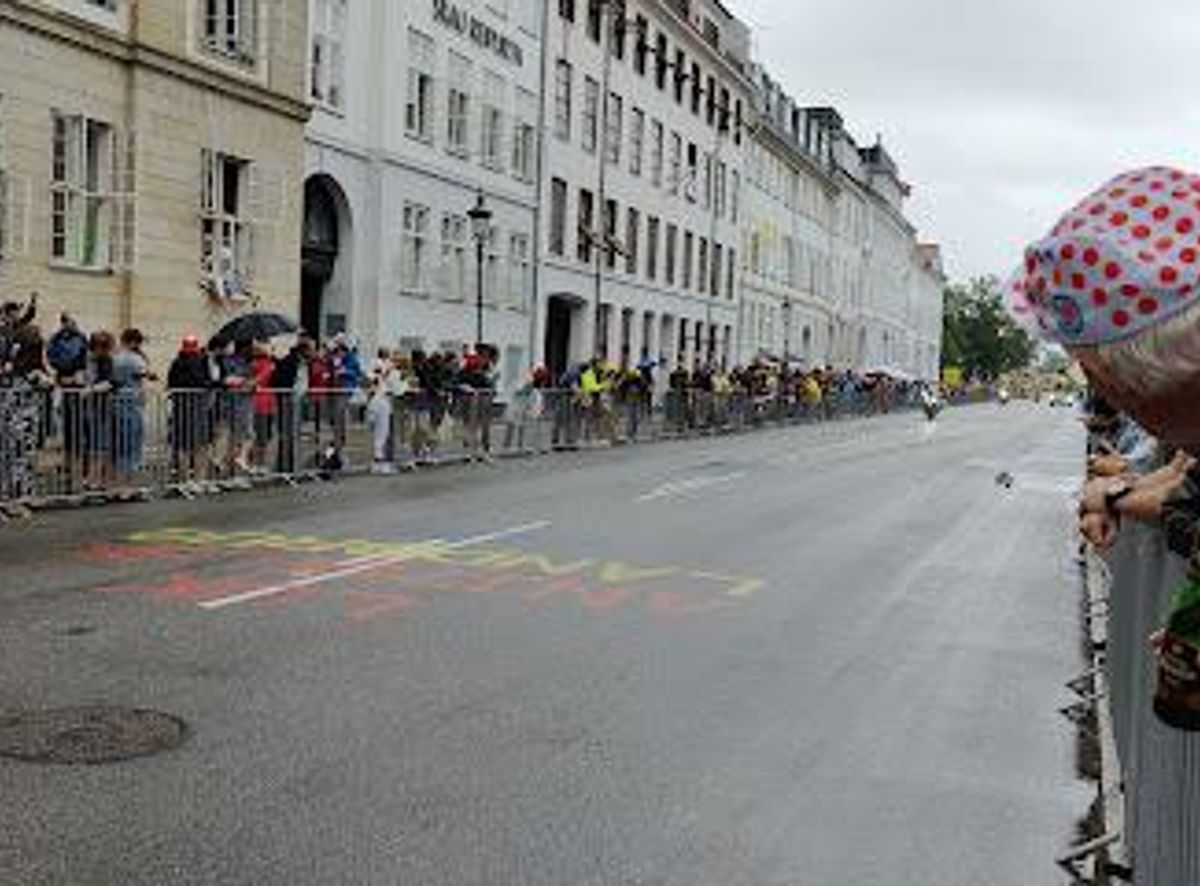
Amaliegade is one of central Copenhagen’s most graceful streets, forming the long axis of the Rococo quarter of Frederiksstaden and passing directly through Amalienborg Palace’s royal square. Lined with 18th‑century mansions, embassies and refined townhouses, it blends Rococo, Baroque and Neoclassical architecture into a quietly grand streetscape. This is a place to stroll slowly, admiring ornate facades, colonnades and discreet doorways that hint at centuries of aristocratic and diplomatic life.

A brief summary to Amaliegade

  • Copenhagen, Indre By, DK
  • Duration: 0.5 to 2 hours
  • Free
  • Environment icon Outdoor
  • Mobile reception: 5 out of 5

Local tips

  • Walk the full length from Sankt Annæ Plads to the Esplanaden end to appreciate how Amaliegade aligns with Amalienborg Palace and the church dome.
  • Look up at pediments, reliefs and friezes; several buildings feature intricate sculpture and a whimsical animal frieze that are easy to miss at street level.
  • Combine your stroll with visits to Amalienborg’s square and the nearby waterfront promenade for varied views within a compact area.
  • Keep voices low and avoid blocking doorways; many properties are active embassies, offices and private residences.
  • Visit in the golden light of early morning or late afternoon to see the facades and stone colonnade at their most atmospheric for photography.
widget icon

Getting There

  • Metro and short walk from central Copenhagen

    From central Copenhagen, take the M3 or M4 metro to Marmorkirken Station, a frequent ring‑line service with trains running every few minutes. A single zone ticket typically costs the same as a standard inner‑city metro fare. From the station, allow around 5–8 minutes on foot along flat pavements to reach the central section of Amaliegade near Amalienborg. This option suits most visitors, with step‑free access via lifts at many metro stops and frequent departures throughout the day.

  • City bus connections to Frederiksstaden

    Several city bus lines serving inner Copenhagen stop within a short walk of Amaliegade, including routes that run along Bredgade and Store Kongensgade. Typical journey times from the central station or Rådhuspladsen area range from 10–20 minutes depending on traffic, and standard city bus tickets are valid across bus and metro. Buses generally operate from early morning until late evening, with reduced frequency late at night and on some weekends.

  • Bicycle from central neighborhoods

    Copenhagen’s extensive cycle lanes make reaching Amaliegade by bike straightforward from most central neighborhoods. Expect a ride of around 10–20 minutes from areas such as Vesterbro, Nørrebro or Østerbro, using dedicated bike lanes for almost the entire way. Public bike‑share schemes and hotel rentals are widely available at a modest hourly or daily rate. The terrain is flat, but be prepared to follow local cycling etiquette and park only in designated racks along nearby streets.

  • Walking from Kongens Nytorv area

    If you are already in the historic center near Kongens Nytorv, reaching Amaliegade on foot is simple and pleasant. Plan for roughly a 10–15 minute walk along broad pavements through the Frederiksstaden grid, passing elegant squares and churches on level ground. This option is free and suitable for most fitness levels, though surfaces are a mix of paving stones and cobbles in some sections, which may require extra care for those with reduced mobility.

Amaliegade location weather suitability

  • Weather icon Any Weather
  • Weather icon Mild Temperatures
  • Weather icon Cold Weather
  • Weather icon Hot Weather
  • Weather icon Clear Skies

Unlock the Best of Amaliegade

Buy tickets

    No tickets available

Book tours with entry

    No tours available

Book tours without entry

    No tours available

Discover more about Amaliegade

Rococo Avenue at the Heart of Frederiksstaden

Amaliegade runs like a ceremonial spine through Frederiksstaden, the formal Rococo district planned in the 18th century to celebrate the Danish monarchy and a new royal dynasty. It stretches from leafy Sankt Annæ Plads in the south up towards Esplanaden and the waterfront, with the square of Amalienborg Palace as its glittering centerpiece. Here the street crosses the shorter axis, Frederiksgade, creating one of Copenhagen’s most harmonious urban compositions. The street’s elegance is no accident. It was laid out as part of a meticulously designed district of straight sightlines, symmetrical blocks and noble townhouses, intended both as a fashionable address for the elite and a statement of royal power. Walking its length, you sense the continuity of that vision in the aligned facades, evenly spaced windows and dignified rhythm of portals and pilasters.

Mansions, Colonnades and Royal Connections

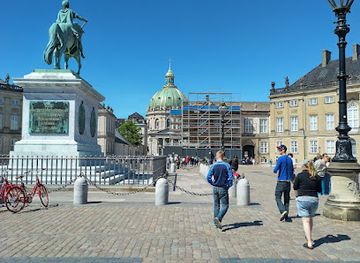
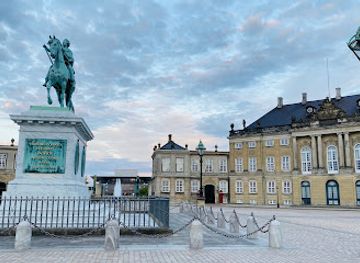
At the heart of Amaliegade, the colonnade that links two of Amalienborg’s palaces stretches above the street like a stone bridge, connecting the historic residences of king and crown prince. Designed in the 1790s by royal architect Caspar Frederik Harsdorff, this covered passage allowed the royal family to move discreetly between palaces while adding a dramatic architectural flourish to the axis. Either side of the palace square, the street is framed by freestanding mansions and townhouse rows erected in the second half of the 18th century. Many were built for merchants, mayors and nobles who wanted to live within sight of the royal residence. Their sculpted doorcases, cartouches and wrought‑iron balconies still announce former status, even if today the interiors often house ministries, embassies and organizations.

Architectural Details Behind Quiet Facades

One of Amaliegade’s pleasures lies in its variety of styles within a tightly controlled framework. Rococo townhouses with playful curves sit beside more restrained Neoclassical buildings, while touches of Baroque survive in heavier cornices and ornamented gables. Several houses retain fine reliefs, coats of arms and carved figures that reward close inspection. Further north, a late‑19th‑century block stands out with an exuberant painted frieze of animals – dragonflies, fish, frogs and a pair of tigers flanked by rows of penguins – an unexpectedly whimsical touch in an otherwise sober quarter. Elsewhere, an early work by the sculptor Bertel Thorvaldsen adorns a pediment, inserting a piece of Danish art history directly into the streetscape.

Stories of Diplomats, Writers and Shipowners

Behind these facades, Amaliegade has long been a stage for influential lives. A number of embassies and ambassadors’ residences occupy the grander townhouses, continuing a diplomatic tradition that suits the street’s discreet prestige. One address serves as the Italian ambassador’s residence, blending national representation with Copenhagen’s architectural heritage. In the 19th century, cultural figures frequented the area: a prominent civil servant and patron of the arts once lived in a recessive townhouse off the street, and the writer Hans Christian Andersen was known to visit here, weaving the quarter into the city’s literary lore. Maritime power is present too, with the Danish shipowners’ association headquartered in one of the more imposing buildings, a reminder of the country’s seafaring economy.

A Refined Walk Between Palace and Harbor

Today Amaliegade is a calm thoroughfare in a busy capital, more about ambience than attractions. Cars move slowly, cyclists glide by and office workers slip through heavy wooden doors that once belonged to noble households. From many points along the street you catch glimpses of the marble dome of Frederik’s Church or a flash of blue from the harbor beyond. For visitors, it is best experienced on foot, ideally combined with time at Amalienborg Palace, the nearby waterfront promenade and the surrounding grid of Frederiksstaden. Benches, small squares and neighboring parks offer places to pause, while the street’s consistent scale and harmonious proportions give even a short stroll a sense of composure and quiet grandeur.

Planning Your Visit on a Human Scale

Amaliegade is compact enough to explore in under an hour yet rich in detail if you enjoy architecture and urban design. There are no formal entry points or tickets; the street is an open part of the city, lined with residences, offices and diplomatic missions, so a respectful attitude and low‑key photography are appropriate. Shops, cafés and restaurants are found on adjoining streets rather than directly on Amaliegade, reinforcing its character as a dignified residential and institutional address. With its central location, flat terrain and generous pavements, it is easy to integrate into almost any walking itinerary through inner Copenhagen, providing a refined corridor between palace, church and harbor.

Busiest months of the year

Busiest hours of the day

Popular Experiences near Amaliegade

Popular Hotels near Amaliegade

Select Currency