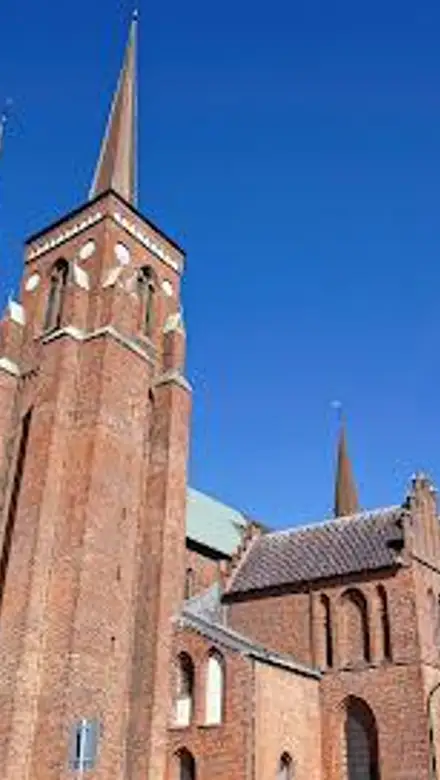
Roskilde Cathedral, Køge Travel Guide
Free Guide: Denmark's royal burial cathedral and Scandinavia's first brick Gothic masterpiece, housing 40 monarchs across 800 years of architectural history.


A brief summary of Roskilde Cathedral
Denmark's royal burial cathedral and Scandinavia's first brick Gothic masterpiece, housing 40 monarchs across 800 years of architectural history.
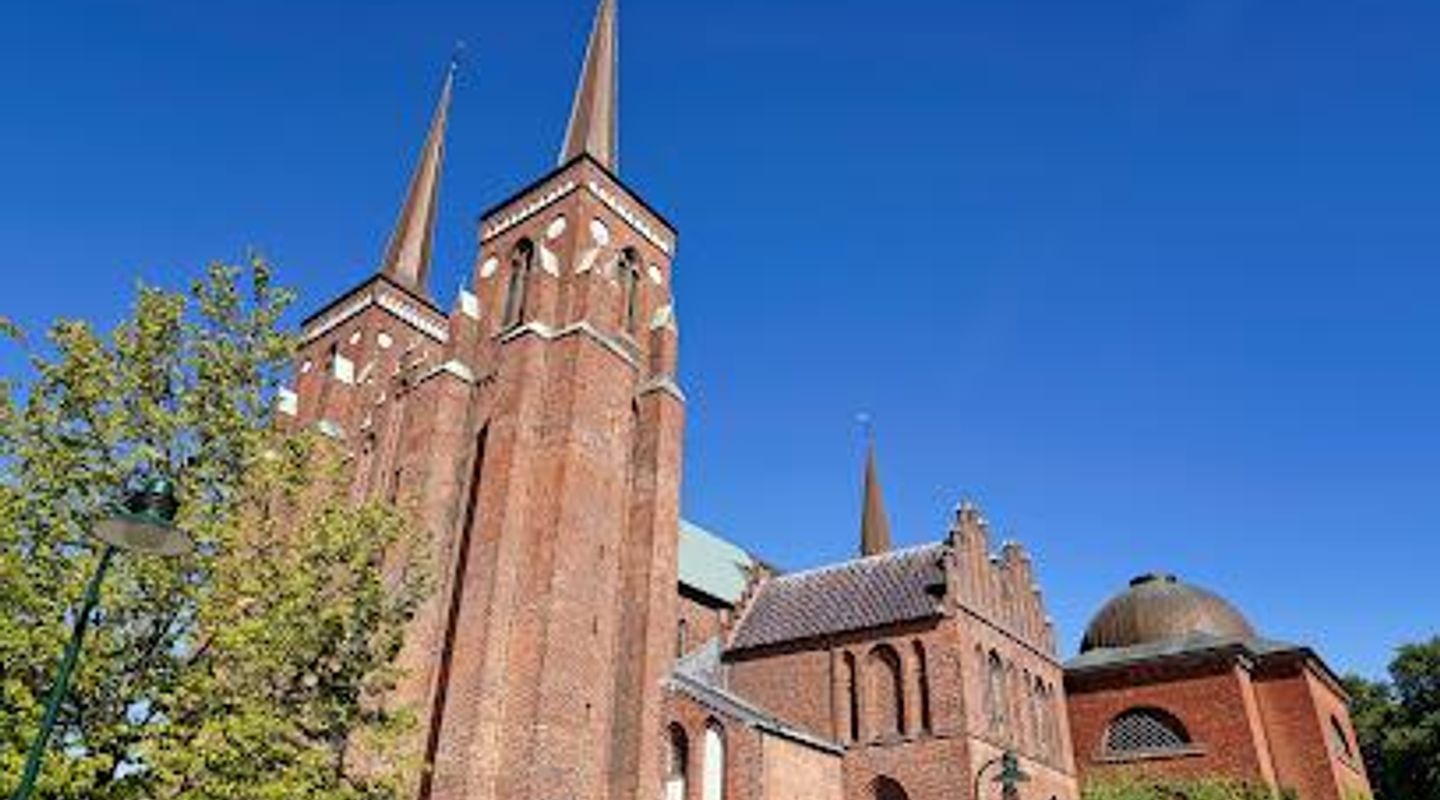
Roskilde Cathedral is Denmark's most significant religious and historical monument, a UNESCO World Heritage Site housing the burial chapels of over 40 Danish monarchs spanning more than 800 years. Built beginning around 1170 as a Romanesque structure and completed circa 1200 in Gothic style using approximately 2.5 million red bricks, it stands as Scandinavia's earliest major brick Gothic cathedral and profoundly influenced ecclesiastical architecture throughout Northern Europe. The cathedral's successive chapels showcase eight centuries of European architectural evolution, from Gothic and Renaissance to Neoclassical and Byzantine Revival styles.
On-site amenities
 Restrooms
 Drink options
 Food options
 Seating areas
 Information boards
 Visitor centre
- Address
- Domkirkepladsen 3, 4000 Roskilde
- Phone
- Website
Getting there
Train from Copenhagen
Car from Copenhagen
Bicycle from Copenhagen
Guided tour bus from Copenhagen
Discover more about Roskilde Cathedral
A Thousand Years of Danish Royal Heritage
Roskilde Cathedral represents an unparalleled repository of Danish monarchy, with more than 40 kings and queens interred within its walls from the 15th century to the present day. The cathedral's origins trace back to the Viking era—Harald Bluetooth, the Viking king who unified Denmark around 987, is believed to be buried on this site. The present cathedral was constructed beginning around 1170 as a Romanesque basilica, with major Gothic reconstruction commencing around 1200 under Bishop Absalon's direction. This transformation marked a pivotal moment in Northern European architecture: Roskilde became Scandinavia's first major Gothic cathedral built entirely in brick, a revolutionary technique that had only recently been rediscovered in Denmark and would reshape construction practices across the entire region.Each royal burial prompted architectural additions reflecting the aesthetic and cultural values of its era. Walking through the cathedral is a journey through eight centuries of European artistic development. The tombs themselves tell stories of power and legacy—Queen Margrete I, who unified all of Scandinavia under her rule, lies prominently in the cathedral's center, her monument a testament to her historical significance. King Christian IV, Denmark's great builder king, commissioned his own chapel in 1613, completed in 1641 with a stunning vaulted blue ceiling decorated with stars and elaborate trompe l'oeil effects. Each chapel, from the Gothic to the Neoclassical to the Byzantine Revival, represents the architectural language of its time.
Architectural Innovation and European Significance
The cathedral's construction employed approximately 2.5 million hand-produced red bricks, a material choice that revolutionized building practices. Brick offered superior durability and fire resistance compared to wood, and its adoption at Roskilde demonstrated the viability of this material for monumental ecclesiastical structures. The cathedral's soaring pointed arches, vaulted ceilings, and external buttresses embodied Gothic architectural principles of creating spaces filled with light and verticality. The twin spires, added during restoration work ordered by King Christian IV in 1635, became the cathedral's iconic silhouette overlooking the Roskilde Fjord.The building's UNESCO World Heritage designation recognizes two fundamental contributions: first, it stands as an outstanding example of the earliest major ecclesiastical brick construction in Northern Europe, directly inspiring the spread of Brick Gothic throughout the region; second, its successive chapels and porches document the evolution of European architectural styles across eight centuries. No other single structure presents such a comprehensive architectural timeline within a unified sacred space.
The Royal Chapels: A Living Museum of Style
The cathedral's most distinctive feature is its collection of royal chapels, each designed in the prevailing architectural style of its patron monarch. Christian I's chapel, built in Gothic style, features two floors—the lower serving as his burial chamber and the upper as a Great Hall for the Order of the Elephant, Denmark's highest honor. Christian IV's chapel, completed in 1641, showcases Dutch Renaissance design with its celebrated blue ceiling and star decorations. Frederik V's chapel, constructed between 1774 and 1825 in Neoclassical style, required 51 years of work and the removal of a previous chapel. The Glücksburger Chapel, completed in 1924, represents Byzantine Revival architecture with its cruciform plan, grey walls, and domed roof.These chapels are not merely tombs but complete architectural statements, each reflecting the monarch's vision of how they wished to be remembered. The variety of styles—from pointed Gothic arches to Renaissance ornamentation to Neoclassical restraint—creates a visual encyclopedia of European taste and power across the medieval and early modern periods.
Sacred Space and Contemporary Function
Beyond its role as a royal mausoleum, Roskilde Cathedral remains an active place of worship and cultural engagement. The cathedral hosts regular services, concerts, and special events including the Night Church program, which offers meditation, yoga, and performances by the cathedral's boys' choir beneath the soaring vaulted ceilings. A small Cathedral Museum, housed in the Gothic-style Great Hall originally built for the Order of the Elephant, displays royal artifacts, historical documents, and ecclesiastical treasures. Guided tours led by expert cathedral guides navigate visitors through the complex layers of history, revealing architectural details, royal stories, and symbolic elements such as the King's Pillar and the legend of Saint George and the dragon.The cathedral's scale and atmosphere create a profound sense of historical continuity. The high vaulted ceilings, intricate frescoes, 17th-century organ, and dark crypts combine to produce an environment where centuries of Danish history seem tangibly present. Children can participate in treasure hunts designed to engage younger visitors with the cathedral's stories and architecture.
Gateway to Medieval Roskilde
The cathedral sits on a small hilltop overlooking the Roskilde Fjord, positioned within the medieval town structure that remains largely intact around it. The surrounding streetscape preserves medieval patterns alongside fine 17th and 18th-century residences, creating a cohesive historical environment. The cathedral's location near Roskilde's train station makes it easily accessible while maintaining its prominence as the spiritual and architectural heart of the city. The building's red brick construction, distinctive twin spires, and commanding position make it a landmark visible across much of Roskilde, anchoring the town's identity and historical significance.
Evendo Review Centre
 Google
Guest reviews
Best time to go
Quietest: Jan, Feb & Nov · before 8am or from 7pm
Busy times are Evendo estimates for a typical year, to help you plan. Actual crowds vary with events, school holidays and the weather.
Explore Roskilde Cathedral on the map
A handpicked selection of must-see spots near Roskilde Cathedral, mapped for you.
Get your free copy of our complete guide to Roskilde Cathedral, delivered straight to you.
Everything on this page, from opening hours and how to get there to Eve’s tips and the best time to go, in one PDF you can read offline, print or share.
Already have an account? Sign in
Your Roskilde Cathedral guide is ready.
We'll send it to · Not you? Sign out

Getting your guide ready…
We are putting together a fresh copy of the Roskilde Cathedral guide. This can take up to a minute.
This can take a few moments. If your browser asks, choose Allow so the download can start. You'll find the guide in your Downloads folder.
Nothing happened? Download it again
Sorry, the guide is taking longer than usual. Please try again in a minute, or get it by email instead.
Unlock the best of Roskilde Cathedral
Skip-the-line tickets, guided tours with entry, and walking tours of the area, booked in a few clicks.




Other nearby places you may find interesting
The closest places of the same kind, if this one is not quite what you had in mind.
-
-
-
-
-


Swipe for more places
More to explore near Roskilde Cathedral

 Best experiences near Roskilde Cathedral
 Best hotels near Roskilde Cathedral
 Best landmarks near Roskilde Cathedral
 Best attractions near Roskilde Cathedral
 Best shops near Roskilde Cathedral
 Best restaurants near Roskilde Cathedral
 Best bars near Roskilde Cathedral
Do you manage this location?
Take control to get all the benefits, like improved information, better appearance, and stronger visibility across AI-powered discovery.
Explore more
Explore more of Køge
Explore Køge, Denmark's coastal gem, with its medieval charm, beautiful marina, and close proximity to the stunning Stevns Klint UNESCO World Heritage site.
Explore Køge
Explore more of Denmark
Discover Denmark: A perfect blend of history, modern design, and the cozy concept of hygge. Explore vibrant cities, serene landscapes, and world-class cuisine.
Explore Denmark