Jægersborg Dyrehave, Mon Travel Guide
UNESCO-listed royal deer park just north of Copenhagen, where ancient oaks, open meadows and free-roaming herds create a vast, car-free escape from the city.
Jægersborg Dyrehave, just north of Copenhagen near Klampenborg, is a UNESCO-listed forest park of ancient oaks, open meadows and more than 2,000 free-roaming deer. Once a royal hunting ground, it is now a car-free haven for walkers, cyclists and riders, with star-shaped avenues radiating from the Baroque Hermitage Hunting Lodge at its heart. Expect big skies, seasonal colour, and a rare feeling of wildness so close to the Danish capital.
A brief summary to Jægersborg Dyrehave
- Dyrehaven, Klampenborg, 2930, DK
- Click to display
- Click to display
- Duration: 2 to 6 hours
- Free
-
 Outdoor
- Mobile reception: 4 out of 5

Know before you go
Hi, I'm Eve. Here are a few practical things to know before exploring Jægersborg Dyrehave.
- Come early in the morning or late afternoon for the best chance of seeing large deer herds active in the open meadows and in softer, photogenic light.
- Pack food and water; facilities are sparse inside the park, and picnicking on the grass near the Hermitage Lodge or under an old oak is part of the experience.
- If visiting in autumn during the rut, keep well back from stags, use a zoom lens for photos and follow any posted safety guidance around wildlife.
- Wear comfortable walking shoes or bring a bike to cover more ground; paths are mostly flat but distances can be long in this 11 km² park.
- Dogs are generally allowed only on a lead; keep them close and calm to avoid disturbing the deer and to comply with local rules.
Do you manage this location?
Take control to get all the benefits, like improved information, better appearance, and stronger visibility across AI-powered discovery. Learn more about listing your business on Evendo
Activate your presenceOther nearby places you may find interesting
The closest places of the same kind, if this one is not quite what you had in mind.
Explore Jægersborg Dyrehave on the Map
A handpicked selection of must-see spots near Jægersborg Dyrehave, mapped for you.
Getting There
-
Train from central Copenhagen
Take the S-train line C from a central station such as København H or Nørreport to Klampenborg Station; the ride typically takes 20–25 minutes and trains usually run every 10–20 minutes during the day. A standard adult single ticket within the Copenhagen zones is generally in the range of 25–40 DKK, depending on your starting point and ticket type. From Klampenborg Station it is a short, level walk on broad paths to one of the main red gateways into Dyrehaven, suitable for most visitors including families with strollers.
-
Regional train from coastal towns
If you are staying along the Øresund coast north or south of Copenhagen, board an Øresund regional train and get off at Klampenborg or Skodsborg Station, both of which sit by the park edge. Typical journey times from Helsingør or Malmö are around 35–60 minutes. Expect ticket prices roughly between 60 and 120 DKK one way, depending on distance and discounts. Trains generally run at least twice per hour in daytime, but evening and weekend frequencies can be lower, so check the timetable in advance.
-
Cycling from Copenhagen
For a more active approach, cycle from central Copenhagen to Dyrehaven using the well-marked bike routes heading north through Østerbro and along Lyngbyvej toward Klampenborg. The distance is roughly 13–15 km each way on mostly flat terrain and usually takes 45–70 minutes depending on pace. There is no entry fee for either the cycle route or the park, and bikes are allowed on many of the wider tracks. Be prepared for changing weather and bring lights if you expect to return after dark.
-
Car or taxi from the region
Arriving by car or taxi from Copenhagen or nearby suburbs typically takes 20–35 minutes outside peak traffic. There are several parking areas around the perimeter near Klampenborg, Fortunen and other gates, some of which may charge modest hourly fees in the range of 10–20 DKK depending on location and time of day. The park interior itself is largely car-free, so you will complete the final stretch on foot or by bike from the car parks; surfaces are generally firm but can be muddy after heavy rain.
For the on-the-go comforts that matter to you
-
 Restrooms
-
 Seating Areas
-
 Trash Bins
-
 Information Boards
-
 Visitor Center
-
 Picnic Areas
Discover more about Jægersborg Dyrehave
Royal hunting grounds turned green escape
Jægersborg Dyrehave, universally known as Dyrehaven, is where Copenhagen’s urban edge dissolves into an enormous sweep of woodland and meadow. Spread across roughly 11 square kilometres, this former royal hunting park feels immediately spacious: broad grassy clearings, long tree-lined rides and gently rolling ground that was shaped as much for spectacle as for sport. A short hop from the city, it nevertheless feels distinctly rural, with birdsong and the rustle of leaves easily drowning out any distant traffic.Created in the 17th century as a fenced hunting reserve for Denmark’s kings, the park still wears its history openly. The network of straight, intersecting avenues was designed so mounted hunters could follow hounds at speed and keep sight of the chase. Today, those same lines make it wonderfully easy to orient yourself, whether you are wandering on foot, pedalling a bike or riding horseback along the sandy tracks.Deer herds and ancient oak giants
The park’s most charismatic residents are its herds of red and fallow deer, which number in the low thousands and move in loose groups between forest edge and open grassland. It is common to spot antlered silhouettes on the horizon or to see animals grazing calmly in the middle distance, especially at dawn and dusk when they are most active. During the autumn rut, the roar of competing stags can echo across the meadows, adding a dramatic soundtrack to the flaming foliage of beech and oak.Equally striking are Dyrehaven’s trees. Some of the oaks here are several centuries old, with thick, gnarled trunks and hollowed centres that speak to long, slow lives. Fallen giants are often left where they lie, creating deadwood habitats and a sense of an ancient, continuously evolving forest. In spring the canopy flushes green; in summer it becomes a dense parasol of shade; by late October, the park glows with copper and gold.The Hermitage and star-shaped vistas
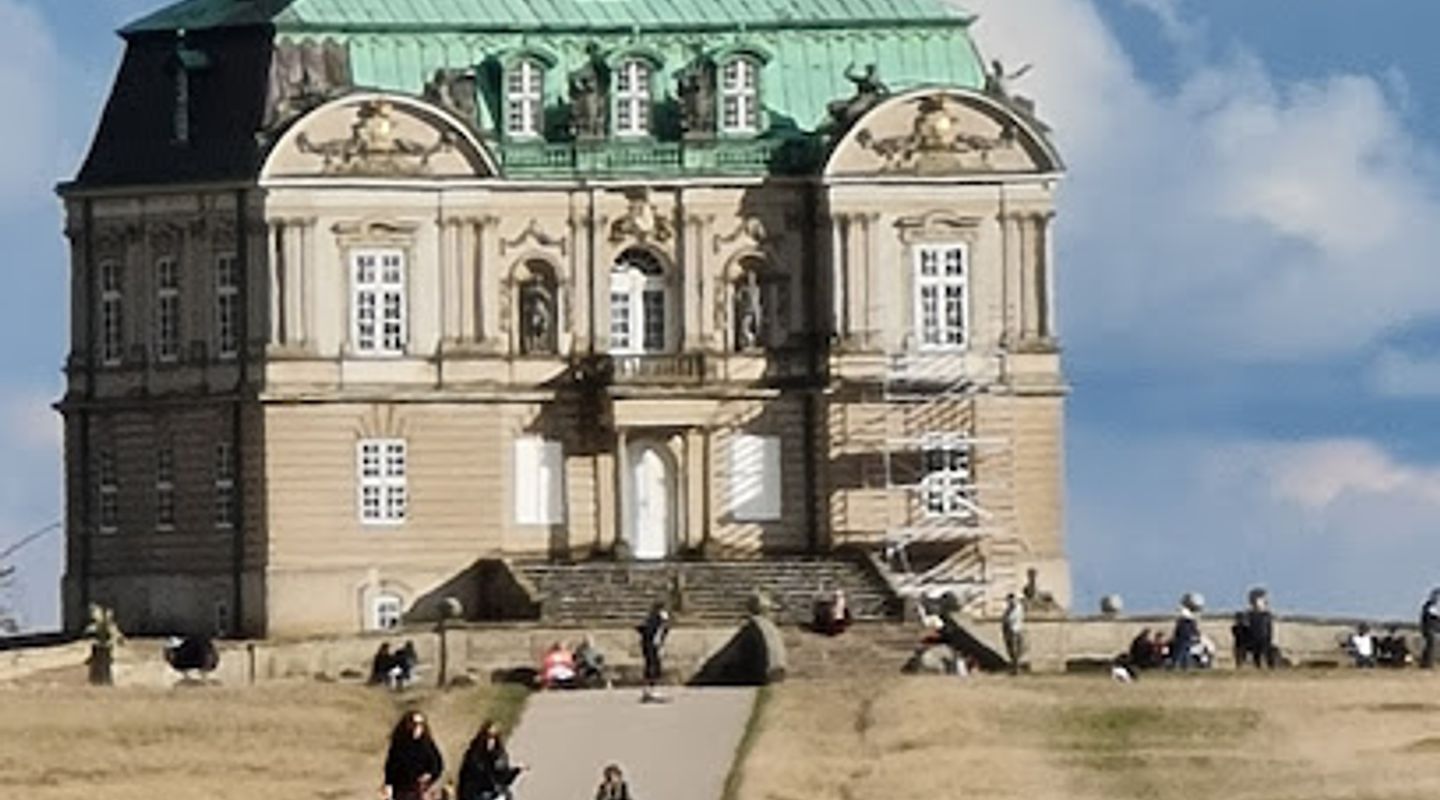
At the park’s heart stands the Hermitage Hunting Lodge, an 18th-century Baroque palace perched on a low rise above a wide plain. Its pale stone, mansard roof and decorative details were intended to impress guests invited for elaborate royal hunts. From here, star-shaped avenues radiate out across the landscape, offering long, unobstructed sightlines that end in distant tree walls, a design now recognised as part of a UNESCO World Heritage cultural landscape.Even when the palace interior is closed, its presence defines the park’s central plateau. People sit in the grass below its terraces, watching clouds drift by or deer passing in loose lines across the open ground. In winter, the exposed hill can feel windswept and austere; in summer, it becomes a favourite picnic spot, with kites in the air and cyclists tracing quiet loops around the slopes.Car-free nature, paths and quiet corners
One of Dyrehaven’s greatest luxuries is its lack of through-traffic. The park is effectively car-free, so the soundscape is dominated by hooves, bicycle bells, children playing and the creak of saddles from traditional horse-drawn carriages that still clip-clop along some routes. Wide gravel paths suit prams and wheelchairs, while smaller forest tracks peel off into more secluded corners for those seeking solitude.Facilities are deliberately light-touch. There are scattered rest spots, a few information points and basic toilets near key landmarks, but otherwise the emphasis is on simple enjoyment of open air and nature. To the south, the historic amusement park Bakken nudges the boundary with its rollercoasters and neon, yet stepping just a little deeper into the trees quickly returns you to birds, deer and the wind in the canopy.Seasons, light and everyday life outdoors
Dyrehaven changes character with the seasons. Frosty mornings can leave the meadows sparkling while deer breath steams in the cold air. In high summer, long evenings draw locals out for post-work walks and impromptu picnics under spreading crowns. Autumn brings the twin spectacles of rutting stags and tumbling leaves, while even in rain the forest offers an atmospheric, soft-lit refuge.For many in the Copenhagen region, this is not a once-in-a-lifetime destination but a kind of extended backyard: a place to run, to teach children to ride bikes, to walk dogs on leads, or simply to sit and watch clouds and animals move across a wide, open stage. For visitors, it offers a revealing glimpse of how closely nature and city intertwine in Denmark, and how a landscape shaped for royal ceremony has become a beloved everyday escape.












Your all‑in‑one travel companion app
Explore expert travel guides, compare and book tours, experiences, hotels, and more—all from the palm of your hand. Download now for seamless trip planning wherever your wanderlust takes you.


Explore More of Mon
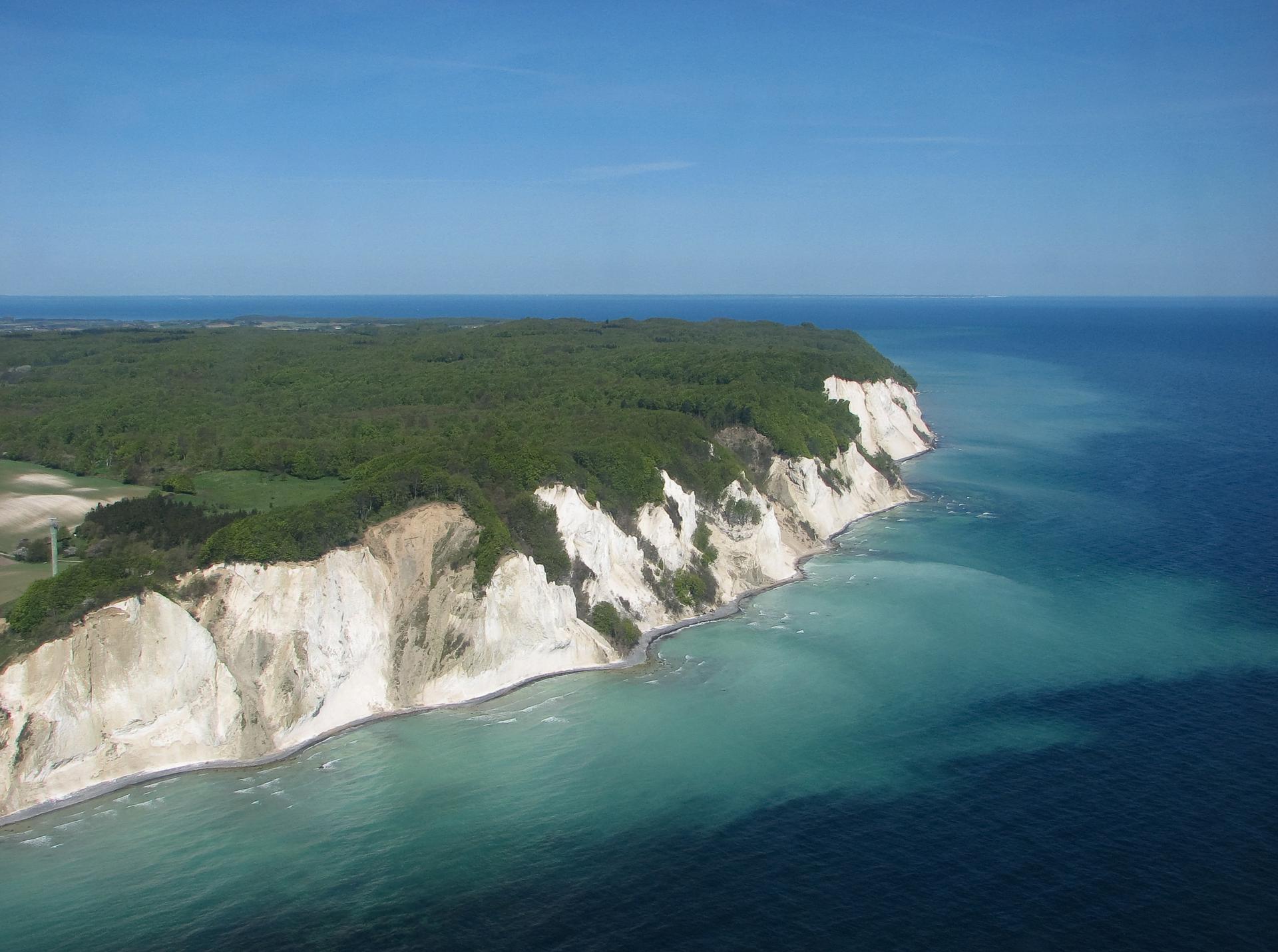
Looking beyond Jægersborg Dyrehave? Discover Mon for broader travel guides, local hot-spots, and regional highlights.
Explore Mon