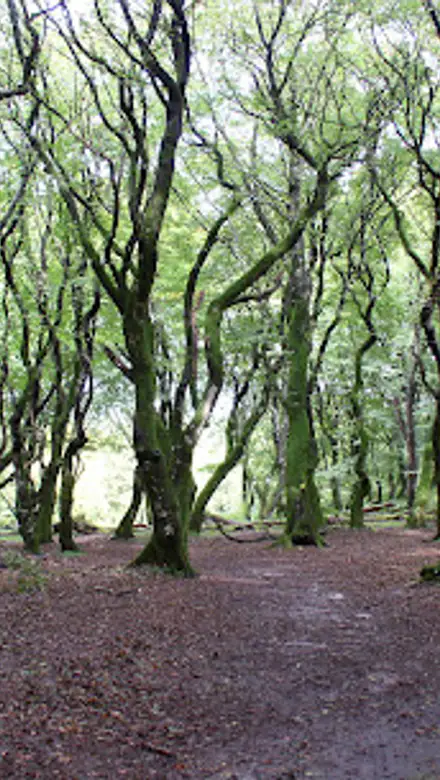
Troldeskoven Travel Guide
Free Guide: A compact corner of Rold Skov where centuries‑old beech trees twist into troll-like sculptures, blending folklore, forest history and quietly enchanting woodland atmosphere.


A brief summary of Troldeskoven
A compact corner of Rold Skov where centuries‑old beech trees twist into troll-like sculptures, blending folklore, forest history and quietly enchanting woodland atmosphere.
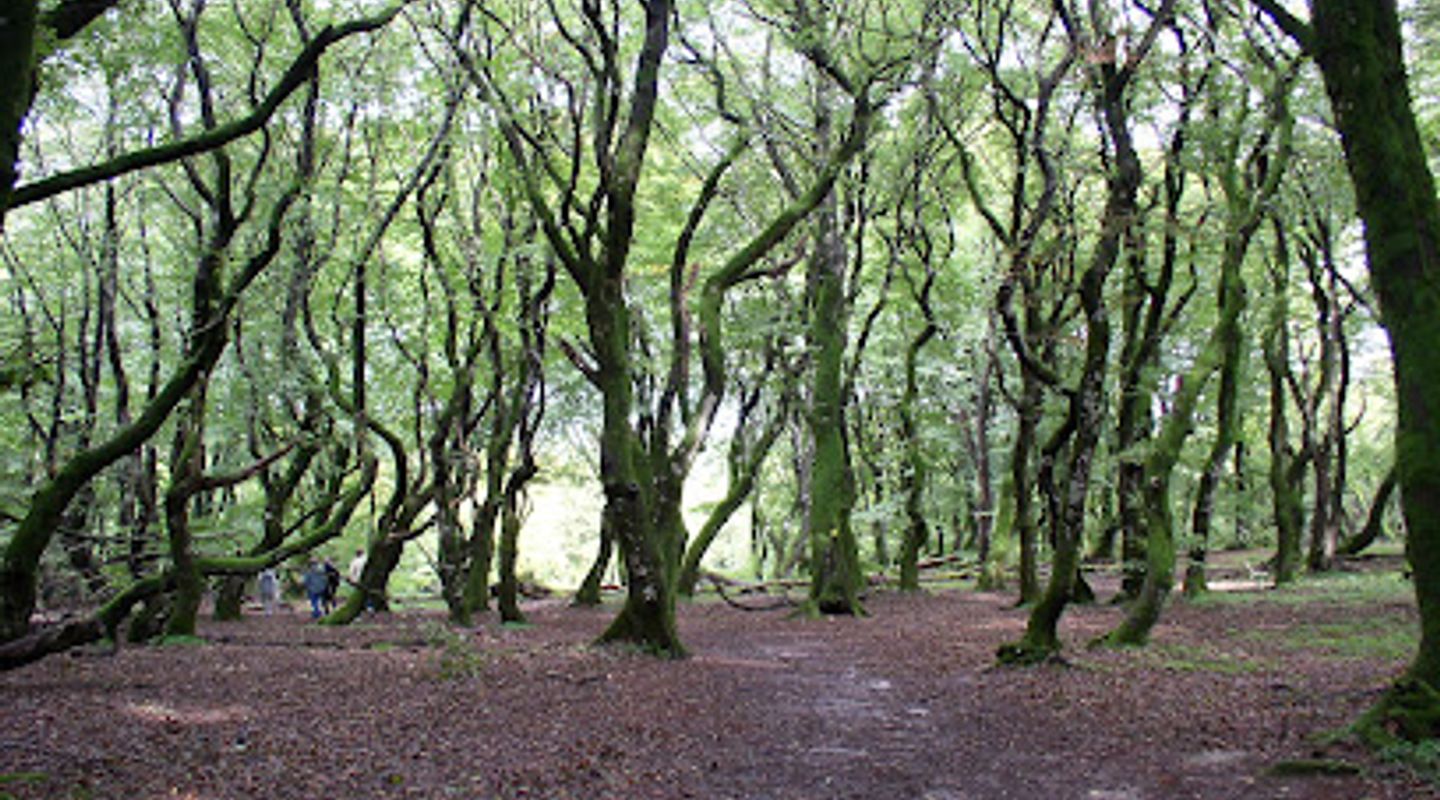
Hidden within North Jutland’s vast Rold Skov, Troldeskoven is a small, atmospheric beech woodland where centuries‑old trees have grown into fantastically twisted shapes that resemble trolls and mythical creatures. These gnarled “røllebøge” are among the forest’s oldest beeches, shaped by a unique combination of soil, climate, repeated coppicing and grazing. Paths thread quietly between multi‑stemmed trunks, natural arches and the legendary “eye trees”, creating an intimate, almost fairy‑tale corner of the forest ideal for slow walks, photography and quiet contemplation.
On-site amenities
 Restrooms
 Seating areas
 Picnic areas
 Trash bins
 Information boards
 Visitor centre
Opening hours
- Every day12 pm–9 pm
Opening hours as listed on the venue’s Google Business Profile. Hours can change for services and special events, so check with the venue before you go.
- Address
- Vælderskoven 11, 9520 Skørping
Getting there
Car from Aalborg
Regional train and walk from Skørping
Bicycle from Skørping or Rebild area
Discover more about Troldeskoven
An ancient forest corner with a fairy-tale twist
Troldeskoven lies in the heart of Rold Skov, Denmark’s largest contiguous forest, yet it feels like a self-contained world. Here the otherwise straight, dignified European beeches suddenly writhe, bend and loop into shapes that look more like frozen dancers or slumbering trolls than ordinary trees. The grove is compact, but every few steps reveal another sculptural trunk or natural arch, inviting you to wander slowly rather than stride through.Despite its modest size, this is one of the most distinctive pockets of woodland in northern Jutland. The light filters differently here, broken by layers of crooked branches, and even on bright days the mood is soft and slightly mysterious. Underfoot, a cushion of leaves and moss muffles sound, adding to the impression that you have stepped briefly out of everyday time.
The curious life story of the ‘røllebøge’
The trees that give Troldeskoven its character are not young saplings distorted by chance, but some of Rold Skov’s very oldest beeches. Many are direct descendants of the first beeches that colonised this part of Denmark in the Middle Ages, and some are estimated to be more than 300 years old. Their tangled look is partly genetic: northern Jutland beeches have a particular ability to sprout vigorously from stump and root after felling.For centuries, people took advantage of this trait. Instead of clear-felling and replanting, foresters repeatedly cut the same trees and allowed them to reshoot, a practice known as coppicing. Over generations, this created multi-stemmed individuals – the so‑called “røllebøge” – with as many as twenty or thirty trunks radiating from a single root system. Combined with poor, sloping soils and grazing by livestock that nibbled young shoots, the result was trees forced into knots, loops and low, spreading forms that look almost designed.
Legends, eye trees and royal anecdotes
Where trees grow strangely, stories tend to follow. In Troldeskoven, superstition once centred on the remarkable “eye trees”, where two or more twisting trunks fuse to form a ring you can see through. Folklore held that a child suffering from rickets – today known as vitamin D deficiency – could be cured by being passed through such a living hoop, symbolically leaving the illness behind in the tree.In the early 1950s this old belief intersected with modern royalty. As children, Denmark’s Queen Margrethe and her sisters were ceremonially passed through an eye tree here, a specimen that became known as the “Prinsessetræet”, or Princess Tree. Whether or not the ritual had any medical effect, it cemented Troldeskoven’s reputation as a place where nature, custom and a touch of magic meet in a uniquely Danish way.
Walking among wooden trolls
For visitors today, Troldeskoven is above all a place to move slowly and look closely. Narrow forest paths loop around the grove, and there is no single prescribed circuit; you are free to meander between trunks, duck beneath low branches and circle your favourite trees. It is an easy, low‑level walk suitable for most abilities, though the natural surface can be uneven and muddy after rain.Many people find they spend as much time standing still as walking, tracing the lines of a particular trunk or picking out faces and creatures in the bark. The grove is especially atmospheric in mist, when individual trees loom out of the haze, and on calm days when birdsong and the rustle of leaves are the main sounds. Families often turn the visit into a gentle treasure hunt for the strangest shape or the best “troll tree”, while photographers can easily lose track of time working with curves, textures and filtered light.
Seasons, light and the wider Rold Skov
Troldeskoven changes character dramatically with the seasons. In spring, tender green leaves soften the silhouettes but still leave the skeletal forms clearly visible. Summer brings a denser canopy and deep shade, perfect on hot days when the rest of the landscape feels exposed. Autumn adds a rich carpet of copper and gold, emphasising the forest’s sculptural lines, while in winter the bare branches turn the entire grove into a gallery of living calligraphy against pale skies.Although the twisted beeches are the highlight, Troldeskoven is also a natural gateway into the broader landscapes of Rold Skov and nearby heaths and hills. Many marked hiking routes pass close by, allowing you to combine an unhurried exploration of the crooked trees with longer woodland walks or a picnic among more conventional beech stands. Returning to the grove at the end of a day on the trails, those familiar contorted trunks feel almost like old acquaintances greeting you beneath their many-armed crowns.
Evendo Review Centre
 Google
Guest reviews
Best time to go
Quietest: Jan, Feb & Dec · before 7am or from 9pm
Busy times are Evendo estimates for a typical year, to help you plan. Actual crowds vary with events, school holidays and the weather.
Explore Troldeskoven on the map
A handpicked selection of must-see spots near Troldeskoven, mapped for you.
Get your free copy of our complete guide to Troldeskoven, delivered straight to you.
Everything on this page, from opening hours and how to get there to Eve’s tips and the best time to go, in one PDF you can read offline, print or share.
Already have an account? Sign in
Your Troldeskoven guide is ready.
We'll send it to · Not you? Sign out

Getting your guide ready…
We are putting together a fresh copy of the Troldeskoven guide. This can take up to a minute.
This can take a few moments. If your browser asks, choose Allow so the download can start. You'll find the guide in your Downloads folder.
Nothing happened? Download it again
Sorry, the guide is taking longer than usual. Please try again in a minute, or get it by email instead.
Other nearby places you may find interesting
The closest places of the same kind, if this one is not quite what you had in mind.
-
-
-
-
-


Swipe for more places
More to explore near Troldeskoven

 Best experiences near Troldeskoven
 Best hotels near Troldeskoven
 Best landmarks near Troldeskoven
 Best attractions near Troldeskoven
 Best shops near Troldeskoven
 Best restaurants near Troldeskoven
 Best bars near Troldeskoven
Do you manage this location?
Take control to get all the benefits, like improved information, better appearance, and stronger visibility across AI-powered discovery.
Explore more

Explore more of Rebild Bakker
Rebild Bakker: A Natural Paradise in Denmark's Heartland, Perfect for Hikers, History Buffs, and Nature Lovers Alike.
Explore Rebild Bakker
Explore more of Denmark
Discover Denmark: A perfect blend of history, modern design, and the cozy concept of hygge. Explore vibrant cities, serene landscapes, and world-class cuisine.
Explore Denmark