Skillingbro kalkgrav Travel Guide
Free Guide: A quiet chalk quarry at the edge of Rold Skov where ancient seabed fossils, rare wildflowers and forest lore meet in a compact, hands-on slice of deep time.


A brief summary of Skillingbro kalkgrav
A quiet chalk quarry at the edge of Rold Skov where ancient seabed fossils, rare wildflowers and forest lore meet in a compact, hands-on slice of deep time.
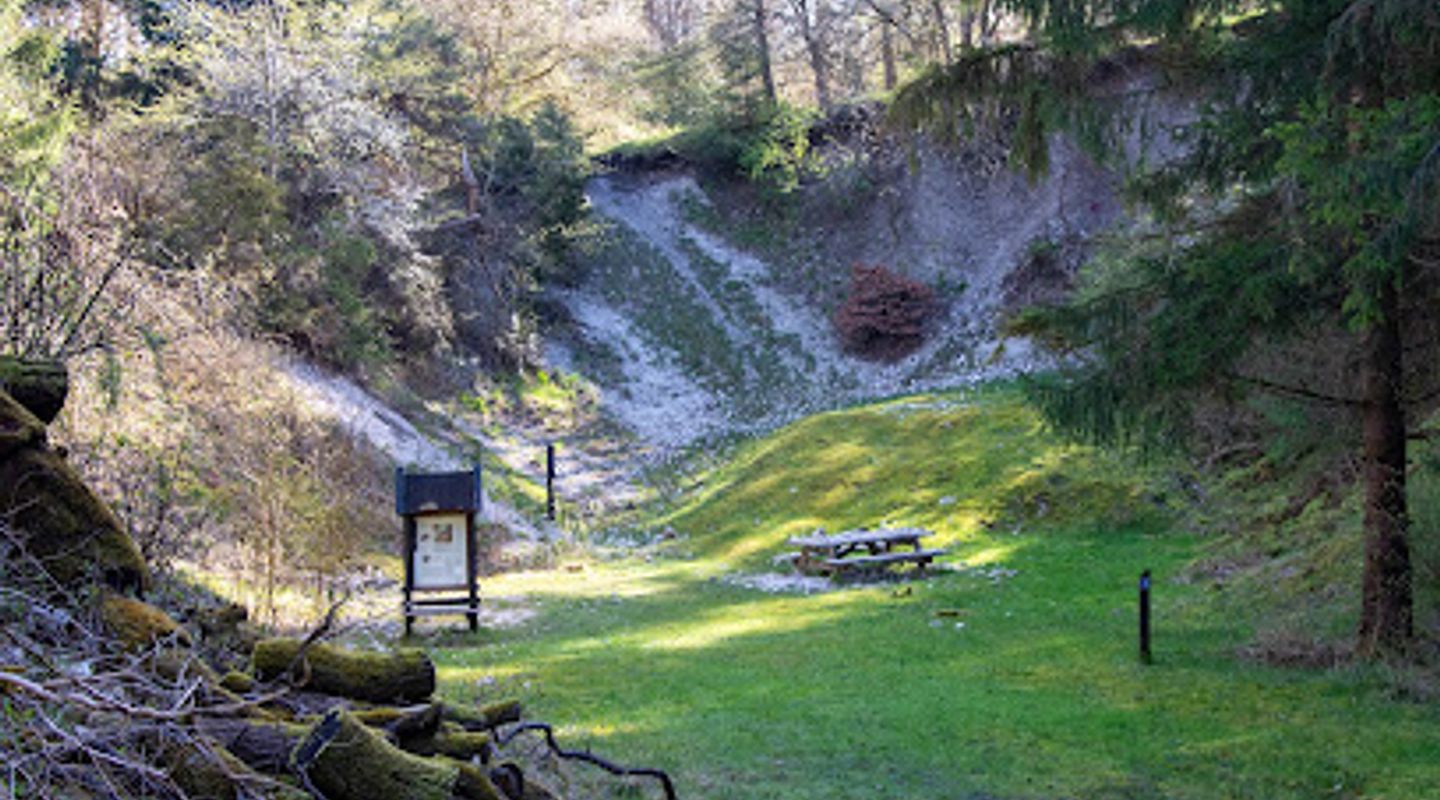
Skillingbro Kalkgrav is a small former limestone quarry tucked into the northern edge of Rold Skov near Skørping. Here, steep white slopes reveal more than 60‑million‑year‑old limestone layers rich in tiny marine fossils from the early Tertiary period. The chalky soil nurtures rare orchids, wildflowers and butterflies, while a short path from the forest edge drops you into a sheltered bowl that feels part outdoor classroom, part secret natural amphitheatre.
On-site amenities
 Trash bins
 Information boards
 Seating areas
- Address
- 56°49'34.0N 9°48'55.
Getting there
Train and walk from Skørping
Car via local roads near Rold Skov
Cycling from Skørping and nearby accommodations
Discover more about Skillingbro kalkgrav
Ancient seabed hidden in the Danish forest
Skillingbro Kalkgrav looks modest at first glance, but the white slopes around you are the exposed floor of an ancient sea. The quarry walls consist of hard limestone formed over 60 million years ago, packed with remains of bryozoans, corals, shells and other marine life that once thrived far below the waves. Today, the pit sits quietly between forest roads and meadows at the edge of Rold Skov, a compact open-air window into deep geological time.The quarry dates back roughly a century, when limestone was dug here for building and agriculture. Once extraction ceased, the pit gradually naturalised, leaving behind a sheltered hollow with bright chalk faces, scattered blocks and patches of thin, lime-rich soil that host a very different plant community from the surrounding beech forest.
Hands-on fossil hunting and natural science
Skillingbro Kalkgrav invites exploration on a human scale. The walls are low enough to feel approachable, and loose fragments of chalk and limestone at your feet make it easy to search for small fossils without any specialist skills. With patience and a pocketknife or small hammer, you can spot bryozoans, tiny shells, fragments of sea lilies and, if you are lucky, a fossil sea urchin or even a shark tooth.Because the fossils are embedded in clearly visible layers, the quarry works almost like a textbook cross-section. It is a popular outdoor classroom for school groups and families who want to see geology, biology and time stratified in front of them. The contrast between the pale rock, dark forest edge and flashes of wildflower colour gives photographers plenty of quiet detail to work with.
Rare flowers, butterflies and chalky slopes
The lime-rich, fast-draining soil here supports a specialised flora more typical of chalk downs than of dense Danish woodland. In late spring and summer, small orchids, gentians and other calcicolous plants dot the slopes, along with grasses that stay short and sparse. These in turn attract butterflies and other insects that favour warm, open banks.Because the pit is sunken and partly sheltered from the wind, it can feel noticeably warmer than the surrounding forest on a clear day. That microclimate lengthens the flowering season and creates a good spot for quiet observation. Careful footsteps are important: some of the plant communities are vulnerable, and sticking to existing paths and more stable areas of scree helps preserve them.
Stories of robbers, roads and forest crossings
Skillingbro sits beside old routes that have crossed this valley for centuries, linking Rold and Skørping and threading through the northern edge of Rold Skov. Nearby hollow ways and embankments mark the lines of former roads that once carried traders, farmers and travellers between inland settlements and coastal trading posts.Local lore tells of a band of robbers said to have used a nearby depression as a hideout, alerted to passing travellers by tripwires and bells. While the tale cannot be proven, it reflects how the folds of this landscape have long provided concealment, resources and strategic crossings in an otherwise rugged forest region.
A quiet pause amid larger Rold Skov adventures
Compared with the dramatic underground galleries of the Thingbæk chalk mines or the rolling heaths near Rebild, Skillingbro Kalkgrav is compact, calm and easily explored in under an hour. A simple path leads down from a small forest-edge clearing into the bowl-like quarry, where you can sit on exposed blocks, examine rock surfaces or simply take in the contrast between white chalk and green canopy above.Many visitors pair a short stop here with longer walks through Rold Skov, using the quarry as a geological detour on a day of forest hiking. Its modest size, soft underfoot terrain and clear sightlines make it welcoming for families and anyone curious about the hidden stories inside the landscape rather than seeking a strenuous outing.
Evendo Review Centre
 Google
Guest reviews
Best time to go
Quietest: Jan, Feb & Nov · before 8am or at 7pm
Busy times are Evendo estimates for a typical year, to help you plan. Actual crowds vary with events, school holidays and the weather.
Explore Skillingbro kalkgrav on the map
A handpicked selection of must-see spots near Skillingbro kalkgrav, mapped for you.
Get your free copy of our complete guide to Skillingbro kalkgrav, delivered straight to you.
Everything on this page, from opening hours and how to get there to Eve’s tips and the best time to go, in one PDF you can read offline, print or share.
Already have an account? Sign in
Your Skillingbro kalkgrav guide is ready.
We'll send it to · Not you? Sign out

Getting your guide ready…
We are putting together a fresh copy of the Skillingbro kalkgrav guide. This can take up to a minute.
This can take a few moments. If your browser asks, choose Allow so the download can start. You'll find the guide in your Downloads folder.
Nothing happened? Download it again
Sorry, the guide is taking longer than usual. Please try again in a minute, or get it by email instead.
Other nearby places you may find interesting
The closest places of the same kind, if this one is not quite what you had in mind.
-
-
-
-
-


Swipe for more places
More to explore near Skillingbro kalkgrav

 Best experiences near Skillingbro kalkgrav
 Best hotels near Skillingbro kalkgrav
 Best landmarks near Skillingbro kalkgrav
 Best attractions near Skillingbro kalkgrav
 Best shops near Skillingbro kalkgrav
 Best restaurants near Skillingbro kalkgrav
 Best bars near Skillingbro kalkgrav
Do you manage this location?
Take control to get all the benefits, like improved information, better appearance, and stronger visibility across AI-powered discovery.
Explore more

Explore more of Rold Skov
Explore Rold Skov, Denmark's largest forest, teeming with ancient trees, diverse wildlife, and a wealth of outdoor activities for nature lovers and history enthusiasts alike.
Explore Rold Skov
Explore more of Denmark
Discover Denmark: A perfect blend of history, modern design, and the cozy concept of hygge. Explore vibrant cities, serene landscapes, and world-class cuisine.
Explore Denmark