Rold Forest Travel Guide
Free Guide: Denmark’s largest contiguous forest: a rolling mosaic of springs, hills, rare orchids and historic tracks, inviting year‑round walking, cycling and quiet nature immersion.


A brief summary of Rold Forest
Denmark’s largest contiguous forest: a rolling mosaic of springs, hills, rare orchids and historic tracks, inviting year‑round walking, cycling and quiet nature immersion.
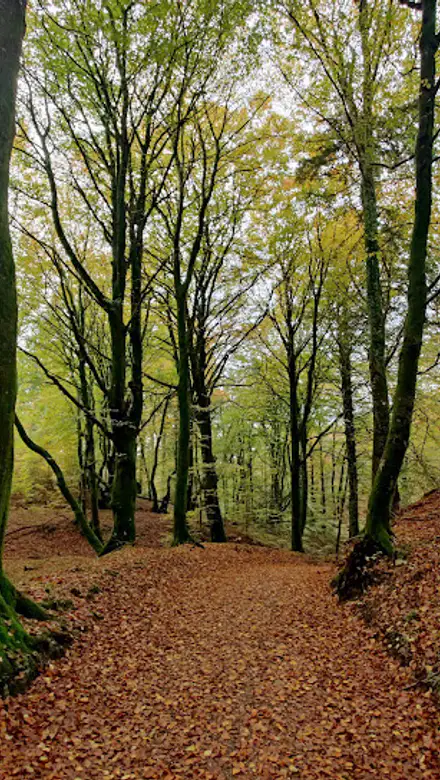
Rold Forest (Rold Skov) spreads across 8,000 hectares of rolling moraine landscape in Himmerland, near Skørping in northern Jutland. Denmark’s largest contiguous forest, it blends dense conifer stands with old beech woods, clear springs, lakes and heath-covered hills. Marked trails for hiking, mountain biking and riding criss-cross a terrain dotted with burial mounds, sunken lanes and old charcoal sites, while rare orchids, abundant wildlife and nearby limestone mines add depth to one of Denmark’s richest nature areas.
On-site amenities
 Restrooms
 Drinking water
 Food options
 Seating areas
 Sheltered areas
 Picnic areas
 Trash bins
 Information boards
 Visitor centre
- Address
- Vælderskoven, 9520 Skørping
Getting there
Regional train and local walk from Aalborg
Car from Aalborg via main roads
Bus connection within Himmerland
Cycling from nearby towns
Discover more about Rold Forest
Ancient woodland at the heart of Himmerland
Rold Forest stretches over some 8,000 hectares on a high moraine plateau in northern Jutland, making it Denmark’s largest continuous woodland. The forest forms a green belt around villages like Skørping, Arden and Rold, yet once you step under the trees you quickly feel removed from everyday life. Hills rise and fall, tracks dive into cool shade, and occasional clearings open to wide skies.The landscape owes its shape to the last Ice Age. Glacial movement left a rolling plateau split by the deep valley of the Lindenborg River, with slopes dropping from around 60–80 metres above sea level to just 10 metres on the valley floor. This dramatic relief creates constant shifts in light, temperature and vegetation as you move between ridges, gullies and low-lying hollows.
Springs, lakes and rare plant life
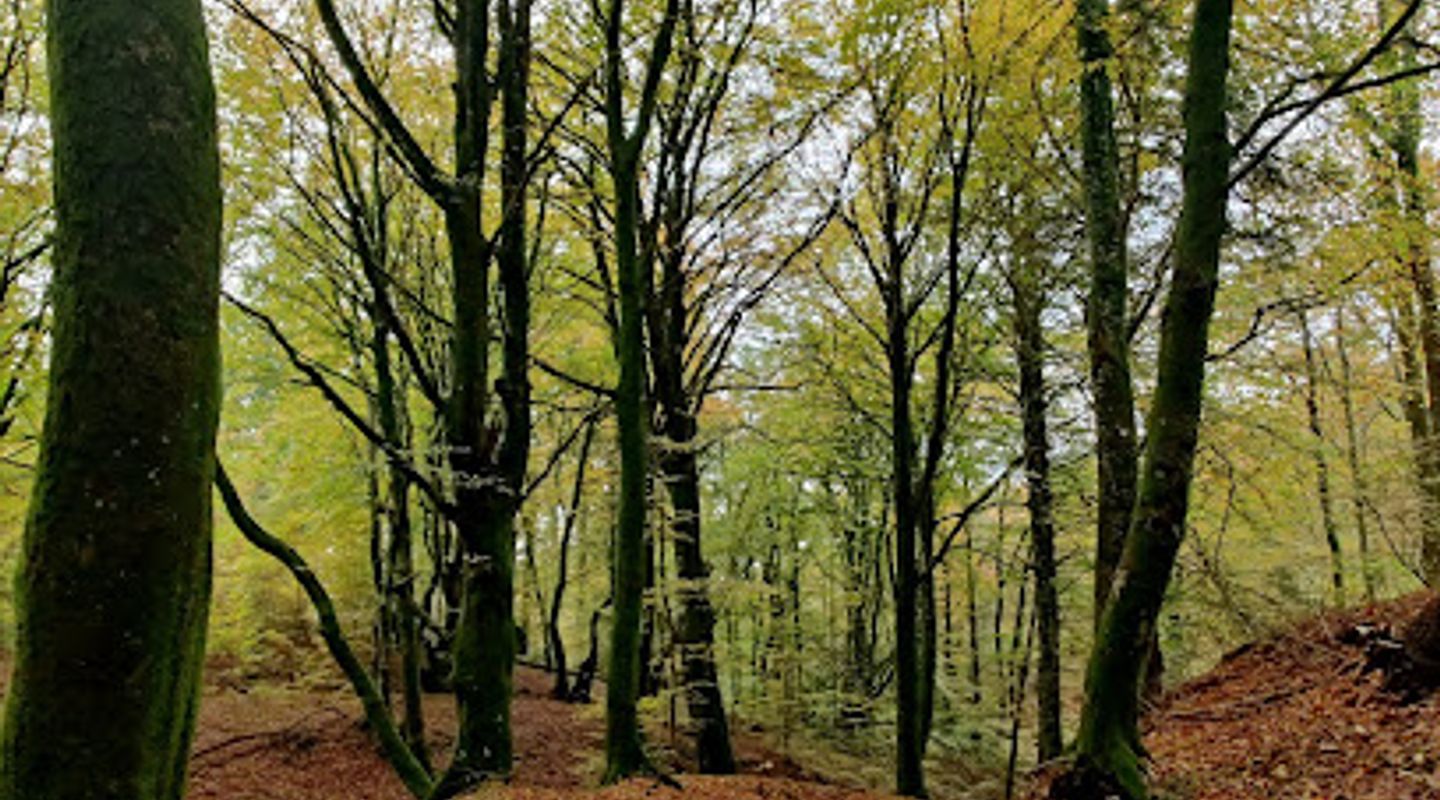
Water defines much of the forest experience. From the chalk-rich underground, some of Denmark’s clearest springs bubble up, feeding streams and small lakes such as Madum Sø and Økssø. In places, the water appears almost impossibly blue or turquoise, framed by moss, overhanging branches and mirror-still reflections.These lime-rich conditions support a surprisingly varied flora. Among the most celebrated plants is the rare lady’s-slipper orchid, protected by law and thriving in a few secluded spots alongside red helleborine, pennywort and blue anemone. Most of the forest is conifer, with tall spruce plantations and mixed stands of pine, but pockets of old beech woodland have been preserved for their atmosphere and biodiversity.
From robber tales to manor estates
Human history runs deep here. Burial mounds from the Bronze Age crown some of the hills, quietly marking millennia of settlement. In other places, old sunken lanes slice through the slopes: former cart tracks eroded into deep trenches by centuries of passage. These hollow ways often converge near former river crossings and clearings, hinting at long-lost trade routes.Folklore is never far away. One notable sinkhole, nicknamed the Robbers’ Room, is said to have sheltered highwaymen who strung tripwires across the road to warn of travellers. Today such stories add a playful shiver to what are now peaceful forest walks. Ownership has historically lain with surrounding manor estates, and even now around three-quarters of the forest remains in private hands, with the rest managed by the Danish Nature Agency.
Trails, tracks and year-round activity
Rold Forest is criss-crossed by marked footpaths, mountain bike routes and bridle trails, ranging from short loops to full-day excursions. Some routes focus on viewpoints over heath-covered hills, others trace shaded stream valleys or circuit lakes with small bathing jetties and picnic spots. In winter, if snow settles, parts of the area are even prepared for cross-country skiing.Families find nature playgrounds, simple campgrounds and shelters suitable for overnight stays, while anglers are drawn to rivers and lakes where permits are available. Cyclists and trail runners appreciate the varied gradients and surfaces, from soft forest floor to sandy tracks. Wayfinding is generally well supported by maps and information boards at key access points.
Protected landscapes and living wildlife
Much of Rold Forest forms part of the Natura 2000 network and an internationally recognized wetland area, reflecting its importance for habitats and water systems. The mix of conifers, deciduous stands, wetlands and open heaths supports red deer, foxes, badgers, numerous bird species and several bat species, particularly around nearby limestone mines.Visitors are encouraged to tread lightly: stick to paths where requested, avoid disturbing wildlife, and leave plant life untouched—especially orchids. With thoughtful use, the forest offers a blend of quiet nature immersion, cultural discovery and outdoor adventure, all within a single, remarkably varied landscape.
Evendo Review Centre
 Google
Guest reviews
Best time to go
Quietest: Jan, Feb & Mar · before 6am or from 9pm
Busy times are Evendo estimates for a typical year, to help you plan. Actual crowds vary with events, school holidays and the weather.
Explore Rold Forest on the map
A handpicked selection of must-see spots near Rold Forest, mapped for you.
Get your free copy of our complete guide to Rold Forest, delivered straight to you.
Everything on this page, from opening hours and how to get there to Eve’s tips and the best time to go, in one PDF you can read offline, print or share.
Already have an account? Sign in
Your Rold Forest guide is ready.
We'll send it to · Not you? Sign out

Getting your guide ready…
We are putting together a fresh copy of the Rold Forest guide. This can take up to a minute.
This can take a few moments. If your browser asks, choose Allow so the download can start. You'll find the guide in your Downloads folder.
Nothing happened? Download it again
Sorry, the guide is taking longer than usual. Please try again in a minute, or get it by email instead.
Other nearby places you may find interesting
The closest places of the same kind, if this one is not quite what you had in mind.
-
-
-
-
-


Swipe for more places
More to explore near Rold Forest

 Best experiences near Rold Forest
 Best hotels near Rold Forest
 Best landmarks near Rold Forest
 Best attractions near Rold Forest
 Best shops near Rold Forest
 Best restaurants near Rold Forest
 Best bars near Rold Forest
Do you manage this location?
Take control to get all the benefits, like improved information, better appearance, and stronger visibility across AI-powered discovery.
Explore more

Explore more of Rold Skov
Explore Rold Skov, Denmark's largest forest, teeming with ancient trees, diverse wildlife, and a wealth of outdoor activities for nature lovers and history enthusiasts alike.
Explore Rold Skov
Explore more of Denmark
Discover Denmark: A perfect blend of history, modern design, and the cozy concept of hygge. Explore vibrant cities, serene landscapes, and world-class cuisine.
Explore Denmark