Background

Culture Tower on Knippels Bridge (Kulturtårnet på Knippelsbro)

A slender copper bridge tower above Copenhagen’s harbour, once reborn as an intimate cultural hideaway with panoramic views from the heart of Knippelsbro.

4.5

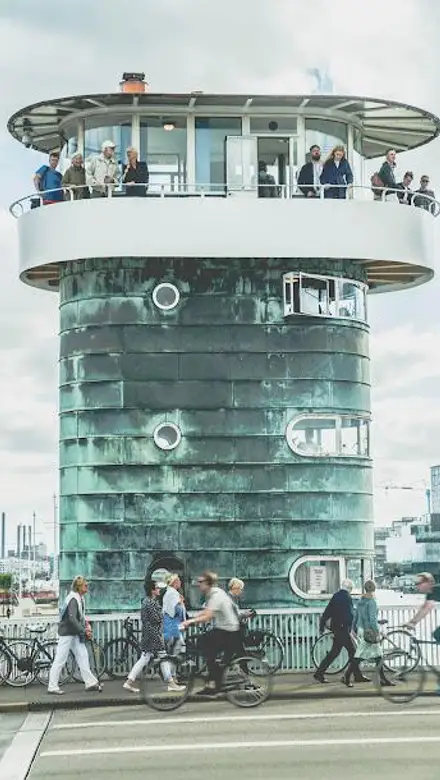
Perched on the Christianshavn-side tower of Copenhagen’s iconic Knippelsbro, the Culture Tower transformed an 80-year-old copper bridge watchtower into an intimate cultural space with wraparound harbour views. Inside the slender, verdigris-clad structure, guests once climbed a narrow stair to compact rooms used for exhibitions, talks, dinners, radio experiments and a tiny café-bar serving drinks and simple dishes above the water. Although the venue is now permanently closed, the tower remains an evocative landmark, illustrating how industrial infrastructure can be reimagined as a miniature cultural lighthouse for the city.

A brief summary to Culture Tower on Knippels Bridge

  • Knippelsbro 2, Indre By, Indre By, 1400, DK
  • +4528712815
  • Visit website
  • Duration: 0.5 to 1 hours
  • Free
  • Environment icon Outdoor
  • Mobile reception: 5 out of 5

Local tips

  • Even though the Culture Tower is closed, walk across Knippelsbro on the Christianshavn side to see the green copper tower up close and appreciate its functionalist details.
  • Pause mid-bridge beside the tower to look both up and down the harbour; this spot offers a classic Copenhagen waterside panorama without needing a formal viewing platform.
  • Visit in the late afternoon for softer light on the copper cladding and reflections on the water, ideal for photographs of the tower and the surrounding skyline.
widget icon

Getting There

  • Metro

    Take the M1 or M2 metro line to Christianshavn Station, then walk about 10–15 minutes toward the harbour to reach Knippelsbro and the Culture Tower area. Metro trains run every few minutes throughout most of the day, and a single-zone ticket within central Copenhagen typically costs around 20–25 DKK. Stations and trains are step-free, making this option convenient for travellers with limited mobility.

  • City Bus

    Several city bus lines run along the harbourfront and through the inner city, with stops within roughly a 10-minute walk of Knippelsbro. Depending on your starting point, the ride will usually take 10–25 minutes. Standard bus tickets within the central zones are in the range of 20–25 DKK per journey, and buses generally operate at least every 10–20 minutes during daytime, with reduced frequency late at night.

  • Bicycle

    Cycling is one of the easiest ways to reach Knippelsbro, which is a major link in Copenhagen’s bike network. From most central neighbourhoods you can expect a 5–20 minute ride along marked cycle lanes. The bridge has dedicated bike tracks separated from car traffic, but it can feel busy at peak commuter times. If you use a pay-as-you-go rental bike, plan for a cost of roughly 10–30 DKK for short trips within the inner city.

  • On Foot

    From central Copenhagen, Knippelsbro is comfortably walkable as part of a harbour or canal stroll, typically taking 10–25 minutes depending on where you start. The route is flat and paved, suitable for most visitors, though crossings near the bridge can be crowded with cyclists during rush hours. Walking lets you appreciate the approach to the tower, the changing views along the quays and the play of light on the harbour.

Culture Tower on Knippels Bridge location weather suitability

  • Weather icon Clear Skies
  • Weather icon Mild Temperatures
  • Weather icon Cold Weather
  • Weather icon Any Weather

Unlock the Best of Culture Tower on Knippels Bridge

Buy tickets

    No tickets available

Book tours with entry

    No tours available

Book tours without entry

    No tours available

Discover more about Culture Tower on Knippels Bridge

From working bridge tower to cultural hideaway

The Culture Tower occupies the southern tower of Knippelsbro, the bascule bridge that links Copenhagen’s historic inner city with Christianshavn across the harbour. Built in 1937, the original towers were functional spaces for bridge officers, filled with control rooms, boilers and equipment used to raise the bridge for passing ships. For decades they were off-limits to the public, their copper cladding slowly weathering into the distinctive green patina now familiar from the 200-kroner banknote. In 2017 this once-private industrial space was carefully renovated and opened as Kulturtårnet, or the Culture Tower. Instead of dials and levers, its compact floors began hosting cultural events, intimate dinners and a small café, turning a piece of transport infrastructure into one of Copenhagen’s most unusual gathering places. The transformation kept the raw character of the tower while adding warm materials and lighting to make the narrow rooms feel welcoming.

Architecture suspended above the harbour

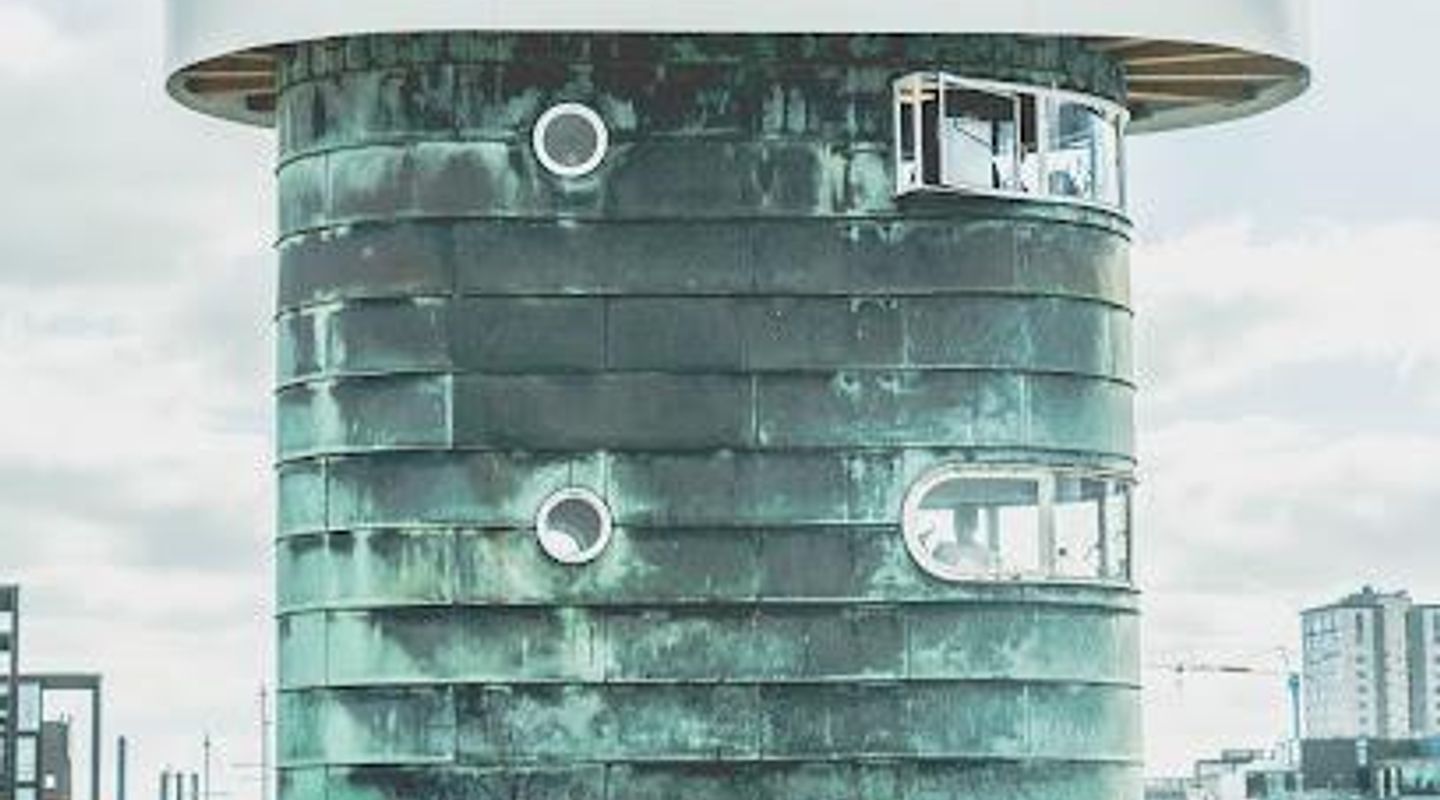
Seen from the bridge, the tower rises like a slim, teal periscope, its copper skin and small windows echoing the functionalist lines of the 1930s bridge beneath. The structure is only a few metres across, so every level feels close to the surrounding water and traffic. Steel, timber and copper define the interior, with low ceilings, porthole-like openings and built-in benches emphasising the tower’s maritime and mechanical heritage. A steep internal staircase coils upwards through several compact floors, each landing revealing a slightly different angle on the harbour, the city skyline and the bustle of cyclists streaming across Knippelsbro. At the top, doors lead to a tiny outdoor deck that seems to hover above the shipping lane. From here you can trace the line of the harbour north and south, watch small boats pass beneath the bridge and see the bridge leaves when they rise for taller vessels.

Harbour views with an intimate scale

What made the Culture Tower unusual was its combination of dramatic outlook and small scale. Instead of a vast viewing platform, guests found just a handful of tables and chairs inside, often arranged for a single event or communal meal. This gave the tower a living-room atmosphere despite its exposed position above the water. Candles, simple tableware and soft lighting contrasted with the constant movement of ships and bicycles outside the windows. The café-bar operated on a similarly modest scale, serving coffee, wine and changing menus tied to special evenings such as themed dinners or seasonal tastings. With only a few seats available, every visit felt like entering a secret nook of the city rather than a large venue. The sense of being suspended between city and harbour, indoors and outdoors, was central to the experience.

A stage for small-scale culture and experimentation

Beyond food and drink, the tower functioned as a micro–cultural institution. Curators and collaborators used the different levels for art installations, sound pieces, talks and radio productions that made playful use of the tower’s acoustics and views. The narrow plan encouraged creative staging: an exhibition might unfold floor by floor as visitors climbed, or a listening session could take place with guests seated close together along the walls. Kulturtårnet also highlighted Copenhagen’s wider harbour regeneration, demonstrating how overlooked industrial structures could be repurposed rather than demolished. Its programme often reflected maritime themes, urban life and experimental culture, tying the building’s working past to contemporary creative practice in the city.

Legacy of a closed but iconic lookout

Although the Culture Tower as an active venue is now permanently closed, the structure itself remains a striking landmark on Knippelsbro. Cyclists and pedestrians still pass within metres of its copper cladding, and the tower continues to mark the threshold between old town and Christianshavn. Its image on national currency and in architectural guides underlines its symbolic role in Copenhagen’s identity. For travellers, the closed tower is still worth seeking out as part of a walk across the harbour. Standing beside it, you can imagine the layered histories inside: bridge keepers monitoring ship traffic, artists reimagining the space for new audiences, and diners sharing a meal above the water. The Culture Tower’s story captures how even the most utilitarian structures can be re-envisioned as places of culture, community and unexpected perspective.

Busiest months of the year

Busiest hours of the day

Popular Experiences near Culture Tower on Knippels Bridge

Popular Hotels near Culture Tower on Knippels Bridge

Select Currency