The Lakes (Søerne), Copenhagen
Copenhagen’s elegant chain of city lakes, where historic defenses have become a beloved everyday escape of waterside paths, birdlife, cafés and skyline reflections.
From Defensive Moat to Urban Oasis
The Lakes, known in Danish as Søerne, form a graceful arc along the western edge of Copenhagen’s historic core, separating the old city from the lively neighbourhoods of Nørrebro, Frederiksberg and Østerbro. Today they feel like a natural part of the cityscape, but their origins lie in medieval engineering. What was once a meandering stream was progressively dammed and reshaped to provide water for mills, drinking supplies and, crucially, defensive moats guarding the expanding town. Over centuries, this functional water system was formalised into three distinct basins: Sankt Jørgens Sø to the south, Peblinge Sø in the middle, and Sortedams Sø to the north. Each was straightened, edged and regulated, turning a practical barrier into a defining feature of Copenhagen’s topography. Walking here, you are literally tracing the line where old Copenhagen once ended.Three Characterful Basins in the Heart of the City
Although they appear as one continuous strip of water, each of the three lakes has its own character. Sankt Jørgens Sø is the deepest, with gently sloping banks and broad views towards the planetarium and surrounding boulevards. Peblinge Sø and Sortedams Sø are edged by stark granite walls, giving them a more formal, canal-like profile that contrasts beautifully with the soft light and swaying trees. A full loop around all three lakes covers just over six kilometres, making it an ideal distance for a steady walk or jog. As you circle the water, the skyline shifts from copper spires and church towers to stately apartment blocks and contemporary glass offices. Bridges at key points allow you to cross and stitch together your own route, whether you have ten minutes or an entire afternoon.Everyday Playground for Locals
Few places illustrate Copenhagen’s outdoor culture as clearly as The Lakes. The encircling paths are a constant flow of joggers, dog walkers and cyclists, while benches and low walls become impromptu living rooms the moment the sun appears. Parents push prams along the gravel tracks, students gather with takeaway coffees and friends meet for a slow stroll as the city hums in the background. The water itself is dotted with birdlife. Ducks, swans and coots patrol the surface, and two small man‑made islands in Sortedams Sø serve as protected breeding spots, turning parts of the lake into seasonal nurseries. In particularly cold winters, when the ice is officially declared thick enough, large sections may open for walking and skating, transforming the lakes into a temporary winter park.Seasonal Moods and Changing Light
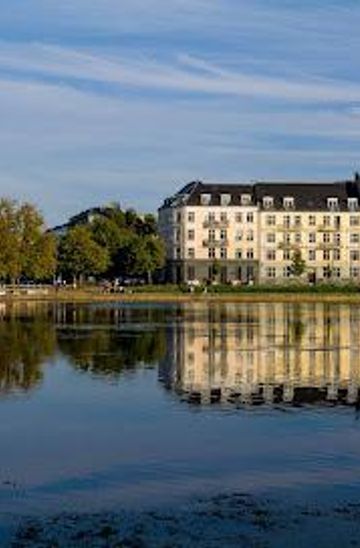
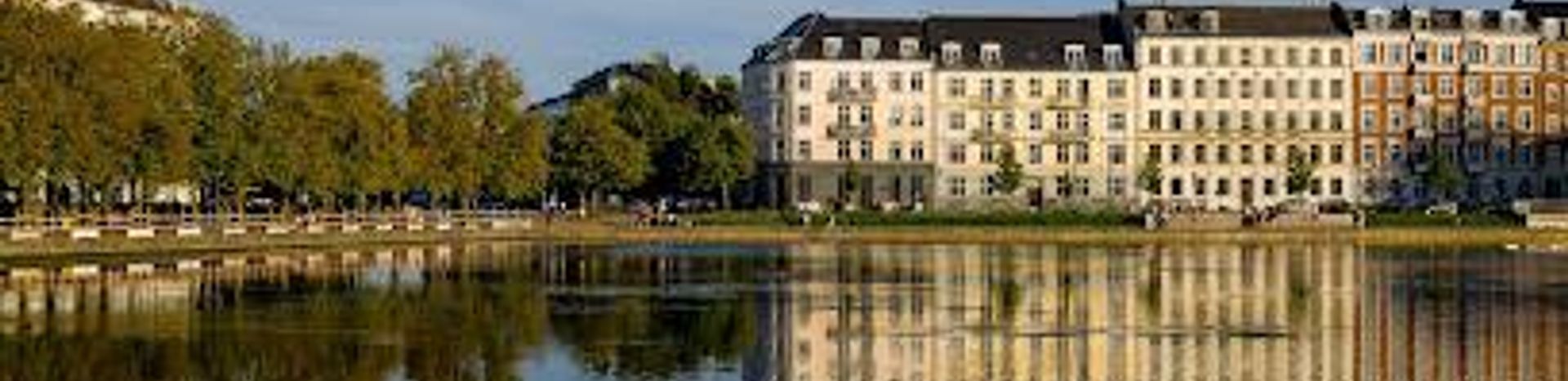
Part of the charm of The Lakes is how dramatically they change with the seasons. Spring brings a soft haze of fresh leaves and longer light, ideal for unhurried circuits before or after a day in the city. In summer, grassy embankments and low quays become popular spots for picnics, with people dangling their feet over the water until late evening. Autumn paints the tree‑line in copper and gold, and calm days create mirror‑like reflections that make the city look theatrical and almost unreal. Even in winter, the stark silhouettes of bare branches, low northern light and drifting mist give the lakes a quiet drama. Whenever you visit, you will see Copenhageners adjusting effortlessly, swapping running shoes for scarves and thermos flasks as the months turn.Cafés, Quiet Corners and City Perspectives
The streets lining The Lakes are dotted with small cafés, bakeries and casual restaurants, many with window seats that look straight onto the water. It is easy to pick up a pastry, coffee or sandwich and find a low wall or bench with a view. Some historic pavilions along the shore now house restaurants and bars, their decorative facades hinting at a past of skating clubs and social gatherings. Despite being so central, there are plenty of quiet corners. Side paths lined with willows or poplars muffle traffic noise, and small landings let you pause close to the waterline. From here, you can watch cyclists gliding along the boulevards, buses crossing the bridges and clouds sliding over the skyline, all while feeling slightly removed from the rush. The Lakes are less about ticking off a sight and more about slipping into the city’s rhythm for a while.Part of Copenhagen’s Green and Blue Network
The Lakes link naturally into Copenhagen’s wider web of parks, canals and harbour spaces. Together they help cool the city in summer, provide habitat for urban wildlife and offer residents and visitors a generous, car‑free corridor of space. For many locals, a day moves to the gentle pulse of Søerne: a morning run, a lunchtime sandwich on a bench, a sunset walk home from the office. Spending time here gives you a sense of how closely everyday life in Copenhagen is tied to water. The Lakes are not a dramatic, once‑in‑a‑lifetime sight; they are something more subtle and perhaps more compelling – a calm, reflective strip of blue that anchors the city and invites you to slow down with it.Local tips
- Walk the full 6+ km circuit around all three lakes to appreciate how the skyline and neighbourhoods change from south to north.
- Bring a reusable cup or bottle; many nearby cafés will happily fill it, and there are places to sit almost everywhere along the banks.
- Visit at sunrise or late evening in summer for the most atmospheric light and calmer paths, especially near Peblinge and Sortedams Sø.
- In very cold winters, only step onto the ice if local authorities have officially opened the lakes for walking or skating.
- Use the lakes as a gentle orientation line: the city centre lies to the east, while lively residential districts spread out to the west.
A brief summary to The Lakes
- Copenhagen, Indre By, DK
Getting There
-
Metro
From central Copenhagen, the most convenient access is via Nørreport or Forum metro stations, both a short walk from the lakeshore. Metro lines M1, M2 and M3 serve Nørreport frequently, with journeys from other inner‑city stations typically taking 3–8 minutes. A single zone ticket within the city costs roughly 20–25 DKK and the metro runs every few minutes for most of the day, with reduced frequency late at night.
-
Bus
Several city bus routes run along the boulevards that follow The Lakes, linking them with areas such as Vesterbro, Nørrebro and Østerbro. Typical journey times from these districts range from 10 to 20 minutes, depending on traffic. Standard city bus tickets are integrated with the metro system and cost around 20–25 DKK per trip within central zones, with services operating from early morning until late evening.
-
Bicycle
Copenhagen’s extensive cycle lanes make reaching The Lakes by bike straightforward from most neighbourhoods. Rides from the city centre, Nørrebro or Frederiksberg usually take 5–15 minutes at an easy pace. You can use bike‑share schemes or rental shops, which generally charge from about 100–150 DKK per day for a standard city bike. Cycle lanes run parallel to the water, but the gravel paths along the shore can be busy with pedestrians, so ride considerately.
-
Walking
From the historic centre around City Hall Square or the main shopping streets, The Lakes are within a comfortable 10–20 minute walk, depending on your starting point. The approach is flat and paved, suitable for most visitors with basic mobility, though some crossings involve cobblestones. Weather can change quickly, so bring layers and waterproofs in cooler months if you plan to explore the full lakeside circuit on foot.