Dronning Louises Bro
An elegant 1887 granite bridge uniting Copenhagen's city centre with vibrant Nørrebro, crowned by neon lights and historic charm.
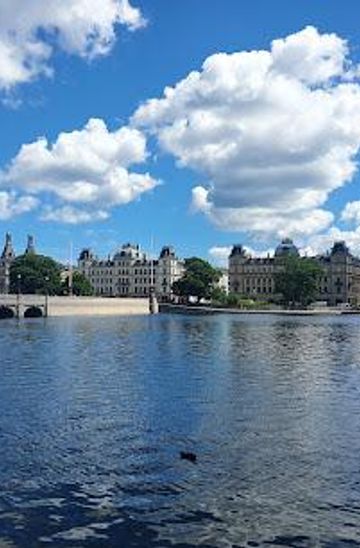
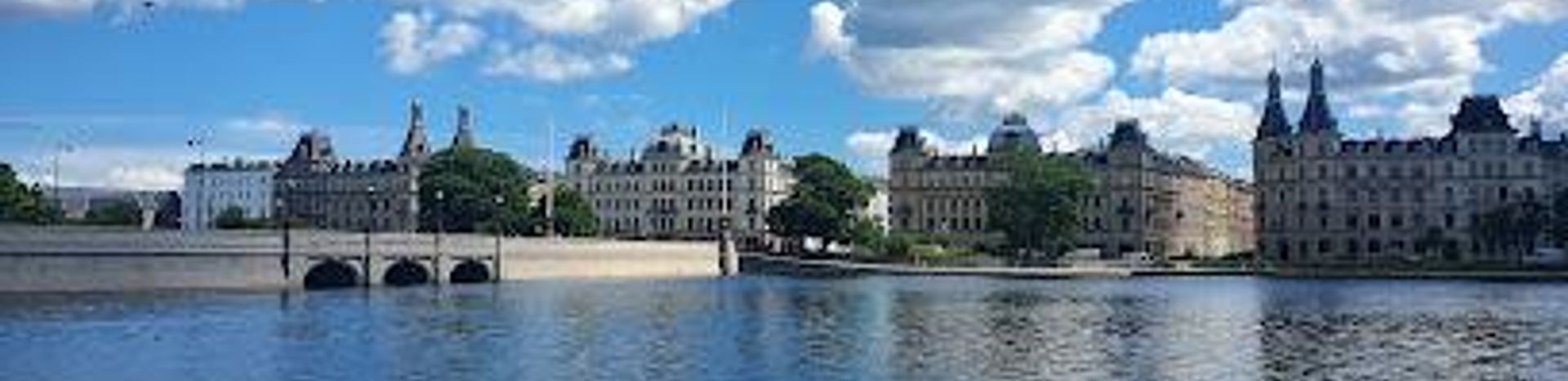
Queen Louise's Bridge is an iconic 1887 granite landmark spanning Copenhagen's central lakes, connecting the city centre with the vibrant Nørrebro district. Designed by architect Vilhelm Dahlerup in French Empire style, this beloved crossing features elegant arches, cast-iron railings decorated with bronze cartouches, and integrated lampposts. The bridge serves as both a vital urban artery and a cherished social gathering space, offering evening views of Nørrebro's famous neon lights and providing access to nearby cultural attractions.
A brief summary to Dronning Louises Bro
- Søtorvet 2, Copenhagen Municipality, Indre By, 1371, DK
- Click to display
- Click to display
- Duration: 0.5 to 2 hours
- Free
-
 Outdoor
- Mobile reception: 5 out of 5

Know before you go
Hi, I'm Eve. Here are a few practical things to know before exploring Dronning Louises Bro.
- Visit in the evening to experience the bridge's most iconic view: the neon lights of Nørrebro reflected in the lakes, particularly the famous Irma hen sign that has illuminated the district since 1953.
- Walk the stone edges and gravel paths around the lakes (created in 1928) on either side of the bridge for peaceful views and to appreciate the surrounding urban landscape and historic apartment buildings.
- Explore the nearby Torvehallerne food halls and Israels Plads, which occupy the site of the historic market that once depended on this bridge for daily produce deliveries.
- Examine the cast-iron railings up close to appreciate the bronze cartouches featuring Copenhagen's coat of arms and the integrated lampposts that form part of the bridge's unified design.
- Visit on a mild day—even in November, sufficient sunshine can make the bridge comfortable for lingering and observing the constant flow of commuters, cyclists, and tram traffic.
Do you manage this location?
Take control to get all the benefits, like improved information, better appearance, and stronger visibility across AI-powered discovery. Learn more
Activate your presenceOther nearby places you may find interesting
Getting There
-
Metro and Walking
From Copenhagen Central Station, take the Metro Line M1 or M2 towards Vanløse or Lufthavn, exiting at Nørreport Station (approximately 5–8 minutes). From the station, walk northwest through Israels Plads for approximately 400 metres to reach the bridge's southern entrance. Total journey time: 15–20 minutes. The route is fully accessible and well-signposted.
-
Bicycle
Copenhagen's extensive cycle network connects directly to the bridge. From the city centre, follow dedicated cycle lanes northward along Frederiksborggade or use the main cycle routes converging on Nørreport. Journey time from central Copenhagen: 10–15 minutes depending on starting point. Note that the bridge accommodates cyclists, though space is shared with vehicular traffic during peak hours.
-
Tram
Multiple tram lines serve the bridge area. Tram lines 5, 14, and 16 run across or near the bridge, connecting it to the city centre and Nørrebro. Journey time from Kongens Nytorv (city centre): approximately 8–12 minutes. Trams run frequently throughout the day and evening, with reduced service after midnight.
-
Walking from City Centre
From Kongens Nytorv or Strøget (the main shopping street), walk northwest through the city centre for approximately 1.2 kilometres, following Frederiksborggade as it leads directly to the bridge. The route is flat, well-lit, and passes through vibrant commercial and residential areas. Total walking time: 15–20 minutes.
For the on-the-go comforts that matter to you
-
 Seating Areas
-
 Information Boards
Discover more about Dronning Louises Bro
A Bridge Born from Urban Expansion
Dronning Louises Bro, or Queen Louise's Bridge, opened on 7 September 1887 as a response to Copenhagen's explosive growth during the late 19th century. The city's fortifications had been demolished around 1870, opening vast areas for development and dramatically increasing foot and carriage traffic across the lakes. The bridge was named in honour of Queen Louise, the consort of King Christian IX, reflecting a symbolic shift in Danish society as the absolute monarchy gave way to more democratic governance. This elegant structure replaced two earlier crossings: a wooden bridge dating from the 16th century and a combined embankment-and-drawbridge built by Christian IV in 1618–1620.Architectural Elegance and Design Innovation
Architect Vilhelm Dahlerup designed the bridge in the French Empire style, creating a structure of enduring beauty and engineering sophistication. The bridge is constructed of granite and features three graceful arches that span the gap between Sortedam Lake to the northeast and Peblinge Lake to the southwest. The cast-iron railings are decorated with four identical bronze cartouches featuring Copenhagen's coat of arms surrounded by weapons, helmets, and lions—a heraldic flourish that speaks to the bridge's importance as a gateway to the city centre. Eight lampposts and four flagpoles are integrated into the railing design, creating a unified aesthetic that has remained largely unchanged since its completion. The bridge was listed as a protected heritage structure in 1997, recognising its architectural and historical significance.A Witness to Copenhagen's Evolution
For over a century, Dronning Louises Bro has served as a silent witness to Copenhagen's transformation. The bridge connects Frederiksborggade in Indre By (the city centre) with Nørrebrogade in Nørrebro, making it one of the city's primary arteries for commuter traffic. In the 1980s, the bridge was reconfigured to accommodate six lanes of vehicular traffic—two lanes in each direction plus a central tram line—though this modernisation reduced the pedestrian pavements to just 3 metres wide. The surrounding landscape has evolved dramatically as well: the stone edges and wide gravel paths around the lakes that are now popular for walking were only created during restoration work in 1928. The bridge has hosted celebrations of national importance, including jubilant gatherings following Denmark's liberation in World War II, and continues to serve as a gathering point for peaceful demonstrations and civic events.The Bridge in the Urban Landscape
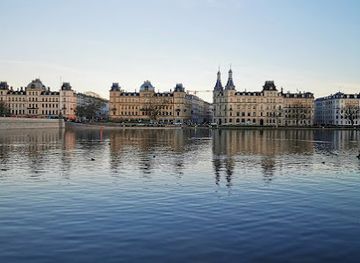
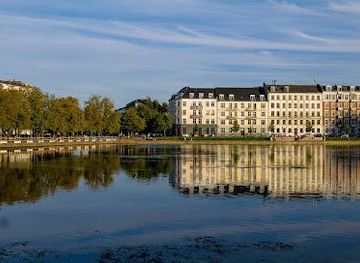
The bridge's significance extends beyond its function as a crossing. The grand apartment buildings on the city side of the bridge, known as Søtorv, were designed in the style of French châteaux with a combined frontage of 240 metres toward the lakes. Flanking the bridge on the city side are statue groups representing the Tiber and the Nile, reflecting ambitious urban planning aspirations of the late 19th century. The bridge originally served as a main route for produce entering the city, supporting the food market that once occupied the large open square nearby. Today, that historic market has evolved into the incredibly popular Torvehallerne food halls and Israels Plads, which remain vibrant cultural destinations.Evening Spectacle and Contemporary Life
In the evening, the bridge offers one of Copenhagen's most memorable views: the famous neon lights of Nørrebro illuminate the skyline, with the beloved Irma hen—a vintage neon sign laying electric eggs since 1953—standing out as an iconic symbol of the district's character. The bridge has transformed from a purely functional crossing for horse-drawn carriages into a beloved social hub where locals and visitors alike pause to enjoy views across the water, watch the changing light on the lakes, and experience the rhythm of urban life. Even in November, sufficient sunshine can warm the bridge enough for people to sit and chat, making it a year-round destination. The crossing remains a vital commuter route, with thousands of people traversing it daily during morning and evening rush hours, yet it retains its capacity to inspire and delight those who take time to appreciate its architectural grace and historical resonance.Explore the best of what Dronning Louises Bro has to offer













More about North Zealand
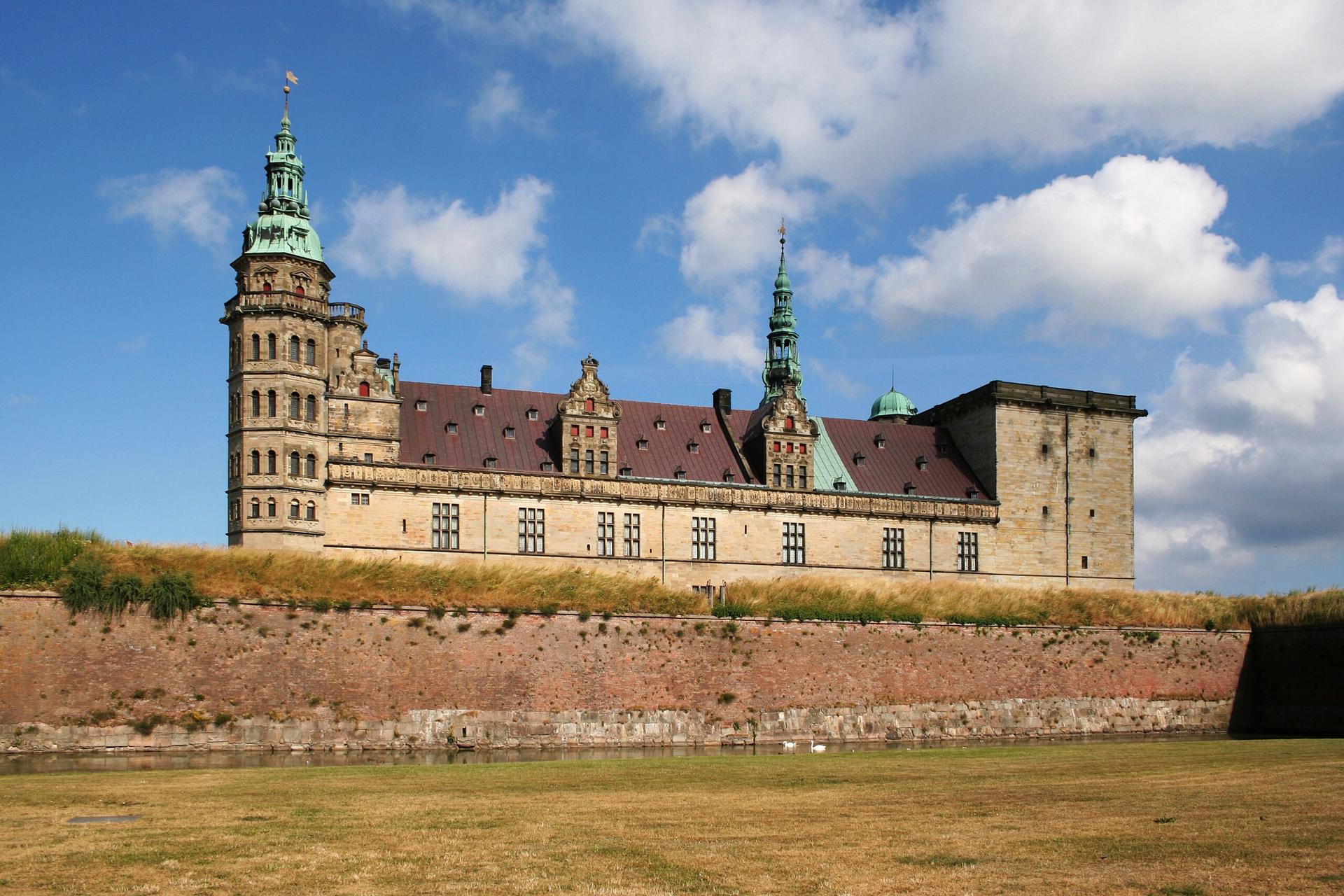
Explore North Zealand, Denmark's enchanting region of castles, beaches, and royal estates, perfect for history buffs, nature enthusiasts, and seaside lovers.
Tell me more about North Zealand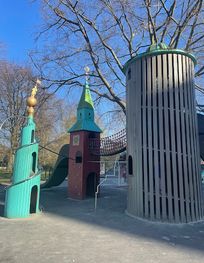
Award-winning Copenhagen playground where kids explore & climb miniature city towers; centrally located in Fælledparken with family-friendly facilities.
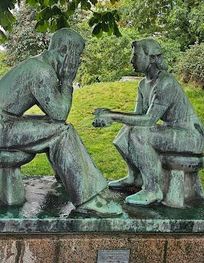
Historic corner of the Søtorvet ensemble, where neo‑Renaissance facades, lake reflections and memories of a legendary poets’ café meet at the city’s watery gateway.