Augustenborg Palace (Augustenborg Slot)
Ducal baroque palace on Augustenborg Fjord, with atmospheric gardens, a historic church and stories linking noble life, politics and Hans Christian Andersen.
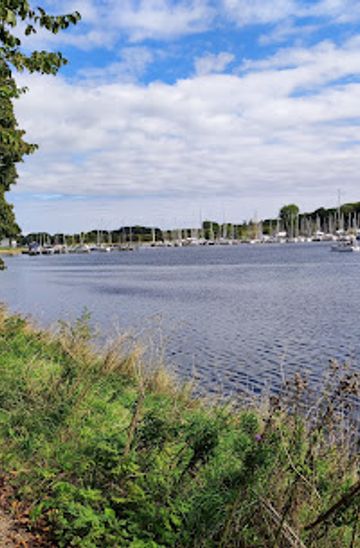
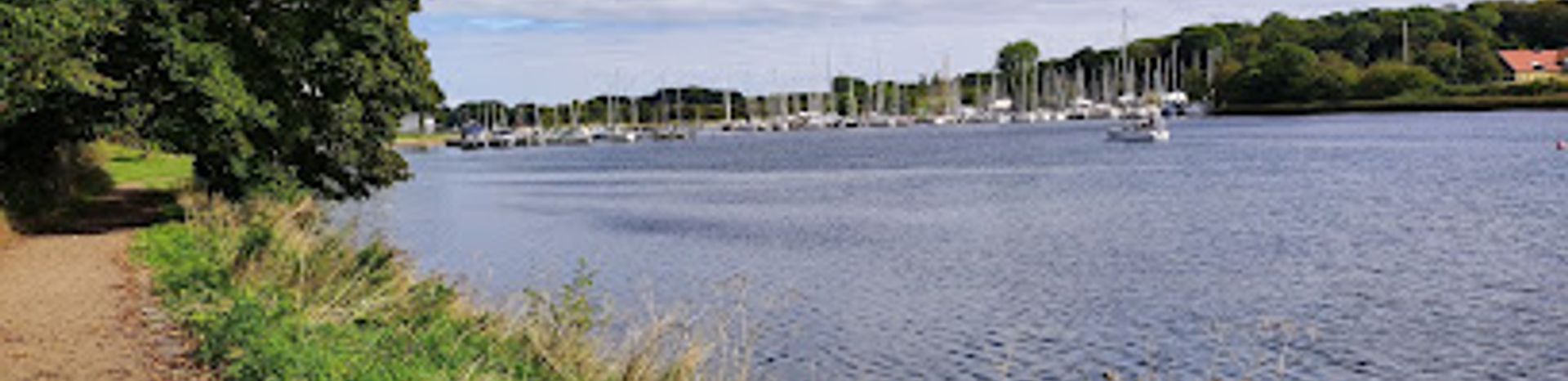
Augustenborg Palace is a late Baroque–Rococo residence set on the shores of Augustenborg Fjord on the island of Als in Southern Denmark. Once the seat of the ducal House of Augustenborg, the yellow-walled, blue-roofed palace is now an administrative building with no general public access, but its atmospheric church, landscaped park and waterfront gardens remain open. Strolling the grounds reveals sweeping lawns, historic linden trees linked to Hans Christian Andersen and quiet paths with views across the fjord.
A brief summary to Augustenborg Palace
- Augustenborg Slot, Augustenborg, 6440, DK
- Click to display
- Duration: 1 to 3 hours
- Free
-
 Mixed
Mixed
- Mobile reception: 4 out of 5

Know before you go
Hi, I'm Eve. Here are a few practical things to know before exploring Augustenborg Palace.
- Plan to explore mainly the park, waterfront and church; the main palace itself is an active government building and generally not open for interior visits.
- Bring comfortable shoes for walking the gardens and forest paths, which can be damp and uneven after rain, especially near the fjord and wooded sections.
- Check local information in advance for church opening times or special events, as access to the palace chapel varies and services take precedence.
- Allow time to visit the small mini‑museum at the gatehouse and, if open, the nearby Augustiana art centre to better understand the estate’s history and art.
- Pack a light picnic or snack to enjoy on the lawns with fjord views, and carry a windproof layer as breezes over the water can feel cool even in summer.
Do you manage this location?
Take control to get all the benefits, like improved information, better appearance, and stronger visibility across AI-powered discovery. Learn more
Activate your presenceOther nearby places you may find interesting

Getting There
-
Regional bus from Sønderborg
From Sønderborg’s central area, take a regional bus toward Augustenborg; typical services run at least hourly on weekdays and less frequently on weekends. The ride usually takes around 20–30 minutes, and adult single tickets generally cost about 25–40 DKK depending on zone and purchase method. Buses stop in the town of Augustenborg, from where you continue on foot through level, paved streets to reach the palace and gardens. Services can be reduced on public holidays, so check the timetable in advance.
-
Car from Sønderborg and Als region
Driving from Sønderborg or elsewhere on Als, you can reach Augustenborg in roughly 15–25 minutes via the island’s main roads. The route is straightforward and mostly on well-maintained two-lane roads with gentle curves. Parking is typically available in designated public areas in Augustenborg, within walking distance of the palace complex; some spaces may have time restrictions but are usually free of charge. The approach is flat and suitable for most drivers year-round, though winter conditions can occasionally require more caution.
-
Cycling on Als
Augustenborg lies along pleasant cycling terrain on Als, making it an appealing stop on a day ride from Sønderborg or nearby villages. Expect about 45–75 minutes of cycling from Sønderborg depending on your route and pace, mostly on gentle, rolling roads and occasional cycle paths. Surfaces are generally good, but be prepared for wind from the fjord and open fields. There is no dedicated bike parking inside the palace, yet you can usually secure your bicycle near public racks or railings in town; remember lights and reflective gear if returning late.
For the on-the-go comforts that matter to you
-
 Restrooms
-
 Drink Options
-
 Food Options
-
 Seating Areas
-
 Picnic Areas
-
 Trash Bins
-
 Information Boards
Discover more about Augustenborg Palace
A ducal residence beside the fjord
Augustenborg Palace anchors the small town of Augustenborg with its long, pale-yellow façades and blue-tiled roofs stretching along the edge of Augustenborg Fjord. Built between 1770 and 1776 in a late Baroque and Rococo idiom, the three-winged main building replaced an earlier half‑timbered manor raised in the 1660s. From the formal courtyard you sense the palace’s former status as one of Southern Denmark’s most important noble residences, the heart of a self‑contained ducal town whose streets and houses were laid out to complement the castle.The palace takes its name from Duchess Augusta, wife of Duke Ernst Günther, and it lent that name in turn to the House of Schleswig-Holstein-Sonderburg-Augustenburg. Generations of dukes used this as their principal seat, shaping both the surrounding landscape and the town’s identity. Even viewed only from the outside, the long, symmetrical wings and gently rising central section convey an air of authority softened by elegant proportions.Layers of history and changing purposes
The palace’s story mirrors the shifting politics of the Schleswig-Holstein region. In the mid‑19th century, Duke Christian August II sided with the German cause during the First Schleswig War. When conflict broke out, the ducal family left Augustenborg and the Danish army took control of the estate. In the decades that followed, the once-private residence became a barracks and later a women’s seminary, its grand rooms adapted to much more utilitarian lives.After the First World War and the border plebiscites, the complex eventually came under Danish state ownership. In the late 1920s, the buildings were converted into a psychiatric hospital, a role they held for more than 75 years. Today, the wards are gone and the palace houses the Danish Agricultural Agency, reflecting yet another chapter in the building’s evolution from aristocratic home to administrative hub. This succession of uses is still legible in the outbuildings and courtyards, which bear traces of both baroque formality and institutional practicality.Gardens shaped by fashion and imagination
Behind the palace, the formal Baroque garden that once extended in strict geometric patterns has long since softened into a landscape park. In the 19th century, tastes shifted toward more naturalistic design, and the grounds were reshaped into sweeping lawns, scattered groves and meandering paths that blend almost seamlessly into the waterscape of the narrow fjord. From many viewpoints, the fjord appears as an elongated garden canal, its surface reflecting both sky and palace.Among the most evocative corners is the area around the old linden trees. One of these is closely associated with Hans Christian Andersen, who visited Augustenborg and is said to have sat here working on stories. A plaque recalls this link, inviting you to imagine the writer looking out over the water. Elsewhere in the park, earth mounds, terraces and remnants of garden structures hint at earlier design phases, including an ice hill that once concealed a deep ice cellar for the ducal household.Art, anecdotes and quiet discoveries
The northern part of the gardens hosts Augustiana, an art centre that occupies former estate buildings and uses the park as an outdoor gallery. Scattered sculptures appear between trees and on grassy knolls, creating small moments of surprise along the paths. Some pieces are subtly integrated into the landscape, while others stand out vividly, including playful works that appeal to children and inject a note of whimsy into the otherwise stately setting.Close to the gatehouse you find a tiny mini‑museum that presents the ducal family’s history and the development of the town and estate. Its compact displays are rich in portraits, plans and objects, giving context to the buildings you see outside. Taken together, the art centre, museum and park create a cultural landscape where stories of power, architecture and everyday life overlap in a relatively small, walkable area.The palace church and the atmosphere today
Although the main palace is not open for casual visits, one wing houses the palace church, which serves as Augustenborg’s parish church. When open, the light-filled interior combines baroque decoration with a sense of restrained dignity, reflecting its origins as a ducal chapel. Even from the courtyard, the church’s tall windows and discrete tower elements add vertical rhythm to the otherwise horizontal composition of the wings.In the present day, Augustenborg Palace feels simultaneously grand and understated. Office workers cross cobbles where carriages once rolled; joggers and dog‑walkers trace routes that were designed for courtly promenades. For visitors, the appeal lies less in lavish interiors and more in ambience: long sightlines to the fjord, the interplay of architecture and greenery, and the knowledge that this quiet corner of Als has played a part in regional history for more than three centuries. A slow circuit of the gardens, with occasional pauses at the water’s edge, is enough to sense why this site was chosen as a residence of dukes.Explore the best of what Augustenborg Palace has to offer













More about South Jutland
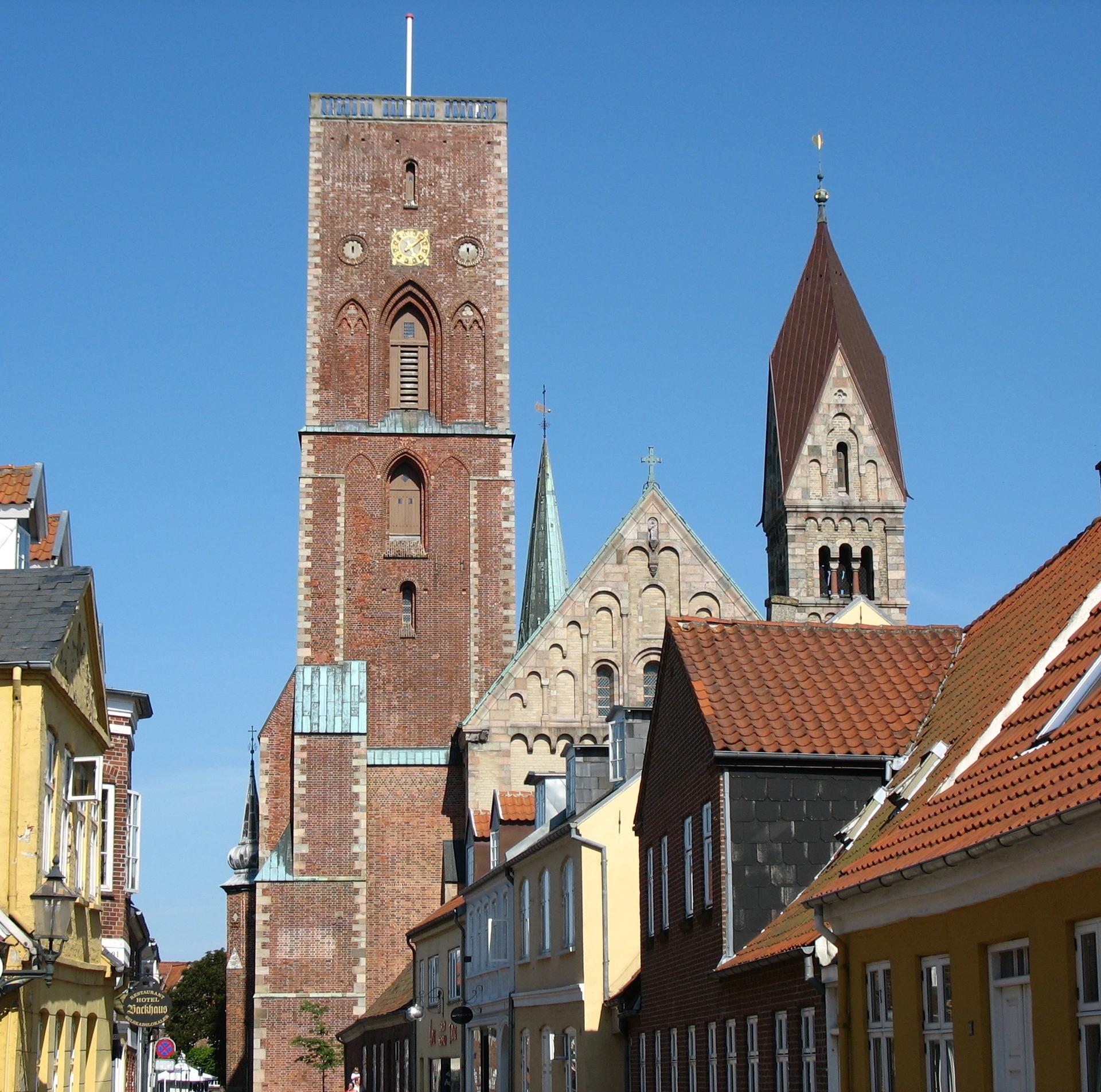
Discover the beauty and charm of South Jutland, Denmark's southern treasure, with its rich history, stunning landscapes, and delightful local cuisine.
Tell me more about South Jutland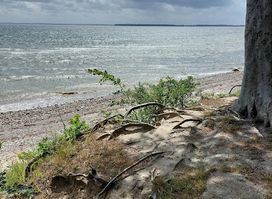
A small coastal information board that opens the door to the historic Gendarmstien’s beach stage between Vemmingbund and Høruphav along the scenic shores near Sønderborg.
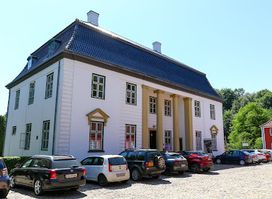
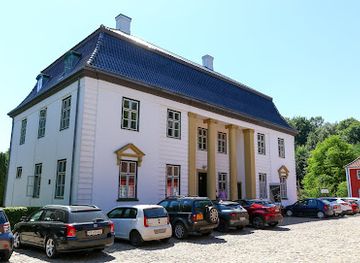
A historic white palace turned contemporary art hub, surrounded by a free, all‑day sculpture park that flows from manicured lawns to the shores of Augustenborg Fjord.