Grønsalen, South Zealand Travel Guide
A vast Stone Age barrow in the fields of Møn, where mythic King Grøn and Queen Fane share a windswept ridge with skylarks and distant sea views.
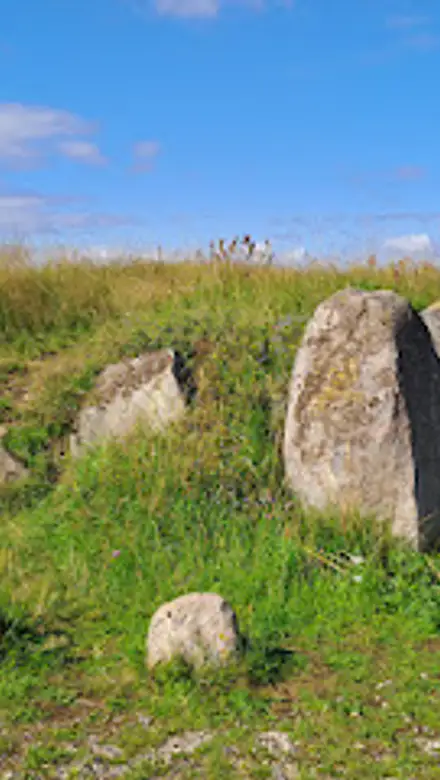
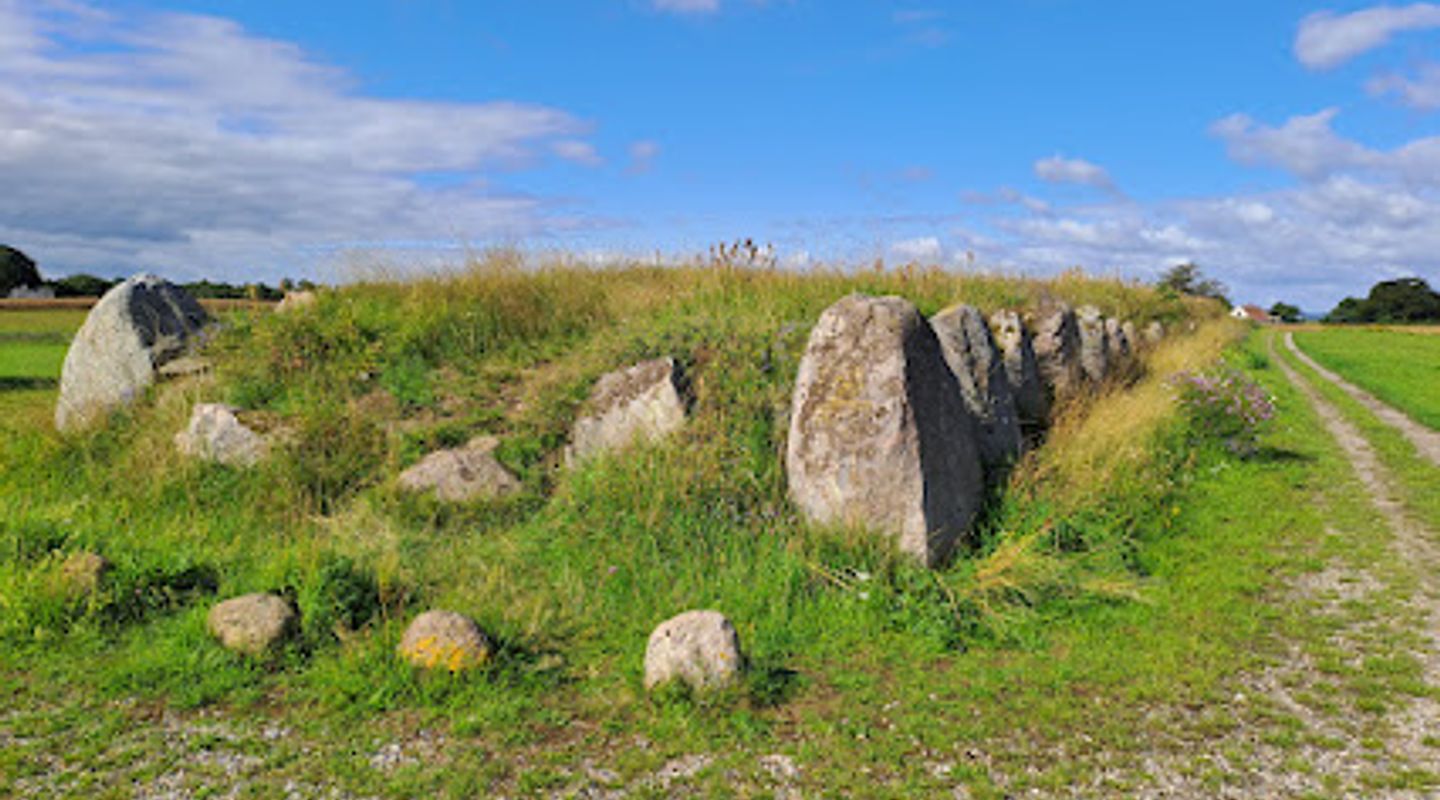
Grønsalen, just inland from the south coast of Møn near Askeby, is one of Denmark’s largest and most atmospheric Neolithic long barrows. Stretching over 100 m through a strip of grass and low trees, this stone-framed mound is linked to legends of King Grøn and his queen Fane, said to rest here. Simple information signs, grazing sheep and views towards Fanefjord create a quiet, timeless setting that invites slow wandering, reflection and photography.
A brief summary to Grønsalen
- Fanefjord Kirkevej 55, Askeby, 4792, DK
- Duration: 0.5 to 1.5 hours
- Free
-
 Outdoor
- Mobile reception: 4 out of 5
- Monday 10:30 am-6 pm
- Tuesday 10:30 am-6 pm
- Wednesday 10:30 am-6 pm
- Thursday 10:30 am-6 pm
- Friday 10:30 am-6 pm
- Saturday 10:30 am-6 pm
- Sunday 10:30 am-6 pm

Know before you go
Hi, I'm Eve. Here are a few practical things to know before exploring Grønsalen.
- Wear sturdy shoes; the grass paths along the barrow can be uneven and slippery after rain.
- Combine your visit with nearby Fanefjord Church to appreciate the wider historic landscape in a single short stop.
- Come early morning or late afternoon for softer light that brings out the contours of the mound in photos.
- Bring water and snacks, as there are no facilities at the barrow itself and only limited options nearby.
- Respect fences, grazing animals and any marked boundaries; parts of the surroundings are privately owned farmland.
Do you manage this location?
Take control to get all the benefits, like improved information, better appearance, and stronger visibility across AI-powered discovery. Learn more about listing your business on Evendo
Activate your presenceOther nearby places you may find interesting
The closest places of the same kind, if this one is not quite what you had in mind.
Explore Grønsalen on the Map
A handpicked selection of must-see spots near Grønsalen, mapped for you.
Getting There
-
Car from Stege (Møn’s main town)
From Stege, driving to Grønsalen typically takes around 20–25 minutes, following the main road across western Møn and minor country roads near Fanefjord. Expect simple two-lane roads with occasional slow-moving farm traffic. Parking is usually free in the small area near the site and church, but spaces are limited in peak summer and on weekends.
-
Regional bus and short walk from Stege
In season, regional buses between Stege and the western part of Møn take about 25–35 minutes, with services running a few times per day. A standard adult single ticket is usually in the range of 30–50 DKK, depending on zones and discounts. From the nearest stop you should allow 15–25 minutes on foot along minor roads and paths, on gently undulating but sometimes uneven ground.
-
Cycling from Askeby village
From Askeby, the ride to Grønsalen generally takes 10–20 minutes by bicycle, using quiet rural roads shared with cars and tractors. The route is mostly flat with a few gentle rises, suitable for casual cyclists. There are no formal bike racks at the barrow, so bring a lock and be prepared to leave your bike off the main path without blocking access or farmland entrances.
For the on-the-go comforts that matter to you
-
 Seating Areas
-
 Information Boards
-
 Trash Bins
Discover more about Grønsalen
An ancient monument in the fields of Møn
Grønsalen lies in gently rolling farmland on western Møn, a slender grass-covered mound edged by large standing stones. At around 100 m in length, it is counted among Denmark’s largest Neolithic long barrows, built in the Funnel Beaker culture more than 5,000 years ago. From a distance it looks like a low green spine in the landscape; up close, the scale and alignment of the stones reveal its deliberate design.The monument sits a short stroll from Fanefjord and its whitewashed church, yet the atmosphere here feels older than the surrounding villages and fields. Skylarks, wind in the hedgerows and the crunch of gravel underfoot do as much to define the place as the archaeology itself.Myths of King Grøn and Queen Fane
Over the centuries, local folklore layered new stories onto this prehistoric grave. Legend has it that the barrow holds the remains of a chieftain known as King Grøn and his wife Fane, rulers of western Møn in a heroic age. Tales describe Grøn as a mighty warrior who defeated giants across the region, his victories echoing the barrow’s imposing length.Whether or not any Iron Age or Viking leader lies here, the storytelling adds a human thread to a site whose original builders left no written record. Standing by the stones, it is easy to imagine processions, rituals and memories anchored to this ridge in the earth.Reading the stones and the landscape
Grønsalen’s outline is defined by dozens of kerbstones, some towering, others tilted or half-sunk into the turf. Within the mound lie several burial chambers, hidden from view but indicated by subtle rises and hollows. Simple information boards help you picture how the tomb may once have appeared, possibly with higher banks and more prominent entrances.The surrounding fields and copses form part of the experience. In clear weather you can see towards Fanefjord Church and the coastline, framing the barrow within a broader cultural landscape that links Stone Age tombs, medieval faith and present-day farming.A quiet stop on walking routes
Many long-distance hikers on the island’s walking trails plan a pause at Grønsalen. Short grass paths lead along both sides of the mound, allowing you to trace its entire length in just a few minutes while still appreciating its size. The gentle gradients make it accessible for most visitors, though the ground can be uneven after rain.There are no commercial facilities on the monument itself, and that simplicity suits its character. The lack of development encourages unhurried exploration: a slow circuit around the mound, a moment to sit against a stone, or time spent watching the play of light and shadow over the ridge.Atmosphere through the seasons
Grønsalen changes subtly with the Danish seasons. In spring, fresh grass and birdsong give the mound a soft, renewed feel. Summer brings long evenings when the stones glow in low sunlight and the distant coastline shimmers. Autumn colours in nearby hedges create a warm frame, while in winter the barrow’s profile becomes sharper against bare trees and frosty fields.Whatever the time of year, the site rewards a mindful visit. It invites you to slow down, consider the span of human time on Møn, and sense how this elongated mound has watched millennia of change without losing its quiet presence.












Your all‑in‑one travel companion app
Explore expert travel guides, compare and book tours, experiences, hotels, and more—all from the palm of your hand. Download now for seamless trip planning wherever your wanderlust takes you.


Explore More of South Zealand
Looking beyond Grønsalen? Discover South Zealand for broader travel guides, local hot-spots, and regional highlights.
Explore South Zealand