Holsteinborg Castle Travel Guide
Free Guide: Seaside Renaissance manor on Zealand where noble history, coastal parkland and Hans Christian Andersen’s fairytale Denmark quietly come together.


A brief summary of Holsteinborg Castle
Seaside Renaissance manor on Zealand where noble history, coastal parkland and Hans Christian Andersen’s fairytale Denmark quietly come together.
Set on the quiet coast of southwest Zealand near Rude, Holsteinborg Castle is a storybook manor where Renaissance brickwork, baroque details and sweeping lawns roll gently down to Holsteinborg Cove. Built by the Trolle family between 1598 and 1651 and owned by the Holstein family since 1707, it is famed for its four-winged, moat-framed main building and extensive parkland with sea views. Hans Christian Andersen was a regular guest here, finding inspiration for his fairytales amid the lime avenues, sheltered courtyards and soft coastal light.
On-site amenities
 Restrooms
 Seating areas
 Trash bins
 Information boards
Opening hours
- Every day9 am–6 pm
Opening hours as listed on the venue’s Google Business Profile. Hours can change for services and special events, so check with the venue before you go.
- Address
- Ørslevvej 334, 4243 Rude
- Phone
- Website
Getting there
Car from Skælskør
Car from Næstved
Bus and short walk from Skælskør area
Cycling from nearby villages
Discover more about Holsteinborg Castle
A seaside manor steeped in Danish history
Holsteinborg Castle sits on a low rise above a shallow cove of the Småland Sea, a few kilometres from the village of Rude. From the main courtyard you sense both its defensive origins and its transformation into a cultivated country seat: brick walls, corner towers and the remaining stretch of moat are softened by lawns that slope towards the water and by old trees framing views of Glænø and other tiny islands offshore.The estate’s roots reach back to around 1200, when a fortification was raised here to guard nearby Bisserup Harbour. In the late 16th and early 17th centuries, the influential Trolle family reshaped the site into a Renaissance manor known as Trolholm, using the earlier stronghold as a core. In 1707, the property passed to Ulrik Adolf Holstein; with his arrival, the name Holsteinborg was adopted and the castle became the seat of a powerful noble family who helped shape Denmark’s political life.
Architecture with layers of styles and symbols
Architecturally, Holsteinborg is a carefully composed ensemble of four two-storey wings surrounding an inner courtyard. The oldest section, the west wing, dates from 1598, while the other wings were completed in the first half of the 17th century. Later alterations in the 18th and 19th centuries added baroque and neoclassical flourishes, so that today Gothic, Renaissance, baroque and classical elements sit side by side without feeling forced.As you cross the stone bridge over the moat, the castle begins to tell its own stories in brick and stone. The north gate is flanked by distinctive headless shieldbearers: a reference to the headless troll in the Trolle coat of arms, a visual echo of the castle’s original name and owners. Around the courtyard you find further heraldic details, carved lions and weathered inscriptions that link past generations of Holstein counts and countesses to specific corners of the building. Farm buildings from the 17th century still define part of the outer complex, underlining the manor’s role as the hub of a large estate.
Fairytale connections and social innovation
Holsteinborg is as much a place of ideas and stories as it is of stone and water. In the early 18th century, Ulrik Adolf Holstein used his influence and resources to create village schools and churches across the estate, early steps in local education and welfare. Later, experiments here foreshadowed modern social institutions: the estate was associated with one of northern Europe’s first savings banks and some of Denmark’s earliest forms of health insurance and organised schooling for crafts.In the 19th century, the castle became closely linked with Hans Christian Andersen. The writer first visited in 1856 after repeated invitations from Count Ludvig Holstein and Countess Joachimine. He returned many times over the following decades, finding an atmosphere of warmth and security that contrasted with the restlessness of his travels. Andersen wrote and revised stories, poems and travel accounts while staying here, and he later remarked that the sunshine at Holsteinborg had left a deep impression on him.
Gardens, parkland and the pull of the sea
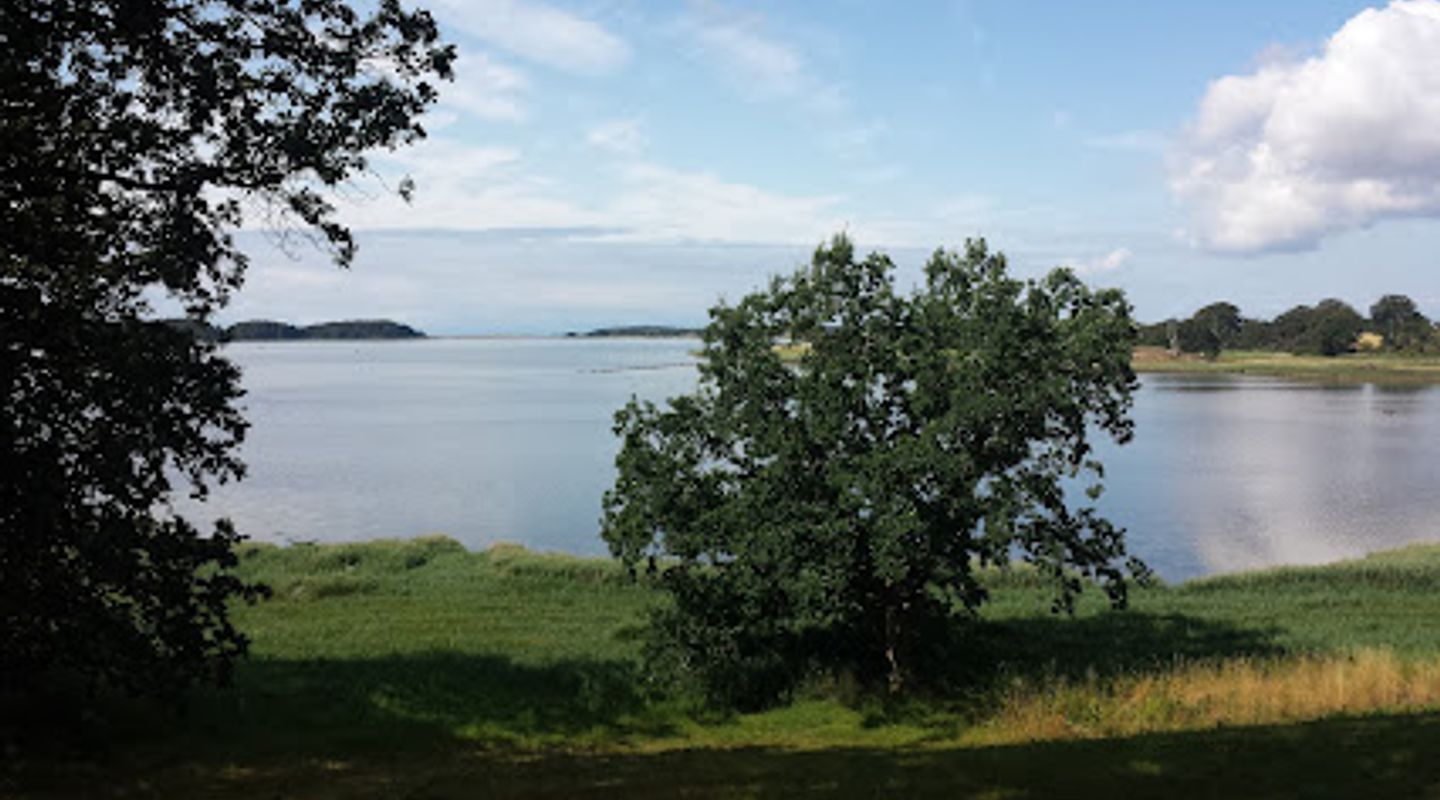
Beyond the main buildings spreads an undulating park whose character changes as you wander. Close to the castle, formal lawns, old avenues and clipped hedges frame the architecture. Further out, the landscape becomes more naturalistic, with meadows and small copses leading you towards the gentle curve of Holsteinborg Cove. From the southern edge of the park, the view opens in a wide arc over the Småland Sea and the Great Belt, with shifting light on the water and low islands marking the horizon.Scattered through the grounds are quieter points of interest: an old stone with cup-like hollows, a 1700s boundary post crowned with royal initials, small bridges and viewpoints tucked among beeches and oaks. The setting encourages a slow pace. Whether you follow the shoreline, trace the remnants of the old moat system or simply sit on a bench beneath the trees, the impression is of a lived-in estate where grand history and everyday rural life have long been intertwined.
Visiting a living private estate
Holsteinborg remains privately owned, and that sense of a living home rather than a frozen monument shapes the experience. Parts of the castle and its park are opened to the public at set times, while other areas stay clearly marked as private. This balance preserves the quiet character of the place: birdsong carries over the lawns, and the sound of the sea drifts up from the cove rather than the noise of traffic.As you explore within permitted areas, it is easy to imagine both aristocratic families and estate workers moving between farmyard and reception rooms, church and shoreline. The castle’s combination of architectural richness, coastal landscape and deep literary and historical connections makes it a rewarding stop on a wider journey through Zealand—especially for travellers interested in the world behind Denmark’s fairytales and the long evolution of its countryside estates.
Evendo Review Centre
 Google
Guest reviews
Best time to go
Quietest: Jan, Feb & Mar · before 8am or at 8pm
Busy times are Evendo estimates for a typical year, to help you plan. Actual crowds vary with events, school holidays and the weather.
Explore Holsteinborg Castle on the map
A handpicked selection of must-see spots near Holsteinborg Castle, mapped for you.
Get your free copy of our complete guide to Holsteinborg Castle, delivered straight to you.
Everything on this page, from opening hours and how to get there to Eve’s tips and the best time to go, in one PDF you can read offline, print or share.
Already have an account? Sign in
Your Holsteinborg Castle guide is ready.
We'll send it to · Not you? Sign out

Getting your guide ready…
We are putting together a fresh copy of the Holsteinborg Castle guide. This can take up to a minute.
This can take a few moments. If your browser asks, choose Allow so the download can start. You'll find the guide in your Downloads folder.
Nothing happened? Download it again
Sorry, the guide is taking longer than usual. Please try again in a minute, or get it by email instead.
Other nearby places you may find interesting
The closest places of the same kind, if this one is not quite what you had in mind.
-
-
-
-
-


Swipe for more places
More to explore near Holsteinborg Castle

 Best experiences near Holsteinborg Castle
 Best hotels near Holsteinborg Castle
 Best landmarks near Holsteinborg Castle
 Best attractions near Holsteinborg Castle
 Best shops near Holsteinborg Castle
 Best restaurants near Holsteinborg Castle
 Best bars near Holsteinborg Castle
Do you manage this location?
Take control to get all the benefits, like improved information, better appearance, and stronger visibility across AI-powered discovery.
Explore more
Explore more of South Zealand
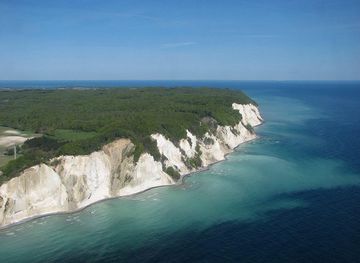
Discover South Zealand, where dramatic cliffs, historic castles, and charming coastal towns create the perfect Danish escape.
Explore South Zealand
Explore more of Denmark
Discover Denmark: A perfect blend of history, modern design, and the cozy concept of hygge. Explore vibrant cities, serene landscapes, and world-class cuisine.
Explore Denmark