Badehusene i Marstal, The South Funen Archipelago Travel Guide
A row of colorful wooden bathhouses on Eriks Hale, where a century of island summer life meets shallow seas, big skies and the quiet charm of Ærø’s coast.
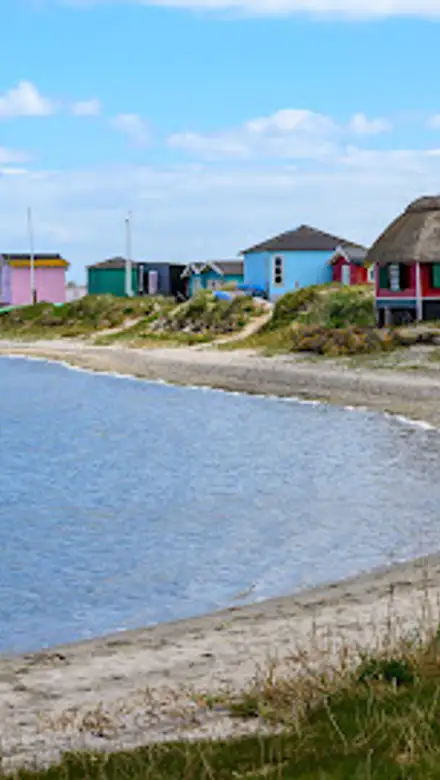
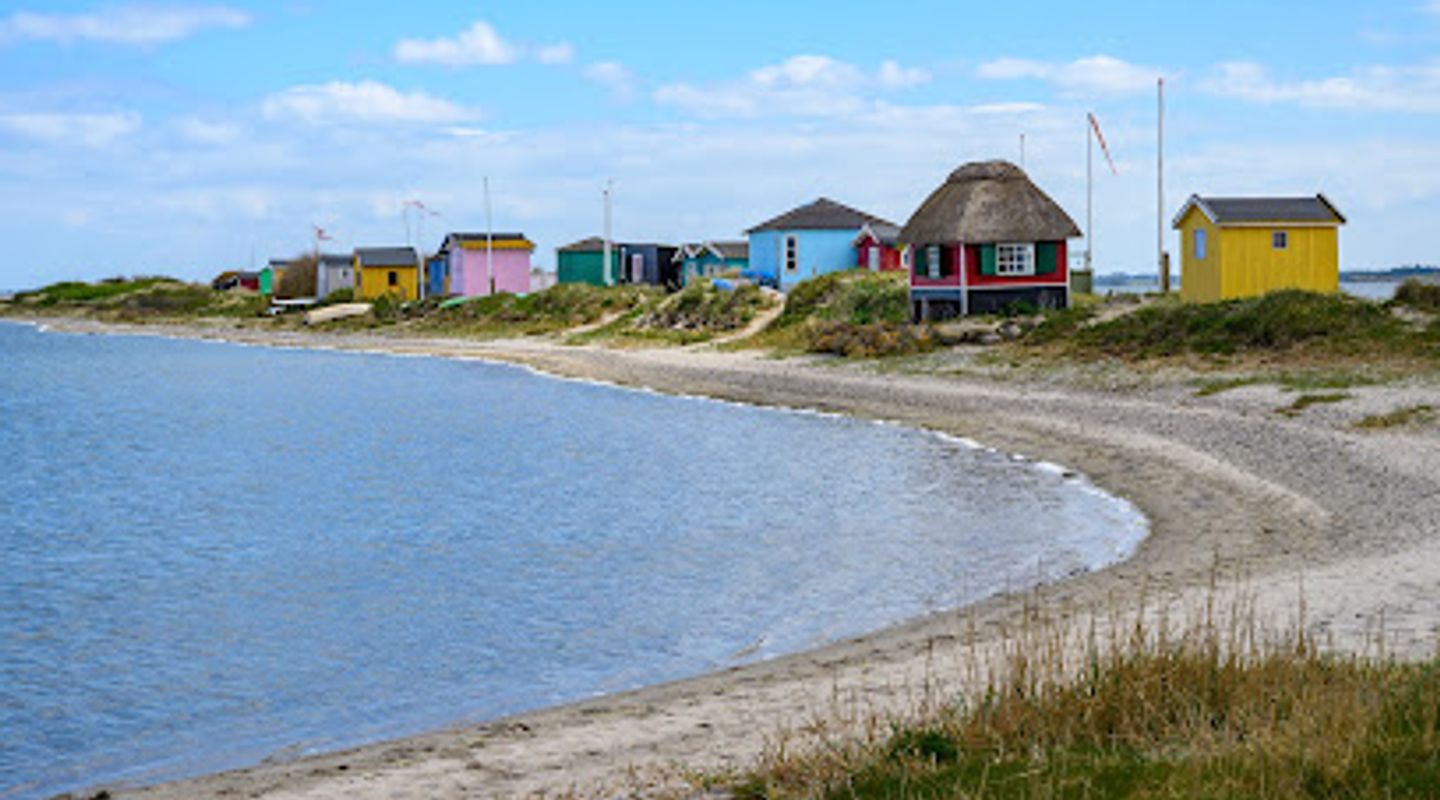
Strung out along the sandspit of Eriks Hale just outside Marstal, the colorful Badehusene i Marstal are one of Ærø’s most cherished coastal sights. These small wooden bathing huts, including the famous little red hut with a thatched roof, stand between lagoon and open sea, framing safe, shallow waters and big Baltic skies. More than simple beach cabins, they are a living piece of island heritage, tied to a century of summer rituals, gatherings, and everyday seaside life.
A brief summary to Badehusene i Marstal
- Kalkovns stien, Marstal, 5960, DK
- Duration: 0.5 to 2 hours
- Free
-
 Outdoor
- Mobile reception: 4 out of 5

Know before you go
Hi, I'm Eve. Here are a few practical things to know before exploring Badehusene i Marstal.
- Come early morning or late afternoon for the softest light on the huts and fewer people on the sandspit, ideal for photography and quiet contemplation.
- Pack swimwear and a towel: the inner side of Eriks Hale usually offers shallow, relatively calm water that suits relaxed dips and family bathing.
- Respect that the bathhouses are private property and part of local heritage—enjoy them from the outside and use only the public beach and paths.
- On breezy days bring an extra layer; the exposed sandspit can feel noticeably cooler than the streets of Marstal even in summer.
- After storms or in winter, check local information for any access advisories, as work on restoration or coastal protection may affect parts of Eriks Hale.
Do you manage this location?
Take control to get all the benefits, like improved information, better appearance, and stronger visibility across AI-powered discovery. Learn more about listing your business on Evendo
Activate your presenceOther nearby places you may find interesting
The closest places of the same kind, if this one is not quite what you had in mind.

Explore Badehusene i Marstal on the Map
A handpicked selection of must-see spots near Badehusene i Marstal, mapped for you.
Getting There
-
Walking from central Marstal
From Marstal’s central area, reaching Eriks Hale and the bathhouses on foot typically takes 15–25 minutes at a relaxed pace. The route is flat and follows local streets and paths toward the coast, making it accessible for most visitors with basic mobility. Surfaces are mostly paved until you reach the sandspit, where firm sand takes over; wheeled mobility aids may find the last stretch softer and slower, especially after rain.
-
Bicycle from around Marstal
Cycling from most neighbourhoods in Marstal to Badehusene i Marstal usually takes 5–10 minutes. Roads are low-speed and generally comfortable for casual cyclists, including families. Simple bicycle stands or informal parking areas are available near the beginning of the sandspit, from where you continue on foot. There is no fee for bike parking, but bring a lock and be prepared for strong coastal winds that can make the ride feel a little more demanding.
-
Taxi within Marstal and from the ferry
A local taxi from Marstal’s centre or the ferry area to the bathhouses normally takes under 10 minutes. Fares on Ærø for such short trips are typically in the range of 60–120 DKK depending on distance, time of day and any waiting time. Taxis can usually drop passengers close to the coastal access point, after which a short walk across sand is required; visitors with limited mobility should confirm drop-off options and current conditions when booking.
-
Car and parking near Eriks Hale
Arriving by car, you can follow local roads toward Eriks Hale and use the small parking areas provided near the approach to the sandspit. The drive from central Marstal generally takes about 5–10 minutes. Parking is often free but spaces are limited, and on warm summer days or during island events they may fill quickly, so earlier or off-peak visits are more comfortable. From the parking area you will need to walk on sand, which may be uneven and less suitable for some wheelchairs and prams.
For the on-the-go comforts that matter to you
-
 Restrooms
-
 Drink Options
-
 Drinking Water
-
 Food Options
-
 Seating Areas
-
 Sheltered Areas
-
 Picnic Areas
-
 Trash Bins
-
 Information Boards
Discover more about Badehusene i Marstal
Iconic bathhouses on Eriks Hale
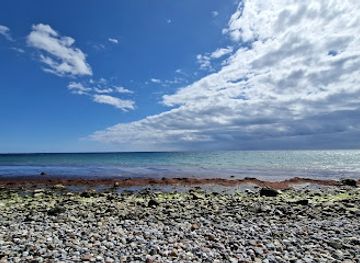
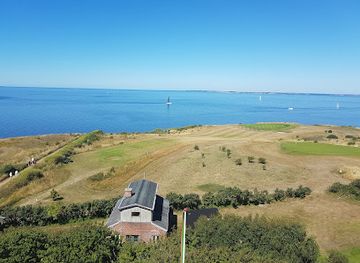
Eriks Hale is a narrow sandspit curving out from Marstal, and along its sheltered shore stand the Badehusene i Marstal, a compact row of brightly painted wooden bathhouses facing the water. Here the Baltic Sea is tamed into shallow, usually calm bathing waters, with soft sand and a gently sloping seabed that make the spot especially welcoming for families and cautious swimmers. The huts sit just above the beach on small plots, each with its own personality, yet together forming one of Ærø’s most recognisable silhouettes.The setting is quietly dramatic: to one side lies the lagoon-like inner beach, to the other the more open sea, with Marstal’s harbour and masts visible in the distance. On still days you hear little more than the lap of waves and distant clink of rigging, while on breezier afternoons wind and surf add a more energetic soundtrack to the pastel panorama.A living fragment of Ærø’s coastal heritage
The bathing huts are not recent seaside décor but the result of more than a century of island tradition. For generations, local families have used them as simple summer bases, changing cabins, and social hubs, returning year after year to the same modest wooden structure. Over time, the huts have become deeply woven into Ærø’s cultural identity, a kind of open-air living room where island life meets the sea.They are considered part of the island’s cultural heritage, and ownership typically passes within families rather than entering the open market. This continuity has kept their character remarkably intact: no flashy rebuilds, just careful maintenance and small adjustments that respect their understated charm and original proportions.Color, character and the little red hut
Each bathhouse is different, painted in hues that range from deep maritime blues and forest greens to sunny yellows and crisp whites. Some are neat and freshly painted, others slightly weathered, all contributing to a pleasingly informal rhythm along the shoreline. Many have small verandas or simple steps down to the sand, making it easy to slip into the water for a morning or evening swim.Among them all, one stands out in most photographs: the small red hut with a thatched roof. This distinctive structure has become an emblem of Marstal and Ærø as a whole, symbolising a slower, more intimate relationship with the sea. Its rustic roof and bold colour anchor the row visually and give photographers a focal point against ever-changing skies and water.Storms, resilience and careful restoration
In October 2023 a powerful storm surge swept across Eriks Hale, severely damaging the area and destroying most of the huts in a single dramatic event. Many of the bathhouses were torn from their footings or crushed by waves, leaving only fragments of their original structure scattered along the sand. For an island so closely identified with these cabins, the loss was both emotional and symbolic.Restoration, however, began quickly, guided by a desire to preserve the bathhouses’ historic appearance while improving their resilience to future storms. New or rebuilt huts are being raised with careful attention to traditional colours, simple forms and modest dimensions, ensuring that the renewed row still feels authentically rooted in the island’s past rather than like a modern reproduction.Swimming, strolling and quiet observation
Visiting Badehusene i Marstal is as much about mood as about activity. Many people simply walk the length of the sandspit, observing how light and reflections change along the line of huts and watching swimmers wade into the sheltered waters. The inner side offers especially gentle bathing conditions, often used for leisurely dips, paddling, and play in summer.Benches, low dunes and the edge of the sand provide informal places to sit and take in the view. Birdlife drifts across the lagoon, small boats pass offshore, and in the late afternoon the setting sun can cast warm light on the huts’ facades, highlighting their colours against the sea. Even outside the main season, the area invites contemplative walks, with the wind, waves and weathered wood creating an atmospheric coastal scene.Island rituals and seasonal gatherings
Over the decades the bathhouses have also served as a backdrop for island rituals and small celebrations. Seasonal gatherings such as midsummer bonfires, informal picnics and holiday swims have long been part of local life at Eriks Hale, often centred on the community of hut owners and their guests. These occasions reinforce the bathhouses’ role not just as picturesque objects, but as stages for shared experiences by the water.For visitors, spending unhurried time here offers a glimpse of that rhythm: towels draped over railings, coffee flasks on simple tables, children moving between sand and sea. Badehusene i Marstal encapsulate the essence of Ærø’s coastal culture—compact, colourful, human-scaled structures that keep everyday life close to the shoreline while framing one of Denmark’s most quietly charming seaside landscapes.












Your all‑in‑one travel companion app
Explore expert travel guides, compare and book tours, experiences, hotels, and more—all from the palm of your hand. Download now for seamless trip planning wherever your wanderlust takes you.


Explore More of The South Funen Archipelago
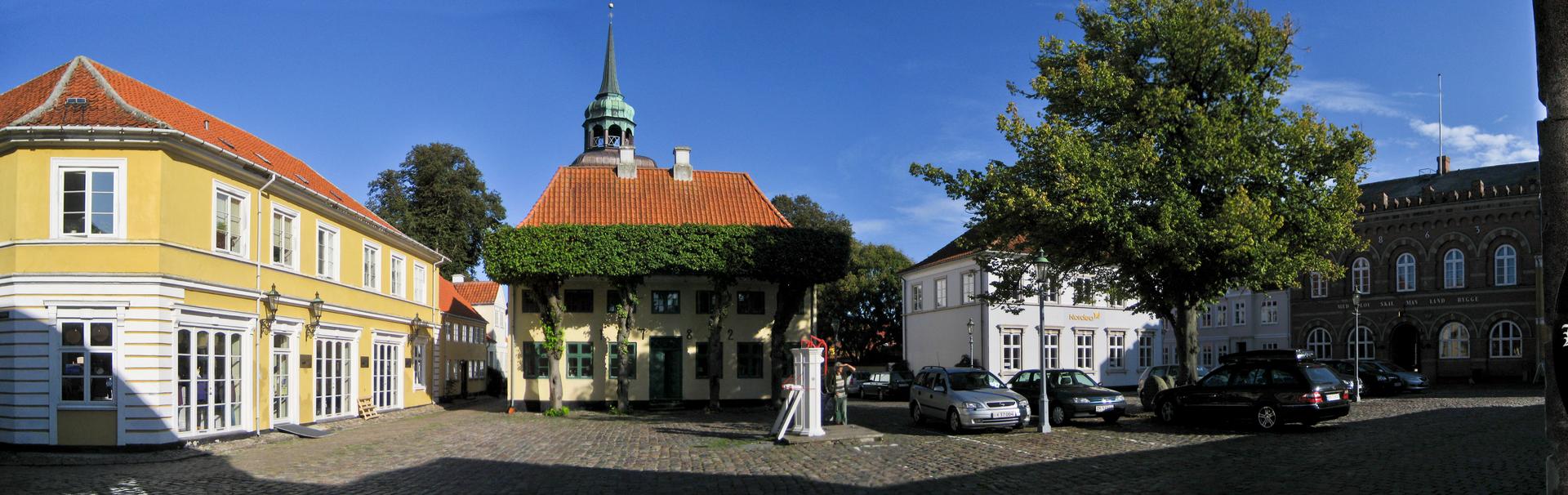
Looking beyond Badehusene i Marstal? Discover The South Funen Archipelago for broader travel guides, local hot-spots, and regional highlights.
Explore The South Funen Archipelago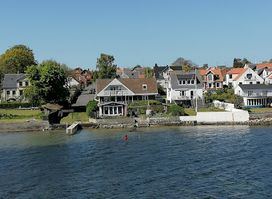
A gentle Danish Baltic island of cobbled lanes, colourful harbours and long, low horizons made for cycling, sea air and unhurried Scandinavian island life.
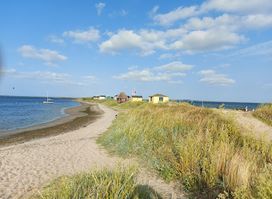
A narrow sandspit of sea, sky and color, where Marstal’s historic bathing huts keep more than a century of simple Danish island summer life alive.