Bananna Park Travel Guide
Free Guide: A bold slice of urban creativity in Nørrebro, where a giant yellow banana, climbing walls and street art turn a former wasteland into Copenhagen’s most playful pocket park.


A brief summary of Bananna Park
A bold slice of urban creativity in Nørrebro, where a giant yellow banana, climbing walls and street art turn a former wasteland into Copenhagen’s most playful pocket park.
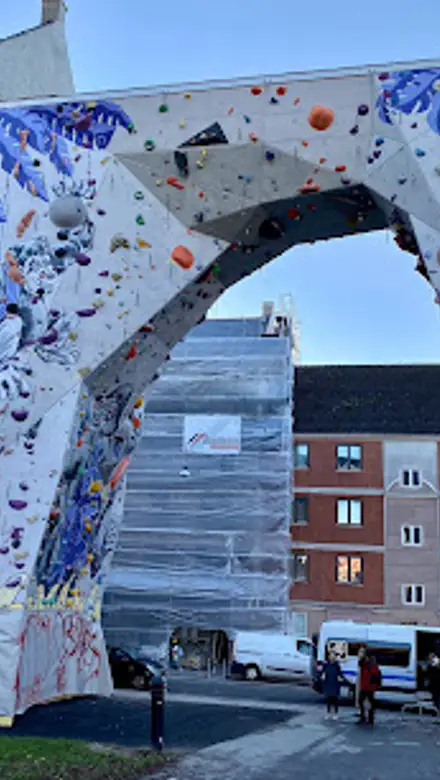
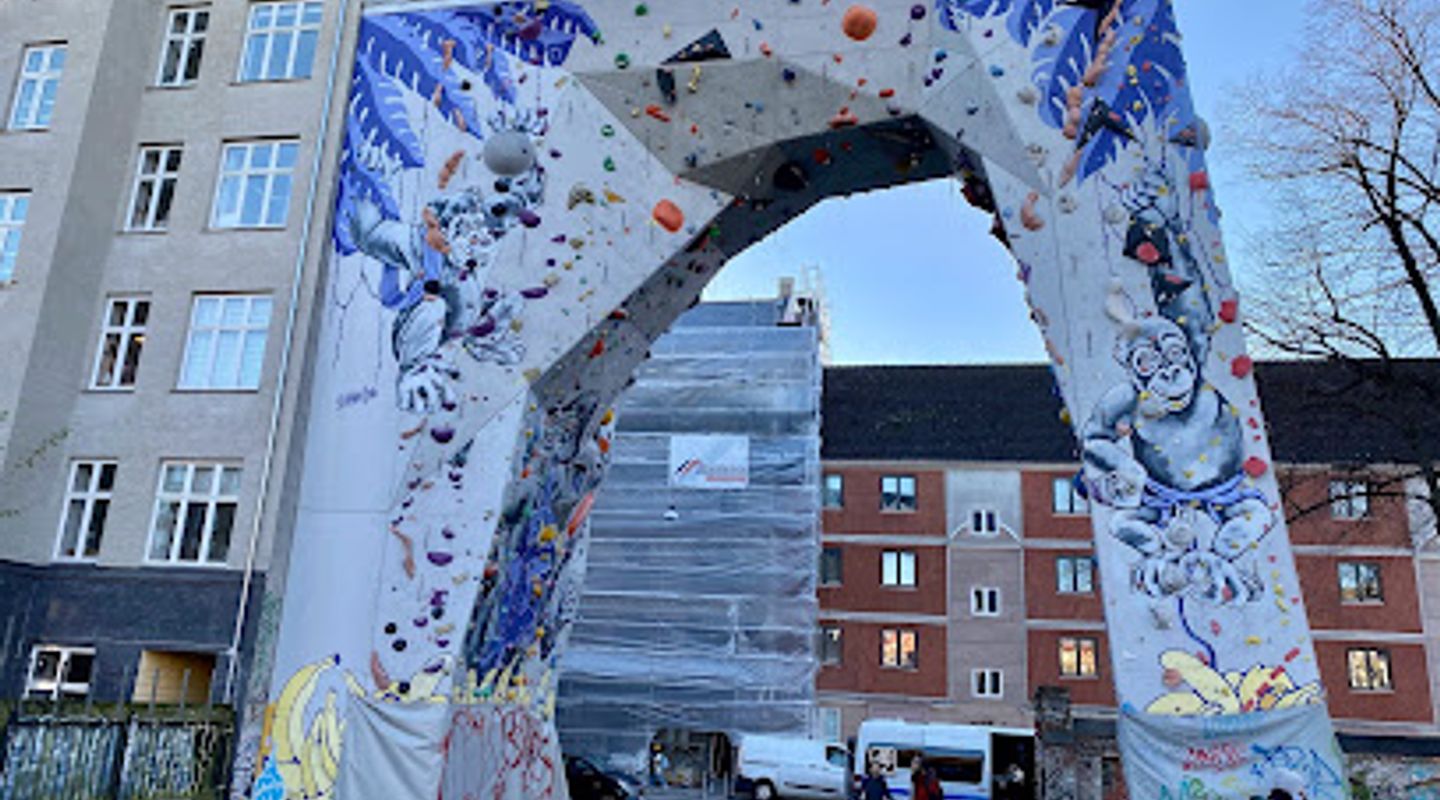
Bananna Park is a compact, boldly designed urban playground in Copenhagen’s multicultural Nørrebro district, built on a former industrial wasteland and transformed into a creative green pocket. Dominated by a huge yellow banana-shaped embankment and a 14 m-high climbing structure, the 6,000 m² park combines street art, sports courts, climbing walls and a surprisingly lush “jungle” of trees and bamboo. It is especially popular with climbers, active families and locals seeking a vibrant, community-focused outdoor hangout.
On-site amenities
 Seating areas
 Trash bins
 Information boards
Opening hours
- Every dayOpen 24 hours
Opening hours as listed on the venue’s Google Business Profile. Hours can change for services and special events, so check with the venue before you go.
- Address
- Nannasgade 6, 2200 København
Getting there
Metro and walk from central Copenhagen
Bus from the inner city
Bicycle from the city centre
Taxi or rideshare within Copenhagen
Discover more about Bananna Park
From Derelict Lot to Playful Urban Landmark
Bananna Park sits on what was once a polluted, neglected plot in outer Nørrebro, an area long characterized by dense housing and scarce green space. In the late 2000s the municipality set out to reinvent the site, commissioning NORD Architects and landscape studio Schønherr to turn this forgotten corner into a showcase for participatory urban design. Local residents, schools and youth groups were invited into the planning process, helping shape a park that reflected how the neighbourhood actually lives and plays.The result is a tight, 6,000 m² space that feels far larger than its footprint suggests. Every surface has been given a function: to sit, skate, climb, kick a ball or simply watch what is going on. It is a textbook example of Copenhagen’s approach to human-scale city-making, proving that even the smallest leftover plot can become a social anchor when thoughtfully reimagined.
The Big Yellow Banana and Its Three Zones
The park’s most striking feature is the oversized yellow banana that curves through the space like a playful embankment. It works as a skateable ridge, informal grandstand and visual identity all at once, lending the park its name and instantly signalling that this is a place for fun rather than formality. Nearby, a 14 m-high steel climbing frame arches over the entrance like a minimalist triumphal arch, inviting you to scramble up and grab an aerial view of the neighbourhood.The design is organized into three distinct zones: the Jungle, the Lawn and the Square. The Jungle is a surprisingly dense thicket of self-seeded deciduous trees, cherry trees and stands of bamboo, threaded with paths and hiding small play corners. The Lawn is an open, grassy core edged by the banana embankment and surrounded by an oval track for running, biking and rollerblading. The Square gathers harder surfaces, ball courts and seating, doubling as an outdoor living room for the surrounding apartment blocks.
Climbing Walls, Courts and Active Play
Although it functions as a neighbourhood park, Bananna Park feels almost like an outdoor sports hall. One long façade carries a tall, bolted climbing wall with routes up to around 15 m high, used both by local climbers and organized sessions for all levels. Plastic holds dot the graffitied surface, and on dry days it hums with the sound of belayers calling encouragement from below.Two adjacent playing fields, one surfaced in bright blue artificial turf and one in natural grass, host impromptu football matches, basketball games and fitness sessions. The broad banana ridge offers tiered seating for spectators, who lean back against the spongy surface and watch the action. For younger children, there is a dedicated playground tucked behind the Jungle, equipped with swings, slides and low climbing elements, so that toddlers and tweens can enjoy the park in parallel.
Street Art, Murals and Neighbourhood Identity
What sets Bananna Park apart from many city parks is its embrace of urban art. Several surrounding gable walls are covered in large-scale murals, adding colour, political commentary and a sense of local voice to the space. The high climbing arch and parts of the banana itself often frame graffiti pieces, making the park feel like a constantly evolving outdoor gallery rather than a fixed, manicured garden.This visual layer underscores the park’s role as a community canvas. The surrounding Nørrebro streets are among Copenhagen’s most diverse, and Bananna Park mirrors that mix in miniature: teenagers hanging out with speakers, parents chatting over prams, climbers roping up, and older residents using benches along the perimeter paths. On warm evenings barbecues appear in the designated grilling spots near the entrance, turning the park into a shared backyard for those living in nearby apartments.
A Pocket of Green Relief in Dense Nørrebro
Despite its playful concrete and steel, Bananna Park also functions as a small but important green lung. The Jungle area creates shade and a sense of immersion, with rustling leaves, birdsong and the occasional flash of urban wildlife threading through the undergrowth. The mix of grass, trees and permeable surfaces helps cool this dense district on hot summer days, and offers a quick escape from traffic-heavy streets without leaving the neighbourhood.Because the park is compact and enclosed by housing, it feels safe and easy to supervise, which makes it particularly attractive for families and for those looking to experiment with climbing or skating in a controlled environment. You come here less for quiet contemplation and more for energy, colour and the experience of seeing how contemporary Copenhagen turns former no-go areas into everyday playgrounds for everyone.
Evendo Review Centre
 Google
Guest reviews
Best time to go
Quietest: Jan, Feb & Dec · before 8am
Busy times are Evendo estimates for a typical year, to help you plan. Actual crowds vary with events, school holidays and the weather.
Explore Bananna Park on the map
A handpicked selection of must-see spots near Bananna Park, mapped for you.
Get your free copy of our complete guide to Bananna Park, delivered straight to you.
Everything on this page, from opening hours and how to get there to Eve’s tips and the best time to go, in one PDF you can read offline, print or share.
Already have an account? Sign in
Your Bananna Park guide is ready.
We'll send it to · Not you? Sign out

Getting your guide ready…
We are putting together a fresh copy of the Bananna Park guide. This can take up to a minute.
This can take a few moments. If your browser asks, choose Allow so the download can start. You'll find the guide in your Downloads folder.
Nothing happened? Download it again
Sorry, the guide is taking longer than usual. Please try again in a minute, or get it by email instead.
Other nearby places you may find interesting
The closest places of the same kind, if this one is not quite what you had in mind.
-
-
-
-
-


Swipe for more places
More to explore near Bananna Park

 Best experiences near Bananna Park
 Best hotels near Bananna Park
 Best landmarks near Bananna Park
 Best attractions near Bananna Park
 Best shops near Bananna Park
 Best restaurants near Bananna Park
 Best bars near Bananna Park
Do you manage this location?
Take control to get all the benefits, like improved information, better appearance, and stronger visibility across AI-powered discovery.
Explore more
Explore more of Zealand
Discover the charm of Zealand, Denmark's largest island, blending vibrant city life in Copenhagen with serene coastal beauty and rich cultural heritage.
Explore Zealand
Explore more of Denmark
Discover Denmark: A perfect blend of history, modern design, and the cozy concept of hygge. Explore vibrant cities, serene landscapes, and world-class cuisine.
Explore Denmark