Frederiksberg Town Hall, Koge Travel Guide
Brick-clad beacon of Frederiksberg’s independence, this 1950s functionalist town hall blends civic power, mid‑century Danish design and views across leafy Copenhagen.
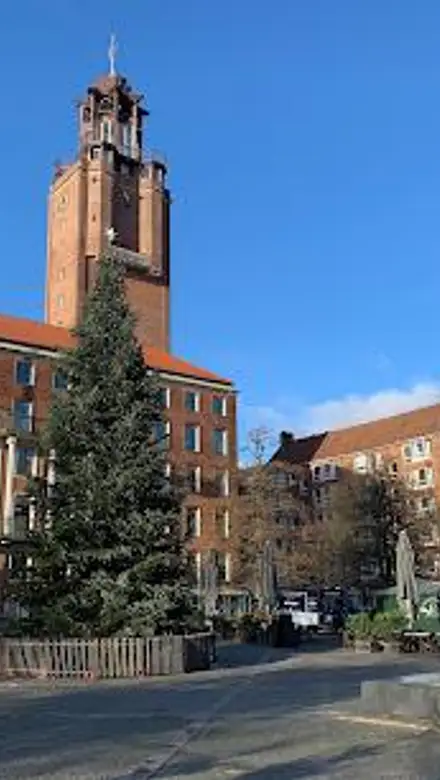
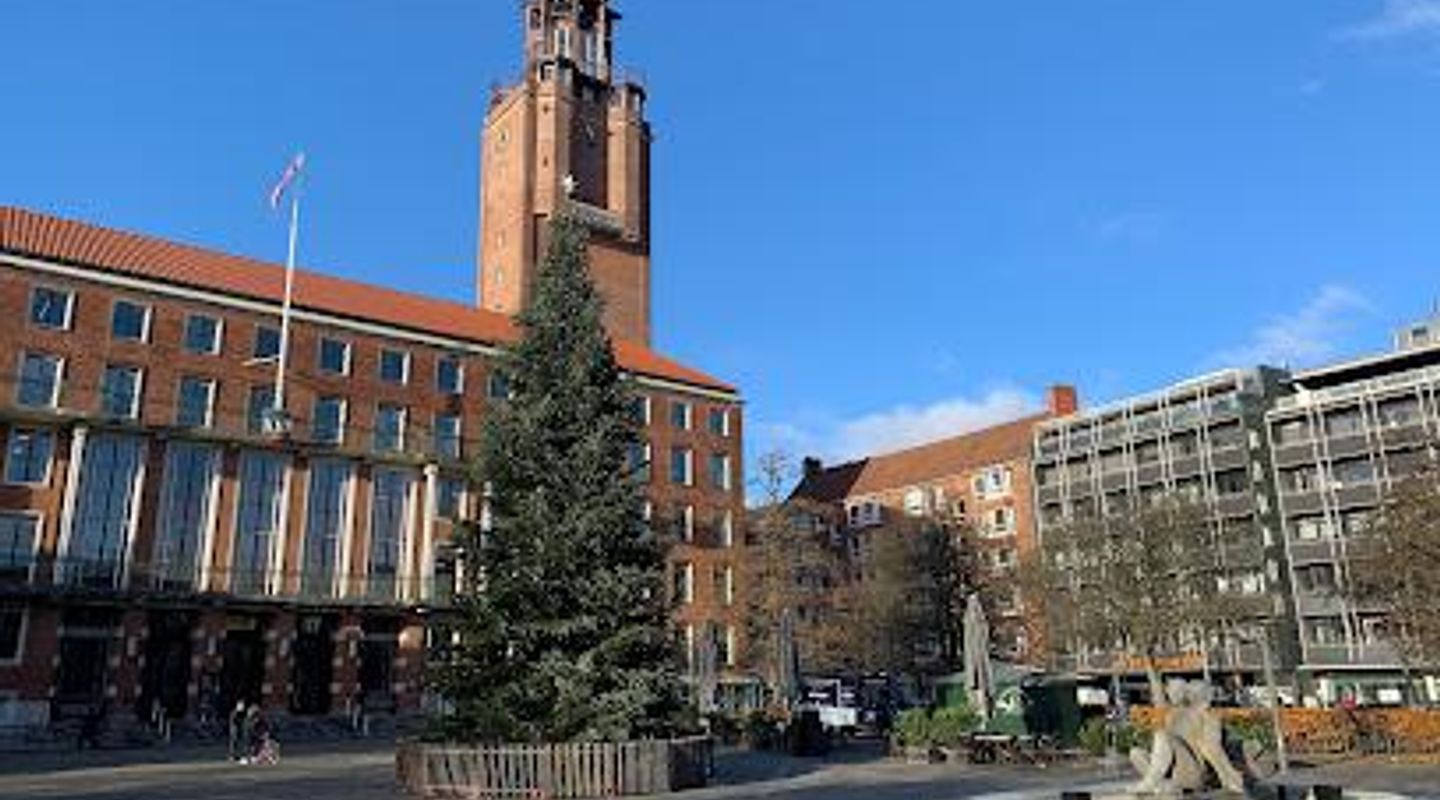
Frederiksberg Town Hall is the striking brick-clad seat of Frederiksberg Municipality, an independent enclave within Copenhagen. Completed in the early 1950s to Henning Hansen’s functionalist design, the long, low main block and 60 m tower dominate Smallegade and frame a compact square used for civic ceremonies. Inside, retro mid‑century details, artworks and wood‑panelled halls reflect postwar Danish design, while regular guided visits and occasional tower access reveal expansive views over leafy Frederiksberg and the wider city.
A brief summary to Frederiksberg Town Hall
- Smallegade 1, Frederiksberg, 2000, DK
- Click to display
- Click to display
- Duration: 0.5 to 2 hours
- Free
-
 Mixed
Mixed
- Mobile reception: 5 out of 5
- Monday 9 am-5 pm
- Tuesday 9 am-1 pm
- Wednesday 9 am-1 pm
- Thursday 9 am-5 pm
- Friday 9 am-1 pm

Know before you go
Hi, I'm Eve. Here are a few practical things to know before exploring Frederiksberg Town Hall.
- Time your visit for a weekday morning if you want to glimpse the building in full working mode, with residents using the Citizen Service Centre and staff moving between offices.
- Look for guided tours that include access to the 60 m tower; on clear days the panorama takes in Frederiksberg’s parks and much of central Copenhagen.
- Combine a short architectural stop here with a stroll along Smallegade and a wander in nearby Frederiksberg Have for a half‑day Frederiksberg walk.
- Step inside the lobby to notice retro details such as open vertical elevators and mid‑century finishes that contrast with the austere exterior.
- If you are arranging civil paperwork or a ceremony, check municipal office hours in advance, as public service desks keep shorter hours than the building itself.
Do you manage this location?
Take control to get all the benefits, like improved information, better appearance, and stronger visibility across AI-powered discovery. Learn more about listing your business on Evendo
Activate your presenceOther nearby places you may find interesting
The closest places of the same kind, if this one is not quite what you had in mind.
Explore Frederiksberg Town Hall on the Map
A handpicked selection of must-see spots near Frederiksberg Town Hall, mapped for you.
Unlock the Best of Frederiksberg Town Hall
Buy tickets
-
No tickets available
Book tours with entry


Getting There
-
Metro
From central Copenhagen, take the M1 or M2 metro to Frederiksberg Station, then walk about 10–15 minutes along main shopping streets to the town hall. Trains run every few minutes throughout the day, and the ride from Nørreport or Kongens Nytorv typically takes 5–8 minutes. A single metro ticket within the city zones costs roughly 20–30 DKK, and stations and trains are step-free, making this the easiest option for most visitors.
-
Bus
Several city bus routes run along Falkoner Allé and nearby thoroughfares, stopping within a 5–10 minute walk of Frederiksberg Town Hall. From Copenhagen City Hall Square or Vesterbro, expect a journey of 15–25 minutes depending on traffic. Standard bus fares match metro prices, around 20–30 DKK for a single trip, and services are frequent during the day, with reduced frequency in late evenings and on Sundays.
-
Bicycle
Cycling from the inner city to Frederiksberg Town Hall typically takes 10–20 minutes, using Copenhagen’s extensive network of separated bike lanes. The route is almost entirely flat and well signposted, and city bikes or rental bicycles are widely available. This option is best in dry weather and outside the most congested rush-hour periods when bike traffic can be very dense.
-
Taxi
A taxi from central Copenhagen to Smallegade 1 usually takes 10–20 minutes, depending on traffic along H.C. Andersens Boulevard and the approach to Frederiksberg. Fares typically fall in the 120–200 DKK range for this distance. Taxis can drop passengers close to the main entrance, which is convenient for those with limited mobility, though costs are higher than public transport.
For the on-the-go comforts that matter to you
-
 Restrooms
-
 Drink Options
-
 Drinking Water
-
 Food Options
-
 Seating Areas
-
 Sheltered Areas
-
 Trash Bins
-
 Information Boards
-
 Visitor Center
Discover more about Frederiksberg Town Hall
A modern city hall for an independent enclave
Frederiksberg Town Hall is the administrative heart of Frederiksberg, a self-governing municipality completely surrounded by Copenhagen yet fiercely proud of its own identity. Conceived during the interwar years and finally built between 1942 and 1953, the town hall symbolised a confident, growing city that had outgrown its earlier, more modest council buildings scattered nearby.The project fell to architect Henning Hansen, whose vision was interrupted by war and material shortages during the German occupation. Construction slowed to a crawl in the mid‑1940s, only resuming in earnest after peace returned. When the building was inaugurated in 1953, it stood as a statement of postwar optimism and administrative ambition, gathering the municipality’s services under one expansive roof.Functionalist lines and a commanding tower
From the outside, the town hall is all about clean geometry and restrained detail. Long facades in warm brick stretch roughly the length of a football pitch, articulated by rhythmic window bands and minimal ornament. A 60‑metre tower rises from one side of the complex rather than the corner, a distinctive choice that sets it apart from many Nordic city halls while still echoing the vertical drama of Copenhagen’s and Stockholm’s counterparts.The building’s footprint covers an area comparable to a soccer field, with around 20,000 square metres of interior space. Crisp proportions, understated stonework and the broad forecourt facing Smallegade give the ensemble a civic gravitas that feels deliberate rather than grandiose, well suited to a dense residential borough of tree‑lined streets and apartment blocks.Interior details from Denmark’s mid‑century moment
Step indoors and the atmosphere shifts to an evocative slice of early 1950s Denmark. Corridors are lined with pale stone and wood panelling, lit by simple yet carefully designed fixtures. Meeting rooms and the council chamber feature clean-lined furniture, muted colours and touches of brass that capture the understated elegance of Scandinavian modernism.Among the artworks, a standout is Jais Nielsen’s large painting depicting King Frederik III handing over farm land to farmers from Amager, created the same year the town hall opened. It underlines Frederiksberg’s journey from rural landscape to dense urban municipality, and anchors the building’s otherwise contemporary interiors in a much older story of land, power and people.Life, ceremonies and views above Frederiksberg
Today some 800 employees work here, from planners and social workers to cultural coordinators and the Citizen Service Centre on the first floor. Weekdays bring a steady flow of residents sorting documents, seeking advice or attending council business, giving the building a lived-in, local rhythm rather than a purely monumental feel.On designated days, guided tours explore the council hall, ceremonial rooms and, when open, the tower. From the top, views sweep across Frederiksberg’s parks, spires and rooftops, out to the broader Copenhagen skyline. Below, the surrounding streets knit the town hall into everyday life: shoppers on Smallegade, students heading towards nearby institutions, and locals crossing the square on their way to the metro.A civic landmark amid gardens and culture
The town hall occupies a key junction between Falkoner Allé and Smallegade, close to Frederiksberg Centre and within walking distance of Frederiksberg Have and Søndermarken. Its broad steps, flagpoles and planted edges often act as a backdrop for official events, commemorations and wedding photos emerging from the ceremony rooms inside.Though primarily a working city hall rather than a museum, the building rewards unhurried exploration of its exterior lines, tower silhouette and subtle details. For anyone interested in Scandinavian architecture, urban history or the way a small, dense municipality expresses its autonomy in brick and stone, Frederiksberg Town Hall offers a quietly compelling stop in the heart of this green, urbane enclave.More to explore near Frederiksberg Town Hall













Your all‑in‑one travel companion app
Explore expert travel guides, compare and book tours, experiences, hotels, and more—all from the palm of your hand. Download now for seamless trip planning wherever your wanderlust takes you.


Explore More of Koge
Looking beyond Frederiksberg Town Hall? Discover Koge for broader travel guides, local hot-spots, and regional highlights.
Explore Koge