

Free Loja Travel Guide & Mobile App
Plan your Loja trip with Evendo. Get free guides to top attractions, restaurants, hotels, and bars. Web access or download the mobile app.


Loja, Ecuador, pairs colonial streets and live music with Andean food, museums, verdant parks and gateways to Podocarpus National Park and Vilcabamba.
Andean Setting and Historic Core
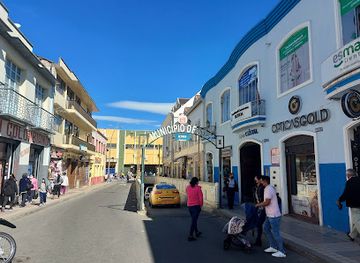
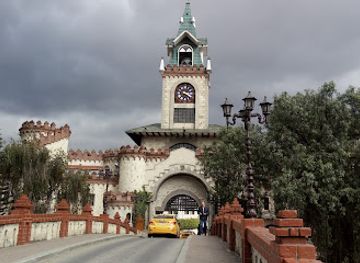
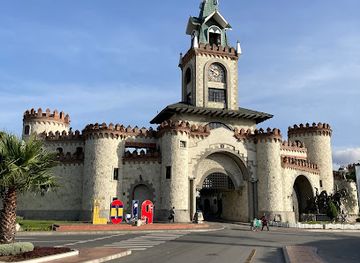
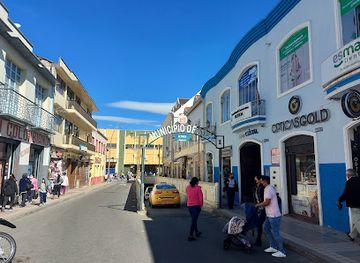
Loja lies in a green valley in southern Ecuador, surrounded by rounded Andean hills and crossed by the Zamora River. Its altitude gives the city a cool, spring-like climate, while its compact centre makes many of the principal sights accessible on foot. Whitewashed façades, tiled roofs and traditional churches shape the historic districts around Parque Central, Parque San Sebastián and the streets leading towards the Zamora riverfront. The Puerta de la Ciudad, a crenellated gateway inspired by Loja’s coat of arms, has become one of the city’s most recognisable symbols.Read more about Loja
Music, Memory and Local Life
Green Surroundings
When is the best time to visit Loja?
Best: July–September · 21–22°C| Month | High (°C) | Rainfall (mm) |
|---|---|---|
| January | 22 | 107 |
| February | 22 | 116 |
| March | 22 | 117 |
| April | 22 | 122 |
| May | 22 | 95 |
| June | 21 | 58 |
| July (best) | 21 | 56 |
| August (best) | 21 | 58 |
| September (best) | 22 | 61 |
| October | 22 | 77 |
| November | 22 | 92 |
| December | 22 | 95 |
Getting to and around Loja
How to get there
Transportation
Best attractions in Loja
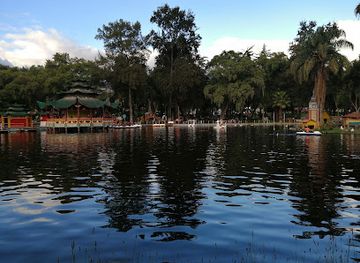
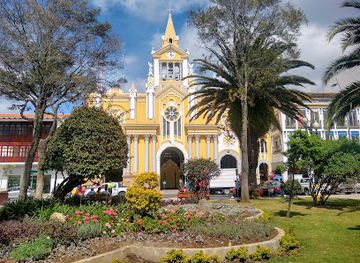
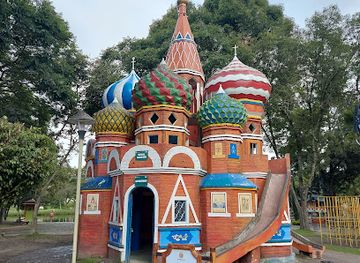
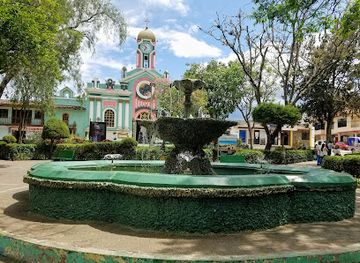
Loja’s principal sightseeing area centres on Parque Central, where the Catedral de Loja and surrounding civic buildings introduce the city’s colonial and republican character. Nearby, the Museo de la Música explores the composers and performers who helped give Loja its reputation as Ecuador’s musical city, while the Museo de la Cultura Lojana offers further context on regional heritage. The red-and-white Puerta de la Ciudad provides a distinctive architectural symbol and a useful starting point for views over the urban valley. Parque San Sebastián, with its church and monument, has a more local, neighbourhood atmosphere, and Jipiro Park offers landscaped grounds, leisure spaces and imaginative architectural features. The botanical garden associated with the Universidad Técnica Particular de Loja adds a botanical perspective. Podocarpus National Park is a major excursion from Loja rather than an urban attraction, offering access to Andean forest landscapes beyond the city.
-
Tourist attraction
Parque Recreacional Jipiro
Experience the tranquility of Parque Recreacional Jipiro, a lush park in Loja, Ecuador, perfect for relaxation, family fun, and a taste of nature's beauty.
16 min walk · 1.3 km from city centre
-
Tourist attraction
Central Market
Experience the vibrant culture and flavors of Loja at Central Market, where local life comes alive with fresh produce, unique crafts, and delicious cuisine.
5 min drive · 1.7 km from city centre
-
Tourist attraction
Central Park
Discover the vibrant heart of Loja at Central Park, where nature meets culture in a picturesque urban oasis.
19 min walk · 1.5 km from city centre
-
Tourist attraction
Central Park
Explore the beauty and culture of Central Park in Loja, a tranquil oasis perfect for relaxation and local experiences.
19 min walk · 1.5 km from city centre

Best landmarks in Loja
The Catedral de Loja, facing Parque Central, is one of the city’s principal religious and civic reference points and forms part of the architectural focus of the historic centre. Iglesia de Santo Domingo and the church of San Sebastián add different settings to Loja’s religious landscape, with San Sebastián associated with the square and monument of the same name. The Puerta de la Ciudad is a modern symbolic landmark designed as a monumental gateway and decorated with elements drawn from Loja’s heraldic identity. The Palacio Municipal and other buildings around the central square represent the city’s administrative development, while the Santuario de El Cisne, although outside Loja, belongs to the wider religious geography of the province. Together these places reveal how colonial Catholic institutions, republican civic life and contemporary regional identity overlap in the city.
-
Park
Parque Recreacional Jipiro
Discover the beauty and tranquility of Parque Recreacional Jipiro in Loja, Ecuador, a perfect blend of nature, recreation, and cultural experiences.
16 min walk · 1.3 km from city centre
-
Shopping mall
Central Market
Explore Loja's Central Market: A vibrant shopping destination filled with fresh produce, artisan crafts, and authentic Ecuadorian cuisine.
5 min drive · 1.7 km from city centre
-
Park
Parque de Vilcabamba
Discover the serene escape of Parque de Vilcabamba, a lush park in Ecuador offering tranquility, stunning views, and a taste of local culture.
51 min drive · 31 km from city centre
-
Historical landmark
Gate of the City
Explore the enchanting Gate of the City in Loja, a historical landmark that showcases the rich culture and vibrant spirit of Ecuador's beautiful heritage.
10 min walk · 0.8 km from city centre
Explore Loja on the map
Plan your Loja trip on one map. See where the top attractions, landmarks, restaurants, bars and hotels are, find what's near where you're staying, and book hotels and experiences in a few clicks.
Best hotels in Loja
Best restaurants in Loja
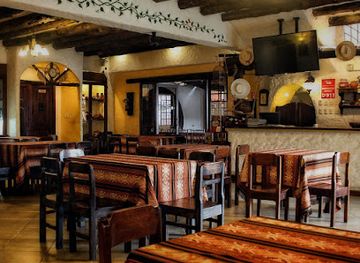
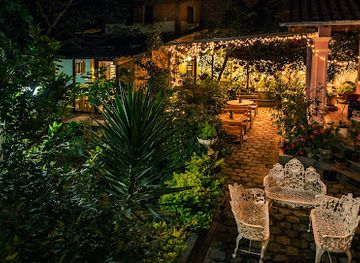
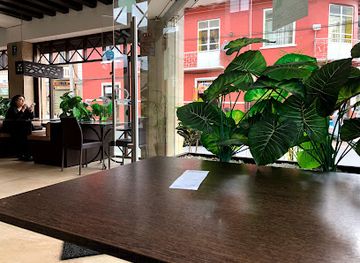
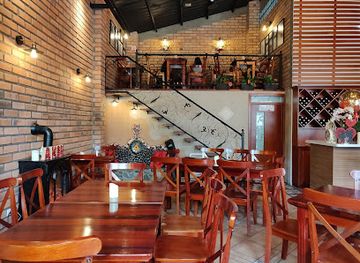
Loja’s food culture reflects the produce and climate of southern Ecuador, with filling highland dishes served in markets, family-run restaurants and traditional eateries. Repe lojano, a creamy soup made with green banana and cheese, is one of the city’s best-known specialities; arvejas con guineo combines peas and green banana in another characteristic local preparation. Cecina, thinly sliced and seasoned pork traditionally cooked over charcoal, is widely associated with Loja, while tamales, humitas and grilled meats appear in everyday dining. Horchata lojana is not the milky drink familiar elsewhere in Latin America but a red herbal infusion made from local plants and served hot or cold. Around the central markets and streets near the historic centre, visitors can find inexpensive breakfasts, soups, juices and pastries, alongside cafés and contemporary restaurants serving Ecuadorian and international food.
-
Restaurant
Mama Lola
Discover authentic Ecuadorian cuisine at Mama Lola in Loja - where flavor meets tradition in every dish.
8 min walk · 0.6 km from city centre
-
Brewpub
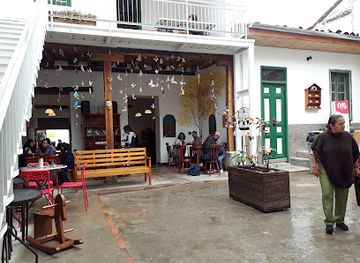
La Huerta (White House)
Experience the vibrant flavors of Loja at La Huerta Brewpub - where local cuisine meets craft beer in an inviting atmosphere.
6 min drive · 2.0 km from city centre
-
Seafood
Piscis
Experience fresh seafood delights at Piscis in Loja - where culinary tradition meets oceanic freshness.
14 min walk · 1.1 km from city centre
-
Italian
La Buona Pasta
Experience authentic Italian cuisine at La Buona Pasta in Loja, where every dish tells a story and every meal is a celebration.
18 min walk · 1.4 km from city centre
Best bars in Loja
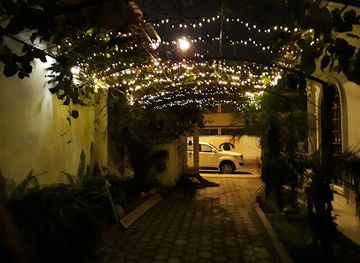
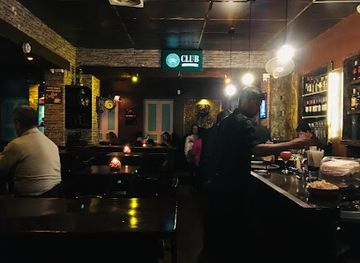
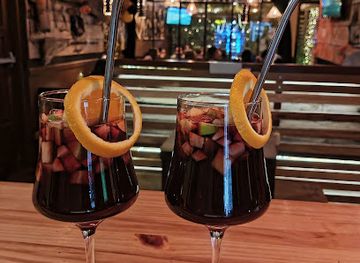
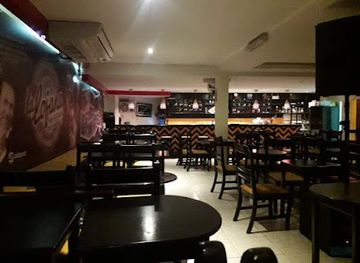
Loja’s evening scene is more intimate than that of Ecuador’s largest cities, with activity concentrated around the historic centre, student areas and commercial streets rather than a single large club district. Cafés and casual bars near Parque Central, San Sebastián and the 24 de Mayo area provide places for conversation, while venues associated with the city’s universities bring a younger atmosphere at certain times of year. Music is central to local identity, and concerts, cultural programmes and theatre performances can offer a more characteristic evening than conventional nightlife. Restaurants and bars may stay open later on busy nights, but schedules vary and the city generally favours relaxed socialising over all-night club culture. Taxis are preferable for returning to accommodation after dark, especially when travelling beyond the central streets.
-
Brewpub
La Huerta (White House)
Experience the unique flavors of Loja at La Huerta, a celebrated brewpub offering artisanal beers and delicious local cuisine.
6 min drive · 2.0 km from city centre
-
Grill
siembra pincheria bar
Experience the vibrant flavors of Ecuador at Siembra Pincheria Bar, where delicious grilled cuisine meets an inviting atmosphere in Loja.
6 min drive · 2.0 km from city centre
-
Gastropub
VUDÚ FOOD & BEER
Discover the vibrant flavors of Loja at VUDÚ FOOD & BEER, where culinary creativity meets a lively atmosphere and an extensive beer selection.
15 min walk · 1.2 km from city centre
-
Bar
La Lojana By Lavoe
Experience the vibrant nightlife at La Lojana By Lavoe, where local flavors and a lively atmosphere blend perfectly in Loja, Ecuador.
12 min walk · 1.0 km from city centre
Best nightclubs in Loja
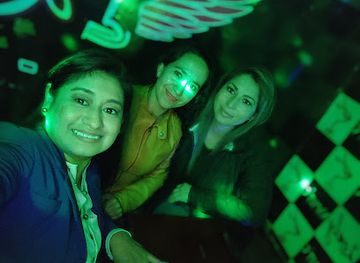
Loja’s evening scene is more intimate than that of Ecuador’s largest cities, with activity concentrated around the historic centre, student areas and commercial streets rather than a single large club district. Cafés and casual bars near Parque Central, San Sebastián and the 24 de Mayo area provide places for conversation, while venues associated with the city’s universities bring a younger atmosphere at certain times of year. Music is central to local identity, and concerts, cultural programmes and theatre performances can offer a more characteristic evening than conventional nightlife. Restaurants and bars may stay open later on busy nights, but schedules vary and the city generally favours relaxed socialising over all-night club culture. Taxis are preferable for returning to accommodation after dark, especially when travelling beyond the central streets.
-
Disco club
Lovely Nights Disco Bar
Discover the electrifying nightlife at Lovely Nights Disco Bar in Loja, where dancing and fun meet in a vibrant atmosphere.
10 min drive · 3.4 km from city centre
-
Night club
Extasis Nigth Club Loja
Discover the electrifying atmosphere of Extasis Night Club Loja, where unforgettable nights and vibrant entertainment await you in the heart of the city!
8 min drive · 2.7 km from city centre
-
Night club
Kamasutra Night Club
Discover the electric nightlife of Loja at Kamasutra Night Club, where music, dance, and vibrant energy come together for an unforgettable experience.
8 min drive · 2.6 km from city centre
-
Night club
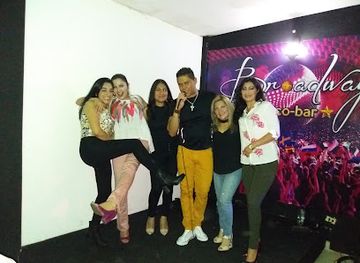
BROADWAY DISCO BAR KARAOKE
Discover the ultimate nightlife experience at Broadway Disco Bar Karaoke, where music and fun come alive in Loja's vibrant atmosphere.
8 min drive · 2.7 km from city centre
Best shops in Loja
Shopping in Loja combines practical local commerce with markets and small businesses that reflect southern Ecuadorian life. The Mercado Centro Comercial and other central market areas are useful for seeing the daily trade in fruit, vegetables, herbs, prepared food and household goods, while streets around the centre contain bakeries, cafés, pharmacies and independent retailers rather than a heavily concentrated luxury-shopping district. Visitors may find regional foods, herbal products, woven goods, ceramics and modest craft items, although stock varies and quality should be assessed individually. Loja’s musical identity also appears in specialist cultural shops and in the city’s interest in instruments and recordings. Larger modern stores and supermarkets serve residents in newer commercial areas, but the most revealing shopping experience remains the contrast between market stalls, family businesses and the orderly streets around the historic core.
-
Shopping mall
Central Market
Experience the heart of Loja at the bustling Central Market, where local flavors, vibrant culture, and artisanal crafts await every visitor.
5 min drive · 1.7 km from city centre
-
Cafeteria
Emporio Lojano
Experience the flavors of Loja at Emporio Lojano, your go-to spot for breakfast and coffee in Ecuador's charming city.
5 min drive · 1.6 km from city centre
-
Natural goods store
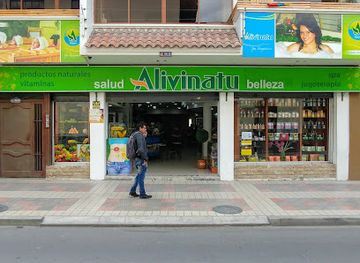
Alivinatu
Explore the best of natural goods in Loja, Ecuador, at Alivinatu, where health meets local flavor in a sustainable shopping experience.
5 min drive · 1.5 km from city centre
-
Cosmetics store
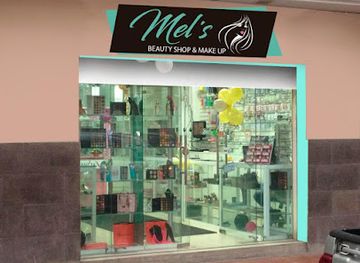
MELS BEAUTY SHOP COSMETICOS
Explore MELS Beauty Shop in Loja for an extensive range of cosmetics and personalized beauty advice to enhance your beauty routine.
15 min walk · 1.2 km from city centre
Get your free copy of our complete guide to Loja, delivered straight to you.
Everything on this page, from attractions and restaurants to essentials and local phrases, in one PDF you can read offline, print or share.
Already have an account? Sign in
Your Loja guide is ready.
We'll send it to · Not you? Sign out

Getting your guide ready…
We are putting together a fresh copy of the Loja guide. This can take up to a minute.
This can take a few moments. If your browser asks, choose Allow so the download can start. You'll find the guide in your Downloads folder.
Nothing happened? Download it again
Sorry, the guide is taking longer than usual. Please try again in a minute, or get it by email instead.
Loja essentials
Currency and Payment
Safety
Emergency Situations
Do's and Don'ts
Local Tips
From Eve
Local phrases worth knowing
You don't need to get them perfect. A few words go a long way, and locals appreciate the effort.
Basics
| English | Local | Say it |
|---|---|---|
| Hello | Hola | [oh-la] |
| Goodbye | Adiós | [ah-dee-ohs] |
| Yes | Sí | [see] |
| No | No | [no] |
| Please/You're welcome | Por favor/De nada | [por fah-vor/de nah-dah] |
| Thank you | Gracias | [grah-see-ahs] |
| Excuse me/Sorry | Disculpe/Perdón | [dees-kool-peh/pehr-dohn] |
| How are you? | ¿Cómo estás? | [koh-moh ehs-tahs] |
| Fine. And you? | Bien. ¿Y tú? | [bee-ehn. ee too] |
| Do you speak English? | ¿Hablas inglés? | [ah-blahs een-glehs] |
| I don't understand | No entiendo | [noh ehn-tee-ehn-doh] |
Eating & Drinking
| English | Local | Say it |
|---|---|---|
| I'd like to see the menu, please | Me gustaría ver el menú, por favor | [meh goos-tah-ree-ah vehr ehl meh-noo, por fah-vor] |
| I don't eat meat | No como carne | [noh koh-moh kahr-neh] |
| Cheers! | ¡Salud! | [sah-lood] |
| I would like to pay, please | Me gustaría pagar, por favor | [meh goos-tah-ree-ah pah-gahr, por fah-vor] |
Emergencies
| English | Local | Say it |
|---|---|---|
| Help! | ¡Ayuda! | [ah-yoo-dah] |
| Go away! | ¡Vete! | [veh-teh] |
| Call the Police! | ¡Llama a la policía! | [yah-mah ah lah poh-lee-see-ah] |
| Call a doctor! | ¡Llama a un médico! | [yah-mah ah oon meh-dee-koh] |
| I'm lost | Estoy perdido | [ehs-toy pehr-dee-doh] |
| I'm ill | Estoy enfermo | [ehs-toy ehn-fehr-moh] |
Shopping
| English | Local | Say it |
|---|---|---|
| I'd like to buy... | Me gustaría comprar... | [meh goos-tah-ree-ah kohm-prahr] |
| I'm just looking | Solo estoy mirando | [soh-loh ehs-toy mee-rahn-doh] |
| How much is it? | ¿Cuánto cuesta? | [kwan-toh kwehs-tah] |
| That's too expensive | Esto es demasiado caro | [ehs-toh ehs deh-mah-syah-doh kah-roh] |
| Can you lower the price? | ¿Puede bajar el precio? | [pweh-deh bah-har ehl pree-syoh] |
Time & Numbers
| English | Local | Say it |
|---|---|---|
| What time is it? | ¿Qué hora es? | [keh oh-rah ehs] |
| It's one o'clock | Es la una | [ehs lah oo-nah] |
| Half past (10) | Las diez y media | [lahs dyehs ee meh-dee-ah] |
| Morning | Mañana | [mah-nyah-nah] |
| Afternoon | Tarde | [tahr-deh] |
| Evening | Noche | [noh-cheh] |
| Yesterday | Ayer | [ah-yehr] |
| Today | Hoy | [oy] |
| Tomorrow | Mañana | [mah-nyah-nah] |
| 1 | Uno | [oo-noh] |
| 2 | Dos | [dohs] |
| 3 | Tres | [trehs] |
| 4 | Cuatro | [kooah-troh] |
| 5 | Cinco | [seen-koh] |
| 6 | Seis | [says] |
| 7 | Siete | [syeh-teh] |
| 8 | Ocho | [oh-choh] |
| 9 | Nueve | [nweh-veh] |
| 10 | Diez | [dyehs] |
Transport & Directions
| English | Local | Say it |
|---|---|---|
| Where's a/the...? | ¿Dónde está...? | [dohn-deh ehs-tah] |
| What's the address? | ¿Cuál es la dirección? | [kwal ehs lah dee-rehk-syon] |
| Can you show me (on the map)? | ¿Puede mostrarme (en el mapa)? | [pweh-deh mohs-trar-meh (ehn ehl mah-pah)] |
| When's the next (bus)? | ¿Cuándo es el próximo (autobús)? | [kwan-doh ehs ehl proh-ksee-moh (ow-toh-booce)] |
| A ticket (to ....) | Un boleto (a ....) | [oon boh-leh-toh (ah)] |
History of Loja
Indigenous Landscapes before Spanish Rule
Before the Spanish foundation of Loja, the region was inhabited by Indigenous communities associated with the southern Andes, including groups commonly identified in historical sources with the Paltas. The valleys around present-day Loja supported farming, exchange and movement between the highlands and the eastern slopes. Spanish chroniclers later described the area through colonial categories that did not always reflect the complexity of Indigenous political and cultural life. The region’s geography remained important after conquest: Loja’s position between the Ecuadorian highlands, the southern frontier and routes towards the Amazon helped make it a strategic settlement, while older patterns of agriculture and local knowledge continued beneath the structures of colonial rule.
The Spanish Foundation of Loja
Spanish forces established Loja in the sixteenth century, with Alonso de Mercadillo traditionally credited with founding the city in 1548. The settlement was named after Loja in Spain and laid out according to colonial urban principles, with a central square, religious institutions and administrative buildings. Its location gave Spanish authorities a base in the south of the Audiencia of Quito and a connection to routes leading towards mining areas and the eastern lowlands. Colonial Loja developed through agriculture, commerce and administration rather than becoming one of the continent’s largest cities. The grid, churches and civic spaces formed during this period continue to underpin the modern centre.
Colonial Trade and Religious Life
During the colonial era, Loja occupied a frontier position within Spanish South America, linked to the wider economy of the southern Andes. Livestock, agricultural production and regional trade sustained the city, while movement through the Loja valley connected settlements in what are now Ecuador and northern Peru. Catholic institutions became central to public life, and churches helped organise both religious practice and the appearance of the town. Devotion to the Virgen de El Cisne, whose sanctuary lies northwest of Loja, became particularly influential in the surrounding region. The annual pilgrimage tradition remains a major expression of southern Ecuadorian religious culture, even though the sanctuary itself is outside the city.
Independence in Southern Ecuador
Loja participated in the political upheavals that ended Spanish colonial rule in the early nineteenth century. The city proclaimed independence on 18 November 1820, joining a wider movement that had already transformed Guayaquil and other parts of the former Audiencia of Quito. Independence altered administrative relationships but did not immediately erase colonial social and economic structures. Loja subsequently became part of the Republic of Ecuador, whose political organisation developed through periods of regional rivalry and constitutional change. The city’s position near the Peruvian border continued to give it strategic importance, while local civic identity increasingly drew on its role as a southern cultural and administrative centre.
A City Shaped by Music and Education
In the nineteenth and twentieth centuries, Loja developed a strong reputation for music, choral performance and cultural education. Religious musical traditions, municipal ensembles, schools and private instruction all contributed to this reputation, and Loja produced composers whose work entered the wider Ecuadorian repertoire. Educational institutions helped connect the city to national intellectual life, while public festivals and performance spaces made music part of civic identity rather than a purely private pursuit. The Museo de la Música preserves elements of this history. Loja’s cultural profile also expanded through universities, theatres and arts organisations, giving the modern city an identity that extends beyond its colonial buildings.
Modern Loja and Southern Ecuador
Contemporary Loja has grown beyond its historic core into a broader urban area stretching along the valley and adjoining slopes. Roads, universities, public parks and newer commercial districts have changed the scale of daily life, while the centre retains many of the city’s most important civic and religious landmarks. Environmental awareness has also become significant because Loja lies close to important Andean ecosystems, including Podocarpus National Park to the east and southeast. These landscapes influence local research, tourism and public identity, although they are not part of the urban area itself. Modern Loja therefore combines regional administration, higher education, music and access to southern Ecuador’s highland and cloud-forest environments.
Loja in Photos
Browse through our photo collection highlighting the charm and character of the destination.
Cities near Loja
The closest cities to Loja, if you have time for more than one stop.
-

-
-

-

-


Swipe for more cities

