

Barka, Eritrea Travel Guide
Discover Barka in Eritrea: A picturesque town surrounded by lush landscapes, offering a rich blend of natural beauty, cultural heritage, and historical sites.
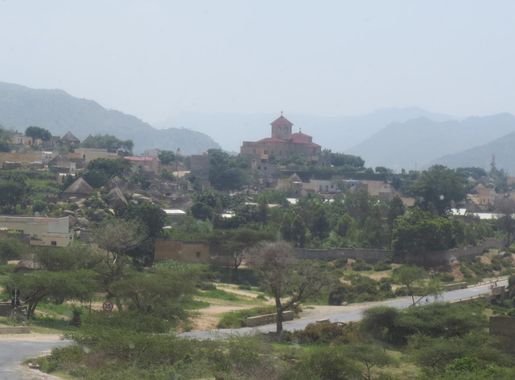
Nestled in the heart of Eritrea, Barka is a picturesque town that offers a unique blend of natural beauty and cultural heritage. Known for its stunning landscapes and welcoming locals, Barka is an ideal destination for those looking to explore beyond the beaten path. The town is surrounded by lush greenery and rolling hills, making it perfect for nature lovers. You can hike through the scenic trails, enjoy bird watching, or simply relax by the tranquil rivers. The local markets are a must-visit, where you can experience the vibrant culture and taste traditional Eritrean cuisine. Barka is also rich in history, with several ancient ruins and historical sites that tell the story of Eritrea’s past. The local museums provide an insightful look into the region’s heritage, showcasing artifacts and exhibits that date back centuries. Whether you are an adventure seeker, a history buff, or just looking to unwind, Barka has something to offer for everyone.

Know before you go
Hi, I'm Eve. Here are a few practical things to know before exploring Barka.
- Visit the local markets early in the morning to experience the bustling atmosphere and get the freshest produce.
- Wear comfortable walking shoes if you plan to explore the hiking trails or ancient ruins.
- Try the traditional Eritrean coffee ceremony, a unique cultural experience you won't want to miss.
- Respect local customs and dress modestly, especially when visiting religious sites.
- Learn a few basic phrases in Tigrinya, the local language, to enhance your interactions with the friendly locals.
Top City Travel Guides in Barka
The cities of Barka, and the easiest places to base yourself.


Destinations in Barka
Resorts, valleys and scenic spots worth a trip of their own.


Best landmarks in Barka
Top-rated picks
Best Landmarks
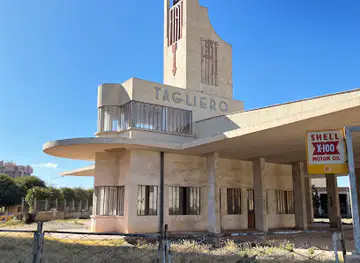
Fiat Tagliero ፡ፍያት ታሌሮ
Discover the architectural brilliance of Fiat Tagliero in Asmara, a stunning blend of Art Deco and Futurism in Eritrea's vibrant capital.
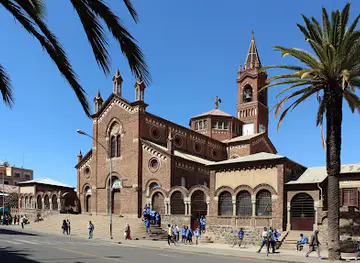
ኣስመራ ካቴድራል | Cathedral Our Lady of the Rosary
Discover the architectural beauty and spiritual serenity of Cathedral Our Lady of the Rosary in Asmara, a must-visit landmark for every traveler.

Khulafa al-Rashidun Mosque - ጃምዕ ኹለፋእ ኣልራሺዲን
Explore the captivating Khulafa al-Rashidun Mosque in Asmara, Eritrea, a stunning blend of architectural beauty and cultural heritage.

ቅድስተ ቅዱሳን ድንግል ማርያም ደብረሲና ኦርቶዶክስ ተዋህዶ ገዳም ኤርትራ "St. Mariam Debresina Orthdox Tewahdo Monastery Eritrea"
Explore the serene beauty and rich heritage of St. Mariam Debresina Orthodox Tewahdo Monastery, a spiritual oasis in the heart of Eritrea.

Best restaurants in Barka
Top-rated picks
Best Restaurants

Ghibabo Restaurant And Pizzeria
Experience the best of Eritrean and Italian cuisine at Ghibabo Restaurant And Pizzeria in Asmara - where flavor meets tradition.

Golden Fork Fast Food
Experience authentic Eritrean flavors at Golden Fork Fast Food in Asmara – perfect for quick bites and rich cultural tastes.

The Roof Garden
Discover authentic Eritrean flavors at The Roof Garden in Asmara, where delicious cuisine meets stunning views.

Banuna Bar & Restaurant
Experience the best of family-friendly dining at Banuna Bar & Restaurant in Mitsiwa with delightful local cuisine and warm hospitality.

Best bars in Barka
Top-rated picks
Best Bars

Bar Pasticceria Vittoria
Discover the rich flavors of Eritrea at Bar Pasticceria Vittoria, a cozy cafe offering delightful pastries and refreshing beverages in Asmara.

Bar Royal
Discover the heart of Asmara at Bar Royal, a cozy cafeteria offering Eritrean delicacies and a warm atmosphere for tourists.

Bar Jima
Experience the vibrant atmosphere of Bar Jima in Asmara, where cultural flavors and refreshing drinks await you.

Bar Zilli
Experience the rich flavors of Eritrea at Bar Zilli, a top destination in Asmara for grilled dishes and refreshing drinks.

Best nightclubs in Barka
Top-rated picks
Best Nightclubs

Bar Royal
Experience the vibrant flavors of Eritrean cuisine at Bar Royal, a cherished cafeteria in the heart of Asmara, perfect for tourists and locals alike.

Bar Jima
Experience the vibrant nightlife of Asmara at Bar Jima, where local culture meets refreshing drinks in a lively atmosphere.

Admas Restaurant & Bar
Experience authentic Eritrean flavors and vibrant nightlife at Admas Restaurant & Bar, the culinary gem of Asmara.

Bar Diana
Experience the vibrant atmosphere of Bar Diana in Asmara, where local culture meets refreshing drinks, perfect for unwinding after a day of exploration.

Best shops in Barka
Top-rated picks
Best Shops

China Market
Explore the China Market in Muscat for a unique blend of Omani culture and Chinese treasures, offering an unforgettable shopping experience.

Barka Grand Center
Experience the best of shopping, dining, and entertainment at Barka Grand Center, the vibrant heart of Barka, Oman.

Chinese Landmarks Mall
Explore the vibrant shopping and dining experiences at Chinese Landmarks Mall in Ar Rumays, Oman—a perfect blend of culture and leisure.

Al noman china wholesale mart
Experience the vibrant shopping atmosphere at Al Noman China Wholesale Mart, where great deals and diverse products await in Barka, Oman.

Explore Barka on the Map
A handpicked selection of must-see spots in Barka, mapped for you.
Barka Essentials
-
Barka is a region in Eritrea, and the nearest international airport is Asmara International Airport (ASM) in the capital city, Asmara, approximately 300 kilometers away. From Asmara, you can take a domestic flight to one of the smaller airports closer to Barka, or you can travel by road. The road journey can take around 6 to 8 hours depending on the condition of the roads and the mode of transport. Buses and shared taxis are available from Asmara to various towns in Barka.
-
Within Barka, transportation options include minibuses, taxis, and shared taxis known locally as 'Higer' buses. These are relatively inexpensive and are the most common means of transportation. For more flexibility, you can also rent a car, but be prepared for varying road conditions. Keep in mind that public transport schedules can be irregular, so plan accordingly.
-
The official currency in Eritrea is the Nakfa (ERN). It is advisable to carry cash as credit cards are not widely accepted outside of major hotels and some restaurants in larger towns. ATMs are scarce in Barka, so it is best to withdraw sufficient cash in Asmara before traveling. Foreign currencies can be exchanged at banks and authorized exchange offices.
-
Barka is generally a safe region, but it is always wise to take standard precautions. Avoid walking alone at night and be cautious in crowded places to prevent pickpocketing. There are no specific high-crime areas targeting tourists, but always stay vigilant. Keep your belongings secure and avoid displaying valuables. It is also advisable to keep copies of important documents like your passport and travel insurance.
-
In case of an emergency, dial 122 for police assistance or 113 for medical emergencies. Medical facilities in Barka are limited, so it is recommended to have travel insurance that covers medical evacuation if necessary. Pharmacies are available in larger towns where you can purchase over-the-counter medications. It is also advisable to carry a basic first aid kit.
-
Fashion: Do dress modestly, especially when visiting rural areas and religious sites. Avoid wearing revealing clothing. Religion: Do respect local customs and traditions. If visiting mosques, always remove your shoes and dress conservatively. Public Transport: Do be respectful and give up your seat to elderly passengers. Don't eat or drink on public transport. Greetings: Do greet people with a handshake. A smile and a nod are also appreciated. Eating & Drinking: Do try local dishes and accept food offerings graciously. Don't refuse hospitality, as it is considered impolite.
-
To experience Barka like a local, visit the local markets where you can buy fresh produce and traditional Eritrean goods. Engage with locals, as they are often friendly and willing to share stories about their culture and history. Don't miss out on participating in local festivals and traditional coffee ceremonies. For a unique experience, explore the beautiful landscapes and historical sites such as ancient ruins and rock art found in the region.
When is the best time to visit Barka?
Useful Local Phrases for Barka
You don't need to speak the language perfectly. Even learning a few simple words can make conversations warmer—and locals usually appreciate the effort.
— Eve

Here are the phrases I use most often in Barka. Try a few—you'll be surprised how far they go! 😊
❤️
-
- HelloSelam
[seh-lahm] - GoodbyeDehan, t'kebar
[deh-han, t'keh-bar] - YesIye
[ee-yeh] - NoAydelem
[eye-deh-lem] - Please/You're welcomeMin ayni
[meen ah-yee-nee] - Thank youYekenyeley
[yeh-keh-neh-leh-yee] - Excuse me/SorryBela, teshekur
[beh-lah, teh-sheh-kur] - How are you?Kemey halek?
[keh-meh-yee hah-lek] - Fine. And you?T'eykun. Kemey?
[t'ey-kun. keh-meh-yee] - Do you speak English?Engelisi t'khaley?
[en-ge-li-see t'kah-leh-yee] - I don't understandYekenyem aydelem
[yeh-keh-nyem eye-deh-lem]
- HelloSelam
-
- I'd like to see the menu, pleaseMin ayni menyu nesu
[meen ah-yee-nee men-yoo neh-soo] - I don't eat meatYekenyem b'la aydelem
[yeh-keh-nyem beh-lah eye-deh-lem] - Cheers!L'ka d'le
[l'kah d-lay] - I would like to pay, pleaseMin ayni h'lal, nesu
[meen ah-yee-nee h'lah-l, neh-soo]
- I'd like to see the menu, pleaseMin ayni menyu nesu
-
- Help!Yemay!
[yeh-mah-yee] - Go away!Bela!
[beh-lah] - Call the Police!Yefelg'eh Police!
[yeh-fehl-geh Po-leece] - Call a doctor!Yefelg'eh d'k'tor!
[yeh-fehl-geh d'keh-tor] - I'm lostEna h'eyti
[eh-nah h'eh-yee-tee] - I'm illEna g'era
[eh-nah geh-rah]
- Help!Yemay!
-
- I'd like to buy...Min ayni kum...
[meen ah-yee-nee koom] - I'm just lookingEna k'ayf
[eh-nah kah-yeef] - How much is it?Kemey z'ey?
[keh-meh-yee z'eh-yee] - That's too expensiveZ'ey zeyt'kebar
[z'eh-yee zeh-yee-t'keh-bar] - Can you lower the price?Yemay t'kebar h'aghal?
[yeh-mah-yee t'keh-bar hah-gahl]
- I'd like to buy...Min ayni kum...
-
- What time is it?Kemey z'ey h'ay?
[keh-meh-yee z'eh-yee ha-ee] - It's one o'clockZ'ey h'edek
[z'eh-yee heh-dek] - Half past (10)Seb'ey h'ay (10)
[seh-beh-yee ha-ee (10)] - MorningB'rha
[b'rah-ha] - AfternoonM'khel
[m'keh-l] - EveningK'aleh
[k'ah-leh] - YesterdayB'eyti
[b'eh-yee-tee] - TodayH'ala
[h'ah-lah] - TomorrowG'eyti
[g'eh-yee-tee] - 1H'ade
[h'ah-deh] - 2K'lu
[k'loo] - 3Sel'si
[sel-see] - 4Arba
[ahr-bah] - 5H'amsa
[h'ahm-sah] - 6S'ita
[see-tah] - 7S'ama
[s'ah-mah] - 8S'manya
[s'man-yah] - 9T'sh'a
[t'sh'ah] - 10Asher
[ah-sher]
- What time is it?Kemey z'ey h'ay?
-
- Where's a/the...?K'emen z'ey...?
[keh-mehn z'eh-yee] - What's the address?Kemey z'ey adrese?
[keh-meh-yee z'eh-yee ah-deh-reh-seh] - Can you show me (on the map)?Yemay h'ala z'ey (mappa)?
[yeh-mah-yee h'ah-lah z'eh-yee (mah-pah)] - When's the next (bus)?Kemey z'ey h'ay s'ey (bus)?
[keh-meh-yee z'eh-yee ha-ee seh-yee (boos)] - A ticket (to ....)H'lal (k'...)
[h'lah-l (k'...)]
- Where's a/the...?K'emen z'ey...?
History of Barka
-
Barka, located in the western region of Eritrea, has a rich history that dates back to ancient times. Archaeological evidence suggests that the area was inhabited by early civilizations that engaged in agriculture and trade. The fertile lands along the Barka River supported the growth of crops and sustained the local communities for centuries.
-
During the medieval period, Barka was influenced by various regional kingdoms and empires. The Aksumite Empire, known for its advanced architecture and trade networks, had a significant impact on the area. The Barka region served as a crucial link in the trade routes that connected the interior of Africa with the Red Sea and beyond.
-
In the 16th century, the Ottoman Empire expanded its influence into the Horn of Africa, including the Barka region. The Ottomans established control over the Red Sea coast and parts of the hinterland, impacting the local governance and trade dynamics. Barka's strategic location made it an important area for the Ottomans to secure their interests in the region.
-
In the late 19th century, Barka, along with the rest of Eritrea, fell under Italian colonial rule. The Italians invested in infrastructure, including roads and railways, to exploit the region's resources and integrate it into their colonial economy. The legacy of Italian architecture and urban planning can still be seen in some parts of the region today.
-
Barka played a significant role in Eritrea's long struggle for independence from Ethiopian rule. The region witnessed numerous battles and skirmishes between Eritrean liberation forces and Ethiopian troops. The resilience and determination of the local population contributed to the eventual success of the independence movement, culminating in Eritrea's independence in 1993.
-
The cultural heritage of Barka is a mosaic of traditions, languages, and customs. The region is home to various ethnic groups, each contributing to the rich tapestry of Barka's cultural identity. Traditional music, dance, and festivals are an integral part of community life. Visitors to Barka can experience the warmth and hospitality of its people, along with a deep sense of cultural pride.
-
Today, Barka is a blend of its historical past and modern aspirations. The region continues to be an agricultural hub, producing crops such as sorghum, millet, and sesame. Efforts are being made to develop infrastructure and improve living standards for the local population. Barka's historical sites, natural beauty, and cultural richness make it an intriguing destination for travelers seeking to explore Eritrea's diverse heritage.
Neighbouring Regions of Barka
The closest regions to Barka, if you have time for more than one.



Your all‑in‑one travel companion app
Explore expert travel guides, compare and book tours, experiences, hotels, and more—all from the palm of your hand. Download now for seamless trip planning wherever your wanderlust takes you.


Explore More of Eritrea

Looking beyond Barka? Discover Eritrea for broader travel guides, local hot-spots, and regional highlights.
Explore EritreaBarka in Photos
Browse through our photo collection highlighting the charm and character of the destination.




Barka: A Hidden Gem in Eritrea
Nestled in the heart of Eritrea, Barka is a picturesque town that offers a unique blend of natural beauty and cultural heritage. Known for its stunning landscapes and welcoming locals, Barka is an ideal destination for those looking to explore beyond the beaten path. The town is surrounded by lush greenery and rolling hills, making it perfect for nature lovers. You can hike through the scenic trails, enjoy bird watching, or simply relax by the tranquil rivers. The local markets are a must-visit, where you can experience the vibrant culture and taste traditional Eritrean cuisine. Barka is also rich in history, with several ancient ruins and historical sites that tell the story of Eritrea’s past. The local museums provide an insightful look into the region’s heritage, showcasing artifacts and exhibits that date back centuries. Whether you are an adventure seeker, a history buff, or just looking to unwind, Barka has something to offer for everyone.