

Free Vágar Travel Guide & Mobile App
Explore Vágar with free travel guides. Discover regional history, expert tips, proposed trips, and audio guides on web or mobile app.


Explore Vágar in the Faroe Islands for dramatic sea cliffs, Múlafossur waterfall, village walks, mountain scenery and Atlantic island history.
Read more about Vágar
When is the best time to visit Vágar?
Best: June–August · 11–13°C| Month | High (°C) | Rainfall (mm) |
|---|---|---|
| January | 6 | 149 |
| February | 6 | 114 |
| March | 6 | 120 |
| April | 7 | 101 |
| May | 10 | 71 |
| June (best) | 11 | 63 |
| July (best) | 13 | 74 |
| August (best) | 13 | 96 |
| September | 12 | 124 |
| October | 9 | 141 |
| November | 7 | 156 |
| December | 6 | 154 |
Getting to and around Vágar
How to get there
Transportation
Top city travel guides in Vágar
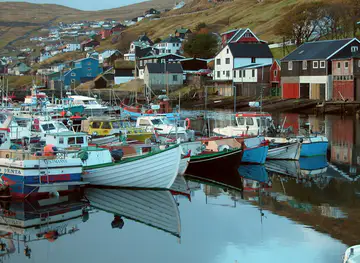
The cities of Vágar, and the easiest places to base yourself.
-
-

-

-

-


Swipe for more cities
Destinations in Vágar
Resorts, valleys and scenic spots worth a trip of their own.
-

-

-


Swipe for more destinations
Best attractions in Vágar
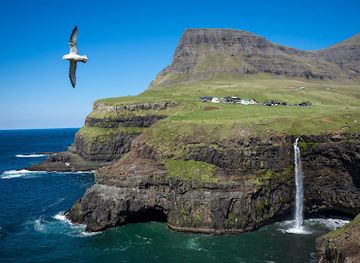
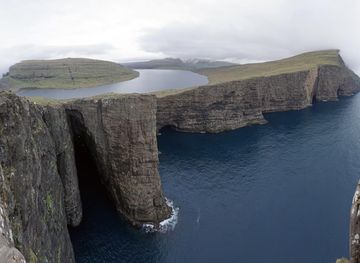
Vágar’s attractions are primarily landscape-based, with dramatic viewpoints and walking routes taking precedence over large visitor complexes. The route around or above Sørvágsvatn, also called Leitisvatn, leads towards Trælanípa and the waterfall Bøsdalafossur, where the lake, cliff and Atlantic appear in close succession. Near Gásadalur, Múlafossur is one of the Faroe Islands’ most recognisable waterfalls, falling from the village valley towards the sea. The villages themselves are part of the experience: Bøur offers traditional architecture and wide views towards Tindhólmur, while Sørvágur, Miðvágur and Sandavágur reveal working harbours and ordinary island life. The Vágar War Museum near Sørvágur provides historical context for the British wartime occupation and the construction of the island’s airfield. Visitors can also use Vágar as a base for birdwatching, scenic drives and boat access to Mykines, which is a separate island rather than part of Vágar. Activities depend strongly on wind, visibility and seasonal access, so the island is best explored with a flexible plan rather than a tightly fixed sequence of hikes.
-
Tourist attraction
Múlafossur Waterfall
Witness the breathtaking Múlafossur Waterfall in the Faroe Islands, where water cascades into the Atlantic Ocean amidst stunning scenery.
-
Tourist attraction
View on Mullafossur and Gasadalur village
Experience the iconic Múlafossur Waterfall in the Faroe Islands, where dramatic cascades meet the serene village of Gásadalur. A must-see natural wonder.
-
Tourist attraction
Trælanípa
Hike to Trælanípa for stunning views, the famous 'floating lake' illusion, and a glimpse into the Faroe Islands' Viking history.
-
Tourist attraction
Bøsdalafossur Waterfall
Witness the stunning Bøsdalafossur Waterfall in the Faroe Islands, where a lake dramatically cascades into the Atlantic Ocean.


Best landmarks in Vágar
Múlafossur is Vágar’s defining natural landmark, a tall waterfall dropping from the Gásadalur valley towards the Atlantic below steep mountains. The nearby village is also significant because its former isolation shaped a distinctive settlement pattern and the road tunnel has transformed access. At the southern end of Sørvágsvatn, or Leitisvatn, the cliffs of Trælanípa and the outlet waterfall Bøsdalafossur form a notable geological and visual landmark above the ocean. The lake itself is among the island’s most recognisable features, appearing to hover close to the sea from elevated viewpoints. Bøur’s village setting, traditional houses and outlook towards Tindhólmur and its sea stacks provide a cultural landscape landmark rather than a single monument. In Sørvágur, the harbour and the former wartime airfield area point to the island’s maritime and military history. Taken together, these places show how Vágar’s identity rests on the close relationship between cliffs, water, settlement and transport.
-
Historical place
Kirkjubømúrurin
Explore Kirkjubøur, a historic village in the Faroe Islands known for its ancient churches, charming architecture, and breathtaking coastal views.
-
Tourist attraction
Múlafossur Waterfall
Discover the breathtaking Múlafossur Waterfall in the Faroe Islands, a stunning natural attraction perfect for nature lovers and photographers alike.
-
Car rental agency
RentYourCar.fo - Airport & Tórshavn Car Rental
Discover the stunning landscapes of the Faroe Islands with RentYourCar.fo, your go-to car rental agency for an unforgettable adventure.
-
Tourist attraction
Gjógv Natural Harbour
Explore the breathtaking beauty of Gjógv Natural Harbour in the Faroe Islands, where nature's wonders and charming village life await.



Explore Vágar on the map
Plan your trip on one map. See where the top cities, national parks and sights are, and book hotels and experiences in a few clicks.
Best hotels in Vágar
Best restaurants in Vágar
Dining on Vágar reflects the wider Faroese food culture while retaining the practical character of a small island. Fish and seafood feature prominently, alongside lamb, potatoes, root vegetables, bread and dairy products; traditional Faroese specialities may include fermented foods whose strong flavours are best approached with local guidance. Restaurants, cafés, guesthouses and village eateries tend to be concentrated around Sørvágur and the larger settlements, with fewer options in the smallest villages. Menus may combine local ingredients with contemporary Nordic techniques, while coffee, cake and simple savoury meals are useful during a day of walking. The island’s proximity to the sea is reflected in its food, but visitors should not assume that every establishment serves the same traditional dishes or operates throughout the year. Booking ahead is sensible during busy periods, particularly when accommodation restaurants provide much of the evening dining.
-
Restaurant
Fríða Kaffihús
Experience the best of Faroese cuisine at Fríða Kaffihús, where tradition meets modern dining in Klaksvík's heart.
-
Restaurant
Hotel Føroyar
Discover unparalleled comfort and stunning views at Hotel Føroyar in Tórshavn – your perfect getaway in the Faroe Islands.
-
Irish pub
Irish Pub Torshavn
Discover the vibrant spirit of Tórshavn at Irish Pub - where great food meets local culture in the heart of the Faroe Islands.
-
Scandinavian
Katrina Christiansen
Experience authentic Scandinavian flavors at Katrina Christiansen in Tórshavn – where every dish tells a story.


Best bars in Vágar
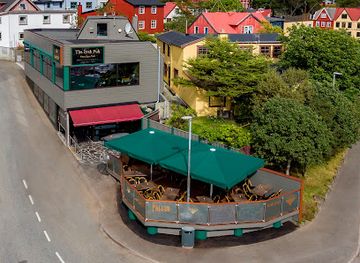
Vágar has a restrained evening scene rather than a nightclub culture. Sørvágur and the other larger villages may offer social life through small bars, cafés, hotel lounges or community venues, while many evenings are centred on restaurants, conversation and the quiet atmosphere of a harbour settlement. Visitors should expect limited late-night options, especially outside the main season, and should check current arrangements locally rather than relying on city-style opening hours. The island’s strongest evening experiences are often landscape-based: changing light over the mountains, a sheltered village walk or the sound of the sea, provided conditions and daylight allow it. For a larger choice of bars, live music and clubs, visitors generally travel outside Vágar to Tórshavn, the Faroese capital, rather than expecting a major nightlife district on the island.
-
Irish pub
Irish Pub Torshavn
Discover the vibrant atmosphere of Irish Pub Torshavn, where traditional Irish cuisine meets Faroese charm in the heart of Tórshavn.
-
Cafe
Fiskastykkið // Úti á Gjógv
Discover the flavors of the Faroe Islands at Fiskastykkið, where local ingredients meet breathtaking views in a cozy café.
-
Scandinavian
Katrina Christiansen
Experience the best of Scandinavian dining in Tórshavn, with fresh local ingredients and traditional flavors at Katrina Christiansen.
-
Restaurant
Angus Steakhouse
Experience the best of Faroe Islands cuisine at Angus Steakhouse, where exceptional steaks meet local culinary traditions.


Best nightclubs in Vágar
Vágar has a restrained evening scene rather than a nightclub culture. Sørvágur and the other larger villages may offer social life through small bars, cafés, hotel lounges or community venues, while many evenings are centred on restaurants, conversation and the quiet atmosphere of a harbour settlement. Visitors should expect limited late-night options, especially outside the main season, and should check current arrangements locally rather than relying on city-style opening hours. The island’s strongest evening experiences are often landscape-based: changing light over the mountains, a sheltered village walk or the sound of the sea, provided conditions and daylight allow it. For a larger choice of bars, live music and clubs, visitors generally travel outside Vágar to Tórshavn, the Faroese capital, rather than expecting a major nightlife district on the island.
-
Bar
Sirkus Bar
Experience the vibrant nightlife of Tórshavn at Sirkus Bar, where creative cocktails and lively ambiance await every visitor.
-
Bar
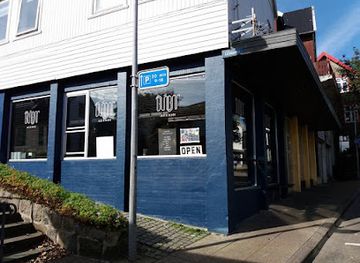
Glitnir
Experience the vibrant nightlife at Glitnir, Tórshavn's top bar for local brews and a lively atmosphere, showcasing the best of Faroese culture.
-
Bar
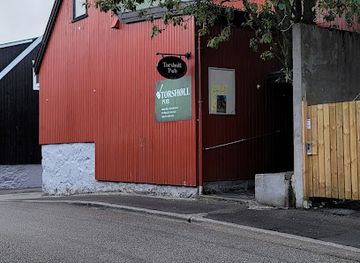
Tórshøll
Tórshøll: Where locals gather to savor drinks and create unforgettable memories in the heart of Tórshavn.
-
Bar
Blábar
Discover the vibrant nightlife of Tórshavn at Blábar, a local bar offering unique cocktails and a welcoming atmosphere.

Best shops in Vágar
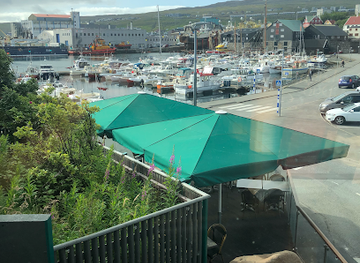
Shopping on Vágar is modest and practical, reflecting the island’s small population and dispersed villages. Sørvágur and the larger settlements provide the most useful places for everyday supplies, snacks and basic travel needs, while local cafés and accommodation providers may offer Faroese food products or small crafts. Visitors looking for regional gifts can consider woollen goods, knitwear, locally produced food, books about Faroese landscapes and small items made by island artists, although availability varies by season. Farm shops and direct sales should be approached respectfully and should not be assumed to operate like permanent retail outlets. For a wider choice of Faroese design, clothing, jewellery, galleries and specialist food, Tórshavn is a practical shopping excursion outside Vágar. Buying from independent makers and choosing durable products is generally more rewarding than expecting a large souvenir-shopping district on the island.
-
Restaurant
Vestmanna Tourist Centre
Explore the beauty and culture of the Faroe Islands at Vestmanna Tourist Centre, your gateway to unforgettable adventures and local flavors.
-
Heritage museum
Dúvugarðar Saksun Heritage Farm
Explore the rich culture and breathtaking landscapes at Dúvugarðar Saksun Heritage Farm in the heart of the Faroe Islands.
-
Gift shop
H. N. Jacobsens Bókahandil
Explore H. N. Jacobsens Bókahandil, Tórshavn's charming gift shop offering books, souvenirs, and toys that capture the essence of the Faroe Islands.
-
Grocery store
Bónus
Discover the best local and international flavors at Bónus in Sandavágur, a must-visit grocery store for every traveler in the Faroe Islands.


Get your free copy of our complete guide to Vágar, delivered straight to you.
Everything on this page, from attractions and restaurants to essentials and local phrases, in one PDF you can read offline, print or share.
Already have an account? Sign in
Your Vágar guide is ready.
We'll send it to · Not you? Sign out

Getting your guide ready…
We are putting together a fresh copy of the Vágar guide. This can take up to a minute.
This can take a few moments. If your browser asks, choose Allow so the download can start. You'll find the guide in your Downloads folder.
Nothing happened? Download it again
Sorry, the guide is taking longer than usual. Please try again in a minute, or get it by email instead.
Vágar essentials
Currency and Payment
Safety
Emergency Situations
Do's and Don'ts
Local Tips
From Eve
Local phrases worth knowing
You don't need to get them perfect. A few words go a long way, and locals appreciate the effort.
Basics
| English | Local | Say it |
|---|---|---|
| Hello | Hey | [hei] |
| Goodbye | Farvæl | [far-vail] |
| Yes | Ja | [yah] |
| No | Nej | [nay] |
| Please/You're welcome | Vinaliga | [vee-nah-lee-gah] |
| Thank you | Takk fyri | [tahk fuh-ree] |
| Excuse me/Sorry | Ursäkka | [oor-seh-kah] |
| How are you? | Hvussu hevur tú? | [hoo-su heh-vur too] |
| Fine. And you? | Fint. Og tú? | [feent. ohg too] |
| Do you speak English? | Talar tú enskt? | [tah-lar too eng-skt] |
| I don't understand | Eg skilji ikki | [eg skeel-yee ee-kee] |
Eating & Drinking
| English | Local | Say it |
|---|---|---|
| I'd like to see the menu, please | Eg vil síggja matseðilin, vinaliga | [eg vil see-gah maht-say-dhlin, vee-nah-lee-gah] |
| I don't eat meat | Eg etti ikki kjöt | [eg eh-tee ee-kee kyut] |
| Cheers! | Skál! | [skahl] |
| I would like to pay, please | Eg vil gjalda, vinaliga | [eg vil yah-lah, vee-nah-lee-gah] |
Emergencies
| English | Local | Say it |
|---|---|---|
| Help! | Hjálp! | [yahlp] |
| Go away! | Far burt! | [far boort] |
| Call the Police! | Kalla løgregluna! | [kah-lah luh-greh-loo-nah] |
| Call a doctor! | Kalla ein lækna! | [kah-lah ayn lehk-nah] |
| I'm lost | Eg eri misvísandi | [eg eh-ree mees-vee-sahn-dee] |
| I'm ill | Eg eri sjúkur | [eg eh-ree shoo-kur] |
Shopping
| English | Local | Say it |
|---|---|---|
| I'd like to buy... | Eg vil keypa... | [eg vil kay-pah] |
| I'm just looking | Eg eri bara at leita | [eg eh-ree bah-rah at lay-tah] |
| How much is it? | Hvat kostar tað? | [hvat koh-stahr tahd] |
| That's too expensive | Tað er ov dýrt | [tahd air ohv deert] |
| Can you lower the price? | Kanst tú lækka prísin? | [kahnst too leh-kah pree-sin] |
Time & Numbers
| English | Local | Say it |
|---|---|---|
| What time is it? | Hvat tíð er tað? | [hvat teed air tahd] |
| It's one o'clock | Klokkan er eitt | [klok-kahn air eyt] |
| Half past (10) | Hálv fimm | [hahlv fim] |
| Morning | Morgun | [mor-gun] |
| Afternoon | Eftirmiddags | [ef-teer-mid-dahgs] |
| Evening | Kvøld | [kvul-d] |
| Yesterday | Í gjár | [ee gahr] |
| Today | Í dag | [ee dahg] |
| Tomorrow | Í morgin | [ee mor-gin] |
| 1 | 1 | [1] |
| 2 | 2 | [2] |
| 3 | 3 | [3] |
| 4 | 4 | [4] |
| 5 | 5 | [5] |
| 6 | 6 | [6] |
| 7 | 7 | [7] |
| 8 | 8 | [8] |
| 9 | 9 | [9] |
| 10 | 10 | [10] |
Transport & Directions
| English | Local | Say it |
|---|---|---|
| Where's a/the...? | Hvar er ein/te... | [hvar air ayn/teh] |
| What's the address? | Hvat er adressan? | [hvat air ah-dreh-sahn] |
| Can you show me (on the map)? | Kanst tú vísa mær (á kartuni)? | [kahnst too vee-sah mair (aw kar-too-nee)] |
| When's the next (bus)? | Nær kemur næsta (buss)? | [nair keh-mur nay-stah (boos)] |
| A ticket (to ....) | Ein billette (til ....) | [ayn bih-let-teh (til ....)] |
History of Vágar
Early Norse Settlement and Farming
The settlement history of Vágar is rooted in the Norse expansion across the North Atlantic during the Viking Age. Communities established farms in sheltered valleys and coastal locations, combining sheep husbandry, fishing and the limited cultivation possible in the Faroese climate. Place names and village patterns preserve elements of this Norse heritage, while the island’s landscape still reflects an economy organised around infield meadow, outlying grazing land and access to the sea. The small settlements that developed on Vágar remained closely connected to neighbouring islands through boats and seasonal work.
Medieval Faroese Society and Christianity
During the medieval period, Vágar formed part of the wider political and religious world of the Faroe Islands, first under Norwegian influence and later within the Danish realm. Christianity reshaped community life, and churches became important centres in the island’s villages. The present churches are largely later buildings, but their locations and the continuity of settlement reflect older patterns. Rural life remained based on mixed subsistence, sheep farming, fishing and maritime exchange, with weather and sea conditions exerting a constant influence on communication between Vágar and the other islands.
Royal Trade Monopoly and Village Economies
From the seventeenth century until the nineteenth century, the Danish royal trade monopoly restricted Faroese overseas commerce and concentrated trading activity through authorised merchants. Vágar’s villages nevertheless maintained active local economies based on fishing, livestock, wool and small-scale exchange. Goods arriving from abroad were important because the islands could not produce many necessities locally. The monopoly’s eventual abolition in the nineteenth century helped open the Faroese economy to wider commercial development, although remote settlements continued to depend heavily on boats and seasonal conditions.
Modern Fishing and Maritime Change
The nineteenth and twentieth centuries brought major changes to Faroese fishing, as improved boats, commercial fisheries and better preservation techniques turned the sea into the foundation of a modern export economy. On Vágar, harbour communities such as Sørvágur developed in response to these economic changes, while farming remained visible in the surrounding villages and uplands. The contrast between small traditional settlements and modern fishing infrastructure is part of the island’s contemporary character. Maritime connections also remained essential for linking Vágar with the rest of the archipelago.
The British Occupation during the Second World War
The Faroe Islands were occupied by British forces from 1940 to 1945 after Denmark came under German occupation. Vágar gained particular strategic importance because the British constructed an airfield there, now the site of Vágar Airport, and built roads, camps and other infrastructure. The occupation left a visible and documented imprint on the island, while the Vágar War Museum near Sørvágur preserves objects and information about the period. The wartime building programme also accelerated transport and communications changes that influenced Vágar long after the soldiers departed.
Road Connections and Contemporary Vágar
Improved roads, tunnels and modern air links transformed Vágar’s relationship with the rest of the Faroe Islands during the late twentieth and early twenty-first centuries. Vágar Airport made the island an international gateway, while road infrastructure reduced the isolation of its villages and supported commuting, tourism and access to services. The island’s economy remains connected to fishing, farming and public services, but visitor interest in its waterfalls, cliffs and traditional settlements has become increasingly important. Managing footpath erosion, traffic and residential privacy is now part of the region’s evolving tourism story.
Vágar in Photos
Browse through our photo collection highlighting the charm and character of the destination.
Neighbouring regions of Vágar
The closest regions to Vágar, if you have time for more than one.
-

-

-
-
-


Swipe for more regions
Explore more
Explore more of Faroe Islands
Discover the Faroe Islands: A land of rugged beauty, rich history, and tranquil villages, perfect for nature lovers and adventurers seeking an off-the-beaten-path destination.
Explore Faroe Islands