

Coconut Grove (Miami) Travel Guide - Free
Explore Coconut Grove in Miami with Evendo's free guide. Find the best shops, historic streets, restaurants, and gems on web or mobile.


Coconut Grove, Miami's leafy bayfront neighbourhood, blends Bahamian heritage, tropical gardens, marinas, historic homes, cafés and cultural attractions.
A Leafy Waterfront Neighbourhood
Coconut Grove occupies a shaded stretch of Miami's Biscayne Bay shoreline, south of the city's central districts and distinct from the high-rise energy of Brickell and Downtown. Its streets wind beneath mature banyans, oaks and palms, while the bay appears intermittently between houses, parks, marinas and low-rise commercial blocks. The neighbourhood's informal boundaries are usually understood around Grand Avenue, Main Highway, U.S. 1 and the waterfront, although nearby Coral Gables and South Miami are separate places.Read more about Coconut Grove
History and Cultural Character
Gardens, Culture and Everyday Life
Best attractions in Coconut Grove
Coconut Grove's attractions combine historic houses, tropical gardens and open waterfront spaces rather than forming a single monument district. The Barnacle Historic State Park preserves Ralph Middleton Munroe's 1891 home and its bayfront grounds, offering a close view of the settlement's early domestic character. At the northern edge, Vizcaya Museum and Gardens presents the former estate of James Deering, with an elaborate house, formal gardens and shoreline setting; its exact position should be treated as the northern Grove area rather than representative of the whole neighbourhood. The Kampong, a National Tropical Botanical Garden site, explores tropical plants in a former private garden. Peacock Park and the Dinner Key waterfront provide space for walking, boating and watching local activity, while the Coconut Grove Cemetery and historic streets around Charles Avenue reward slower exploration.
-
Park
Merrie Christmas Park
Discover the peaceful beauty of Merrie Christmas Park, a serene oasis in Miami's Coconut Grove, perfect for relaxation and outdoor fun.
6 min drive · 1.9 km from neighbourhood centre
-
Botanical garden
The Kampong, National Tropical Botanical Garden
Explore the lush landscapes and vibrant flora of The Kampong, a tropical botanical garden in Miami's Coconut Grove, perfect for nature lovers and tranquil escapes.
19 min walk · 1.5 km from neighbourhood centre
-
Tourist attraction
Biscayne National Park Institute at Coconut Grove
Explore the aquatic wonders and rich history of Biscayne National Park Institute in Coconut Grove, a must-see destination in Miami for all nature lovers.
6 min drive · 1.9 km from neighbourhood centre
-
Tourist attraction
Art Spring Village
Explore Art Spring Village in Coconut Grove, Miami—an artistic haven filled with galleries, murals, and captivating local culture.
13 min walk · 1.1 km from neighbourhood centre


Best landmarks in Coconut Grove
The Barnacle, built in 1891 for boat designer and yachtsman Ralph Middleton Munroe, is Coconut Grove's clearest surviving link to its early settlement and bay-oriented way of life. The Coconut Grove Cemetery on Charles Avenue records the area's Bahamian and Black heritage and provides an important counterpoint to the grander estates and commercial developments. The Coconut Grove Playhouse, opened in 1927, remains a prominent theatre landmark even though it is not functioning as a conventional active playhouse. Further north, Vizcaya Museum and Gardens is a major estate landmark on Biscayne Bay, while the Kampong preserves the horticultural legacy of plant collector David Fairchild. Together these places show how the Grove developed through maritime culture, tropical gardening, religious and community life, and twentieth-century arts institutions.
-
Park
Peacock Park
Explore the lush landscapes and serene waterfront views at Peacock Park, a tranquil oasis in Miami's Coconut Grove perfect for relaxation and outdoor activities.
18 min walk · 1.5 km from neighbourhood centre
-
Park
The Barnacle Historic State Park
Explore the serene beauty and rich history of The Barnacle Historic State Park in Miami’s Coconut Grove, a perfect getaway for nature lovers and history enthusiasts.
16 min walk · 1.3 km from neighbourhood centre
-
Botanical garden
The Kampong, National Tropical Botanical Garden
Explore The Kampong, a tropical botanical garden in Miami, where exotic plants and serene landscapes create a peaceful escape for nature lovers.
19 min walk · 1.5 km from neighbourhood centre
-
Historical landmark
Marjory Stoneman Douglas Historic Home
Explore Marjory Stoneman Douglas Historic Home, a vital piece of Miami's heritage and a symbol of environmental advocacy in Florida.
6 min drive · 1.9 km from neighbourhood centre


Explore Coconut Grove on the map
A handpicked selection of must-see spots in Coconut Grove, mapped for you.
Best hotels in Coconut Grove
Best restaurants in Coconut Grove
Coconut Grove's dining scene is concentrated around Grand Avenue, Main Highway, Commodore Plaza and the CocoWalk area, where cafés, restaurants and bars occupy a mixture of historic-looking low-rise buildings and newer commercial spaces. The neighbourhood's tropical setting encourages outdoor dining, while its maritime history and long association with Bahamian and Caribbean communities sit alongside the broader influences of Miami's international food culture. Visitors can find casual breakfasts, coffee, seafood, contemporary American cooking, Latin American flavours and polished evening restaurants within walking distance of the bay. Grand Avenue and the streets around Commodore Plaza offer a more local, mixed-use atmosphere than the larger shopping complexes, while the waterfront provides dining near marinas and public parks. Because individual businesses and formats change, checking current listings is sensible, especially when looking for specialist cuisine or late service.
-
Restaurant
Monty's Coconut Grove
Experience delicious seafood and American cuisine at Monty's Coconut Grove with stunning waterfront views in Miami's charming neighborhood.
7 min drive · 2.3 km from neighbourhood centre
-
American
Glass & Vine
Discover exquisite American cuisine and fine wines amidst lush greenery at Glass & Vine in Coconut Grove.
17 min walk · 1.4 km from neighbourhood centre
-
Restaurant
Jaguar Restaurant | Coconut Grove
Discover the vibrant flavors of Latin American cuisine at Jaguar Restaurant in Coconut Grove – a must-visit culinary gem.
15 min walk · 1.2 km from neighbourhood centre
-
Italian
Sapore di Mare Italian Seafood - Coconut Grove
Experience the best of Italian seafood cuisine at Sapore di Mare in Coconut Grove - where every bite tells a story.
14 min walk · 1.1 km from neighbourhood centre


Best bars in Coconut Grove
Coconut Grove's nightlife is generally social and restaurant-led rather than dominated by large nightclubs. The main evening concentration lies around Commodore Plaza, Grand Avenue, Main Highway and CocoWalk, where bars and dining rooms attract local residents, students and visitors. The area has long carried a bohemian cultural association, and its entertainment history includes the Coconut Grove Playhouse, a significant theatre building that is currently a historic site rather than a regularly operating venue. Evenings can also centre on outdoor tables and informal drinks near the commercial core, while the residential streets become noticeably quieter. Waterfront and marina areas may offer a calmer setting, but access varies by property and time of day. Visitors should check current opening arrangements and make the short return journey to accommodation thoughtfully after late-night socialising.
-
Restaurant
Monty's Coconut Grove
Experience the vibrant flavors of Miami at Monty's Coconut Grove, where fresh seafood meets American cuisine in a stunning waterfront setting.
7 min drive · 2.3 km from neighbourhood centre
-
Grill
Bayshore Club Bar & Grill
Discover the vibrant flavors of Miami at Bayshore Club Bar & Grill, where fresh ingredients meet an inviting atmosphere and stunning views.
6 min drive · 2.1 km from neighbourhood centre
-
American
Glass & Vine
Discover the perfect blend of American cuisine and fine wines at Glass & Vine in Coconut Grove, a must-visit for food lovers in Miami.
17 min walk · 1.4 km from neighbourhood centre
-
Grill
Barracuda Taphouse & Grill
Barracuda Taphouse & Grill in Coconut Grove: Savor American flavors in a vibrant bar and grill atmosphere, perfect for food and sports lovers alike.
15 min walk · 1.2 km from neighbourhood centre


Best nightclubs in Coconut Grove
Coconut Grove's nightlife is generally social and restaurant-led rather than dominated by large nightclubs. The main evening concentration lies around Commodore Plaza, Grand Avenue, Main Highway and CocoWalk, where bars and dining rooms attract local residents, students and visitors. The area has long carried a bohemian cultural association, and its entertainment history includes the Coconut Grove Playhouse, a significant theatre building that is currently a historic site rather than a regularly operating venue. Evenings can also centre on outdoor tables and informal drinks near the commercial core, while the residential streets become noticeably quieter. Waterfront and marina areas may offer a calmer setting, but access varies by property and time of day. Visitors should check current opening arrangements and make the short return journey to accommodation thoughtfully after late-night socialising.
-
Grill
Bayshore Club Bar & Grill
Experience the best of Miami dining at Bayshore Club Bar & Grill with fantastic grilled dishes and stunning waterfront views.
6 min drive · 2.1 km from neighbourhood centre
-
Lounge
Oasis Lounge and Hookah bar
Discover Oasis Lounge and Hookah Bar, a vibrant lounge in Coconut Grove, Miami, perfect for relaxation, drinks, and hookah experiences.
17 min walk · 1.4 km from neighbourhood centre
-
Gay night club
Azucar NightClub
Dive into the vibrant nightlife at Azucar Nightclub, Miami's premier gay club, known for its lively atmosphere and unforgettable dance parties.
7 min drive · 2.4 km from neighbourhood centre
-
Adult entertainment club
Playmates Club
Unleash your wild side at Playmates Club, Miami's premier adult entertainment venue – where nightlife meets sophistication.
8 min walk · 0.6 km from neighbourhood centre


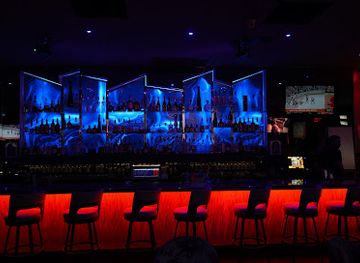
Best shops in Coconut Grove
Shopping in Coconut Grove is centred on the commercial streets around Grand Avenue, Main Highway, Commodore Plaza and the CocoWalk complex. The mix includes fashion, beauty, gifts, homeware, cafés and independent businesses, with the strongest concentration of contemporary retail around the larger village-style development. Grand Avenue and the surrounding side streets provide a more mixed local setting, reflecting the area's long history as a small community rather than a purpose-built shopping district. Visitors interested in books, design, art and tropical living may find the neighbourhood's independent retailers more distinctive than its chain stores, although individual businesses and stock change regularly. The Grove is not primarily a traditional market quarter, so shopping here works best as part of a walk linking cafés, historic streets, parks and the bay rather than as a single all-day retail itinerary.
-
Shopping mall
Shops at Merrick Park
Discover luxury shopping, exquisite dining, and vibrant atmosphere at the Shops at Merrick Park in Coral Gables, Florida.
8 min walk · 0.6 km from neighbourhood centre
-
Shopping mall
CocoWalk
Experience the lively atmosphere of CocoWalk, a premier shopping mall in Coconut Grove featuring diverse shops, delicious dining, and vibrant entertainment.
16 min walk · 1.3 km from neighbourhood centre
-
Shopping mall
Grove Gate S.C.
Explore the dynamic Grove Gate Shopping Center in Coconut Grove, Miami, where shopping meets local culture and delightful dining experiences.
17 min walk · 1.4 km from neighbourhood centre
-
Shopping mall
Grove Station Shops
Explore the vibrant Grove Station Shops in Coconut Grove, Miami, where shopping meets local culture in a delightful atmosphere.
6 min drive · 2.0 km from neighbourhood centre


Coconut Grove essentials
Getting There
Getting Around
Safety
Emergency Situations
Do's and Don'ts
Local Tips

From Eve
Local phrases worth knowing
You don't need to get them perfect. A few words go a long way, and locals appreciate the effort.
Basics
| English | Local | Say it |
|---|---|---|
| Hello | Hey there | [hey thair] |
| Goodbye | Catch you later | [kach yu lay-ter] |
| Yes | Yeah | [yeh] |
| No | Nah | [nah] |
| Please/You're welcome | Please/No worries | [pleez/no wor-eez] |
| Thank you | Thanks | [thanks] |
| Excuse me/Sorry | Pardon me/My bad | [par-dun me/my bad] |
| How are you? | How ya doin'? | [how ya do-in] |
| Fine. And you? | Good. You? | [gud. yu] |
| Do you speak English? | You speak English? | [yu speak ing-lish] |
| I don't understand | I don't get it | [i dont get it] |
Eating & Drinking
| English | Local | Say it |
|---|---|---|
| I'd like to see the menu, please | Can I check out the menu? | [kan i chek out the menu?] |
| I don't eat meat | I'm vegetarian | [im ve-ja-te-ree-an] |
| Cheers! | Cheers! | [cheers] |
| I would like to pay, please | Check, please | [chek, please] |
Emergencies
| English | Local | Say it |
|---|---|---|
| Help! | SOS! | [ess-oh-ess] |
| Go away! | Get lost! | [get lost] |
| Call the Police! | Call the cops! | [call the cops] |
| Call a doctor! | Get a doc! | [get a doc] |
| I'm lost | I'm lost | [im lost] |
| I'm ill | I'm sick | [im sik] |
Shopping
| English | Local | Say it |
|---|---|---|
| I'd like to buy... | I wanna buy... | [i wanna buy] |
| I'm just looking | Just browsing | [just brows-ing] |
| How much is it? | What's the price? | [whats the price] |
| That's too expensive | That's pricey | [thats pry-see] |
| Can you lower the price? | Can you give a discount? | [kan yu giv a dis-count] |
Time & Numbers
| English | Local | Say it |
|---|---|---|
| What time is it? | What's the time? | [whats the time] |
| It's one o'clock | It's one | [its one] |
| Half past (10) | 10:30 | [ten-thur-tee] |
| Morning | Morning | [mor-ning] |
| Afternoon | Afternoon | [af-ter-noon] |
| Evening | Evening | [ee-ven-ing] |
| Yesterday | Yesterday | [yes-ter-day] |
| Today | Today | [to-day] |
| Tomorrow | Tomorrow | [to-mor-row] |
| 1 | One | [wun] |
| 2 | Two | [too] |
| 3 | Three | [three] |
| 4 | Four | [for] |
| 5 | Five | [fiv] |
| 6 | Six | [siks] |
| 7 | Seven | [sev-en] |
| 8 | Eight | [ate] |
| 9 | Nine | [nine] |
| 10 | Ten | [ten] |
Transport & Directions
| English | Local | Say it |
|---|---|---|
| Where's a/the...? | Where can I find...? | [where kan i find] |
| What's the address? | Where's that at? | [wheres that at] |
| Can you show me (on the map)? | Can you point it out (on the map)? | [kan yu point it out on the map] |
| When's the next (bus)? | When's the next one (bus)? | [whens the next one bus] |
| A ticket (to ....) | One ticket (to ....) | [wun ticket to] |
History of Coconut Grove
Early Settlement and Bahamian Roots
Before Coconut Grove became part of metropolitan Miami, the area attracted homesteaders, boatmen, farmers and visitors drawn to its bayfront setting and abundant vegetation. Bahamian immigrants played a particularly important role in establishing the settlement's early social and economic life during the late nineteenth century, bringing maritime skills, building knowledge and cultural traditions. The neighbourhood's name is generally linked to the coconut palms noticed by early settlers, although the area's tropical vegetation included many other species. Surviving traces of this period are concentrated around Charles Avenue, the Coconut Grove Cemetery and historic religious institutions, where the Grove's early communities remain part of the physical landscape.
A Resort and Artists' Village
By the 1880s and 1890s, Coconut Grove had developed a reputation as a relaxed bayfront retreat, connected to the wider region by water and gradually by improved roads. The Peacock Inn, established by Charles and Isabella Peacock in the 1880s, helped give the settlement a hospitality economy and attracted visitors, sailors and seasonal residents. Artists, writers and other bohemian-minded newcomers were drawn to the landscape and relative informality. The Barnacle, built in 1891 for Ralph Middleton Munroe, reflects this era: its elevated design and bay-facing setting belong to a period when Coconut Grove was still a small, semi-rural community rather than a fully urban district.
Urban Growth Around the Bay
The arrival of railways in the wider Miami area and the rapid expansion of South Florida in the early twentieth century brought Coconut Grove into closer contact with the growing city. Roads, utilities and new homes gradually replaced some of the earlier rural character, while the waterfront remained important for boating and recreation. The 1926 Miami hurricane and the property collapse that followed affected the local economy, as they did much of South Florida, but Coconut Grove retained a substantial collection of mature trees and older buildings. In 1925 it was incorporated into the City of Miami, formalising its connection with the expanding municipality while preserving a strong local identity.
Preservation, Redevelopment and Cultural Change
The later twentieth century brought both preservation and commercial redevelopment. Historic places such as The Barnacle, Vizcaya and the Kampong gained recognition as cultural and horticultural assets, while Grand Avenue, Commodore Plaza and the bayfront became centres of restaurants, shops and entertainment. The Coconut Grove Playhouse, opened in 1927 and long associated with South Florida theatre, became an important cultural landmark even after its closure. Redevelopment around CocoWalk and the waterfront has changed the commercial landscape, while residents and preservation groups continue to debate how new construction should relate to the neighbourhood's tree canopy, historic buildings and Bahamian heritage.
Coconut Grove in Photos
Browse through our photo collection highlighting the charm and character of the destination.
Neighbourhoods near Coconut Grove
The closest neighbourhoods to Coconut Grove, if you have time for more than one stop.
-

-

-

-


Swipe for more neighbourhoods
Explore more

Explore more of Miami
Miami blends Art Deco architecture, Caribbean culture, beaches, museums and Everglades access into a dynamic Florida city shaped by water and migration.
Explore Miami