

Free Sarasota Travel Guide & Mobile App
Plan your Sarasota trip with Evendo. Get free guides to top attractions, restaurants, hotels, and bars. Web access or download the mobile app.


Sarasota, Florida blends Gulf beaches, Ringling arts, historic districts, botanical gardens and lively cultural attractions with laid-back coastal sightseeing.
Gulf Coast Setting
Sarasota occupies a particularly varied stretch of Florida’s Gulf Coast, where the mainland faces Sarasota Bay and a chain of barrier islands separates the inland waterways from the open Gulf of Mexico. The city centre is compact and walkable by American standards, with palm-lined streets, waterfront parks and a cultural quarter anchored by museums, theatres and galleries. Across the bay, Lido Key and St Armands offer beaches, boating and a more resort-oriented atmosphere, while Siesta Key, although outside Sarasota city limits, is a nearby destination known for its pale quartz sand.Read more about Sarasota
Arts, Architecture and Gardens
Neighbourhoods and Coastal Life
When is the best time to visit Sarasota?
Best: March, November–December · 22–26°C| Month | High (°C) | Rainfall (mm) |
|---|---|---|
| January | 22 | 66 |
| February | 23 | 76 |
| March (best) | 24 | 89 |
| April | 27 | 76 |
| May | 30 | 89 |
| June | 32 | 203 |
| July | 33 | 216 |
| August | 33 | 234 |
| September | 32 | 198 |
| October | 29 | 99 |
| November (best) | 26 | 64 |
| December (best) | 22 | 61 |
Getting to and around Sarasota
How to get there
Transportation
Best attractions in Sarasota
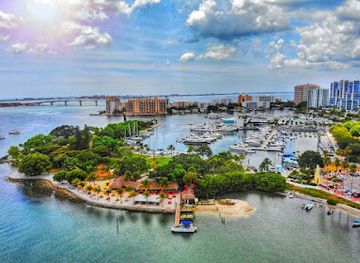
Sarasota’s attractions range from major cultural institutions to coastal landscapes. The Ringling brings together an art museum, the Circus Museum, the Ca’ d’Zan mansion and formal gardens in a substantial bayfront estate, while Marie Selby Botanical Gardens combines tropical plant collections with waterfront views in the city centre. The Sarasota Opera House and Florida Studio Theatre provide established performing-arts experiences, and the historic Sarasota Art Museum occupies a former high-school building with exhibitions focused on modern and contemporary art. Bayfront Park offers open views across Sarasota Bay, with the nearby John and Mable Ringling Bridge linking the mainland to Lido Key. St Armands Circle adds galleries, shops and dining around a landscaped roundabout, and Lido Beach provides a quieter urban beach setting. Siesta Key’s famous sand is a nearby county destination rather than part of Sarasota city itself.
-
City park
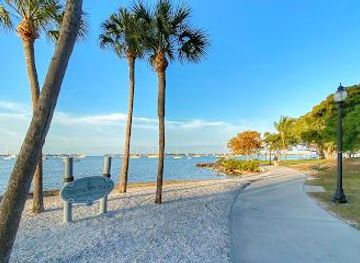
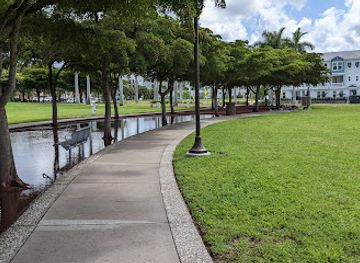
Bayfront Park
Explore the beauty of Bayfront Park in Sarasota, a perfect blend of nature, recreation, and breathtaking waterfront views.
18 min walk · 1.4 km from city centre
-
Botanical garden
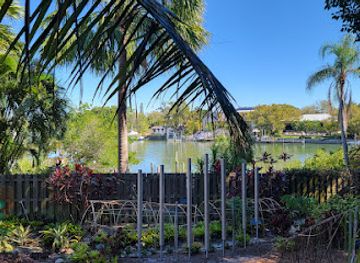
Marie Selby Botanical Gardens Downtown Sarasota
Explore the lush beauty and tranquility of the Marie Selby Botanical Gardens, a must-visit destination for nature lovers in Sarasota, Florida.
17 min walk · 1.3 km from city centre
-
Tourist attraction
Marie Selby Botanical Gardens Downtown Sarasota campus
Explore the enchanting landscapes of Marie Selby Botanical Gardens in Sarasota, a botanical paradise filled with unique plants and artful exhibits.
17 min walk · 1.3 km from city centre
-
City park
Bayfront Park
Experience the vibrant beauty of Bayfront Park in Sarasota, a perfect blend of nature and recreation by the stunning waterfront.
18 min walk · 1.4 km from city centre

Best landmarks in Sarasota
Sarasota’s landmarks express its connections with art, wealth, performance and modern architecture. Ca’ d’Zan, the former Ringling residence, is a palatial bayfront house whose Venetian Gothic design reflects the ambitions of its 1920s owners, while The Ringling’s museum complex records John Ringling’s cultural legacy. In the centre, the Sarasota Opera House, originally opened in 1926 as the Edwards Theatre, is an important historic performance building, and the nearby Sarasota County Courthouse contributes a civic presence to the downtown streetscape. The Unconditional Surrender statue on the bayfront commemorates the famous Second World War photograph, although its interpretation remains part of wider public discussion about representation and memory. The city is also known for Sarasota School modernism, visible in surviving mid-century buildings that use shade, open space and large windows to respond to Florida’s climate.
-
City park
Bayfront Park
Experience the beauty of Bayfront Park in Sarasota, where nature, recreation, and culture converge in a stunning urban oasis.
18 min walk · 1.4 km from city centre
-
City park
Payne Park
Experience the natural beauty and family-friendly fun at Payne Park in Sarasota, where lush landscapes meet vibrant community activities.
6 min walk · 0.5 km from city centre
-
Tourist attraction
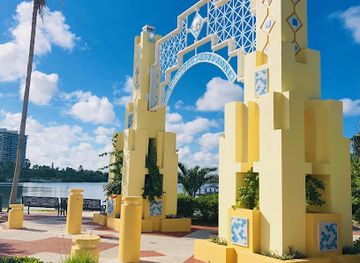
Unconditional Surrender - Sarasota, FL
Discover the iconic Unconditional Surrender monument in Sarasota, FL—an artistic tribute to love and victory set in a beautiful park landscape.
16 min walk · 1.3 km from city centre
-
Non-profit organization
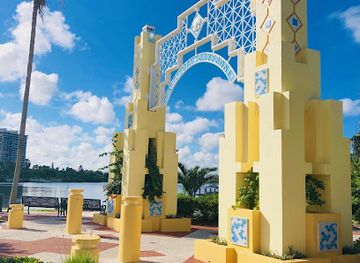
The Sarasota Children's Garden
Explore The Sarasota Children's Garden: A magical, family-friendly botanical paradise in Florida, brimming with interactive fun and natural beauty for all ages.
14 min walk · 1.1 km from city centre

Explore Sarasota on the map
Plan your Sarasota trip on one map. See where the top attractions, landmarks, restaurants, bars and hotels are, find what's near where you're staying, and book hotels and experiences in a few clicks.
Neighbourhoods in Sarasota
-

-

-


Swipe for more neighbourhoods
Best hotels in Sarasota
Best restaurants in Sarasota
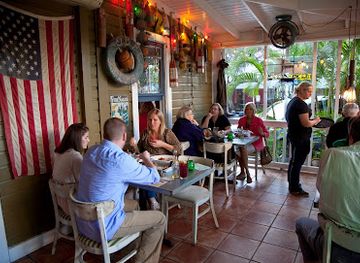
Sarasota’s dining scene reflects its Gulf Coast setting, with seafood, shellfish, Florida produce and casual waterfront meals prominent alongside a broad range of international cooking. Grouper, snapper, stone crab when in season and locally sourced fish appear in many restaurants, while Cuban and wider Caribbean influences are part of the region’s culinary mix. Downtown Main Street, Palm Avenue, Rosemary District and St Armands Circle contain the greatest concentration of restaurants, cafés and bars, with Burns Court adding a smaller, more intimate setting. The Sarasota Farmers Market brings together growers, bakers and prepared-food vendors on weekends, while Yoder’s Restaurant and Bakery is a long-established local institution associated with comfort food and pies. Dining ranges from seafood shacks and breakfast cafés to contemporary kitchens, Italian restaurants and globally influenced menus, with seasonal availability affecting some ingredients.
-
Restaurant
Marina Jack
Experience exquisite seafood and vibrant nightlife at Marina Jack in Sarasota – where dining meets breathtaking waterfront views.
19 min walk · 1.5 km from city centre
-
American
Libby's
Discover Libby's Neighborhood Brasserie: A Culinary Gem in Sarasota Offering Exceptional American Cuisine in an Inviting Atmosphere.
7 min drive · 2.3 km from city centre
-
Seafood
Owen's Fish Camp
Experience the essence of coastal dining at Owen's Fish Camp, where fresh seafood meets a charming atmosphere in Sarasota.
12 min walk · 0.9 km from city centre
-
Tex Mex
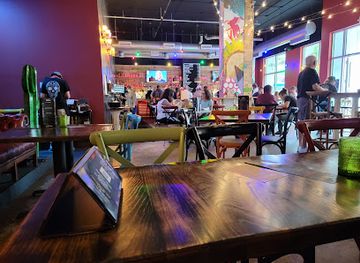
Circo
Experience authentic Tex-Mex cuisine at Circo in Sarasota - where vibrant flavors meet a lively atmosphere for an unforgettable dining experience.
13 min walk · 1.0 km from city centre
Best bars in Sarasota
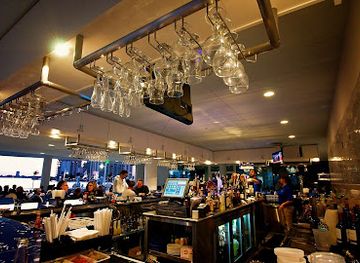
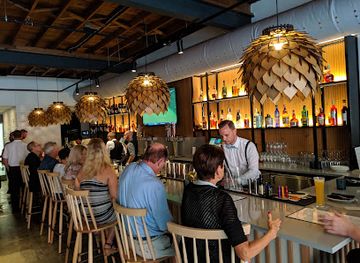
Sarasota’s evening life is more cultural and social than club-centred. Downtown Main Street and Palm Avenue have the broadest selection of cocktail bars, wine bars, breweries and relaxed late-evening venues, while St Armands Circle offers drinks and dining in a more polished resort setting. Live performance is central to the city’s after-dark identity: Sarasota Opera, Florida Studio Theatre, the Van Wezel Performing Arts Hall and smaller venues present opera, theatre, music, dance and comedy across the year. The city also has jazz, acoustic music and occasional outdoor performances, though the character of individual venues changes by season. Beach bars and waterfront restaurants provide sunset settings around Lido Key and the bay, but nightlife is generally dispersed and comparatively restrained rather than concentrated in a large nightclub district.
-
Restaurant
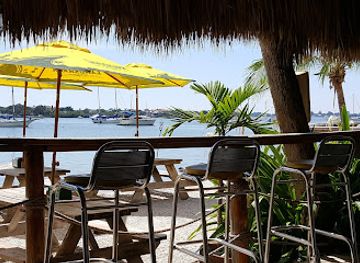
O'Leary's Tiki Bar & Grill
Discover O'Leary's Tiki Bar & Grill, where delicious seafood meets a vibrant tropical atmosphere in Sarasota, Florida.
17 min walk · 1.3 km from city centre
-
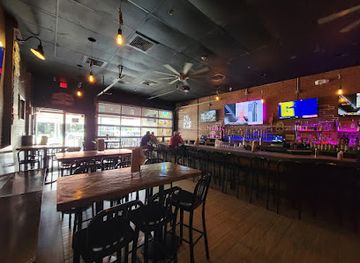
Bar
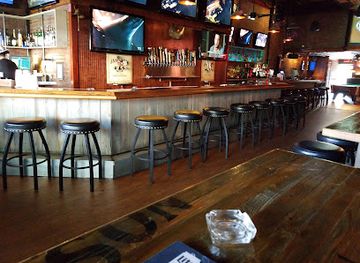
Joe's On Main
Experience the vibrant nightlife at Joe's On Main, a top bar in Sarasota offering delightful drinks, delicious bites, and an electric atmosphere.
12 min walk · 1.0 km from city centre
-
Grill
Brewster’s
Experience the best of Sarasota dining at Brewster's, where gourmet grill cuisine meets a vibrant gastropub atmosphere.
12 min walk · 1.0 km from city centre
-
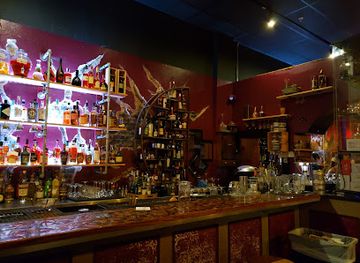
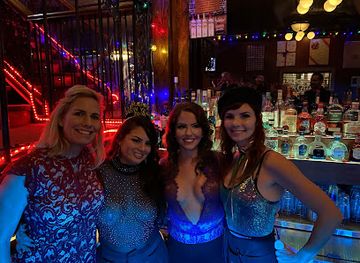
Lounge
Pangea Alchemy Lab
Discover the enchanting Pangea Alchemy Lab in Sarasota, where creative cocktails and vibrant ambiance create an unforgettable nightlife experience.
10 min walk · 0.8 km from city centre
Best nightclubs in Sarasota
Sarasota’s evening life is more cultural and social than club-centred. Downtown Main Street and Palm Avenue have the broadest selection of cocktail bars, wine bars, breweries and relaxed late-evening venues, while St Armands Circle offers drinks and dining in a more polished resort setting. Live performance is central to the city’s after-dark identity: Sarasota Opera, Florida Studio Theatre, the Van Wezel Performing Arts Hall and smaller venues present opera, theatre, music, dance and comedy across the year. The city also has jazz, acoustic music and occasional outdoor performances, though the character of individual venues changes by season. Beach bars and waterfront restaurants provide sunset settings around Lido Key and the bay, but nightlife is generally dispersed and comparatively restrained rather than concentrated in a large nightclub district.
-
Restaurant
O'Leary's Tiki Bar & Grill
Discover the vibrant flavors and breathtaking views at O'Leary's Tiki Bar & Grill, a must-visit dining experience in Sarasota, Florida.
17 min walk · 1.3 km from city centre
-
Bar
Perspective Rooftop Pool Bar
Discover breathtaking views and vibrant nightlife at Perspective Rooftop Pool Bar in Sarasota, where every moment is elevated.
16 min walk · 1.3 km from city centre
-
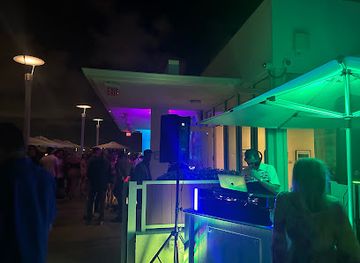
Night club
The Gator Club
Experience the pulse of Sarasota nightlife at The Gator Club, where live music and vibrant vibes create unforgettable memories.
11 min walk · 0.9 km from city centre
-
Jazz
Jazz Club of Sarasota
Discover the vibrant rhythms and soulful melodies at the Jazz Club of Sarasota, where live music meets a cozy atmosphere in downtown Florida.
12 min walk · 0.9 km from city centre
Best shops in Sarasota
Shopping in Sarasota ranges from independent downtown businesses to resort-oriented retail and open-air markets. Main Street and Palm Avenue contain boutiques, galleries, jewellers, design shops and cafés, while St Armands Circle offers a concentrated collection of fashion, gifts, art and speciality retailers within walking distance of Lido Beach. Towles Court is associated with studios, galleries and creative businesses in a quieter historic setting, and the Sarasota Farmers Market sells seasonal produce, baked goods, prepared food and locally made products rather than conventional souvenirs. Visitors may find Florida-themed art, ceramics, jewellery, coastal homeware and regional food products, though genuine local craftsmanship varies by retailer. UTC, north of the city near Interstate 75, provides a large contemporary shopping and dining complex, while antique and vintage shops are scattered through older commercial districts rather than forming one single market quarter.
-
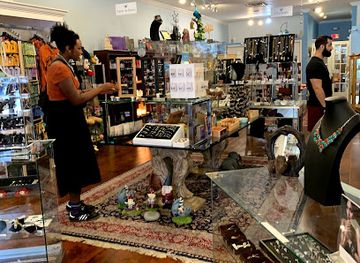
Gift shop
Pixie Dust SRQ
Explore the magical world of Pixie Dust SRQ, a unique gift shop in Sarasota offering metaphysical supplies and psychic services for every spiritual seeker.
12 min walk · 0.9 km from city centre
-
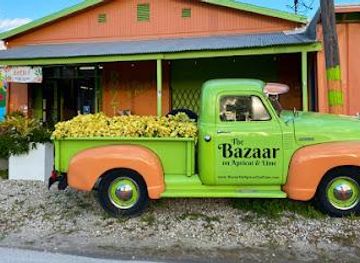
Bazar
The Bazaar on Apricot & Lime
Explore a vibrant marketplace in Sarasota, blending local artistry, delicious food, and live music for an unforgettable experience.
13 min walk · 1.0 km from city centre
-
Vintage clothing store
Canned Ham Vintage
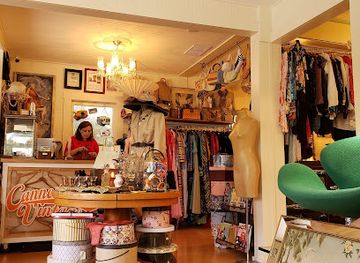
Discover unique vintage clothing, furniture, and jewelry at Canned Ham Vintage in Sarasota, a stylish haven for retro enthusiasts.
18 min walk · 1.4 km from city centre
-
Estate liquidator
Antiques & Chatchkes
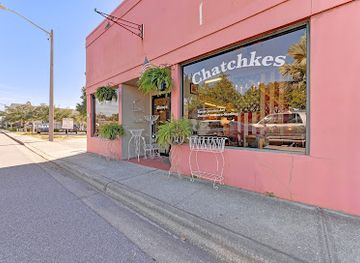
Explore a unique collection of antiques, art, and treasures at Antiques & Chatchkes in Sarasota, Florida - a must-visit for collectors and enthusiasts.
11 min walk · 0.8 km from city centre
Get your free copy of our complete guide to Sarasota, delivered straight to you.
Everything on this page, from attractions and restaurants to essentials and local phrases, in one PDF you can read offline, print or share.
Already have an account? Sign in
Your Sarasota guide is ready.
We'll send it to · Not you? Sign out

Getting your guide ready…
We are putting together a fresh copy of the Sarasota guide. This can take up to a minute.
This can take a few moments. If your browser asks, choose Allow so the download can start. You'll find the guide in your Downloads folder.
Nothing happened? Download it again
Sorry, the guide is taking longer than usual. Please try again in a minute, or get it by email instead.
Sarasota essentials
Currency and Payment
Safety
Emergency Situations
Do's and Don'ts
Local Tips
From Eve
Local phrases worth knowing
You don't need to get them perfect. A few words go a long way, and locals appreciate the effort.
Basics
| English | Local | Say it |
|---|---|---|
| Hello | Hi | [hai] |
| Goodbye | Bye | [bai] |
| Yes | Yeah | [yeh] |
| No | Nope | [nohp] |
| Please/You're welcome | Please/You're welcome | [pliz/yur wɛlkəm] |
| Thank you | Thank you | [θæŋk jʊ] |
| Excuse me/Sorry | Excuse me/Sorry | [ɪkskyuz mi/sɔri] |
| How are you? | How are you? | [haʊ ɑr ju] |
| Fine. And you? | Fine. And you? | [faɪn. ænd ju] |
| Do you speak English? | Do you speak English? | [du ju spik ɪŋɡlɪʃ] |
| I don't understand | I don't understand | [aɪ doʊnt ʌndərˈstænd] |
Eating & Drinking
| English | Local | Say it |
|---|---|---|
| I'd like to see the menu, please | I'd like to see the menu, please | [aɪd laɪk tʊ si ðə ˈmɛnju pliz] |
| I don't eat meat | I don't eat meat | [aɪ doʊnt it mit] |
| Cheers! | Cheers! | [tʃɪrz] |
| I would like to pay, please | I would like to pay, please | [aɪ wʊd laɪk tʊ peɪ pliz] |
Emergencies
| English | Local | Say it |
|---|---|---|
| Help! | Help! | [hɛlp] |
| Go away! | Go away! | [ɡoʊ əˈweɪ] |
| Call the Police! | Call the Police! | [kɔl ðə pəˈlis] |
| Call a doctor! | Call a doctor! | [kɔl ə ˈdɑktər] |
| I'm lost | I'm lost | [aɪm lɔst] |
| I'm ill | I'm ill | [aɪm ɪl] |
Shopping
| English | Local | Say it |
|---|---|---|
| I'd like to buy... | I'd like to buy... | [aɪd laɪk tʊ baɪ] |
| I'm just looking | I'm just looking | [aɪm ˈdʒəst ˈlʊkɪŋ] |
| How much is it? | How much is it? | [haʊ mʌt ɪz ɪt] |
| That's too expensive | That's too expensive | [ðæts tu ɪkˈspɛnsɪv] |
| Can you lower the price? | Can you lower the price? | [kæn ju ˈloʊər ðə praɪs] |
Time & Numbers
| English | Local | Say it |
|---|---|---|
| What time is it? | What time is it? | [wʌt taɪm ɪz ɪt] |
| It's one o'clock | It's one o'clock | [ɪts wʌn əˈklɑk] |
| Half past (10) | Half past (10) | [hæf pæst (ˈtɛn)] |
| Morning | Morning | [ˈmɔrnɪŋ] |
| Afternoon | Afternoon | [ˌæftərˈnun] |
| Evening | Evening | [ˈivnɪŋ] |
| Yesterday | Yesterday | [ˈjɛstərˌdeɪ] |
| Today | Today | [təˈdeɪ] |
| Tomorrow | Tomorrow | [təˈmɑroʊ] |
| 1 | 1 | [wʌn] |
| 2 | 2 | [tu] |
| 3 | 3 | [θri] |
| 4 | 4 | [fɔr] |
| 5 | 5 | [faɪv] |
| 6 | 6 | [sɪks] |
| 7 | 7 | [sɛvən] |
| 8 | 8 | [eɪt] |
| 9 | 9 | [naɪn] |
| 10 | 10 | [tɛn] |
Transport & Directions
| English | Local | Say it |
|---|---|---|
| Where's a/the...? | Where's a/the...? | [wɛrz ə/ði] |
| What's the address? | What's the address? | [wʌts ðə əˈdrɛs] |
| Can you show me (on the map)? | Can you show me (on the map)? | [kæn ju ʃoʊ mi (ɒn ðə mæp)] |
| When's the next (bus)? | When's the next (bus)? | [wɛnz ðə nɛkst (bʌs)] |
| A ticket (to ....) | A ticket (to ....) | [eɪ ˈtɪkɪt (tu ....)] |
History of Sarasota
Indigenous Gulf Coast Homelands
Long before Sarasota became a city, the central Gulf Coast was inhabited by Indigenous peoples whose communities depended on fishing, shellfish, hunting and the seasonal resources of bays, estuaries and barrier islands. The wider region was associated with the Calusa and, in other periods and places, the Manasota and Timucua cultural spheres. European diseases, violence and colonial disruption caused severe population decline after the sixteenth century, leaving much of the coast sparsely settled. Shell middens and other archaeological evidence record the deep antiquity of human life around Sarasota Bay, although many sites have been damaged by development, erosion and collecting.
Spanish Exploration and Colonial Change
Spanish expeditions explored Florida’s Gulf Coast from the sixteenth century onwards, but the area around present-day Sarasota did not develop into a permanent Spanish colonial town. Florida passed between Spanish, British and later American control before the United States acquired the territory in 1821. Several explanations have been proposed for the name Sarasota, including associations with early maps and Indigenous place-names, but its precise origin remains uncertain. During the nineteenth century, the bay and surrounding land gradually entered wider patterns of surveying, settlement, agriculture and maritime trade.
Settlement and the Railroad Era
Permanent American settlement expanded in the late nineteenth century, when Sarasota remained a small coastal community connected to fishing, farming, shipping and the developing tourist economy. The arrival of the railroad in 1903 improved links with other parts of Florida and helped move produce, building materials and visitors through the town. Sarasota incorporated as a municipality in 1902, and the growth of roads, hotels and waterfront commerce gradually gave the settlement an urban framework. Its warm climate and attractive bay location began drawing winter visitors as well as permanent residents.
The Ringling Cultural Legacy
Sarasota’s cultural history changed decisively through its connection with John Ringling, the circus impresario who established a winter base in the area with his wife, Mable. The couple developed the Venetian Gothic-style Ca’ d’Zan on the bayfront, and John Ringling created an art museum that opened in 1931. The estate, together with the circus collection and gardens, helped give Sarasota a cultural reputation extending beyond seasonal tourism. The Ringling’s buildings and collections remain a major physical expression of this period, linking the city’s coastal setting with European art, Gilded Age collecting and circus history.
Boom, Bust and Architectural Experiment
Sarasota participated in Florida’s speculative land boom of the 1920s, when new subdivisions, hotels and commercial buildings reflected expectations of rapid growth. The 1926 hurricane season and the collapse of the land boom were followed by the Great Depression, limiting development for years. After the Second World War, population growth and tourism accelerated, while Sarasota became associated with the Sarasota School of Architecture. Architects including Paul Rudolph and Ralph Twitchell explored climate-responsive modernism through shaded terraces, open plans and careful relationships between buildings and landscape.
A Modern Arts and Coastal City
From the late twentieth century onwards, Sarasota expanded as a retirement, cultural and visitor centre, while preserving and adapting parts of its historic urban fabric. Institutions such as Sarasota Opera, Florida Studio Theatre, the Van Wezel Performing Arts Hall and Marie Selby Botanical Gardens broadened the city’s cultural life. Conservation efforts have also focused on bayfront landscapes, architectural heritage and the ecological importance of mangroves and barrier islands. Contemporary Sarasota therefore combines a tourism economy and growing residential districts with an arts identity shaped by The Ringling, modernist architecture and the environmental character of Florida’s Gulf Coast.
Sarasota in Photos
Browse through our photo collection highlighting the charm and character of the destination.
Cities near Sarasota
The closest cities to Sarasota, if you have time for more than one stop.
-

-
-

-

-


Swipe for more cities
Explore more

Explore more of Florida
Discover Florida: A Sunshine State full of dazzling beaches, iconic theme parks, rich history, and stunning natural parks, offering endless adventures for every traveler.
Explore Florida