

Free North Florida Travel Guide & Mobile App
Explore North Florida with free travel guides. Discover regional history, expert tips, proposed trips, and audio guides on web or mobile app.


Explore North Florida for Gulf and Atlantic beaches, clear springs, historic St Augustine, river landscapes, seafood and Southern heritage.
Read more about North Florida
When is the best time to visit North Florida?
Best: April, October–November · 21–28°C| Month | High (°C) | Rainfall (mm) |
|---|---|---|
| January | 17 | 78 |
| February | 19 | 84 |
| March | 22 | 94 |
| April (best) | 25 | 84 |
| May | 29 | 103 |
| June | 33 | 158 |
| July | 34 | 180 |
| August | 34 | 180 |
| September | 32 | 158 |
| October (best) | 28 | 94 |
| November (best) | 21 | 84 |
| December | 18 | 78 |
Getting to and around North Florida
How to get there
Transportation
Top city travel guides in North Florida
The cities of North Florida, and the easiest places to base yourself.
-

-

-

-
-


Swipe for more cities
Destinations in North Florida
Resorts, valleys and scenic spots worth a trip of their own.
-

-

-
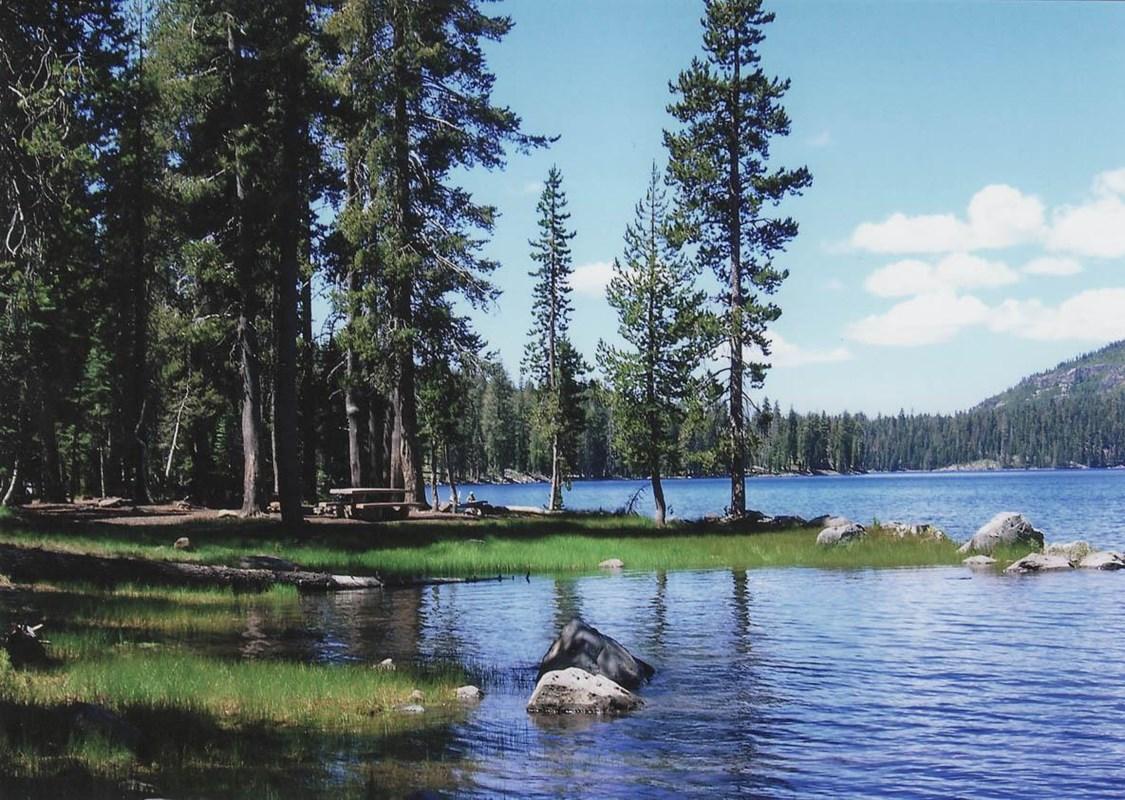 Juniper Springs Recreation Area
 in Florida offers crystal-clear springs, forest trails, canoeing on Juniper Run and historic Ocala National Forest scenery.
-

-

-


Swipe for more destinations
Best attractions in North Florida
North Florida offers a varied attraction landscape rather than a single concentration of sights. Along the Gulf, visitors find broad beaches, dune systems, state parks, bays and fishing communities, with the developed resort coast around Destin, Panama City Beach and Pensacola contrasting with the lower-key shores of the Forgotten Coast and Apalachicola Bay. St Augustine combines museums, archaeological sites, harbour views and colonial history, while Jacksonville brings major art, science and cultural institutions to the banks of the St Johns River. Inland, springs such as Ichetucknee, Wakulla and Silver Glen support swimming, paddling and wildlife observation, subject to seasonal rules and access limits. Tallahassee's museums, historic properties and surrounding parks introduce the landscape and history of the state capital. Forests, wildlife refuges and river corridors provide hiking, birdwatching, fishing and paddling, while Gainesville serves as a base for museums, university culture and north-central nature. The region also contains Civil War sites, African American heritage attractions and archaeological evidence of Indigenous and Spanish communities, making structured interpretation as important as scenery.
-
Garden
Bok Tower Gardens
Explore the lush landscapes and historical significance of Bok Tower Gardens, a serene escape in Lake Wales, Florida, perfect for nature lovers and history enthusiasts.
-
Natural history museum
Florida Museum
Discover Florida's natural heritage at the Florida Museum, where science, culture, and adventure come together in a captivating experience.
-
State park
Ruth B. Kirby Gilchrist Blue Springs State Park
Experience the breathtaking beauty of Ruth B. Kirby Gilchrist Blue Springs State Park, where crystal-clear springs meet lush landscapes in Florida's natural paradise.
-
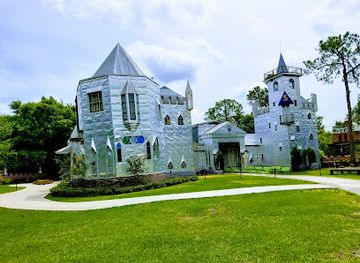
Castle
Solomon's Castle
Explore the unique artistry and culinary delights of Solomon's Castle, a whimsical destination in Florida blending creativity and history.


Best landmarks in North Florida
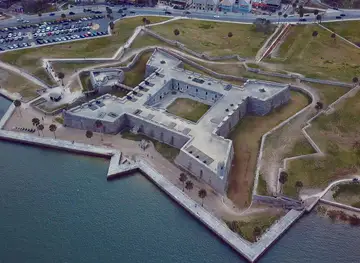
Castillo de San Marcos in St Augustine is North Florida's most recognisable historic structure, a Spanish fortress built from distinctive coquina stone to guard the harbour and settlement. The old city's gates, street plan and surviving colonial buildings form a broader architectural landmark, although much of what visitors see reflects several periods of reconstruction and preservation. In Tallahassee, the Old Capitol and the newer Florida State Capitol represent different eras of state government, while Mission San Luis preserves an important archaeological and interpretive record of Apalachee and Spanish life. The St Johns River is a defining natural landmark of north-eastern Florida, shaping Jacksonville's history and cityscape. On the Gulf, the lighthouse and maritime setting of St Marks, the bays around Apalachicola and the long barrier-island shores of St George Island express the region's coastal character. Inland, Wakulla Spring, the Suwannee River and the cypress-lined waterways of north-central Florida are geographical landmarks as much as recreational sites. Their significance lies in the combination of geology, ecology, transport history and long human use.
-
Fortress
Castillo de San Marcos National Monument
Explore the historic Castillo de San Marcos, the oldest masonry fort in the U.S., and immerse yourself in centuries of captivating history in St. Augustine.
-
Historical landmark
Southernmost Point of the Continental U.S.A.
Experience the iconic Southernmost Point of the Continental U.S.A. in Key West, a vibrant blend of history, culture, and breathtaking ocean views.
-
Museum
Ponce de Leon Inlet Lighthouse & Museum
Discover Florida's maritime history at the iconic Ponce de Leon Inlet Lighthouse & Museum, featuring breathtaking views and fascinating exhibits.
-
Garden
Bok Tower Gardens
Explore the enchanting Bok Tower Gardens, a serene botanical haven in Lake Wales, Florida, blending natural beauty with rich historical significance.


Explore North Florida on the map
Plan your trip on one map. See where the top cities, national parks and sights are, and book hotels and experiences in a few clicks.
Best hotels in North Florida
Best restaurants in North Florida
North Florida's dining reflects both the Gulf and the inland South. Coastal menus commonly feature oysters, shrimp, blue crab, grouper, mullet and other seafood, with Apalachicola and the nearby bays particularly associated with oyster culture, although availability and harvest conditions change. Pensacola and other Panhandle communities combine seafood with Southern, Gulf Coast and broader American cooking, while Jacksonville offers the region's widest range of contemporary restaurants and international cuisines. Inland towns are strong territory for barbecue, fried chicken, biscuits, seasonal vegetables, peanuts and farm-linked cooking, with Gainesville and Tallahassee adding substantial student, immigrant and modern restaurant influences. Rural inns, fish camps, oyster houses, family-run cafés and food markets provide a more local atmosphere than resort dining alone. Craft breweries and independent coffee shops are established in larger towns, while Florida citrus, pecans, honey and other produce appear in farm shops and seasonal markets. Tipping follows United States practice, and menus, seafood sourcing and service charges should be checked carefully.
-
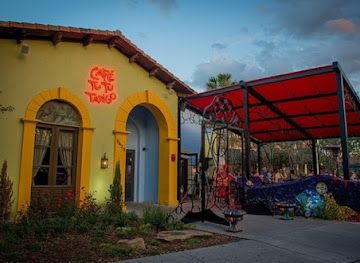
Tapas
Café Tu Tu Tango
Experience culinary creativity at Café Tu Tu Tango in Orlando—where delicious tapas meet vibrant art in a unique dining adventure.
-
Seafood
Harborside
Discover exquisite seafood and delightful steaks at Harborside, where every dish promises freshness and flavor in Winter Haven.
-
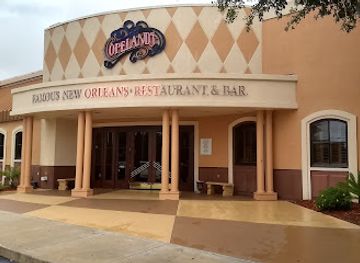
Cajun
Copeland's of New Orleans
Savor authentic Cajun and Creole dishes at Copeland's of New Orleans – a must-visit culinary gem in Jacksonville.
-
Italian
Maggiano's Little Italy
Experience the best of Italian cuisine at Maggiano's Little Italy in Jacksonville – where every meal is a celebration of flavors.


Best bars in North Florida
Evening life varies sharply across North Florida. St Augustine centres on historic pubs, cocktail bars, restaurants, live music and venues near the old town, while Jacksonville has the largest metropolitan choice, including neighbourhood bars, breweries, music venues and late-night entertainment. Tallahassee's university population supports a more concentrated bar and live-music scene, particularly around central districts, though the atmosphere changes considerably outside the academic year. Pensacola and the western Panhandle have established waterfront and downtown nightlife, and resort communities become busier during summer and holiday periods. Elsewhere, evenings are more likely to revolve around local pubs, seafood restaurants, breweries, community performances or quiet waterfront settings than nightclubs. Coastal venues can be seasonal, and rural areas may have limited late transport, so arrange a safe return journey rather than assuming taxis or rideshares will be immediately available. Drinking is not necessary to appreciate the region's evening culture.
-
Bar
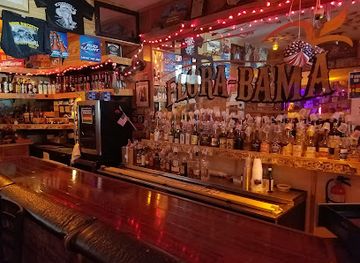
Flora-Bama
Experience the vibrant culture of Florida's Gulf Coast at Flora-Bama, a legendary bar and live music venue on Perdido Key.
-
American
Swampy's Bar & Grille
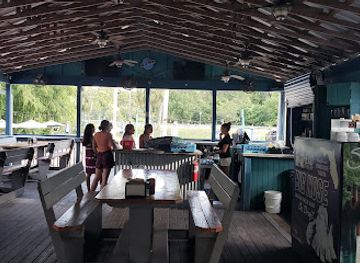
Experience the delightful fusion of American and Cajun cuisine at Swampy's Bar & Grille in Dunnellon, Florida.
-
Seafood
Blue Gator Tiki Bar & Restaurant
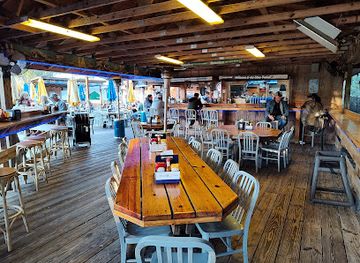
Experience the vibrant atmosphere and delectable seafood at Blue Gator Tiki Bar & Restaurant, a must-visit in Dunnellon, Florida.
-
Bar
Square Grouper Tiki Bar Jupiter Inlet
Experience the tropical charm of Square Grouper Tiki Bar in Jupiter, where fresh seafood and stunning views create the perfect coastal getaway.

Best nightclubs in North Florida
Evening life varies sharply across North Florida. St Augustine centres on historic pubs, cocktail bars, restaurants, live music and venues near the old town, while Jacksonville has the largest metropolitan choice, including neighbourhood bars, breweries, music venues and late-night entertainment. Tallahassee's university population supports a more concentrated bar and live-music scene, particularly around central districts, though the atmosphere changes considerably outside the academic year. Pensacola and the western Panhandle have established waterfront and downtown nightlife, and resort communities become busier during summer and holiday periods. Elsewhere, evenings are more likely to revolve around local pubs, seafood restaurants, breweries, community performances or quiet waterfront settings than nightclubs. Coastal venues can be seasonal, and rural areas may have limited late transport, so arrange a safe return journey rather than assuming taxis or rideshares will be immediately available. Drinking is not necessary to appreciate the region's evening culture.
-
Lounge
Cuba Libre Ultra Lounge
Discover the vibrant nightlife and lively atmosphere at Cuba Libre Ultra Lounge, where dining meets dancing in Jacksonville's hottest venue.
-
Night club
Myth Nightclub | Element Bistro
Experience the ultimate nightlife at Myth Nightclub in Jacksonville – where live music, dancing, and electrifying ambiance unite for an unforgettable night.
-
Bar
Eclipse Nightclub & Bar Riverside
Discover Eclipse Nightclub & Bar, Jacksonville's lively hub for cocktails, dance, and unforgettable entertainment in a vibrant atmosphere.
-
Lounge
The Fresh Spot Lounge
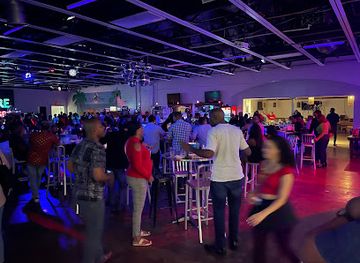
Experience the vibrant nightlife at The Fresh Spot Lounge in Middleburg, FL, where great drinks and lively entertainment await you.


Best shops in North Florida
Shopping in North Florida is most rewarding when approached through its different local centres. St Augustine's old town has galleries, bookshops, independent boutiques, craft retailers and food shops, though the busiest streets also contain strongly tourist-oriented merchandise. Jacksonville provides the broadest conventional retail choice, from major shopping areas to neighbourhood boutiques and antique shops, while Tallahassee combines national retailers with independent businesses serving the university and state-capital communities. Gulf Coast towns offer beachwear, nautical goods, art, shell-inspired products and local food, but visitors should distinguish durable regional crafts from generic souvenirs. Farmers' markets and farm shops are useful for citrus, honey, pecans, preserves, hot sauces and seasonal produce, with availability varying by town and time of year. Apalachicola and other working coastal communities are good places to look for seafood products and maritime-themed goods, while galleries in smaller towns often represent local painters, ceramicists and makers. Check whether food products can legally be carried into the next destination or taken on an international flight.
-
Outlet mall
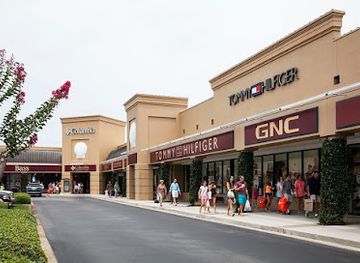
Silver Sands Premium Outlets
Discover unbeatable savings on top brands at Silver Sands Premium Outlets, the leading shopping destination in Miramar Beach, Florida.
-
Shopping mall
Grand Boulevard at Sandestin
Discover the charm of Grand Boulevard at Sandestin: a shopping haven with dining, entertainment, and a vibrant community atmosphere.
-
Shopping mall
Shoppes of Avondale
Discover unique shops and local dining at the Shoppes of Avondale, a vibrant shopping destination in Jacksonville, Florida.
-
Gift shop
Beaches Town Center
Explore the charm of Beaches Town Center, a vibrant shopping and dining destination in Neptune Beach, Florida, perfect for every tourist.

Get your free copy of our complete guide to North Florida, delivered straight to you.
Everything on this page, from attractions and restaurants to essentials and local phrases, in one PDF you can read offline, print or share.
Already have an account? Sign in
Your North Florida guide is ready.
We'll send it to · Not you? Sign out

Getting your guide ready…
We are putting together a fresh copy of the North Florida guide. This can take up to a minute.
This can take a few moments. If your browser asks, choose Allow so the download can start. You'll find the guide in your Downloads folder.
Nothing happened? Download it again
Sorry, the guide is taking longer than usual. Please try again in a minute, or get it by email instead.
North Florida essentials
Currency and Payment
Safety
Emergency Situations
Do's and Don'ts
Local Tips
From Eve
Local phrases worth knowing
You don't need to get them perfect. A few words go a long way, and locals appreciate the effort.
Basics
| English | Local | Say it |
|---|---|---|
| Hello | Hey y'all | [Hey yawl] |
| Goodbye | See ya later | [See ya lay-tur] |
| Yes | Yep | [Yep] |
| No | Nah | [Nah] |
| Please/You're welcome | No problem | [No prob-lum] |
| Thank you | Thanks | [Thanks] |
| Excuse me/Sorry | Excuse me | [Ex-cuse me] |
| How are you? | How ya doin'? | [How ya doin'?] |
| Fine. And you? | Good. And you? | [Good. And you?] |
| Do you speak English? | Y'all speakin' English? | [Y'all speakin' In-glish?] |
| I don't understand | I ain't gettin' it | [I ain't gettin' it] |
Eating & Drinking
| English | Local | Say it |
|---|---|---|
| I'd like to see the menu, please | Can I see the menu? | [Can I see the men-yoo?] |
| I don't eat meat | I don't eat no meat | [I don't eat no meet] |
| Cheers! | Cheers! | [Cheers!] |
| I would like to pay, please | Can I get the check? | [Can I get the chek?] |
Emergencies
| English | Local | Say it |
|---|---|---|
| Help! | Help! | [Help!] |
| Go away! | Leave me alone! | [Leave me uh-lone!] |
| Call the Police! | Call the cops! | [Call the cops!] |
| Call a doctor! | Get a doctor! | [Get a doc-tor!] |
| I'm lost | I'm lost | [I'm lost] |
| I'm ill | I ain't feelin' good | [I ain't feelin' gud] |
Shopping
| English | Local | Say it |
|---|---|---|
| I'd like to buy... | I wanna buy... | [I wanna buy...] |
| I'm just looking | Just lookin' | [Just lookin'] |
| How much is it? | How much is it? | [How much is it?] |
| That's too expensive | That’s too pricey | [That’s too pry-see] |
| Can you lower the price? | Can ya drop the price? | [Can ya drop the pryce?] |
Time & Numbers
| English | Local | Say it |
|---|---|---|
| What time is it? | What time is it? | [What time is it?] |
| It's one o'clock | It's one o'clock | [It's one o'clock] |
| Half past (10) | Half past ten | [Half past ten] |
| Morning | Mornin' | [Mornin'] |
| Afternoon | Afternoon | [Afternoon] |
| Evening | Evenin' | [Evenin'] |
| Yesterday | Yesterday | [Yesterday] |
| Today | Today | [Today] |
| Tomorrow | Tomorrow | [Tomorrow] |
| 1 | One | [One] |
| 2 | Two | [Two] |
| 3 | Three | [Three] |
| 4 | Four | [Four] |
| 5 | Five | [Five] |
| 6 | Six | [Six] |
| 7 | Seven | [Seven] |
| 8 | Eight | [Eight] |
| 9 | Nine | [Nine] |
| 10 | Ten | [Ten] |
Transport & Directions
| English | Local | Say it |
|---|---|---|
| Where's a/the...? | Where's the...? | [Where's the...?] |
| What's the address? | What’s the address? | [What’s the ad-dress?] |
| Can you show me (on the map)? | Can ya show me on the map? | [Can ya show me on the map?] |
| When's the next (bus)? | When's the next bus? | [When's the next bus?] |
| A ticket (to ....) | A ticket to... | [A ticket to...] |
History of North Florida
Indigenous Florida Before European Colonisation
North Florida has been inhabited for thousands of years. Its rivers, springs, wetlands and coastal estuaries supported communities whose descendants include the Apalachee, Timucua, Creek and other Indigenous peoples. Archaeological sites, shell middens, earthworks and traces of long-established agricultural and trading systems testify to complex societies rather than an empty wilderness. European diseases, warfare, enslavement and displacement caused severe disruption after contact, while later migrants and governments often obscured Indigenous histories. Modern museums, archaeological work and cultural programmes continue to document these connections across the Panhandle and northern peninsula.
Spanish St Augustine and the Atlantic Frontier
St Augustine was founded by Spain in 1565 and became the oldest continuously inhabited European-established city in the continental United States. Spanish Florida was a frontier of missions, military rivalry and exchange involving Indigenous communities, enslaved Africans, settlers and European powers. Castillo de San Marcos, built from coquina stone, reflects the strategic importance of the harbour and the northern approaches to Spanish territory. Britain controlled Florida from 1763 to 1783, after which Spain returned briefly before ceding the territory to the United States in 1821.
Colonial Missions and the Apalachee Region
The Tallahassee area and the western Florida Panhandle became centres of Spanish mission activity during the seventeenth and early eighteenth centuries. Missions sought to convert and administer Indigenous populations while linking inland settlements with St Augustine and the Gulf Coast. The system brought trade, agriculture and political change, but also disease, coercion and conflict. British attacks and the destruction of missions in the early eighteenth century transformed the region. Archaeological sites such as Mission San Luis near Tallahassee help visitors understand this period through the interaction of Apalachee and Spanish communities.
Florida Statehood and Plantation Society
Florida became a United States territory in 1821 and entered the Union as a state in 1845. North Florida's inland districts developed around cotton plantations, timber, cattle and trade, with Tallahassee serving as an important political centre. This economy depended heavily on the labour of enslaved African Americans, whose knowledge and work shaped agriculture, domestic life and local communities. Historic houses, plantation landscapes and museums preserve parts of this story, but they must be read alongside the violence of slavery, resistance, emancipation and the continuing importance of African American institutions.
The Civil War and Reconstruction
Florida seceded from the Union in 1861, and North Florida became strategically important because of its railways, ports, rivers and agricultural supplies. The Battle of Olustee in 1864, fought near Lake City, was the largest Civil War battle in Florida. Union forces were defeated, and the conflict disrupted transport and production across the region. After the war, Reconstruction brought emancipation and political change but also intense opposition, racial violence and the eventual reassertion of white Democratic control. The period left a significant legacy in the region's cemeteries, communities, monuments and civil-rights history.
Timber, Railways and Gulf Coast Commerce
From the late nineteenth century into the twentieth, railways, sawmills, turpentine production and the timber trade reshaped North Florida. Pine forests supplied naval stores and lumber, while rail connections linked inland towns with ports including Pensacola, Apalachicola and Jacksonville. Gulf fishing, oyster harvesting and shipping also supported coastal communities. These industries created new towns and fortunes but brought demanding labour conditions and environmental pressures. Later forest management, conservation and economic diversification changed the balance between extractive industries, agriculture, tourism and public lands.
Civil Rights and the Modern Region
North Florida played a substantial role in the civil-rights movement. African American residents challenged segregation through litigation, boycotts, student demonstrations and community organising in cities including Tallahassee, Jacksonville and St Augustine. The 1964 demonstrations in St Augustine, which drew national attention, contributed to the political pressure surrounding the Civil Rights Act. The region later experienced rapid growth in education, defence, logistics, healthcare and tourism. Today its universities, historic districts, museums and community institutions reflect both the conflicts of the past and the continuing development of a diverse modern Florida.
North Florida in Photos
Browse through our photo collection highlighting the charm and character of the destination.
Neighbouring regions of North Florida
The closest regions to North Florida, if you have time for more than one.
-

-

-

-
-


Swipe for more regions
Explore more

Explore more of Florida
Discover Florida: A Sunshine State full of dazzling beaches, iconic theme parks, rich history, and stunning natural parks, offering endless adventures for every traveler.
Explore Florida