

St. George Island Travel Guide - Free Web & App
Your ultimate guide to St. George Island. Discover top landmarks, proposed trips, and local tips. Free on the web or via the Evendo companion app.


St. George Island, Florida, pairs quiet Gulf beaches, a historic lighthouse, wildlife-rich dunes, Apalachicola Bay and relaxed coastal adventures.
Barrier-Island Landscapes
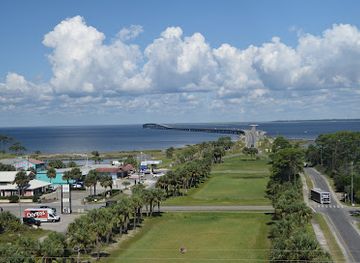
St. George Island stretches along Florida’s north-western Gulf Coast as a slender barrier island separated from the mainland by Apalachicola Bay and reached by a long bridge from Eastpoint. Its character is defined by broad, pale beaches, shifting dunes, sea oats, maritime scrub and tidal water rather than by intensive resort development. The western and central parts contain the island’s principal residential and holiday areas, while the eastern end is protected within Dr Julian G Bruce St George Island State Park, one of the largest publicly owned undeveloped barrier-island areas in the state.Read more about St. George Island
Coast, Bay and Wildlife
Island Community and Heritage
When is the best time to visit St. George Island?
Best: April, October–November · 22–27°C| Month | High (°C) | Rainfall (mm) |
|---|---|---|
| January | 17 | 83 |
| February | 19 | 91 |
| March | 23 | 105 |
| April (best) | 25 | 89 |
| May | 29 | 103 |
| June | 32 | 153 |
| July | 33 | 177 |
| August | 33 | 177 |
| September | 32 | 163 |
| October (best) | 27 | 94 |
| November (best) | 22 | 77 |
| December | 18 | 84 |
Getting to and around St. George Island
How to get there
Transportation
Best attractions in St. George Island
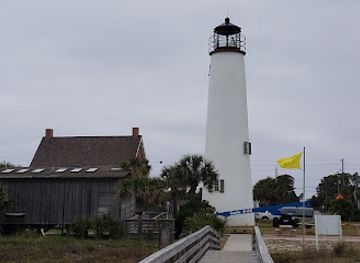
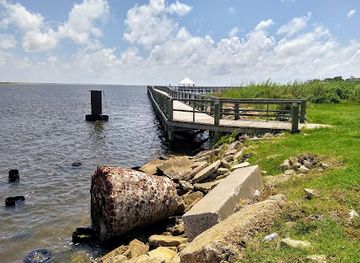
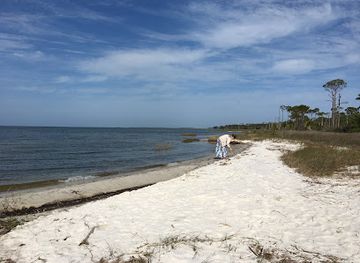
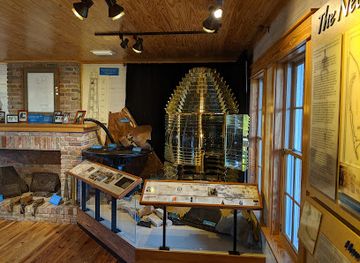
St. George Island’s principal attraction is its long Gulf beach, where broad sand, rolling surf and dune vegetation create a setting for walking, beachcombing and carefully supervised bathing. At the eastern end, Dr Julian G Bruce St George Island State Park protects an extensive stretch of beaches, dunes, scrub and coastal wetlands, with opportunities for walking, fishing, birdwatching and paddling where conditions and regulations permit. Near the island’s developed western area, the reconstructed St. George Island Lighthouse and its associated museum interpret the community’s maritime past. The bay side provides views across Apalachicola Bay towards mainland marshes and oyster waters, while the island’s quiet roads and beach accesses reveal changing coastal habitats. Outside the island itself, nearby Apalachicola is a valuable companion attraction, known for its preserved historic streets, maritime connections and museums, but it should be treated as a mainland gateway rather than part of St. George Island.
-
Tourist attraction
St. George Island Lighthouse, Museum & Gift Shop
Discover the charm of St. George Island Lighthouse, where history, scenic views, and unique gifts converge for an unforgettable experience.
-
Tourist attraction
Battery Park
Discover the beauty and history of Battery Park in Apalachicola, Florida, a perfect blend of nature and culture for tourists and families alike.
-
State park
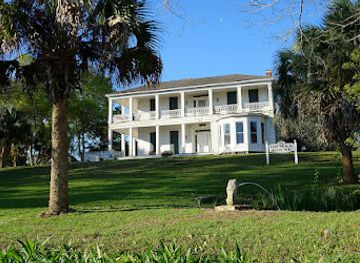
Orman House Historic State Park
Discover the rich history and natural beauty of Orman House Historic State Park in Apalachicola, Florida—a perfect blend of culture and nature.
-
Local history museum
St George Lighthouse Association, Inc.
Explore the maritime heritage of St. George Island at the St. George Lighthouse Association, a local history museum celebrating coastal navigation and lighthouse lore.
Best landmarks in St. George Island
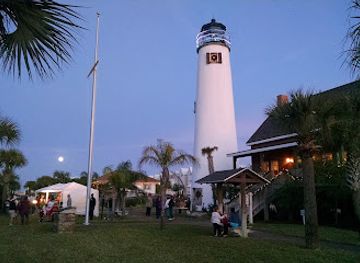
The St. George Island Lighthouse is the island’s defining man-made landmark, recalling the navigational demands of the Gulf approach to Apalachicola Bay and the coastal communities that depended on maritime routes. The present structure represents a reconstruction and preservation effort after the earlier lighthouse was lost, and the adjacent museum gives the landmark a tangible local context. The island’s most important natural landmarks are its barrier beaches, rolling dune lines and the meeting of open Gulf waters with the sheltered estuarine environment of Apalachicola Bay. At the eastern end, the protected shore and dunes of Dr Julian G Bruce St George Island State Park demonstrate the scale of the island’s remaining natural landscape. These features are changeable rather than monumental: storms, tides, erosion and vegetation continually reshape the coast.
-
Museum
St. George Island Lighthouse, Museum & Gift Shop
Explore the St. George Island Lighthouse, where history, stunning views, and local treasures await you on Florida's beautiful Gulf Coast.
-
State park
Orman House Historic State Park
Explore the rich history and natural beauty of Orman House Historic State Park in Apalachicola, Florida, a perfect blend for history and nature lovers.
-
State park
John Gorrie Museum State Park
Discover the serene beauty and historical significance of John Gorrie Museum State Park in Apalachicola, Florida, a unique blend of nature and innovation.
-
Park
Apalachicola Bay National Estuarine Research Reserve
Experience the natural beauty and biodiversity of Apalachicola Bay National Estuarine Research Reserve, a tranquil park for outdoor enthusiasts.
Explore St. George Island on the map
Plan your trip on one map. See where the top attractions, landmarks, restaurants and hotels are, and book hotels and experiences in a few clicks.
Best hotels in St. George Island
Best restaurants in St. George Island
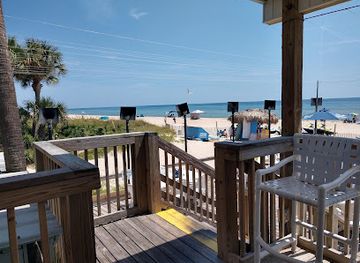
Dining on St. George Island is shaped by its position between the Gulf of Mexico and Apalachicola Bay. Restaurants and casual cafés in the island’s small commercial area typically focus on seafood, with regional menus often drawing on Gulf fish, shrimp, crab and the celebrated oysters associated with the Apalachicola Bay area. Holiday rentals make self-catering practical, and visitors can supplement island provisions with produce and seafood from mainland shops and markets. The choice becomes broader in Apalachicola, where historic streets contain restaurants, cafés, bakeries and informal waterfront-oriented places to eat. Dining is generally relaxed rather than metropolitan, and seasonal demand can influence availability, so remote beach outings should be approached with food and water already organised. Local catch, oysters and simple Southern coastal cooking are more characteristic of the region than an elaborate restaurant district.
-
Seafood
Blue Parrot Ocean Front Cafe
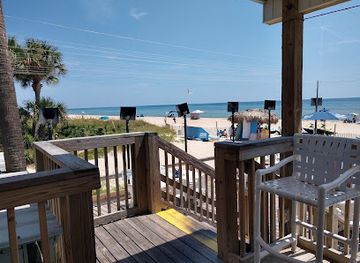
Experience coastal dining at its finest at Blue Parrot Ocean Front Cafe on St. George Island - where fresh seafood meets stunning ocean views.
-
Seafood
Paddy's Raw Bar
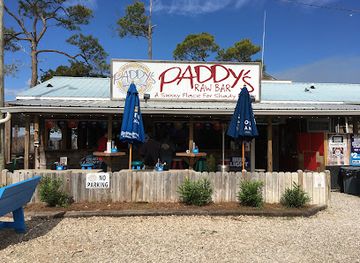
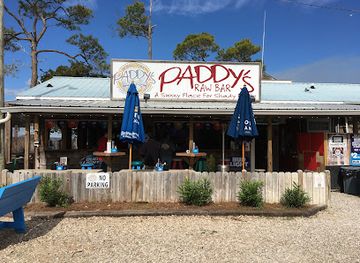
Experience the best seafood at Paddy's Raw Bar in St. George Island—where fresh flavors meet laid-back island vibes.
-
Seafood
Beach Pit
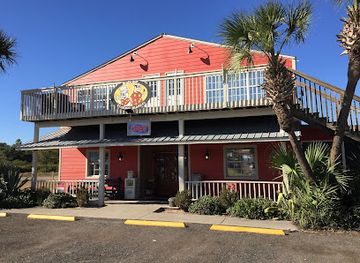
Discover Beach Pit on St. George Island: where fresh seafood meets Southern hospitality in a stunning coastal setting.
-
Restaurant
Harry A 's Bar & Grill
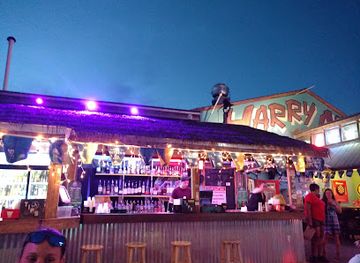
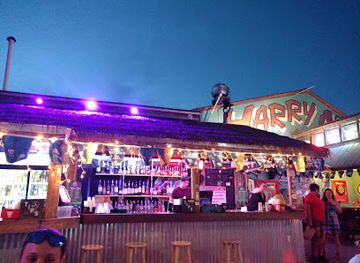
Experience the taste of coastal cuisine at Harry A's Bar & Grill in St. George Island – where fresh seafood meets a vibrant atmosphere.
Best bars in St. George Island
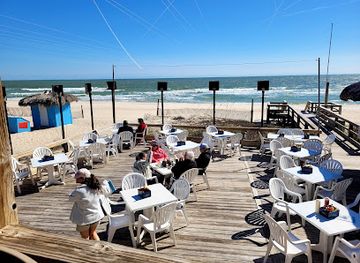
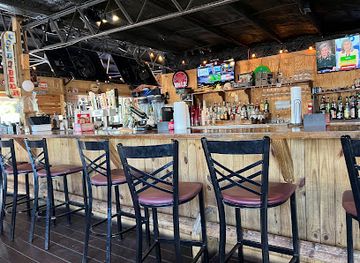
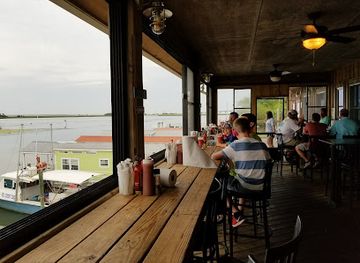
St. George Island has a quiet evening culture rather than a concentrated nightlife scene. Visitors are more likely to find relaxed island restaurants, informal bars and occasional live entertainment connected with local hospitality than dedicated nightclubs or late-night districts. Evenings often centre on a meal, conversation, a walk near the shore or time spent at a holiday rental, with the darkness and open horizon making the island notably calmer after sunset. Apalachicola offers a wider selection of pubs, bars and restaurants in its historic centre, but it remains a small coastal town rather than a major entertainment destination. Opening arrangements and seasonal programming can change, so evening plans are best kept flexible, particularly outside the busier holiday periods.
-
Seafood
Blue Parrot Ocean Front Cafe
Experience coastal dining at the Blue Parrot Ocean Front Cafe, where fresh seafood meets stunning ocean views in St. George Island.
-
Family-friendly
Red Pirate Family Grill & Oyster Bar
Savor the flavors of Florida at Red Pirate Family Grill & Oyster Bar, a family-friendly destination for fresh seafood and hearty meals in Eastpoint.
-
Seafood
Paddy's Raw Bar
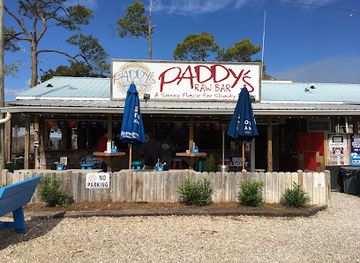
Savor fresh seafood and local brews at Paddy's Raw Bar, a laid-back seafood pub in St. George Island, Florida.
-
Oyster Bar
Up The Creek Raw Bar
Experience the authentic taste of Apalachicola at Up The Creek Raw Bar, where fresh oysters and local seafood create unforgettable dining moments.
Best nightclubs in St. George Island
St. George Island has a quiet evening culture rather than a concentrated nightlife scene. Visitors are more likely to find relaxed island restaurants, informal bars and occasional live entertainment connected with local hospitality than dedicated nightclubs or late-night districts. Evenings often centre on a meal, conversation, a walk near the shore or time spent at a holiday rental, with the darkness and open horizon making the island notably calmer after sunset. Apalachicola offers a wider selection of pubs, bars and restaurants in its historic centre, but it remains a small coastal town rather than a major entertainment destination. Opening arrangements and seasonal programming can change, so evening plans are best kept flexible, particularly outside the busier holiday periods.
-
Seafood
Blue Parrot Ocean Front Cafe
Experience the best of St. George Island at Blue Parrot Ocean Front Cafe - where fresh seafood meets breathtaking ocean views.
-
Seafood
Paddy's Raw Bar
Experience the best of coastal dining at Paddy's Raw Bar, a seafood haven on St. George Island, offering fresh flavors and a vibrant atmosphere.
-
Seafood
Beach Pit
Experience the best seafood and barbecue at Beach Pit, a local favorite on St. George Island, Florida, perfect for families and food lovers alike.
-
Restaurant
Harry A 's Bar & Grill
Experience the vibrant flavors and coastal charm at Harry A's Bar & Grill on St. George Island, a culinary gem for tourists and locals.
Best shops in St. George Island
Shopping on St. George Island is modest and primarily practical, with provisions, beach supplies, fishing equipment, gifts, souvenirs and locally oriented artwork available around the island’s developed areas. Small galleries and independent shops may showcase coastal photography, paintings, crafts and decorative work inspired by the Gulf and bay, while holiday visitors often buy regional food products or seafood for self-catering. The island is not a destination for large-scale retail, and specialist shopping is more readily found in Apalachicola and other mainland communities. Apalachicola’s independent businesses and galleries reflect the area’s maritime history and coastal culture, although visitors should distinguish permanent local retail from seasonal or event-based stalls. Outdoor equipment and fishing supplies are particularly useful purchases for those exploring the beaches, bay shore or state park.
-
Gift shop
St. George Island Lighthouse, Museum & Gift Shop
Discover the historic St. George Island Lighthouse, an enchanting blend of maritime heritage, scenic beauty, and unique local shopping experiences.
-
Grocery store
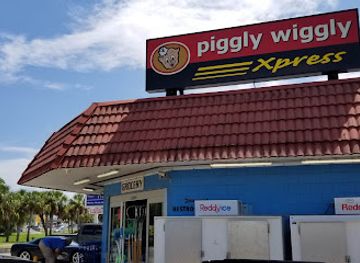
Piggly Wiggly St. George Island Grocery Store
Discover the local flavors and friendly atmosphere at Piggly Wiggly St. George Island, your convenient grocery store for all island needs.
-
Ice Cream
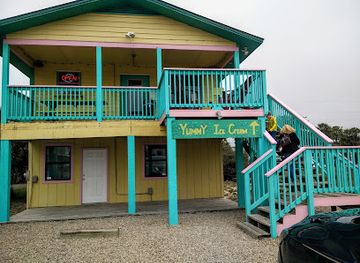
Aunt Ebby's Ice Cream
Discover the creamy delights of Aunt Ebby's Ice Cream on St. George Island, where every scoop is a taste of paradise.
-
Candy store
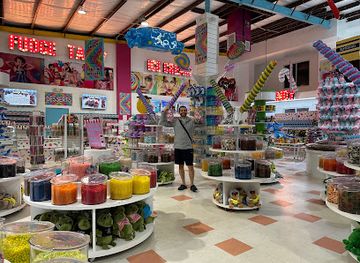
SUGAR KINGDOM
Discover a whimsical candy paradise at Sugar Kingdom in Eastpoint, Florida, where sweet dreams come true with every delicious treat.
Get your free copy of our complete guide to St. George Island, delivered straight to you.
Everything on this page, from attractions and restaurants to essentials and local phrases, in one PDF you can read offline, print or share.
Already have an account? Sign in
Your St. George Island guide is ready.
We'll send it to · Not you? Sign out

Getting your guide ready…
We are putting together a fresh copy of the St. George Island guide. This can take up to a minute.
This can take a few moments. If your browser asks, choose Allow so the download can start. You'll find the guide in your Downloads folder.
Nothing happened? Download it again
Sorry, the guide is taking longer than usual. Please try again in a minute, or get it by email instead.
St. George Island essentials
Currency and Payment
Safety
Emergency Situations
Do's and Don'ts
Local Tips
From Eve
Local phrases worth knowing
You don't need to get them perfect. A few words go a long way, and locals appreciate the effort.
Basics
| English | Local | Say it |
|---|---|---|
| Hello | Howdy | [hah-dee] |
| Goodbye | Later | [lay-ter] |
| Yes | Yup | [yuhp] |
| No | Nah | [nuh] |
| Please/You're welcome | Please | [pleez] |
| Thank you | Thanks | [th-anks] |
| Excuse me/Sorry | Pardon | [pahr-dn] |
| How are you? | How ya doin'? | [haw yuh doo-in] |
| Fine. And you? | Fine. How 'bout you? | [f-ine. how 'b-owt yuh] |
| Do you speak English? | Ya speak English? | [yuh speek ing-glish] |
| I don't understand | I dunno | [i dun-oh] |
Eating & Drinking
| English | Local | Say it |
|---|---|---|
| I'd like to see the menu, please | Menu, please | [men-yoo, pleez] |
| I don't eat meat | No meat for me | [noh meet fuh mi] |
| Cheers! | Cheers! | [cheers] |
| I would like to pay, please | Check, please | [ch-ek, pleez] |
Emergencies
| English | Local | Say it |
|---|---|---|
| Help! | Help! | [help] |
| Go away! | Get lost! | [get lost] |
| Call the Police! | Call the cops! | [call the cops] |
| Call a doctor! | Get a doc! | [get a doc] |
| I'm lost | Lost | [lost] |
| I'm ill | Sick | [sick] |
Shopping
| English | Local | Say it |
|---|---|---|
| I'd like to buy... | I wanna buy... | [i wahn-uh buy] |
| I'm just looking | Just lookin' | [j-ust look-in] |
| How much is it? | How much? | [h-ow much] |
| That's too expensive | Too much | [too much] |
| Can you lower the price? | Lower the price? | [loh-er the price] |
Time & Numbers
| English | Local | Say it |
|---|---|---|
| What time is it? | What time? | [what time] |
| It's one o'clock | One o'clock | [w-uhn o'clock] |
| Half past (10) | Half ten | [h-ah-f t-en] |
| Morning | Mornin' | [m-orn-in] |
| Afternoon | Afternoon | [afternoon] |
| Evening | Evenin' | [ev-en-in] |
| Yesterday | Yest'day | [yes-t-day] |
| Today | Today | [t-oday] |
| Tomorrow | Tomorrah | [tom-or-rah] |
| 1 | One | [w-uhn] |
| 2 | Two | [too] |
| 3 | Three | [three] |
| 4 | Four | [f-ohr] |
| 5 | Five | [f-eye-v] |
| 6 | Six | [s-ix] |
| 7 | Seven | [sev-en] |
| 8 | Eight | [ayt] |
| 9 | Nine | [nine] |
| 10 | Ten | [ten] |
Transport & Directions
| English | Local | Say it |
|---|---|---|
| Where's a/the...? | Where... | [where] |
| What's the address? | Address? | [address] |
| Can you show me (on the map)? | Show me | [show me] |
| When's the next (bus)? | Next bus? | [next bus] |
| A ticket (to ....) | Ticket | [ticket] |
History of St. George Island
A Gulf Barrier Island Takes Shape
St. George Island is part of the shifting barrier-coast system of Florida’s north-western Gulf shore. Wind, waves, storms and longshore movement have continually altered its beaches, dunes and inlets, while the island shelters the waters of Apalachicola Bay from the open Gulf. This geological setting explains both the island’s attractive sandy shore and its vulnerability to hurricanes, erosion and overwash. The dunes and maritime vegetation are not simply scenery: they form a changing natural defence and provide habitat within an estuarine coastal landscape.
Indigenous Coastal Use
The wider Apalachicola Bay region supported Indigenous communities for centuries before European colonisation, with fisheries, shellfish, hunting and travel along the river, bay and Gulf coast shaping local life. The bay’s abundant oysters and other aquatic resources made the surrounding estuary particularly important. Precise accounts of permanent settlement on the exposed barrier island are limited, since such shores are mobile and vulnerable to storms, but the island belongs to a broader cultural landscape connected with the Apalachee and other peoples of the north-west Florida coast.
Spanish Florida and Maritime Charts
European powers mapped and used the Gulf coast from the sixteenth century onwards, and the island appears within the region’s developing network of Spanish, British and later American coastal routes. Its name reflects the Christian naming conventions commonly applied to places in colonial Florida, although the island’s maritime identity was shaped more by its position beside Apalachicola Bay than by dense settlement. Shoals, passes, storms and changing shorelines made reliable charts and navigational knowledge essential to vessels moving through the region.
Lighthouse and Coastal Navigation
A lighthouse was established on St. George Island in the nineteenth century to assist vessels approaching Apalachicola Bay and the surrounding Gulf coast. The tower and its associated keepers’ facilities became important features of the island’s maritime history, even as storms and coastal change affected the structure. The original lighthouse was later lost, but the community supported reconstruction and preservation efforts, resulting in the lighthouse now associated with the island’s western settlement. Its presence connects today’s holiday landscape with the practical demands of regional shipping and navigation.
Conservation and Modern Tourism
St. George Island’s modern identity developed through a combination of seasonal homes, holiday rentals, fishing and beach recreation, while the eastern end was protected as Dr Julian G Bruce St George Island State Park. The park preserves a substantial stretch of dunes, beach and coastal habitat in a region where development has altered many barrier shores. Hurricane damage, including the destruction of the former lighthouse, has repeatedly demonstrated the force of the Gulf. Contemporary management therefore balances public recreation with dune protection, wildlife conservation and the natural movement of the coastline.
St. George Island in Photos
Browse through our photo collection highlighting the charm and character of the destination.
Neighbouring destination travel guides
The closest destinations to St. George Island, if you have time for more than one.
-

-

-

-
 Grayton Beach
, Florida pairs a broad Gulf beach with Western Lake, pinewoods, dunes, wildlife, state-park trails and the laid-back 30A coast.
Grayton Beach
Grayton Beach, Florida pairs a broad Gulf beach with Western Lake, pinewoods, dunes, wildlife, state-park trails and the laid-back 30A coast.
-


Swipe for more destinations
Explore more

Explore more of Panhandle
Explore the Florida Panhandle for white-sand Gulf beaches, pine forests, historic Pensacola, seafood towns, springs and uncrowded coastal nature.
Explore Panhandle
Explore more of Florida
Discover Florida: A Sunshine State full of dazzling beaches, iconic theme parks, rich history, and stunning natural parks, offering endless adventures for every traveler.
Explore Florida