

Courchevel Travel Guide - Free Web & App
Your ultimate guide to Courchevel. Discover top landmarks, proposed trips, and local tips. Free on the web or via the Evendo companion app.


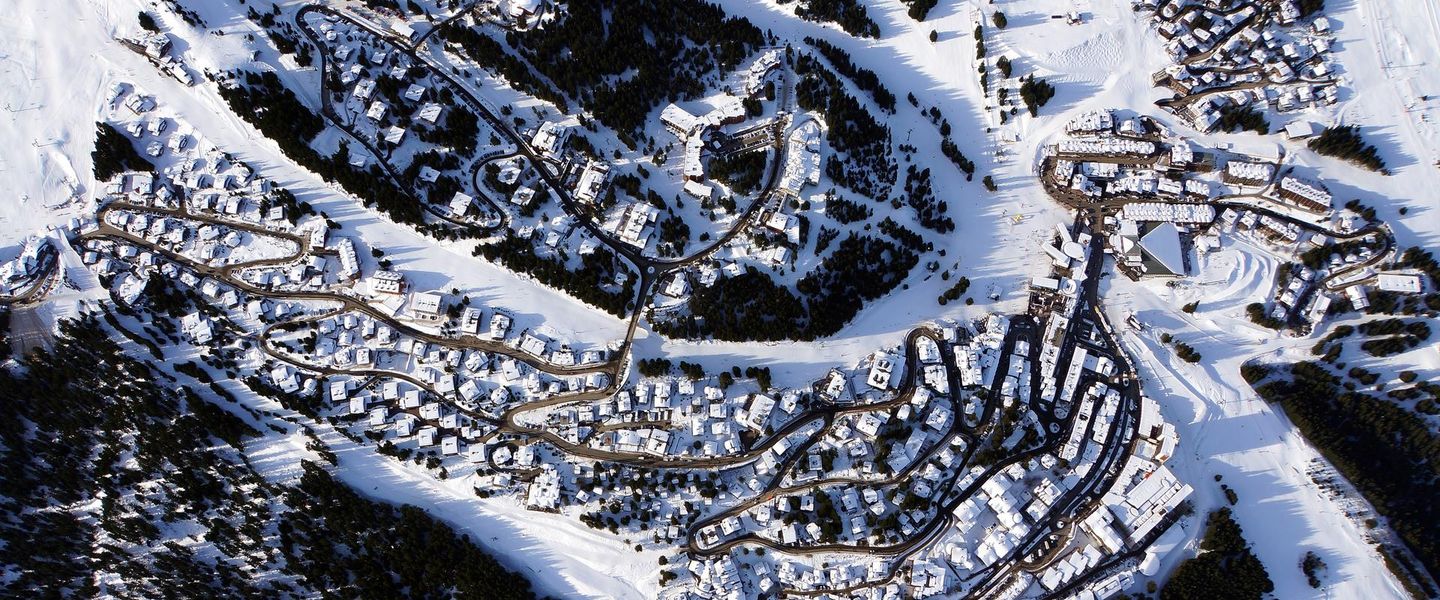


Courchevel, France, combines linked Three Valleys skiing, alpine villages, mountain dining, summer trails and Savoyard heritage in every season.
A Mountain Resort in the Tarentaise
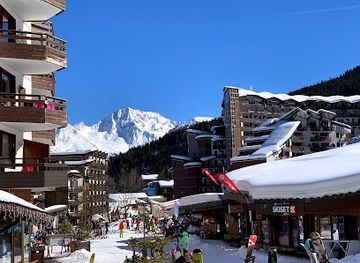
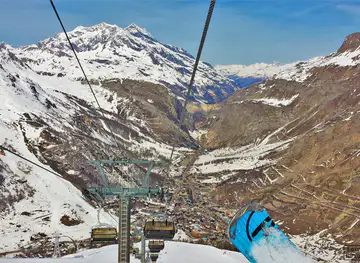
Courchevel occupies the upper part of the Saint-Bon valley in France’s Savoie department, rising above the Tarentaise Valley in the northern French Alps. Rather than a single compact settlement, it is a vertical series of villages and resort districts: Le Praz at about 1,300 metres, Courchevel Village at 1,550 metres, Courchevel Moriond at 1,650 metres and Courchevel at 1,850 metres. Together they form part of Les 3 Vallées, one of the world’s largest linked ski areas, with extensive high-altitude terrain beneath the summits of the Saulire and surrounding peaks.Read more about Courchevel
Four Seasons on the Slopes
Landscape, Heritage and Local Character
When is the best time to visit Courchevel?
Best: June–August · 20–23°C| Month | High (°C) | Rainfall (mm) |
|---|---|---|
| January | 1 | 50 |
| February | 2 | 45 |
| March | 4 | 45 |
| April | 9 | 35 |
| May | 15 | 35 |
| June (best) | 20 | 35 |
| July (best) | 23 | 35 |
| August (best) | 23 | 35 |
| September | 18 | 35 |
| October | 12 | 45 |
| November | 7 | 50 |
| December | 3 | 50 |
Getting to and around Courchevel
How to get there
Transportation
Best attractions in Courchevel
Courchevel’s principal attraction is the extensive ski terrain reached from its four main levels, with routes extending across the Courchevel sector and into the wider 3 Vallées when lifts and passes permit. Le Praz combines a traditional village setting with the Olympic ski-jump complex, while Courchevel Moriond provides access to Lac de la Rosière, a wooded mountain lake surrounded by walking routes and rocky slopes. Above the resort, the Saulire sector delivers high-alpine scenery and links towards Méribel; the Dent du Villard forms a distinctive landmark on the Courchevel side of the valley. In summer, visitors explore forest tracks, alpine pastures and marked hiking trails on foot or by mountain bike, with routes varying considerably in steepness and exposure. The resort’s different villages are attractions in their own right, offering contrasting architecture, altitude, views and access to restaurants, shops and mountain activities.
-
Tourist attraction
Aquamotion Courchevel
Discover Aquamotion Courchevel: a captivating aquatic center offering thrilling water slides, relaxing spas, and breathtaking Alpine views for an unforgettable experience.
-
Lake
Lac de la Rosière
Discover the breathtaking beauty of Lac de la Rosière in Courchevel, a serene alpine lake perfect for outdoor adventures and relaxation amidst stunning mountain views.
-
Tourist attraction
La Piste des Animaux Meribel Les 3 Vallées
Discover the charm of La Piste des Animaux, a family-friendly ski resort in Meribel's breathtaking Three Valleys, blending adventure and education.
-
Wildlife refuge
Refuge des Lacs Merlet
Experience the breathtaking beauty of Refuge des Lacs Merlet, a wildlife refuge in Vanoise National Park, perfect for nature lovers and outdoor adventures.

Best landmarks in Courchevel
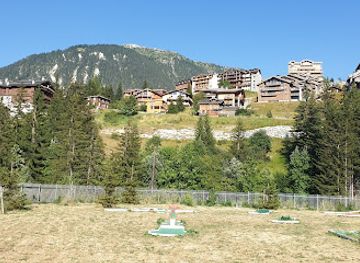
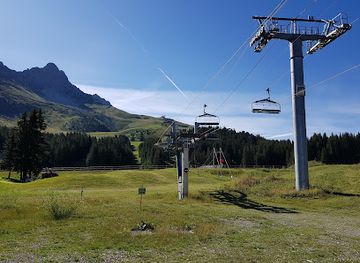
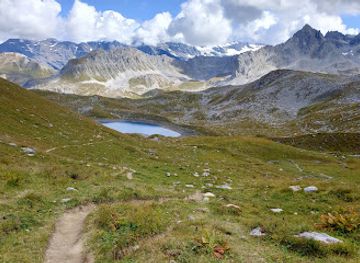
The Saulire ridge is Courchevel’s defining high-mountain landmark, separating the resort from Méribel and forming one of the principal viewpoints and lift-accessed areas in the 3 Vallées. The Dent du Villard, a sharply profiled limestone summit above the valley, gives the Courchevel landscape a readily recognisable geological and visual feature. Lac de la Rosière is an important natural landmark near Courchevel Moriond, set within forest and steep mountain terrain. In Le Praz, the ski-jump facilities are the destination’s most significant modern sporting landmark, recalling the 1992 Albertville Winter Olympics. The stepped arrangement of the resort villages is itself notable: Le Praz preserves the strongest traditional settlement character, while the higher stations express the post-war planning and architecture that transformed Courchevel into an international alpine resort.
-
Restaurant
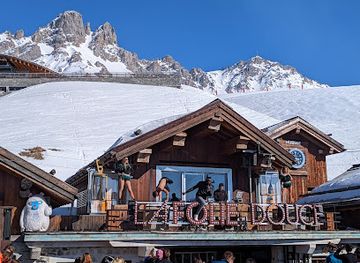
Restaurant d'altitude La Folie Douce Méribel-Courchevel
Experience high-altitude dining and electrifying après-ski entertainment at La Folie Douce Méribel-Courchevel, in the heart of the Three Valleys.
-
French
Les Verdons
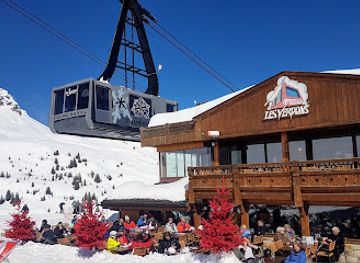
A slopeside restaurant in Courchevel 1850 offering Savoyard and international cuisine with panoramic views of the Alps.
-
Bar
Ski Lodge
La Tania's original and best après-ski destination, serving up good times, great food, and live music since 1993.
-
Restaurant
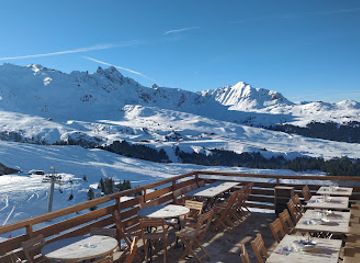
Le Bel Air Mountain Restaurant
Savor Savoyard cuisine with panoramic views at Courchevel's popular slopeside restaurant, accessible by gondola and known for its sunny terrace.
Explore Courchevel on the map
Plan your trip on one map. See where the top attractions, landmarks, restaurants and hotels are, and book hotels and experiences in a few clicks.
Best hotels in Courchevel
Best restaurants in Courchevel
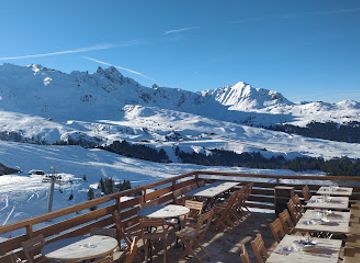
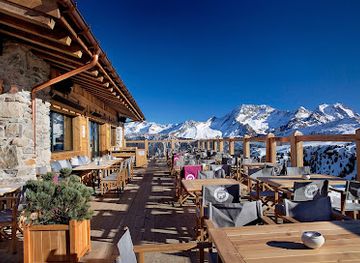
Courchevel has one of the most developed dining scenes in the French Alps, ranging from traditional Savoyard restaurants and mountain eateries to gastronomic establishments in the higher resort villages. Local cooking draws on ingredients and dishes associated with Savoie, including fondue, raclette, tartiflette, croûte, alpine cheeses, cured meats and regional pastries, alongside contemporary French cuisine and international menus. Dining options are concentrated in Courchevel 1850, Courchevel Moriond, Courchevel Village and Le Praz, while mountain restaurants serve skiers and walkers during the appropriate seasons. The resort is also known for a strong fine-dining culture, although restaurants change over time and advance planning is often sensible in busy periods. Traditional village inns and cafés in Le Praz and the lower valley provide a more informal setting for regional specialities, coffee and après-ski meals.
-
French
Les Verdons
Experience exquisite French cuisine with stunning mountain views at Les Verdons in Courchevel.
-
Restaurant
Le Bel Air Mountain Restaurant
Experience exquisite French cuisine amidst breathtaking alpine views at Le Bel Air Mountain Restaurant in Courchevel.
-
Restaurant
Cave des Creux
Discover exceptional French cuisine at Cave des Creux in Courchevel, where mountain views meet culinary excellence for an unforgettable dining experience.
-
Restaurant
Le Cap Horn
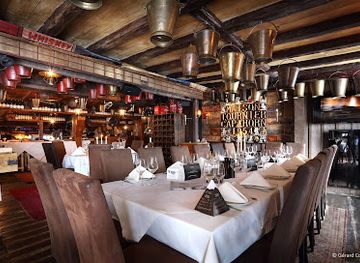
Discover unparalleled French cuisine and breathtaking mountain views at Le Cap Horn in Courchevel – a must-visit culinary destination.
Best bars in Courchevel
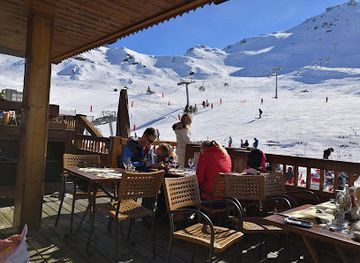
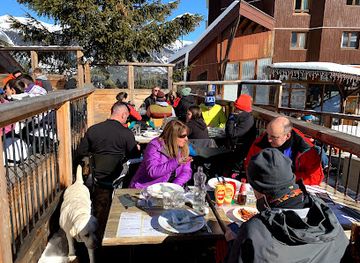
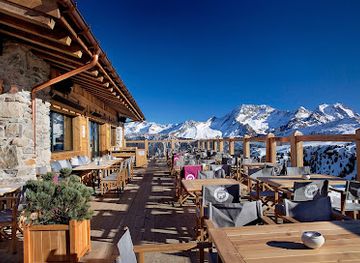
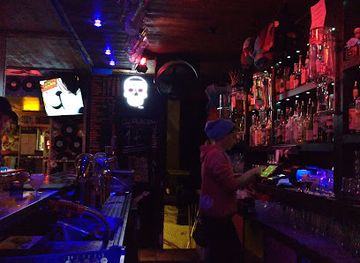
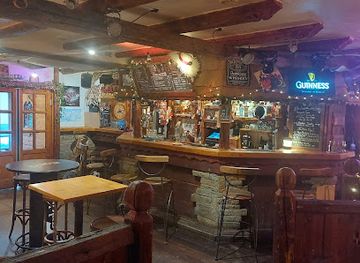
Evenings in Courchevel range from quiet village hospitality to an affluent après-ski and late-night scene, particularly in Courchevel 1850. Bars, hotel lounges and après-ski venues are concentrated around the main resort centres, while Le Praz, Courchevel Village and Courchevel Moriond generally offer a more relaxed choice of pubs, cafés and accommodation-based bars. The character of the evening depends strongly on the season, with winter bringing the greatest concentration of visitors and entertainment. Courchevel is not principally a clubbing destination across all its villages, and facilities outside the main resort areas are limited. In summer, evenings are more likely to centre on restaurants, local events, terrace drinks and the peaceful atmosphere of the mountain settlements than on extensive nightlife.
-
French
Les Verdons
Experience French culinary excellence at Les Verdons, a luxurious dining destination in the heart of Courchevel's stunning alpine landscape.
-
Bar
Ski Lodge
Experience the perfect blend of relaxation and entertainment at Ski Lodge in Courchevel, your alpine retreat with live music and delicious cuisine.
-
Bar
Cave des Creux
Discover the exquisite flavors of French cuisine at Cave des Creux, a culinary gem nestled in the stunning Alps of Courchevel.
-
Bar
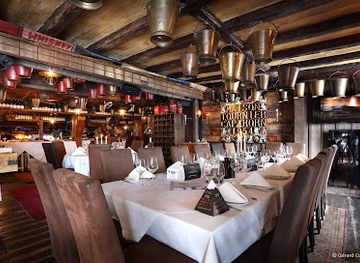
Le Cap Horn
Experience unparalleled luxury and exquisite French cuisine at Le Cap Horn in Courchevel, where every meal is a celebration of alpine elegance.
Best nightclubs in Courchevel
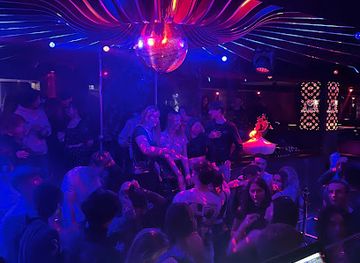
Evenings in Courchevel range from quiet village hospitality to an affluent après-ski and late-night scene, particularly in Courchevel 1850. Bars, hotel lounges and après-ski venues are concentrated around the main resort centres, while Le Praz, Courchevel Village and Courchevel Moriond generally offer a more relaxed choice of pubs, cafés and accommodation-based bars. The character of the evening depends strongly on the season, with winter bringing the greatest concentration of visitors and entertainment. Courchevel is not principally a clubbing destination across all its villages, and facilities outside the main resort areas are limited. In summer, evenings are more likely to centre on restaurants, local events, terrace drinks and the peaceful atmosphere of the mountain settlements than on extensive nightlife.
-
Bar
Ski Lodge
Discover the perfect blend of relaxation and entertainment at Publeski Lodge in La Tania, where delicious food and live music await.
-
Bar
Funky Fox Bar
Experience the vibrant nightlife of Courchevel at Funky Fox Bar, where every night is an adventure filled with great drinks and lively atmosphere.
-
Disco club
Les Caves de Courchevel
Experience the vibrant nightlife at Les Caves de Courchevel, where music, dancing, and unforgettable moments await in the heart of the French Alps.
-
Bar
Le Catérail
Experience the vibrant nightlife at Le Catérail in Courchevel, where delicious drinks and lively ambiance create unforgettable alpine evenings.
Best shops in Courchevel
Shopping is concentrated in the resort villages, especially Courchevel 1850, where visitors find fashion, ski equipment, outdoor clothing, food shops, galleries and specialist boutiques rather than a traditional regional market town. Courchevel Moriond, Courchevel Village and Le Praz provide smaller selections of everyday goods, sports equipment, bakeries and locally oriented shops. Regional purchases include Savoie cheeses, cured meats, confectionery, mountain herbs, wines from the wider Savoie area and locally made crafts, although product ranges vary by season and settlement. Skiers can arrange equipment hire and servicing in the principal resort centres, while visitors seeking larger supermarkets or a broader choice of practical supplies may need to use lower valley towns such as Bozel or Moûtiers. Permanent markets and artisan workshops should not be assumed at every resort level.
-
Ski rental service
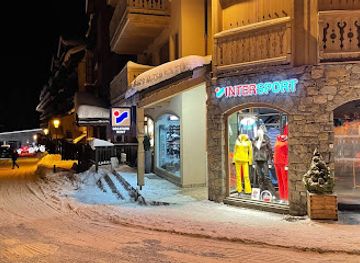
Intersport
Explore the slopes of Courchevel with Intersport, your top destination for ski and outdoor rentals, gear, and expert advice.
-
Sporting goods store
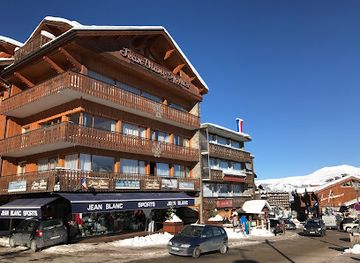
Jean Blanc Sports
Explore the best in sporting goods at Jean Blanc Sports in Courchevel, your gateway to alpine adventures and outdoor excitement.
-
Leather goods store
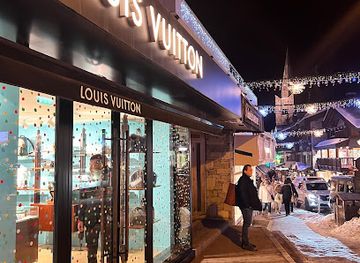
Louis Vuitton Courchevel
Experience unparalleled luxury shopping at Louis Vuitton in Courchevel, surrounded by the stunning beauty of the French Alps.
-
Shoe store
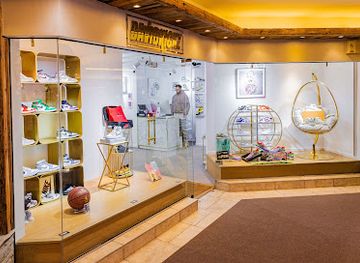
Davidkickz
Explore the finest selection of footwear at Davidkickz in Courchevel, where style, comfort, and quality come together for the ultimate shopping experience.
Get your free copy of our complete guide to Courchevel, delivered straight to you.
Everything on this page, from attractions and restaurants to essentials and local phrases, in one PDF you can read offline, print or share.
Already have an account? Sign in
Your Courchevel guide is ready.
We'll send it to · Not you? Sign out

Getting your guide ready…
We are putting together a fresh copy of the Courchevel guide. This can take up to a minute.
This can take a few moments. If your browser asks, choose Allow so the download can start. You'll find the guide in your Downloads folder.
Nothing happened? Download it again
Sorry, the guide is taking longer than usual. Please try again in a minute, or get it by email instead.
Courchevel essentials
Currency and Payment
Safety
Emergency Situations
Do's and Don'ts
Local Tips
From Eve
Local phrases worth knowing
You don't need to get them perfect. A few words go a long way, and locals appreciate the effort.
Basics
| English | Local | Say it |
|---|---|---|
| Hello | Bonjour | [bohn-zhoor] |
| Goodbye | Au revoir | [oh ruh-vwah] |
| Yes | Oui | [wee] |
| No | Non | [noh] |
| Please/You're welcome | S'il vous plaît/De rien | [seel voo pleh/duh ryen] |
| Thank you | Merci | [mehr-see] |
| Excuse me/Sorry | Excusez-moi/Désolé | [ex-kew-zay mwah/dey-zoh-lay] |
| How are you? | Comment ça va? | [koh-mohn sah vah] |
| Fine. And you? | Bien. Et toi? | [byen. ay twah] |
| Do you speak English? | Parlez-vous anglais? | [par-lay voo ahn-glay] |
| I don't understand | Je ne comprends pas | [zhuh nuh kohm-prahn pah] |
Eating & Drinking
| English | Local | Say it |
|---|---|---|
| I'd like to see the menu, please | Je voudrais voir la carte, s'il vous plaît | [zhuh voo-dray vwahr lah kart, seel voo pleh] |
| I don't eat meat | Je ne mange pas de viande | [zhuh nuh mahnj pah duh vyand] |
| Cheers! | Santé! | [sahn-tay] |
| I would like to pay, please | Je voudrais payer, s'il vous plaît | [zhuh voo-dray pay-ay, seel voo pleh] |
Emergencies
| English | Local | Say it |
|---|---|---|
| Help! | Au secours! | [oh suh-coor] |
| Go away! | Allez-vous en! | [ah-lay voo zahn] |
| Call the Police! | Appelez la Police! | [ah-peh-lay lah poh-lees] |
| Call a doctor! | Appelez un médecin! | [ah-peh-lay uh meh-deh-sahn] |
| I'm lost | Je suis perdu | [zhuh swee pair-doo] |
| I'm ill | Je suis malade | [zhuh swee mah-lahd] |
Shopping
| English | Local | Say it |
|---|---|---|
| I'd like to buy... | Je voudrais acheter... | [zhuh voo-dray zheh-tay] |
| I'm just looking | Je regarde juste | [zhuh ruh-gard zhewst] |
| How much is it? | Combien ça coûte? | [kohm-byen sah koot] |
| That's too expensive | C'est trop cher | [say troh shair] |
| Can you lower the price? | Pouvez-vous baisser le prix? | [poo-veh voo bay-say luh pree] |
Time & Numbers
| English | Local | Say it |
|---|---|---|
| What time is it? | Quelle heure est-il? | [kell uhr eh-teel] |
| It's one o'clock | Il est une heure | [eel eh tun uhr] |
| Half past (10) | Dix et demie | [dees ay duh-mee] |
| Morning | Matin | [mah-tahn] |
| Afternoon | Après-midi | [ah-pray-mee-dee] |
| Evening | Soir | [swahr] |
| Yesterday | Hier | [yehr] |
| Today | Aujourd'hui | [oh-zhoor-dwee] |
| Tomorrow | Demain | [duh-mahn] |
| 1 | Un | [uhn] |
| 2 | Deux | [duh] |
| 3 | Trois | [twah] |
| 4 | Quatre | [kah-truh] |
| 5 | Cinq | [sank] |
| 6 | Six | [sees] |
| 7 | Sept | [set] |
| 8 | Huit | [wheet] |
| 9 | Neuf | [nuhf] |
| 10 | Dix | [dees] |
Transport & Directions
| English | Local | Say it |
|---|---|---|
| Where's a/the...? | Où est le/la...? | [oo eh luh/lah] |
| What's the address? | Quelle est l'adresse? | [kell eh la-dress] |
| Can you show me (on the map)? | Pouvez-vous me montrer (sur la carte)? | [poo-veh voo muh mohn-tray (soor lah kart)] |
| When's the next (bus)? | Quand est le prochain (bus)? | [kahn eh luh proh-shahn (boos)] |
| A ticket (to ....) | Un billet (pour ....) | [uhn bee-yay (poor)] |
History of Courchevel
The Alpine Landscape
Courchevel’s terrain was shaped by the geological history of the Alps and later modified by glaciers, which carved the steep Tarentaise valleys and left forests, pastures and high mountain basins. The resort’s slopes rise from the Doron de Bozel valley towards the Saulire ridge and the Vanoise mountains. This combination of varied gradients, north-facing snowfields and accessible upland terrain later made the area suitable for a major ski destination, while traditional agriculture continued in lower villages and alpine pastures.
Saint-Bon and Mountain Settlement
Before Courchevel became an international resort, the area formed part of the commune of Saint-Bon-Tarentaise, whose settlement pattern reflected the demanding geography of the valley. Le Praz and the lower hamlets were linked to farming, forestry and seasonal pastoral activity, with buildings and local customs shaped by Savoyard mountain life. The steep slopes limited large-scale agriculture, but summer grazing and haymaking helped maintain the open pastures that remain part of the landscape above the villages.
Post-War Resort Planning
Courchevel’s modern development began after the Second World War, when public authorities pursued the creation of a purpose-planned ski resort in the upper Saint-Bon valley. Architect and planner Laurent Chappis played an important role in developing the concept of a high-altitude station integrated with the terrain rather than a conventional village built along a narrow valley floor. The first lifts and accommodation established the foundations of Courchevel 1850, while later development extended down the mountain through Courchevel Moriond, Courchevel Village and Le Praz.
The Rise of Les 3 Vallées
Courchevel’s importance grew as lift connections expanded across the surrounding valleys. It became one of the principal gateways to Les 3 Vallées, linking the Courchevel, Méribel and Belleville sectors and allowing skiers to travel between a wide range of resorts and elevations. This network altered the local economy by shifting emphasis from largely seasonal mountain agriculture towards tourism, hospitality, ski instruction, lift operation and related services, while also making transport, planning and environmental management increasingly important.
Olympic and Contemporary Courchevel
Le Praz gained international attention during the 1992 Albertville Winter Olympics, when its ski-jumping facilities hosted the jumping events and Nordic combined competition. The Olympic association remains visible in the village’s sporting identity. Since the late twentieth century, Courchevel has continued to develop as a four-season destination, combining high-end hospitality with mass-market skiing, summer mountain recreation and continuing investment in lifts and public spaces. Its history now reflects the wider challenge of balancing tourism, alpine environmental pressures and the character of established villages.
Courchevel in Photos
Browse through our photo collection highlighting the charm and character of the destination.
Neighbouring destination travel guides
The closest destinations to Courchevel, if you have time for more than one.
-

-

-

-

-


Swipe for more destinations
Explore more

Explore more of Rhône-Alpes
Discover the stunning landscapes, historic cities, and world-class ski resorts of Rhône-Alpes, a French region that offers a perfect blend of nature and culture.
Explore Rhône-Alpes
Explore more of France
Explore France: A land of romance, history, and unparalleled beauty, from the iconic streets of Paris to the serene landscapes of Provence and the luxury of the French Riviera.
Explore France