Equestrian statue of Frederick William IV, Berlin Travel Guide
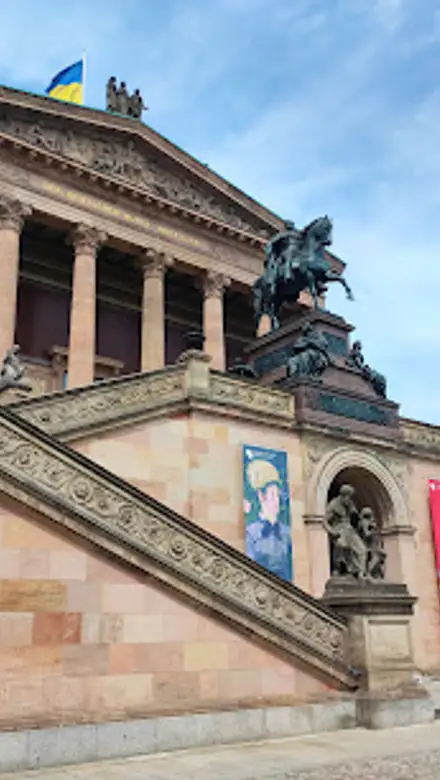
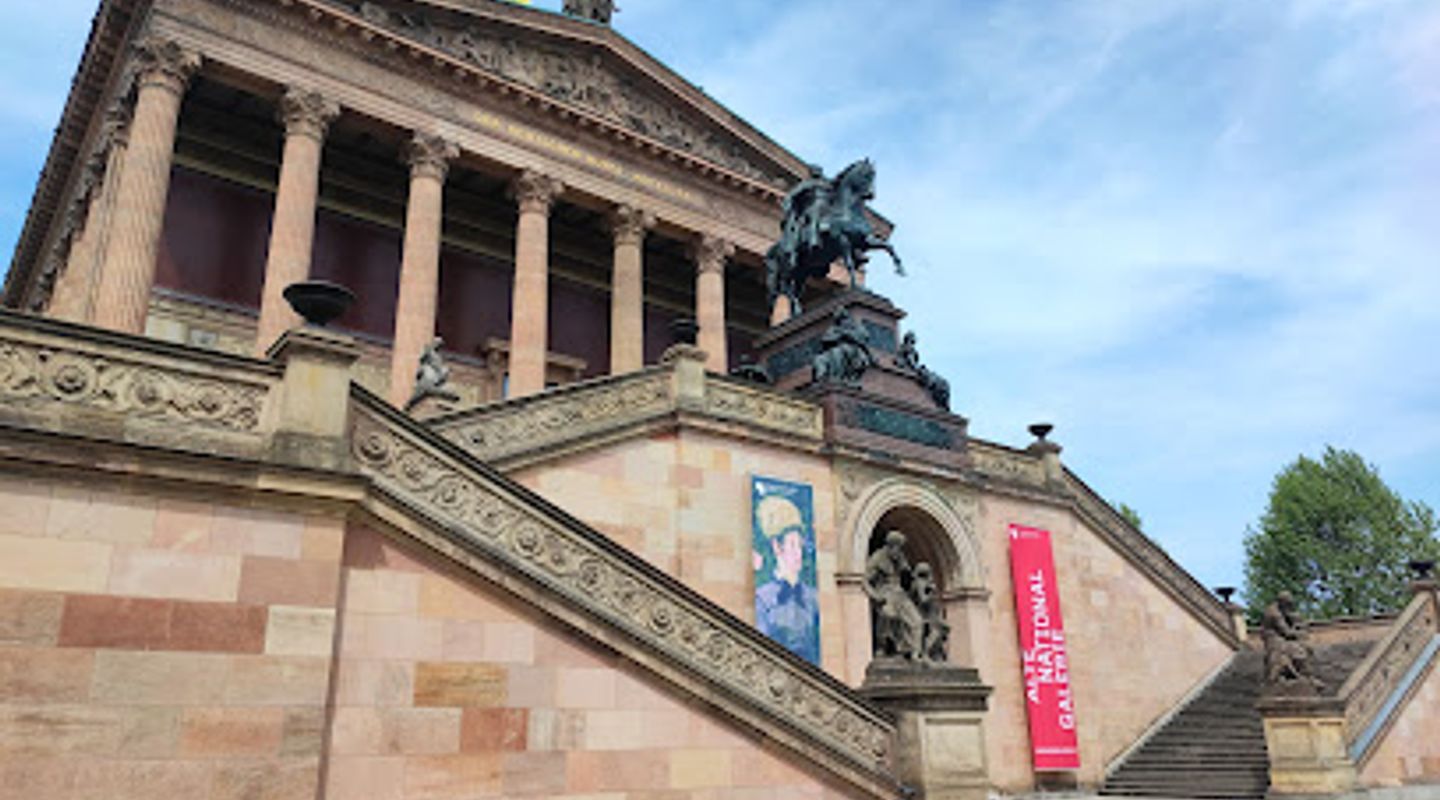
A regal bronze equestrian statue honoring Frederick William IV, King of Prussia, standing proudly at the entrance of Berlin's Alte Nationalgalerie on Museum Island.
Dominating the entrance to the Alte Nationalgalerie on Berlin's Museum Island, the equestrian statue of Frederick William IV is a powerful symbol of Prussian history and artistic ambition. Created by Alexander Calandrelli between 1875 and 1886, the bronze sculpture depicts the king in a regal pose atop his horse, embodying the romantic ideals and aspirations for a unified Germany that characterized his reign. The statue's intricate details, from the king's attire to the horse's stance, showcase the exquisite craftsmanship of the era. Surrounded by the vibrant urban landscape of Berlin, the statue offers a captivating glimpse into the city's rich past, making it a must-see for history buffs and art enthusiasts alike. Its location on Museum Island places it amidst other significant cultural attractions, allowing visitors to easily incorporate it into a broader exploration of Berlin's artistic and historical treasures. Despite often being crowded, the statue provides a compelling focal point for discussions about German history and identity.
A brief summary to Equestrian statue of Frederick William IV
- Berlin, Mitte, 10178, DE

Know before you go
Hi, I'm Eve. Here are a few practical things to know before exploring Equestrian statue of Frederick William IV.
- Visit early in the morning or later in the afternoon to avoid the largest crowds and have a more intimate experience with the statue and the Alte Nationalgalerie.
- Combine your visit with a tour of Museum Island to explore other world-class museums and historical sites in close proximity.
- Take a moment to appreciate the architectural details of the Alte Nationalgalerie, which provides a stunning backdrop for the equestrian statue.
Do you manage this location?
Take control to get all the benefits, like improved information, better appearance, and stronger visibility across AI-powered discovery. Learn more about listing your business on Evendo
Activate your presenceOther nearby places you may find interesting
The closest places of the same kind, if this one is not quite what you had in mind.
Explore Equestrian statue of Frederick William IV on the Map
A handpicked selection of must-see spots near Equestrian statue of Frederick William IV, mapped for you.
Getting There
-
Public Transport
The Equestrian Statue of Frederick William IV is located on Museum Island and is easily accessible by public transport. Take the U5 U-Bahn line to the 'Museumsinsel' station, which is a short walk from the statue. Alternatively, take the S-Bahn to 'Hackescher Markt' or 'Friedrichstraße' stations, both within a 10-15 minute walk. Several tram lines also stop nearby, including the M1, M4, M5 and M6 at 'Hackescher Markt'. A single ticket for zones AB costs €3.80.
-
Walking
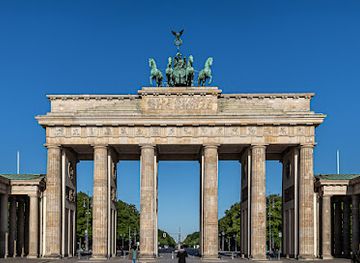
If you are already in the Mitte district, walking to the Equestrian Statue is a pleasant option. From Unter den Linden, walk east towards Museum Island. Cross the Schlossbrücke (Palace Bridge), and you'll see the Alte Nationalgalerie and the statue in front of it. The walk is approximately 15-20 minutes from the Brandenburg Gate.
-
Taxi/Ride-Share
A taxi or ride-share from a central location in Berlin-Mitte, such as Alexanderplatz, will cost approximately €10-€15, depending on traffic. The journey should take around 10-15 minutes. Be sure to specify 'Museum Island' or 'Alte Nationalgalerie' as your destination.
Discover more about Equestrian statue of Frederick William IV
More to explore near Equestrian statue of Frederick William IV
-

Best experiences near Equestrian statue of Frederick William IV
-

Best hotels near Equestrian statue of Frederick William IV
-

Best attractions near Equestrian statue of Frederick William IV
-

Best shops near Equestrian statue of Frederick William IV
-

Best restaurants near Equestrian statue of Frederick William IV
-

Best bars near Equestrian statue of Frederick William IV







Your all‑in‑one travel companion app
Explore expert travel guides, compare and book tours, experiences, hotels, and more—all from the palm of your hand. Download now for seamless trip planning wherever your wanderlust takes you.


Explore More of Berlin
Looking beyond Equestrian statue of Frederick William IV? Discover Berlin for broader travel guides, local hot-spots, and regional highlights.
Explore Berlin
Discover Berlin's first Neo-Gothic church, a stunning architectural masterpiece by Karl Friedrich Schinkel, now showcasing 19th-century German sculptures in the heart of the city.
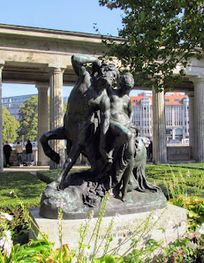
Explore Kolonnadenhof, a stunning courtyard on Berlin's Museum Island, where art, history, and architecture come together in a serene setting.