Humboldt Forum, Berlin Travel Guide
Free Guide: Explore world cultures and Berlin's global connections at the Humboldt Forum, a dynamic museum and cultural hub in the heart of the city, inspired by the Humboldt brothers.


A brief summary of Humboldt Forum
Explore world cultures and Berlin's global connections at the Humboldt Forum, a dynamic museum and cultural hub in the heart of the city, inspired by the Humboldt brothers.
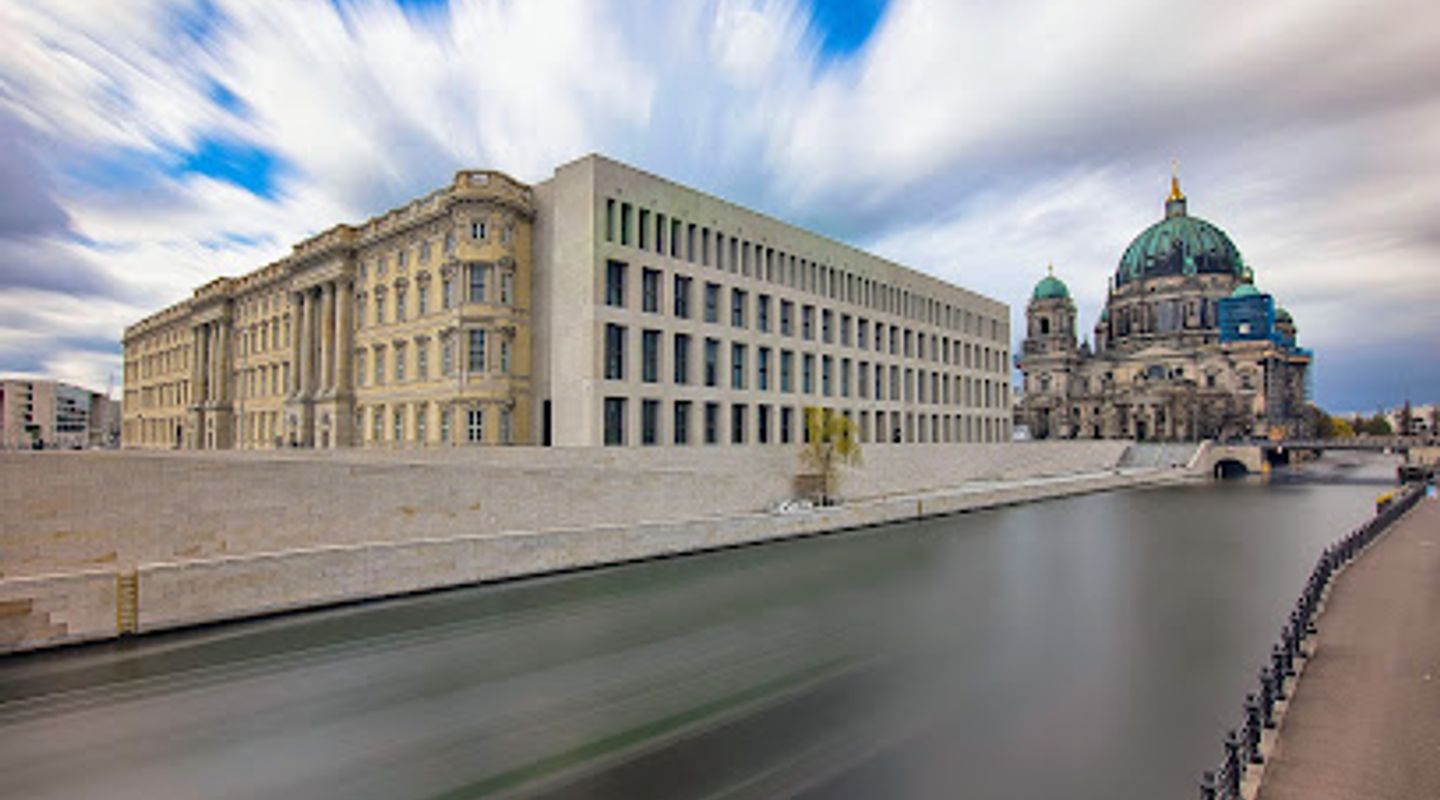
The Humboldt Forum, located on Berlin's historic Schlossplatz, is a world-class museum and cultural center housed within a partially reconstructed Berlin Palace. Inspired by the Humboldt brothers, Alexander and Wilhelm, the forum presents a diverse program of exhibitions, events, and cultural education, fostering dialogue between cultures and disciplines. Explore the Ethnological Museum and the Museum of Asian Art, showcasing an array of global artifacts. Engage with exhibitions exploring Berlin's global connections and the history of the site itself. With its striking architecture, the Humboldt Forum offers a space for learning, reflection, and exchange in the heart of Berlin, attracting visitors with its varied offerings and commitment to accessibility. The Forum is more than just a museum; it's a dynamic hub where history, culture, and science converge.
Opening hours
- Mon10:30 am–6:30 pm
- TueClosed
- Wed10:30 am–6:30 pm
- Thu10:30 am–6:30 pm
- Fri10:30 am–6:30 pm
- Sat10:30 am–6:30 pm
- Sun10:30 am–6:30 pm
Opening hours as listed on the venue’s Google Business Profile. Hours can change for services and special events, so check with the venue before you go.
- Address
- Schloßpl. 1, 10178 Berlin
- Phone
- Website
Getting there
Public Transport
Taxi/Ride-Share
Driving
Discover more about Humboldt Forum
Overview
The Humboldt Forum stands as a monumental testament to Berlin's layered history and its aspirations for the future. Located on Schlossplatz, in the heart of the city, it occupies the site of the former Berlin Palace, a structure that witnessed centuries of Prussian and German history. The palace, originally built in the 15th century, served as the residence of the Hohenzollern dynasty for nearly 500 years. Damaged during World War II, it was demolished in 1950 by the East German government, which later constructed the Palace of the Republic on the site. Following German reunification, the decision was made to partially reconstruct the Berlin Palace and create a new cultural center: the Humboldt Forum. The Humboldt Forum is named in honor of the Humboldt brothers, Alexander and Wilhelm, two of Germany's most celebrated intellectuals and explorers. Alexander von Humboldt was a renowned scientist, geographer, and explorer whose work emphasized the interconnectedness of nature and culture. Wilhelm von Humboldt was a philosopher, linguist, and educational reformer who played a key role in establishing the modern research university. The Humboldt Forum seeks to embody the spirit of these brothers by fostering interdisciplinary dialogue, promoting global understanding, and encouraging intellectual curiosity. The architectural design of the Humboldt Forum is a blend of historical reconstruction and contemporary innovation. The north, south, and west facades of the building have been reconstructed in the Baroque style of the original Berlin Palace, while the eastern facade features a modern design. This juxtaposition of old and new reflects the Humboldt Forum's mission to engage with both the past and the present. The building's interior features a vast entrance hall, exhibition spaces, a theater, and various public areas. The Humboldt Forum houses several museums and cultural institutions, including the Ethnological Museum of Berlin and the Museum of Asian Art. These museums showcase an extensive collection of artifacts from around the world, representing diverse cultures and historical periods. The Ethnological Museum's collection includes objects from Africa, Asia, Oceania, and the Americas, while the Museum of Asian Art features art and artifacts from across the Asian continent. These collections offer visitors a unique opportunity to explore the richness and diversity of human culture. In addition to its museums, the Humboldt Forum hosts a variety of temporary exhibitions, events, and cultural programs. These programs cover a wide range of topics, from art and history to science and technology. The Humboldt Forum also features a dedicated space for the Humboldt University of Berlin, where researchers and students can engage with the public and share their work. The Humboldt Forum aims to be a dynamic and interactive space where visitors can learn, explore, and engage with new ideas. The Humboldt Forum has been the subject of considerable debate and controversy, particularly regarding the provenance of some of the artifacts in its collections. Many of these artifacts were acquired during the colonial era, and there have been calls for their repatriation to their countries of origin. The Humboldt Forum has acknowledged these concerns and has committed to conducting provenance research and engaging in dialogue with communities affected by colonialism. The Humboldt Forum seeks to address the complex and sensitive issues surrounding its collections in a transparent and responsible manner. The Humboldt Forum is located in the heart of Berlin, making it easily accessible to visitors. It is situated near many other major attractions, including Museum Island, the Brandenburg Gate, and the Reichstag Building. The Humboldt Forum is open to the public six days a week, and admission is free to many of its exhibitions and events. The Humboldt Forum is a must-see destination for anyone interested in history, culture, and global affairs. The Humboldt Forum is more than just a museum; it is a place of encounter and exchange. It is a place where people from different backgrounds can come together to learn, to share, and to build bridges of understanding. The Humboldt Forum is a symbol of Berlin's commitment to openness, diversity, and international cooperation. As it continues to evolve and grow, the Humboldt Forum promises to be a vital center for culture and dialogue in the heart of Europe. The Humboldt Forum also houses the Berlin Global exhibition, which explores the city's connections to the wider world. Through interactive displays and multimedia presentations, the exhibition examines Berlin's role in global events and the impact of global trends on the city. Visitors can learn about Berlin's history as a center of trade, migration, and cultural exchange. The Berlin Global exhibition offers a fascinating perspective on the city's place in the world. The Humboldt Forum's rooftop terrace provides stunning panoramic views of Berlin. From this vantage point, visitors can see many of the city's most iconic landmarks, including the Brandenburg Gate, the Berlin Cathedral, and the TV Tower. The rooftop terrace is a popular spot for taking photos and enjoying the city's skyline. A visit to the rooftop terrace is a perfect way to end a visit to the Humboldt Forum. The Humboldt Forum is committed to accessibility and inclusivity. The building is wheelchair accessible, and there are tactile maps and audio guides available for visitors with disabilities. The Humboldt Forum also offers a variety of programs and events designed to be inclusive of diverse audiences. The Humboldt Forum strives to create a welcoming and accessible environment for all visitors.
Evendo Review Centre
 Google
Guest reviews
Explore Humboldt Forum on the map
A handpicked selection of must-see spots near Humboldt Forum, mapped for you.
Get your free copy of our complete guide to Humboldt Forum, delivered straight to you.
Everything on this page, from opening hours and how to get there to Eve’s tips and the best time to go, in one PDF you can read offline, print or share.
Already have an account? Sign in
Your Humboldt Forum guide is ready.
We'll send it to · Not you? Sign out

Getting your guide ready…
We are putting together a fresh copy of the Humboldt Forum guide. This can take up to a minute.
This can take a few moments. If your browser asks, choose Allow so the download can start. You'll find the guide in your Downloads folder.
Nothing happened? Download it again
Sorry, the guide is taking longer than usual. Please try again in a minute, or get it by email instead.
Unlock the best of Humboldt Forum
Skip-the-line tickets, guided tours with entry, and walking tours of the area, booked in a few clicks.
 Tour with entry
Berlin in a Day - Audio Guide and Self Guided Tour
from $5.32 Tour with entry
Discover Berlin: A Self-Guided Audio Experience from Story Hunt
from $14.07 Tour with entry
Berlin Political District Self Guided Treasure Hunt for Kids 5-12
from $15.99 Tour with entry
BERLIN FULL in 3.5h (Guide + Headphones)
from $20.25


Other nearby places you may find interesting
The closest places of the same kind, if this one is not quite what you had in mind.
-
-
-
-
-


Swipe for more places
More to explore near Humboldt Forum

 Best experiences near Humboldt Forum
 Best hotels near Humboldt Forum
 Best landmarks near Humboldt Forum
 Best attractions near Humboldt Forum
 Best shops near Humboldt Forum
 Best restaurants near Humboldt Forum
 Best bars near Humboldt Forum
Do you manage this location?
Take control to get all the benefits, like improved information, better appearance, and stronger visibility across AI-powered discovery.
Explore more

Explore more of Berlin
Berlin: A fascinating blend of history, culture, and modernity, offering everything from historic landmarks to vibrant nightlife and culinary delights.
Explore Berlin
Explore more of Germany
Experience Germany: where history meets innovation, and urban energy blends with natural beauty. Discover diverse cultures, delicious cuisine, and stunning landscapes.
Explore Germany