

Free Upper Rhine Travel Guide & Mobile App
Explore Upper Rhine with free travel guides. Discover regional history, expert tips, proposed trips, and audio guides on web or mobile app.


Explore Germany’s Upper Rhine for Freiburg, vineyard villages, Rhine landscapes, Baden cuisine and easy access to the Black Forest.
Read more about Upper Rhine
When is the best time to visit Upper Rhine?
Best: June–August · 23–25°C| Month | High (°C) | Rainfall (mm) |
|---|---|---|
| January | 5 | 45 |
| February | 6 | 42 |
| March | 11 | 49 |
| April | 15 | 54 |
| May | 19 | 61 |
| June (best) | 23 | 67 |
| July (best) | 25 | 72 |
| August (best) | 25 | 69 |
| September | 21 | 61 |
| October | 15 | 51 |
| November | 9 | 55 |
| December | 5 | 49 |
Getting to and around Upper Rhine
How to get there
Transportation
Top city travel guides in Upper Rhine
The cities of Upper Rhine, and the easiest places to base yourself.
-

-

-


Swipe for more cities
Destinations in Upper Rhine
Resorts, valleys and scenic spots worth a trip of their own.

Swipe for more destinations
Best attractions in Upper Rhine
The Upper Rhine’s attractions combine urban culture, historic towns, vineyards and river landscapes rather than revolving around one single landmark. Freiburg’s old town and museums provide a strong base, while Karlsruhe offers palace collections, contemporary art and science-focused institutions within a planned city setting. In Ortenau, towns such as Gengenbach and Oberkirch lead towards vineyard routes and the Black Forest, while the Kaiserstuhl and Tuniberg are suited to walking, cycling and wine-focused excursions. Rust is home to Europa-Park, a major theme park and resort within the Upper Rhine plain, while nearby wetlands and woodland offer a quieter contrast. Breisach’s hilltop setting, the market towns of Markgräflerland and the museums around Lörrach broaden the cultural picture in the south. Along the Rhine, floodplain forests, navigation channels and restored wetland areas support cycling, birdwatching and nature interpretation. The eastern edge also provides access to Black Forest trails and spa towns, though these journeys involve climbing away from the flat river plain.
-
Tourist attraction
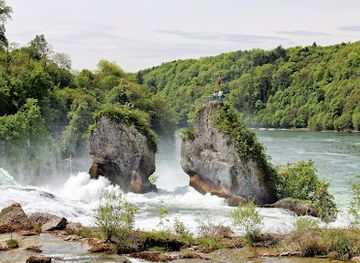
Rhine Falls
Experience the breathtaking Rhine Falls, Europe's largest waterfall, where nature's beauty meets adventure in Switzerland's stunning landscape.
-
Monument
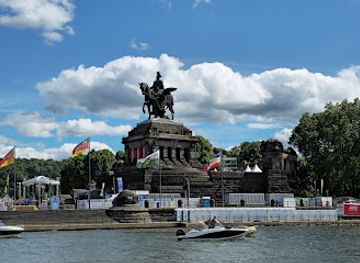
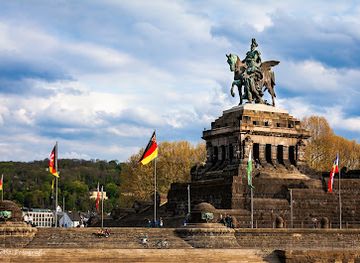
Deutsches Eck
Discover the stunning views and historical significance at Deutsches Eck, where the Rhine and Mosel rivers meet in Koblenz.
-
Cathedral
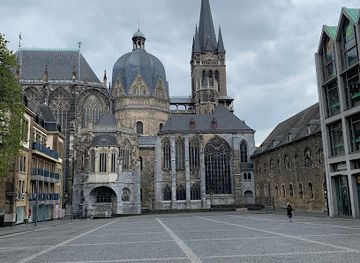
Aachen Cathedral
Discover the awe-inspiring Aachen Cathedral, a UNESCO World Heritage site rich in history and stunning architecture, a must-see for every traveler.
-
Cultural landmark
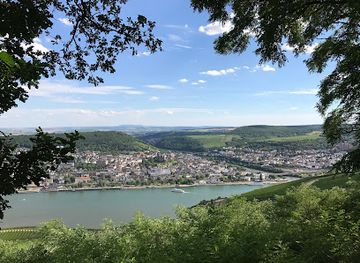
Niederwald Monument
Discover the iconic Niederwald Monument, a stunning cultural landmark offering breathtaking views and rich history in Rüdesheim am Rhein.
Best landmarks in Upper Rhine
Freiburg Minster is the region’s most recognisable medieval landmark, its red sandstone tower rising above a compact old town threaded with the city’s characteristic open water channels. Karlsruhe Palace provides a contrasting symbol: its radiating avenues express the planned geometry of the former Baden residence city. On a hill above the Rhine, Breisach’s St Stephen’s Minster and historic upper town reflect the strategic importance of the river crossing and the settlement’s long political history. Gengenbach’s preserved townscape, gates and timber-framed buildings represent the medieval market culture of Ortenau, while the hilltop ruins and historic setting of Badenweiler point to the region’s Roman and spa traditions. The Rhine itself is also a defining landmark, although its modern appearance is shaped by nineteenth-century channel correction, navigation works and flood-control forests. In the southern area, the Vitra Campus at Weil am Rhein is a major example of contemporary architectural design within the German Upper Rhine, distinct from the older civic and ecclesiastical monuments found elsewhere along the corridor.
-
 Cathedral
Cologne Cathedral
Experience the grandeur of Cologne Cathedral, a UNESCO World Heritage site, where Gothic architecture, religious history, and artistic treasures converge in the heart of Cologne.
-
Monument
Deutsches Eck
Witness the confluence of the Rhine and Moselle at Deutsches Eck in Koblenz, a symbol of German unity and a UNESCO World Heritage Site.
-
Castle
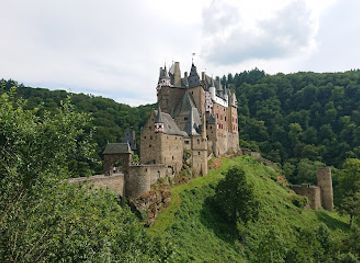
Eltz Castle
Discover the enchanting Eltz Castle, a remarkably preserved medieval fortress owned by the same family for over 850 years, nestled in the scenic hills above the Moselle River.
-
Castle
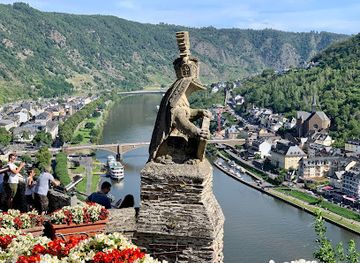
Cochem Castle
Discover Reichsburg Cochem, a majestic Neo-Gothic castle with a rich history, offering stunning views of the Moselle Valley and an immersive journey through time.
Explore Upper Rhine on the map
Plan your trip on one map. See where the top cities, national parks and sights are, and book hotels and experiences in a few clicks.
Best hotels in Upper Rhine
Best restaurants in Upper Rhine
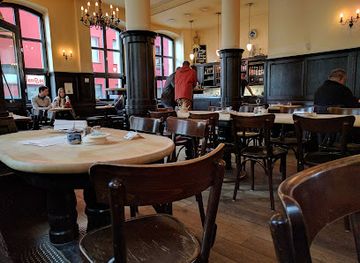
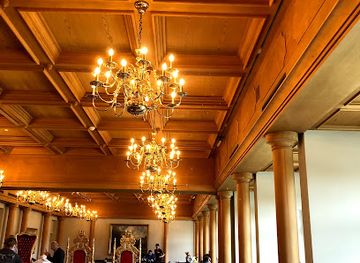
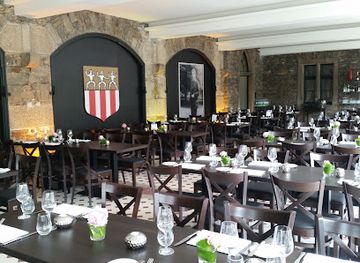
Baden cooking is rooted in seasonal produce, orchard fruit, asparagus, freshwater and river-plain agriculture, with clear influences from neighbouring Alsace and Switzerland. Menus may include spätzle, käsespätzle, schnitzel, potato dishes, trout, seasonal game and savoury tarts, alongside regional cakes and pastries. The Kaiserstuhl, Tuniberg and Markgräflerland vineyards support a strong wine culture, with spätburgunder, grauburgunder and other Baden varieties commonly appearing in village inns and wine taverns. Freiburg and Karlsruhe offer the widest choice of contemporary restaurants, international food and vegetarian cooking, while rural dining is often centred on family-run Gasthäuser, farm shops and wine estates. In spring, asparagus is prominent; later in the year, menus follow plum, apple, mushroom and grape harvests. Farmers’ markets in the larger towns are useful for discovering local cheeses, breads, cured meats, honey and fruit, although the exact selection varies by season.
-
Restaurant
Rheinstein Castle
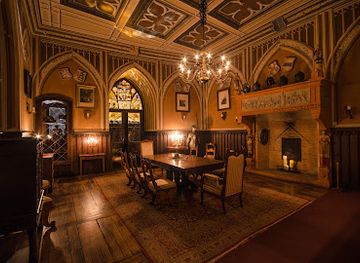
Discover Rheinstein Castle: A stunning blend of history, architecture, and gastronomy nestled on the banks of the Rhine River.
-
German
Max Stark
Experience authentic German cuisine at Max Stark in Cologne's vibrant Innenstadt – where tradition meets modernity.
-
Restaurant
Restaurant Laufen Castle at the Rheinfalls
Experience exquisite dining at Restaurant Laufen Castle with breathtaking views of Rhine Falls - a must-visit historical gem in Switzerland.
-
Restaurant
Burg Reichenstein
Experience the rich history and culinary delights at Burg Reichenstein - a stunning castle overlooking the Rhine Valley.
Best bars in Upper Rhine
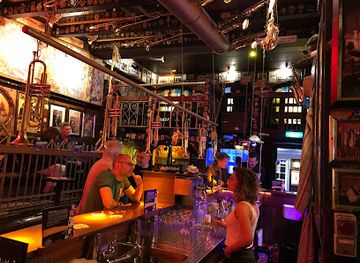
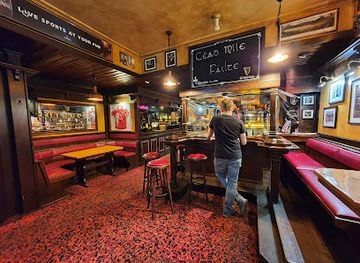
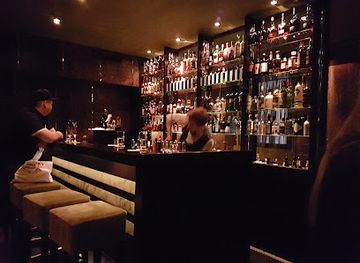
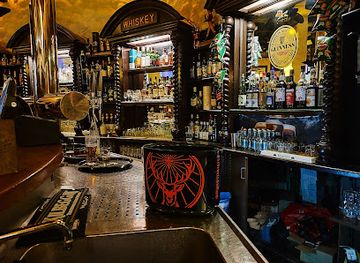
Evening life varies considerably along the Upper Rhine. Freiburg has the region’s most established student and cultural nightlife, with traditional pubs, wine bars, live music, theatres and late-opening venues concentrated around the centre. Karlsruhe also offers a broad evening scene, including cocktail bars, music venues and restaurants, while Offenburg and Lörrach provide more localised choices. In vineyard districts, evenings often centre on wine taverns, seasonal festivals, brewery rooms and village inns rather than nightclubs. The southern border area benefits from its proximity to Basel, but Basel is in Switzerland and should not be presented as part of Germany’s Upper Rhine nightlife. In smaller towns, closing times and transport options can be limited, so an evening meal or tasting may be more practical than moving between venues. Summer brings open-air events and wine celebrations, but programmes change from year to year.
-
Jazz
Papa Joe's Jazz Bar
Immerse yourself in the rhythmic vibes of Cologne at Papa Joe's Jazz Bar, the ultimate destination for live jazz and spirited nightlife.
-
Irish pub
The Corkonian Irish pub
Experience the heart of Ireland at The Corkonian Irish Pub in Cologne, where traditional food, drinks, and live music create unforgettable memories.
-
Bar
Le Lion • Bar de Paris
Discover the elegance of Le Lion, a Parisian-style bar in Hamburg, offering exquisite cocktails and a vibrant atmosphere for an unforgettable night out.
-
Irish pub
Irish Pub Koblenz
Discover the vibrant charm of Irish Pub Koblenz, where authentic Irish cuisine meets a lively atmosphere in the heart of Germany.
Best nightclubs in Upper Rhine
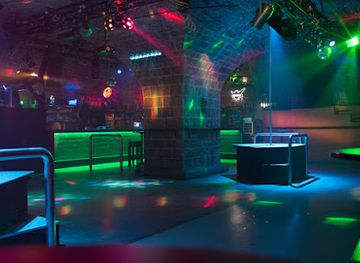
Evening life varies considerably along the Upper Rhine. Freiburg has the region’s most established student and cultural nightlife, with traditional pubs, wine bars, live music, theatres and late-opening venues concentrated around the centre. Karlsruhe also offers a broad evening scene, including cocktail bars, music venues and restaurants, while Offenburg and Lörrach provide more localised choices. In vineyard districts, evenings often centre on wine taverns, seasonal festivals, brewery rooms and village inns rather than nightclubs. The southern border area benefits from its proximity to Basel, but Basel is in Switzerland and should not be presented as part of Germany’s Upper Rhine nightlife. In smaller towns, closing times and transport options can be limited, so an evening meal or tasting may be more practical than moving between venues. Summer brings open-air events and wine celebrations, but programmes change from year to year.
-
Disco club
Velvet
Velvet Disco Club in Frankfurt: Experience unforgettable nights filled with music, dancing, and a vibrant atmosphere.
-
Disco club
Nachtwerk Musikclub
Experience the vibrant nightlife of Karlsruhe at Nachtwerk Musikclub, where electrifying beats and unforgettable memories await every weekend.
-
Night club
Vanity Club Cologne - Köln
Discover the electric nightlife of Cologne at Vanity Club, where stunning design meets a vibrant dance scene.
-
Disco club
En Vogue Nightclub
Dive into the electrifying atmosphere of En Vogue Nightclub in Karlsruhe, where music and dance unite for an unforgettable night out.



Best shops in Upper Rhine
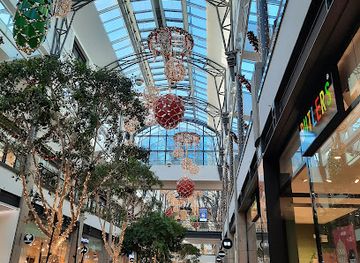
Shopping in the Upper Rhine is strongest in the larger centres and historic market towns rather than in extensive luxury districts. Freiburg combines pedestrian streets, department stores, bookshops, specialist food shops and independent retailers around its old town, while Karlsruhe offers a broader urban choice along its central avenues. Weekly markets are useful for Baden produce, bread, cheese, honey, flowers and seasonal fruit, with selection and schedules varying by town. Kaiserstuhl, Tuniberg and Markgräflerland are good areas to look for bottled local wine, grape products, orchard goods and farm-shop specialities. Gengenbach, Endingen, Oberkirch and other historic towns have small galleries, craft shops, antiques and locally made gifts, though opening arrangements can be limited outside busy periods. Ceramics, woodwork, textiles and regional food products make more meaningful souvenirs than generic Rhine merchandise. Visitors should distinguish German retail from cross-border shopping: Basel and Alsace are nearby, but they operate under different national systems and may have different prices, currencies and tax rules.
-
Shopping mall
Centro Oberhausen
Experience shopping, dining, and entertainment at Centro Oberhausen, a leading retail destination in Germany with something for everyone.
-
Shopping mall
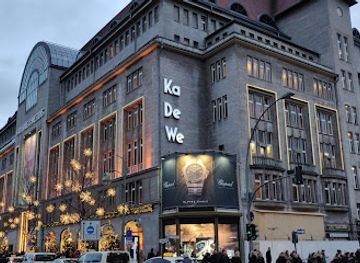
KaDeWe - Kaufhaus des Westens
Explore KaDeWe, Europe's largest department store, where luxury shopping meets gourmet dining in the heart of Berlin.
-
Outlet mall
OUTLETCITY Metzingen
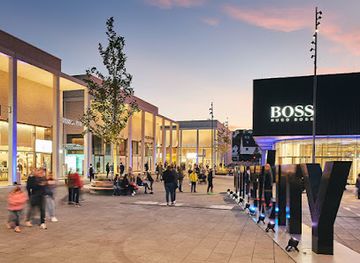
Shop at OUTLETCITY Metzingen for exclusive deals on top designer brands in a stylish and spacious outlet mall setting.
-
Outlet mall
Designer Outlet Neumünster
Explore the best of fashion and lifestyle at Designer Outlet Neumünster, where premium brands meet unbeatable prices.

Get your free copy of our complete guide to Upper Rhine, delivered straight to you.
Everything on this page, from attractions and restaurants to essentials and local phrases, in one PDF you can read offline, print or share.
Already have an account? Sign in
Your Upper Rhine guide is ready.
We'll send it to · Not you? Sign out

Getting your guide ready…
We are putting together a fresh copy of the Upper Rhine guide. This can take up to a minute.
This can take a few moments. If your browser asks, choose Allow so the download can start. You'll find the guide in your Downloads folder.
Nothing happened? Download it again
Sorry, the guide is taking longer than usual. Please try again in a minute, or get it by email instead.
Upper Rhine essentials
Currency and Payment
Safety
Emergency Situations
Do's and Don'ts
Local Tips
From Eve
Local phrases worth knowing
You don't need to get them perfect. A few words go a long way, and locals appreciate the effort.
Basics
| English | Local | Say it |
|---|---|---|
| Hello | Hallo | [Hah-loh] |
| Goodbye | Auf Wiedersehen | [Owf Vee-der-zay-en] |
| Yes | Ja | [Yah] |
| No | Nein | [Nyn] |
| Please/You're welcome | Bitte | [Bi-teh] |
| Thank you | Danke | [Dahn-keh] |
| Excuse me/Sorry | Entschuldigung | [Ent-shool-dee-goong] |
| How are you? | Wie geht's? | [Vee gates?] |
| Fine. And you? | Gut. Und dir? | [Gooot. Oond deer?] |
| Do you speak English? | Sprechen Sie Englisch? | [Shpreh-ken Zee Eng-lish?] |
| I don't understand | Ich verstehe nicht | [Ish fer-shteh-eh nikht] |
Eating & Drinking
| English | Local | Say it |
|---|---|---|
| I'd like to see the menu, please | Ich hätte gerne die Speisekarte, bitte | [Ish heh-teh gern-eh dee Shpie-zeh-kar-teh, bi-teh] |
| I don't eat meat | Ich esse kein Fleisch | [Ish es-seh kyn Flysh] |
| Cheers! | Prost! | [Prohst!] |
| I would like to pay, please | Ich würde gerne bezahlen, bitte | [Ish vur-deh gern-eh beh-tzah-len, bi-teh] |
Emergencies
| English | Local | Say it |
|---|---|---|
| Help! | Hilfe! | [Hil-feh!] |
| Go away! | Geh weg! | [Gay vehg!] |
| Call the Police! | Rufen Sie die Polizei! | [Roo-fen Zee dee Po-lee-tsai!] |
| Call a doctor! | Rufen Sie einen Arzt! | [Roo-fen Zee eye-nen Artst!] |
| I'm lost | Ich bin verloren | [Ish bin fer-lo-ren] |
| I'm ill | Ich bin krank | [Ish bin krank] |
Shopping
| English | Local | Say it |
|---|---|---|
| I'd like to buy... | Ich möchte ... kaufen | [Ish muh-teh ... kau-fen] |
| I'm just looking | Ich schaue nur | [Ish shau-eh noor] |
| How much is it? | Wie viel kostet das? | [Vee feel kos-tet dahs?] |
| That's too expensive | Das ist zu teuer | [Dahs ist tsu toy-er] |
| Can you lower the price? | Könnten Sie den Preis senken? | [Kurn-ten Zee den Pryce zen-ken?] |
Time & Numbers
| English | Local | Say it |
|---|---|---|
| What time is it? | Wie spät ist es? | [Vee shpayt ist es?] |
| It's one o'clock | Es ist ein Uhr | [Es ist ayn Oor] |
| Half past (10) | Halb elf | [Hahlb elf] |
| Morning | Morgen | [Mor-gen] |
| Afternoon | Nachmittag | [Nahkht-mit-tahg] |
| Evening | Abend | [Ah-bend] |
| Yesterday | Gestern | [Geh-stern] |
| Today | Heute | [Hoy-teh] |
| Tomorrow | Morgen | [Mor-gen] |
| 1 | Eins | [Ayns] |
| 2 | Zwei | [Zvy] |
| 3 | Drei | [Dry] |
| 4 | Vier | [Feer] |
| 5 | Fünf | [Foonf] |
| 6 | Sechs | [Zex] |
| 7 | Sieben | [Zee-ben] |
| 8 | Acht | [Acht] |
| 9 | Neun | [Noyn] |
| 10 | Zehn | [Tsen] |
Transport & Directions
| English | Local | Say it |
|---|---|---|
| Where's a/the...? | Wo ist ein/das ...? | [Vo ist ayn/dahs ...?] |
| What's the address? | Wie ist die Adresse? | [Vee ist dee Ah-dres-seh?] |
| Can you show me (on the map)? | Könnten Sie mir (auf der Karte) zeigen? | [Kurn-ten Zee meer (owf dare Kar-teh) tsai-gen?] |
| When's the next (bus)? | Wann ist der nächste (Bus)? | [Vahn ist dare nay-shteh (Boos)?] |
| A ticket (to ...) | Ein Ticket (nach ...) | [Ayn Tih-ket (nahkh ...)] |
History of Upper Rhine
Celtic and Roman Upper Rhine
The Upper Rhine plain was a settled agricultural and trading zone before Roman expansion. Rome incorporated parts of the region into its frontier system, establishing roads, estates, military installations and market settlements along routes linking the Rhine with the Black Forest and the wider province of Germania Superior. The river served both as a defensive boundary and as a commercial artery. Archaeological remains, Roman roads and excavated settlements around Baden-Württemberg demonstrate the region’s early integration into imperial networks, even though many of the most famous Roman sites of the wider Upper Rhine lie across today’s borders.
Alemannic Settlement and Medieval Lordships
After Roman authority receded, Alemannic communities became an important cultural and linguistic influence across south-western Germany. During the medieval period, ecclesiastical foundations, noble families and market settlements organised the Upper Rhine landscape. Freiburg was founded by the Zähringer dynasty in the early twelfth century, while towns such as Gengenbach, Endingen and Breisach developed around trade, administration and fortified positions. Monasteries, parish churches and vineyard cultivation helped shape settlement patterns that remain visible in the region’s historic centres and rural villages.
Habsburg Influence and the Borderlands
Much of southern Baden was linked to the Habsburg dynastic sphere for centuries, and Freiburg became an important Habsburg possession. Its university, founded in 1457, reinforced the city’s intellectual and administrative role. The Upper Rhine’s position between France, the German states and Switzerland also made it a contested frontier. Fortified towns, changing jurisdictions and religious divisions reflected the political instability of the early modern period. Breisach, in particular, occupied a strategic position above the river and repeatedly acquired military importance.
War, Religion and the Thirty Years’ Conflict
The Upper Rhine suffered heavily during the Thirty Years’ War and the wars that followed it. Armies moved along the river corridor, requisitioning food and supplies from towns and villages while fortresses and crossings became military objectives. Religious divisions between Catholic and Protestant territories added to the region’s complexity, although they did not by themselves determine every conflict. Repeated warfare altered settlement, trade and demography, and later fortification works around important river crossings testify to the strategic value of the corridor.
Baden, Industry and the Railway Age
The nineteenth century brought political consolidation under the Grand Duchy of Baden, agricultural improvement and rapid transport development. The railway linking Mannheim, Karlsruhe, Freiburg and Basel transformed the Upper Rhine from a collection of local markets into a connected economic corridor. Industrial activity expanded in Karlsruhe, Freiburg and other centres, while vineyards, tobacco, textiles, engineering and river commerce remained important in different districts. Karlsruhe’s planned court city and Freiburg’s growing suburban districts both reflect the administrative and economic changes of this period.
Rhine Correction and Modern Engineering
The nineteenth-century correction of the Upper Rhine, associated particularly with Johann Gottfried Tulla’s plans, straightened channels, improved navigation and reduced some flood risks. It also removed wetlands, altered islands and changed the relationship between communities and the river. Later canals, hydroelectric works, ports and floodplain restoration created a more engineered but still ecologically important landscape. Today, protected woods and wetlands along the Rhine preserve fragments of the former river environment, while visitor trails interpret the tension between navigation, flood control and conservation.
Twentieth-Century Rupture and Cross-Border Renewal
The region experienced the political violence, persecution and destruction of the twentieth century, including the Nazi dictatorship and the Second World War. Freiburg, Karlsruhe and smaller towns preserve memorials and documentation of these years, while former border and military landscapes reveal the consequences of conflict. After 1945, cooperation between German, French and Swiss communities gradually turned the Upper Rhine into a centre of cross-border planning, commerce and travel. The modern tri-national area around Basel and the wider Upper Rhine cooperation framework reflect this continuing attempt to make the river a connection rather than a dividing line.
Upper Rhine in Photos
Browse through our photo collection highlighting the charm and character of the destination.
Neighbouring regions of Upper Rhine
The closest regions to Upper Rhine, if you have time for more than one.
-

-

-

-

-


Swipe for more regions
Explore more

Explore more of Germany
Experience Germany: where history meets innovation, and urban energy blends with natural beauty. Discover diverse cultures, delicious cuisine, and stunning landscapes.
Explore Germany