

Ponderosa State Park Travel Guide - Free Web & App
Your ultimate guide to Ponderosa State Park. Discover top landmarks, proposed trips, and local tips. Free on the web or via the Evendo companion app.


Ponderosa State Park in Idaho surrounds Payette Lake with pine forests, mountain trails, winter skiing, camping and easy access to McCall’s outdoor culture.
Forests, Lake and Mountain Setting
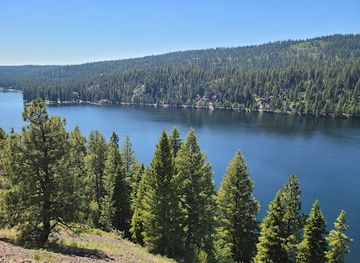
Ponderosa State Park occupies a heavily wooded peninsula extending into Payette Lake beside the mountain town of McCall in west-central Idaho. Its landscape is defined by tall ponderosa pines, Douglas firs, open glades, rocky slopes and long views across the lake towards the mountains of the Payette National Forest. Although the park is close to McCall, its trails and shoreline provide a strong sense of immersion in Idaho’s inland mountain country.Read more about Ponderosa State Park
Exploring the Park
McCall and the Wider Landscape
When is the best time to visit Ponderosa State Park?
Best: June–August · 20–23°C| Month | High (°C) | Rainfall (mm) |
|---|---|---|
| January | 0 | 70 |
| February | 2 | 55 |
| March | 6 | 60 |
| April | 10 | 50 |
| May | 15 | 45 |
| June (best) | 20 | 35 |
| July (best) | 23 | 25 |
| August (best) | 22 | 30 |
| September | 18 | 35 |
| October | 11 | 45 |
| November | 3 | 60 |
| December | 0 | 65 |
Getting to and around Ponderosa State Park
How to get there
Transportation
Best attractions in Ponderosa State Park
Ponderosa State Park’s principal attraction is its forested peninsula on Payette Lake, where trails, picnic areas and shoreline clearings provide access to mature ponderosa pine woodland and broad mountain views. The route to Osprey Point is a popular way to reach an elevated perspective over the lake, while the park’s network of walking and cycling trails reveals quieter glades, rocky slopes and changing forest habitats. Camping areas, cabins and day-use facilities make the landscape accessible for longer stays, and interpretive programmes can add context about local ecology and conservation. In summer, visitors can explore the lakeshore by paddlecraft or boat where permitted and conditions allow; in winter, groomed Nordic routes and snowshoeing bring a different character to the peninsula. McCall, immediately outside the park, adds galleries, shops, restaurants and access to wider Payette Lake recreation, but should be treated as the gateway community rather than part of the park itself.
-
Park
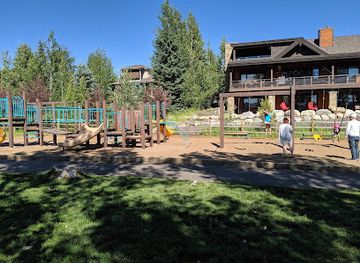
Brown Park
Explore Brown Park in McCall, Idaho: A tranquil park with stunning views, perfect for picnics, family fun, and serene nature walks.
-
Visitor center
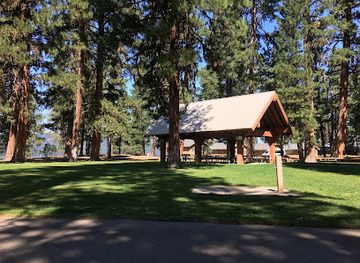
Ponderosa State Park Visitors Center
Explore the stunning landscapes and recreational activities at Ponderosa State Park Visitors Center in McCall, Idaho, the gateway to outdoor adventures.
-
Park
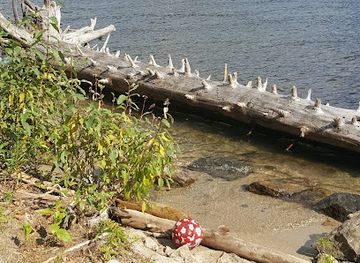
Davis Beach
Discover the serene beauty of Davis Beach in McCall, Idaho - a perfect destination for relaxation, family fun, and stunning lakeside views.
-
Park
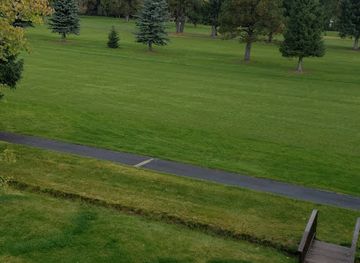
Gold Glove
Experience the tranquility of Gold Glove Park in McCall, Idaho—a beautiful park perfect for relaxation and outdoor adventures amidst nature's beauty.
Explore Ponderosa State Park on the map
Plan your trip on one map. See where the top attractions, landmarks, restaurants and hotels are, and book hotels and experiences in a few clicks.
Best hotels in Ponderosa State Park
Best bars in Ponderosa State Park
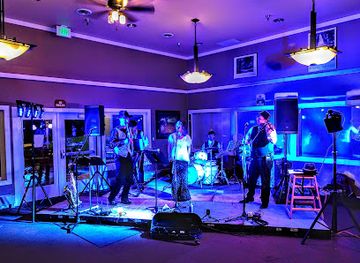
Evenings in Ponderosa State Park are shaped by camping, cabin stays, lakeside darkness and the sounds of the forest rather than by nightlife venues. There is no substantial bar or nightclub district inside the park, and accommodation areas are generally oriented towards quiet outdoor recreation and observance of campground rules. McCall provides the nearest established evening scene, with casual bars, restaurants and seasonal community entertainment rather than a large-city club culture. The town’s atmosphere changes with the calendar and visitor levels, so live music or special events should be treated as occasional rather than guaranteed. Visitors can enjoy a drink or meal in McCall, but should plan a safe return to their accommodation and avoid driving after drinking on rural mountain roads.
-
Restaurant
Banyans on the Green
Discover the culinary delights of Banyans on the Green, a restaurant in McCall, Idaho, where local flavors meet stunning scenery.
Best shops in Ponderosa State Park
Shopping associated with Ponderosa State Park is concentrated in McCall, where visitors can find groceries, outdoor equipment, practical supplies, gifts, artwork and locally oriented products. The town’s retail character reflects its role as a mountain resort and service centre for Payette Lake, with businesses catering to camping, hiking, cycling, boating, skiing and other seasonal activities. Regional food products and Idaho-made goods may appear in independent shops, galleries or speciality retailers, although stock and opening arrangements vary. Inside the park, shopping is minimal and should not be relied upon for provisions, clothing or technical equipment. Purchase fuel, food, maps, layers and any activity-specific supplies in McCall before travelling to more remote trailheads or spending extended time outdoors.
-
Park
Ponderosa State Park
Discover the breathtaking landscapes and outdoor adventures at Ponderosa State Park, a premier destination in McCall, Idaho, for nature enthusiasts.
-
Gun shop
Guns Whiskey Freedom
Discover the rugged spirit of Idaho at Guns Whiskey Freedom, your go-to destination for firearms and outdoor adventure in McCall.
-
Clothing store
Notta Jock
Discover Idaho's spirit at Notta Jock, a clothing store in McCall offering unique apparel and accessories for outdoor enthusiasts and travelers.

Get your free copy of our complete guide to Ponderosa State Park, delivered straight to you.
Everything on this page, from attractions and restaurants to essentials and local phrases, in one PDF you can read offline, print or share.
Already have an account? Sign in
Your Ponderosa State Park guide is ready.
We'll send it to · Not you? Sign out

Getting your guide ready…
We are putting together a fresh copy of the Ponderosa State Park guide. This can take up to a minute.
This can take a few moments. If your browser asks, choose Allow so the download can start. You'll find the guide in your Downloads folder.
Nothing happened? Download it again
Sorry, the guide is taking longer than usual. Please try again in a minute, or get it by email instead.
Ponderosa State Park essentials
Currency and Payment
Safety
Emergency Situations
Do's and Don'ts
Local Tips
From Eve
Local phrases worth knowing
You don't need to get them perfect. A few words go a long way, and locals appreciate the effort.
Basics
| English | Local | Say it |
|---|---|---|
| Hello | Howdy | [haw-dee] |
| Goodbye | See ya | [see yah] |
| Yes | Yup | [yuhp] |
| No | Nah | [na] |
| Please/You're welcome | Please/No problem | [pleez / noo pra-bluhm] |
| Thank you | Thanks | [thanks] |
| Excuse me/Sorry | Pardon me | [pahr-dn mee] |
| How are you? | Howdy | [haw-dee] |
| Fine. And you? | Good. You? | [good. yoo?] |
| Do you speak English? | Ya speak English? | [yah speak ing-glish?] |
| I don't understand | I ain't gettin' ya | [I aint get-tin yah] |
Eating & Drinking
| English | Local | Say it |
|---|---|---|
| I'd like to see the menu, please | Can I see the grub list, please | [kan I see the grub list, please] |
| I don't eat meat | I ain't a meat eater | [I aint uh meat eet-er] |
| Cheers! | Cheers! | [cheers!] |
| I would like to pay, please | I wanna settle up, please | [I wanna set-tl up, please] |
Emergencies
| English | Local | Say it |
|---|---|---|
| Help! | Assist! | [uh-sist!] |
| Go away! | Git! | [git!] |
| Call the Police! | Get the Sheriff! | [get the sher-iff!] |
| Call a doctor! | Fetch a doc! | [fetch uh doc!] |
| I'm lost | I'm turned around | [I'm turned uh-round] |
| I'm ill | I ain't feelin' well | [I aint feelin well] |
Shopping
| English | Local | Say it |
|---|---|---|
| I'd like to buy... | I wanna buy... | [I wanna buy...] |
| I'm just looking | Just browsin' | [just brow-zin] |
| How much is it? | What's the price? | [whats the price?] |
| That's too expensive | That's steep | [thats steep] |
| Can you lower the price? | Can ya drop the price? | [can yah drop the price?] |
Time & Numbers
| English | Local | Say it |
|---|---|---|
| What time is it? | What's the time? | [whats the time?] |
| It's one o'clock | It's one | [its one] |
| Half past (10) | Half past ten | [half past ten] |
| Morning | Mornin' | [mornin] |
| Afternoon | Afternoon | [after-noon] |
| Evening | Evenin' | [evenin] |
| Yesterday | Yest'day | [yest-day] |
| Today | Today | [today] |
| Tomorrow | Tomorra | [tom-or-uh] |
| 1 | One | [wun] |
| 2 | Two | [too] |
| 3 | Three | [three] |
| 4 | Four | [four] |
| 5 | Five | [five] |
| 6 | Six | [six] |
| 7 | Seven | [seven] |
| 8 | Eight | [eight] |
| 9 | Nine | [nine] |
| 10 | Ten | [ten] |
Transport & Directions
| English | Local | Say it |
|---|---|---|
| Where's a/the...? | Where's the...? | [wheres the...?] |
| What's the address? | What's the addy? | [whats the addy?] |
| Can you show me (on the map)? | Can ya point it out (on the map)? | [can yah point it out (on the map)?] |
| When's the next (bus)? | When's the next (bus)? | [whens the next (bus)?] |
| A ticket (to ....) | A pass (to ....) | [uh pass (to ....)] |
History of Ponderosa State Park
Glacial Origins of Payette Lake
The landscape around Ponderosa State Park reflects the geological history of the central Idaho mountains. Payette Lake occupies a basin shaped by glacial activity and later modified by erosion and changing water levels, while the surrounding slopes support forests adapted to a relatively dry mountain climate. The lake, peninsula and adjoining uplands give the park its distinctive geography, creating a setting where shoreline habitats meet extensive conifer forest. These natural processes long predate human settlement and remain fundamental to understanding the park’s scenery, drainage patterns and seasonal recreation.
Indigenous Homelands and Early Travel
The Payette Lake region lies within the wider traditional homeland and travel territory of Indigenous peoples of the interior Plateau and northern Great Basin, including communities associated with the Nimiipuu and Shoshone-Bannock peoples. Indigenous travel, hunting and seasonal use connected lakes, valleys and mountain routes long before the arrival of American settlers. The wider region was later entered by explorers, trappers and traders, and the lake became part of a changing network of routes through central Idaho. Modern visitors should understand the park as a cultural landscape as well as a recreational one.
Logging, Ranching and the Growth of McCall
During the late nineteenth and early twentieth centuries, the Payette Lake area developed through resource industries, including logging, ranching and associated transport. McCall grew as a regional settlement and supply centre, while timber operations altered parts of the surrounding forest and helped shape local employment and infrastructure. The lake also began to attract visitors seeking cooler mountain conditions and access to boating, fishing and forest recreation. These overlapping economic uses established the relationship between McCall and the peninsula that later became Ponderosa State Park.
Creation of Ponderosa State Park
Idaho developed Ponderosa State Park during the mid-twentieth century as public recreation expanded around Payette Lake. Protecting the peninsula’s mature forest and shoreline created a lasting open-space counterpoint to the growing community of McCall and preserved a substantial area for camping, walking, boating and interpretation. Park development introduced roads, campsites, cabins and trails while retaining the area’s wooded character. Today, management balances public recreation with protection of forest habitats, water quality, wildlife and the scenic landscape that made the site valuable for conservation.
Ponderosa State Park in Photos
Browse through our photo collection highlighting the charm and character of the destination.
Neighbouring destination travel guides
The closest destinations to Ponderosa State Park, if you have time for more than one.
-

-

-

-

-


Swipe for more destinations
Explore more

Explore more of Salmon River
Explore Idaho’s Salmon River through mountain towns, whitewater canyons, wilderness trails, historic mining country and remote outdoor adventures.
Explore Salmon River
Explore more of Idaho
Idaho: Discover the Gem State's stunning landscapes, vibrant cities, and outdoor adventures. From majestic mountains to serene lakes, experience the natural wonders of Idaho.
Explore Idaho