

Free Richland Travel Guide & Mobile App
Plan your Richland trip with Evendo. Get free guides to top attractions, restaurants, hotels, and bars. Web access or download the mobile app.


Richland, Washington combines Columbia River scenery, Hanford history, wine-country culture, outdoor trails and wide-open Tri-Cities sightseeing.
River Country and High Desert
Richland occupies the eastern edge of Washington's Columbia Basin, where the Yakima River joins the broad Columbia River beneath open, sage-covered hills. It forms part of the Tri-Cities with Kennewick and Pasco, a spread-out urban area shaped by waterways, agriculture, scientific research and the legacy of the Hanford nuclear site. The landscape is distinctly inland north-western: dry summers, long views, irrigated orchards and vineyards, and river corridors that bring shade and wildlife to an otherwise arid setting.Read more about Richland
A City Shaped by Science
Wine, Water and Open Space
When is the best time to visit Richland?
Best: May–June, September · 22–27°C| Month | High (°C) | Rainfall (mm) |
|---|---|---|
| January | 5 | 20 |
| February | 9 | 15 |
| March | 13 | 18 |
| April | 17 | 15 |
| May (best) | 22 | 12 |
| June (best) | 27 | 10 |
| July | 31 | 5 |
| August | 30 | 6 |
| September (best) | 25 | 10 |
| October | 17 | 15 |
| November | 10 | 18 |
| December | 5 | 20 |
Getting to and around Richland
How to get there
Transportation
Best attractions in Richland
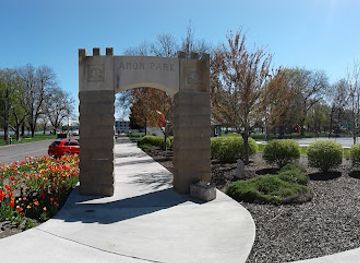
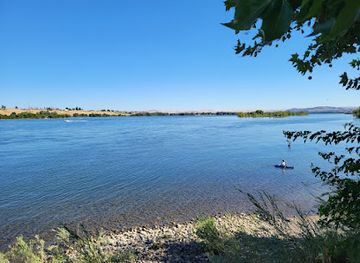
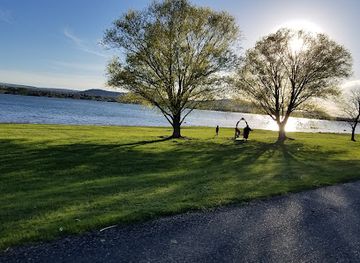
Richland's attractions are spread through a river-oriented city and the surrounding Tri-Cities rather than concentrated in one historic centre. The REACH Museum offers an accessible introduction to the Columbia Basin's geology, Indigenous heritage, agriculture and the complicated Hanford story. Howard Amon Park provides lawns, mature trees and river views, while the Sacagawea Heritage Trail links walking and cycling routes along the Columbia and Yakima rivers. The nearby Hanford Reach National Monument, outside the urban area, protects an unusually free-flowing section of the Columbia and its dry, wildlife-rich landscape, though access requires planning and some locations are remote. Public art, community events and seasonal farmers' markets add local texture, and the region's vineyards provide a different kind of excursion through open agricultural country. The combined attractions suit visitors interested in science, landscapes, local history and low-key outdoor recreation.
-
Tourist attraction
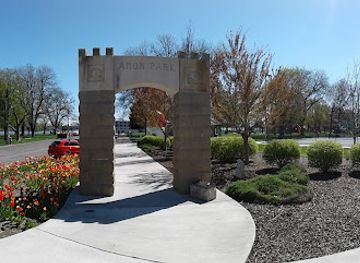
Howard Amon Park
Experience the natural beauty and recreational charm of Howard Amon Park in Richland, WA—a perfect destination for relaxation and outdoor fun.
5 min drive · 1.7 km from city centre
-
Tourist attraction
Leslie Groves Park
Explore the natural beauty and recreational charm of Leslie Groves Park in Richland, WA, a perfect destination for relaxation and outdoor fun.
9 min drive · 2.9 km from city centre
-
Tourist attraction
Columbia Point Marina Park
Explore Columbia Point Marina Park - a serene riverside retreat in Richland, WA, offering stunning views, recreational activities, and family-friendly amenities.
11 min drive · 3.7 km from city centre
-
Tourist attraction
Chiawana Park
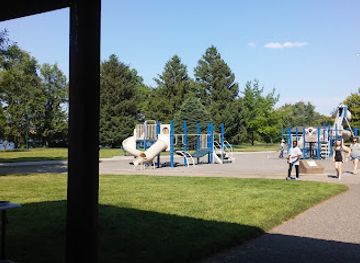
Discover the beauty of Chiawana Park in Pasco, WA - a family-friendly park featuring playgrounds, scenic trails, and a boat ramp along the Columbia River.
22 min drive · 7.4 km from city centre
Best landmarks in Richland
Richland's most revealing landmarks are linked to rivers, civic planning and the Hanford era. The REACH Museum interprets the physical and human landscape of the Columbia Basin, including the transformation brought by the Manhattan Project. Howard Amon Park, on the Columbia River, is a civic landmark whose paths, lawns and shoreline show how the city has turned its water edge into public space. Richland's early federal-era neighbourhoods and surviving modest houses express the planned character imposed during wartime construction, even where later changes have altered the original setting. The Hanford B Reactor, on the wider Hanford site rather than within ordinary city limits, is a nationally significant surviving industrial structure associated with wartime plutonium production; access is controlled and should not be assumed. The Columbia and Yakima river confluence remains the natural landmark underpinning Richland's geography and development.
-
Park
Howard Amon Park
Discover the scenic beauty and recreational charm of Howard Amon Park, a premier destination for outdoor activities in Richland, Washington.
5 min drive · 1.7 km from city centre
-
American
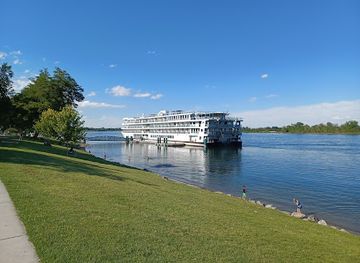
Sterling's Famous Steak Seafood & Salad Bar - On The River
Experience the best of American cuisine at Sterling's Famous Steak Seafood & Salad Bar, where every meal is a delicious journey on the banks of the Columbia River.
15 min walk · 1.2 km from city centre
-
Shopping mall
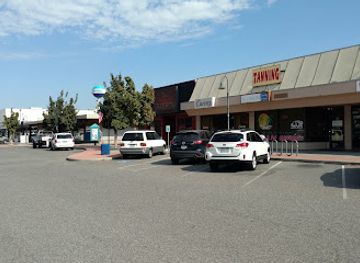
Uptown Shopping Center
Explore the Uptown Shopping Center in Richland, WA – a lively destination for shopping, dining, and entertainment in a modern setting.
9 min walk · 0.7 km from city centre
-
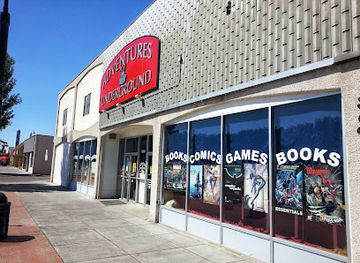
Book store
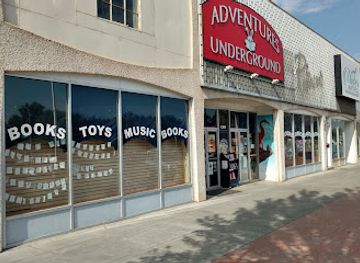
Adventures Underground
Discover your next favorite book, game, or collectible in the heart of Richland, WA at Adventures Underground—a paradise for hobbyists and book lovers.
10 min walk · 0.8 km from city centre
Explore Richland on the map
Plan your Richland trip on one map. See where the top attractions, landmarks, restaurants, bars and hotels are, find what's near where you're staying, and book hotels and experiences in a few clicks.
Best hotels in Richland
Best restaurants in Richland
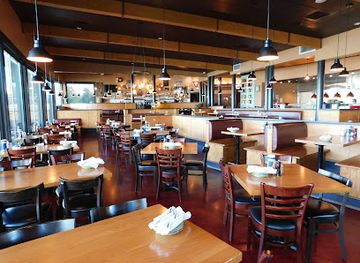
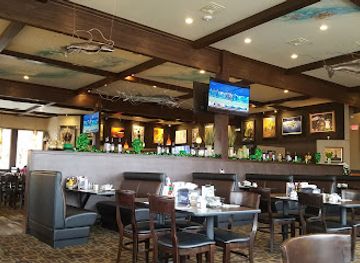
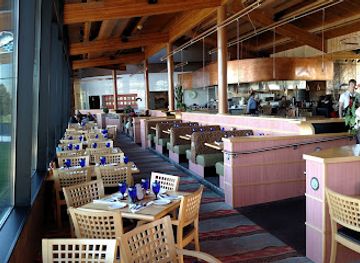
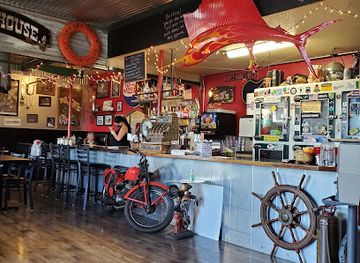
Richland's dining scene reflects the agricultural Columbia Basin and the practical, contemporary character of the Tri-Cities. Menus commonly draw on Washington produce, including apples, cherries, asparagus and wine grapes, while local wineries have helped establish a culture of tasting rooms, small plates and regional pairings. Restaurants range from casual cafés, bakeries and family-run eateries to steakhouses, contemporary American kitchens and internationally influenced cooking. The riverfront and commercial districts offer the greatest concentration of dining, while nearby Kennewick and Pasco broaden the choice considerably. Farmers' markets and seasonal farm stands provide a direct taste of orchard country, and craft breweries add another regional strand. Because Richland is spread out and many vineyards lie beyond the city, checking locations and arranging transport matters, especially when an itinerary includes alcohol tastings.
-
American
LU LU Craft Bar + Kitchen
Experience innovative American cuisine at LU LU Craft Bar + Kitchen in Richland—where local flavors meet creativity in every dish.
11 min drive · 3.6 km from city centre
-
American
Sterling's Famous Steak Seafood & Salad Bar - On The River
Savor delectable steaks and fresh seafood at Sterling's Famous Steak Seafood & Salad Bar along the scenic river in Richland.
15 min walk · 1.2 km from city centre
-
Restaurant
Anthony's at Columbia Point
Discover exquisite seafood dining at Anthony's at Columbia Point with breathtaking river views in Richland, Washington.
11 min drive · 3.6 km from city centre
-
American
Sage Port Grille
Discover delicious American breakfast delights at Sage Port Grille in Richland - where comfort food meets local charm.
21 min drive · 7.1 km from city centre
Best bars in Richland
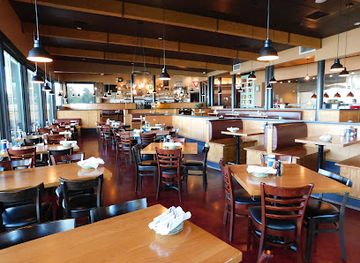
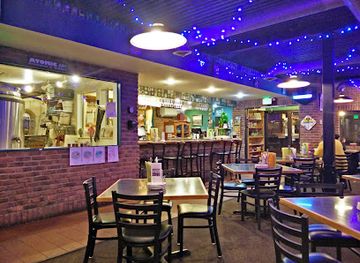
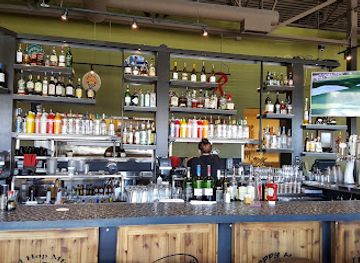
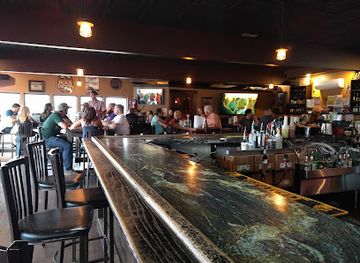
Richland's evening scene is moderate and dispersed rather than built around a single nightclub district. Wine-tasting rooms and craft breweries provide much of the region's social life, with relaxed settings for local bottles, conversation and occasional live music. The commercial areas around The Parkway and Queensgate include bars, restaurants and venues where evenings tend to be casual, while the riverfront parks offer a quieter after-dark setting when public access and conditions permit. Cultural programming, community events and performances in Tri-Cities venues add alternatives to drinking, though larger entertainment choices may require a short drive to Kennewick or Pasco. Visitors should plan transport before winery visits, as distances are considerable and public transport is not designed around late-night touring. Expectations are best set for an understated regional nightlife scene rather than a dense club quarter.
-
American
LU LU Craft Bar + Kitchen
Savor the best of American cuisine at LU LU Craft Bar + Kitchen, where every dish is a delightful blend of flavor and creativity.
11 min drive · 3.6 km from city centre
-
Brewpub
Atomic Ale Brewpub & Eatery
Discover the best of Richland at the Atomic Ale Brewpub & Eatery, where unique flavors and handcrafted brews come together for an unforgettable dining experience.
17 min walk · 1.4 km from city centre
-
Grill
Hops n Drops
Experience the vibrant flavors of Hops n Drops, a premier grill and hamburger restaurant in South Richland, perfect for food lovers and families.
11 min drive · 3.6 km from city centre
-
Grill
Amendment XXI
Discover the vibrant flavors of Amendment XXI in Richland, WA, where delicious grilled dishes meet a lively atmosphere perfect for tourists.
22 min drive · 7.3 km from city centre
Best nightclubs in Richland
Richland's evening scene is moderate and dispersed rather than built around a single nightclub district. Wine-tasting rooms and craft breweries provide much of the region's social life, with relaxed settings for local bottles, conversation and occasional live music. The commercial areas around The Parkway and Queensgate include bars, restaurants and venues where evenings tend to be casual, while the riverfront parks offer a quieter after-dark setting when public access and conditions permit. Cultural programming, community events and performances in Tri-Cities venues add alternatives to drinking, though larger entertainment choices may require a short drive to Kennewick or Pasco. Visitors should plan transport before winery visits, as distances are considerable and public transport is not designed around late-night touring. Expectations are best set for an understated regional nightlife scene rather than a dense club quarter.
-
Comedy club
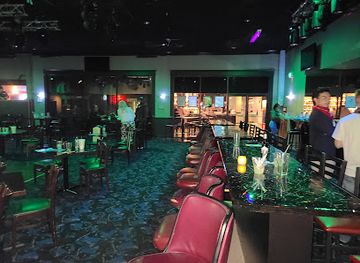
Jokers Comedy Club
Experience the vibrant nightlife of Richland at Jokers Comedy Club, where laughter meets lively entertainment and refreshing drinks.
16 min walk · 1.3 km from city centre
-
Bar
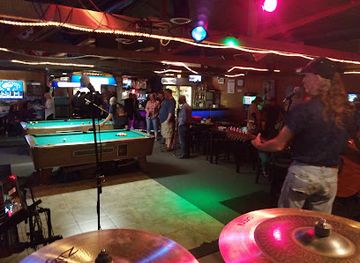
Whiskey River Bar
Experience the vibrant nightlife at Whiskey River Bar in Richland, WA, featuring a cozy atmosphere, great drinks, and live music on Thursdays.
14 min walk · 1.1 km from city centre
-
Grill
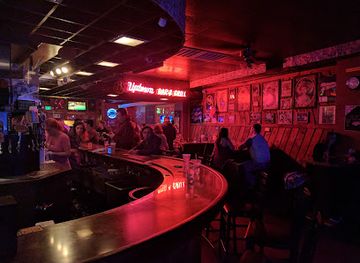
Uptown Bar & Grill
Experience the vibrant atmosphere and delicious grilled flavors at Uptown Bar & Grill, a culinary gem in Richland, WA.
10 min walk · 0.8 km from city centre
-
Bar
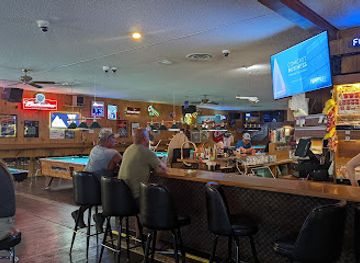
Two Bit's & A Bite
Experience the lively bar scene at Two Bit's & A Bite in Richland, with affordable drinks and fun pool games in a welcoming atmosphere.
10 min walk · 0.8 km from city centre
Best shops in Richland
Shopping in Richland is centred on practical commercial districts, independent businesses and products associated with the wider agricultural region rather than a preserved old-town retail quarter. The Parkway and Queensgate areas contain restaurants, everyday shops and services, while Uptown Shopping Center represents an older, more local-style commercial environment. Farmers' markets and seasonal stands are useful for Washington fruit, vegetables, baked goods, flowers and small-producer foods, subject to changing dates and locations. Wine from the Columbia Valley is a prominent regional purchase, and tasting rooms often sell bottles and locally made gifts. Visitors may also find craft goods, books and small artworks through community markets and cultural events. As in much of the Tri-Cities, distances between retail areas are substantial, making a car useful for combining shopping with river parks or winery visits.
-
Shopping mall
Uptown Shopping Center
Experience the charm of Uptown Shopping Center in Richland, WA, where unique shops and delicious dining await you.
9 min walk · 0.7 km from city centre
-
Gift shop
Country Mercantile
Experience the flavors of Richland at Country Mercantile, your one-stop destination for gourmet treats, local produce, and unique gifts.
24 min drive · 8.1 km from city centre
-
Book store
Adventures Underground
Explore the enchanting Adventures Underground, a unique bookstore in Richland, WA, where literature, games, and community come together.
10 min walk · 0.8 km from city centre
-
Shopping mall
Vintner Square
Vintner Square: A vibrant shopping mall in Richland, WA, offering a delightful blend of stores, dining, and seasonal festivities.
11 min drive · 3.7 km from city centre
Get your free copy of our complete guide to Richland, delivered straight to you.
Everything on this page, from attractions and restaurants to essentials and local phrases, in one PDF you can read offline, print or share.
Already have an account? Sign in
Your Richland guide is ready.
We'll send it to · Not you? Sign out

Getting your guide ready…
We are putting together a fresh copy of the Richland guide. This can take up to a minute.
This can take a few moments. If your browser asks, choose Allow so the download can start. You'll find the guide in your Downloads folder.
Nothing happened? Download it again
Sorry, the guide is taking longer than usual. Please try again in a minute, or get it by email instead.
Richland essentials
Currency and Payment
Safety
Emergency Situations
Do's and Don'ts
Local Tips
From Eve
Local phrases worth knowing
You don't need to get them perfect. A few words go a long way, and locals appreciate the effort.
Basics
| English | Local | Say it |
|---|---|---|
| Hello | Hey | [hey] |
| Goodbye | See ya | [see ya] |
| Yes | Yep | [yep] |
| No | Nope | [nope] |
| Please/You're welcome | Please/No problem | [please/no problem] |
| Thank you | Thanks | [thanks] |
| Excuse me/Sorry | Sorry | [sorry] |
| How are you? | How's it going? | [hows it going] |
| Fine. And you? | Good. You? | [good you] |
| Do you speak English? | You speak English? | [you speak english] |
| I don't understand | I don't get it | [i dont get it] |
Eating & Drinking
| English | Local | Say it |
|---|---|---|
| I'd like to see the menu, please | Can I see the menu? | [can i see the menu] |
| I don't eat meat | I'm vegetarian | [im vegetarian] |
| Cheers! | Cheers! | [cheers] |
| I would like to pay, please | Can I pay now? | [can i pay now] |
Emergencies
| English | Local | Say it |
|---|---|---|
| Help! | Help! | [help] |
| Go away! | Leave me alone! | [leave me alone] |
| Call the Police! | Call the cops! | [call the cops] |
| Call a doctor! | Get me a doctor! | [get me a doctor] |
| I'm lost | I'm lost | [im lost] |
| I'm ill | I'm sick | [im sick] |
Shopping
| English | Local | Say it |
|---|---|---|
| I'd like to buy... | I want to buy... | [i want to buy] |
| I'm just looking | Just looking | [just looking] |
| How much is it? | How much does it cost? | [how much does it cost] |
| That's too expensive | Too pricey | [too pricey] |
| Can you lower the price? | Can you give me a discount? | [can you give me a discount] |
Time & Numbers
| English | Local | Say it |
|---|---|---|
| What time is it? | What's the time? | [whats the time] |
| It's one o'clock | It's one | [its one] |
| Half past (10) | Ten thirty | [ten thirty] |
| Morning | Morning | [morning] |
| Afternoon | Afternoon | [afternoon] |
| Evening | Evening | [evening] |
| Yesterday | Yesterday | [yesterday] |
| Today | Today | [today] |
| Tomorrow | Tomorrow | [tomorrow] |
| 1 | One | [one] |
| 2 | Two | [two] |
| 3 | Three | [three] |
| 4 | Four | [four] |
| 5 | Five | [five] |
| 6 | Six | [six] |
| 7 | Seven | [seven] |
| 8 | Eight | [eight] |
| 9 | Nine | [nine] |
| 10 | Ten | [ten] |
Transport & Directions
| English | Local | Say it |
|---|---|---|
| Where's a/the...? | Where's the...? | [wheres the] |
| What's the address? | What's the address? | [whats the address] |
| Can you show me (on the map)? | Can you show me (on the map)? | [can you show me on the map] |
| When's the next (bus)? | When's the next (bus)? | [whens the next bus] |
| A ticket (to ....) | A ticket (to ....) | [a ticket to] |
History of Richland
Indigenous River Landscapes
The Columbia, Yakima and Snake river systems supported Indigenous peoples long before American settlement, providing salmon, water routes, plants and places of seasonal gathering. The Richland area lies within a wider cultural landscape associated with peoples including the Wanapum and members of the Confederated Tribes of the Umatilla Indian Reservation. River access and fishing shaped movement through the region, while later settler development disrupted established lifeways through land taking, changing economies and the construction of dams. The archaeological and cultural record of the Columbia Basin therefore predates the modern city by many centuries, even though relatively little of that earlier landscape is visible in Richland's suburban streets.
Settlement at the River Junction
Non-Indigenous settlement expanded in the late nineteenth and early twentieth centuries as irrigation, rail links and agriculture encouraged communities along the lower Columbia and Yakima rivers. Richland was incorporated in 1910, developing as a small farming and trading settlement rather than as a major industrial centre. Its position beside the rivers supported orchards and other irrigated agriculture, while the surrounding basin remained sparsely populated compared with western Washington. This early rural character continued until the federal government selected the wider Hanford area for wartime industrial development, an event that would radically alter Richland's population, land use and place in national history.
The Manhattan Project Transforms Richland
In 1943, the United States government acquired Richland and much of the surrounding area to house workers for the Manhattan Project's plutonium-production facilities at Hanford. Residents were displaced, the town was placed under federal control and a new, carefully planned community was built for a rapidly growing workforce. Designed neighbourhoods, modest houses, schools and civic facilities reflected wartime demands and later remained part of Richland's physical identity. Plutonium produced at Hanford was used in the Trinity test and in the atomic bomb dropped on Nagasaki in 1945. The city's wartime history is inseparable from the moral, human and environmental consequences of the project.
A Federal Scientific Community
After the Second World War, Hanford continued operating as a major centre of plutonium production during the Cold War. Richland became a federal scientific community, attracting engineers, technicians, administrators and researchers whose work extended beyond weapons production into nuclear science, environmental management and energy research. The presence of the site encouraged strong schools, laboratories and technical institutions, while the city grew beyond its original wartime plan. The establishment and development of Pacific Northwest National Laboratory reinforced Richland's long-term association with scientific research. Many surviving planned neighbourhoods and civic spaces still reflect the unusual circumstances of a company town created for a national programme.
Cleanup, Research and Regional Growth
With plutonium production ending in the late twentieth century, Hanford entered a prolonged period of environmental cleanup and waste management, involving federal agencies, contractors, scientists and affected communities. The scale and complexity of that work continue to shape local debate and employment. At the same time, Richland diversified through research, healthcare, education, agriculture, wine production and services, and became part of the growing Tri-Cities metropolitan area. Museums, interpretive programmes and public discussions now present the Hanford story through wartime, Indigenous, worker, scientific and environmental perspectives. Contemporary Richland consequently combines the appearance of a river-oriented inland city with a history linked to one of the most consequential industrial projects of the twentieth century.
Richland in Photos
Browse through our photo collection highlighting the charm and character of the destination.
Cities near Richland
The closest cities to Richland, if you have time for more than one stop.
-

-

-

-

-


Swipe for more cities
Explore more

Explore more of Washington
Explore Washington State: From the vibrant streets of Seattle to the tranquil beauty of the Olympic Peninsula, discover the diverse landscapes, culture, and adventures awaiting you.
Explore Washington