

Free Chicagoland Travel Guide & Mobile App
Explore Chicagoland with free travel guides. Discover regional history, expert tips, proposed trips, and audio guides on web or mobile app.


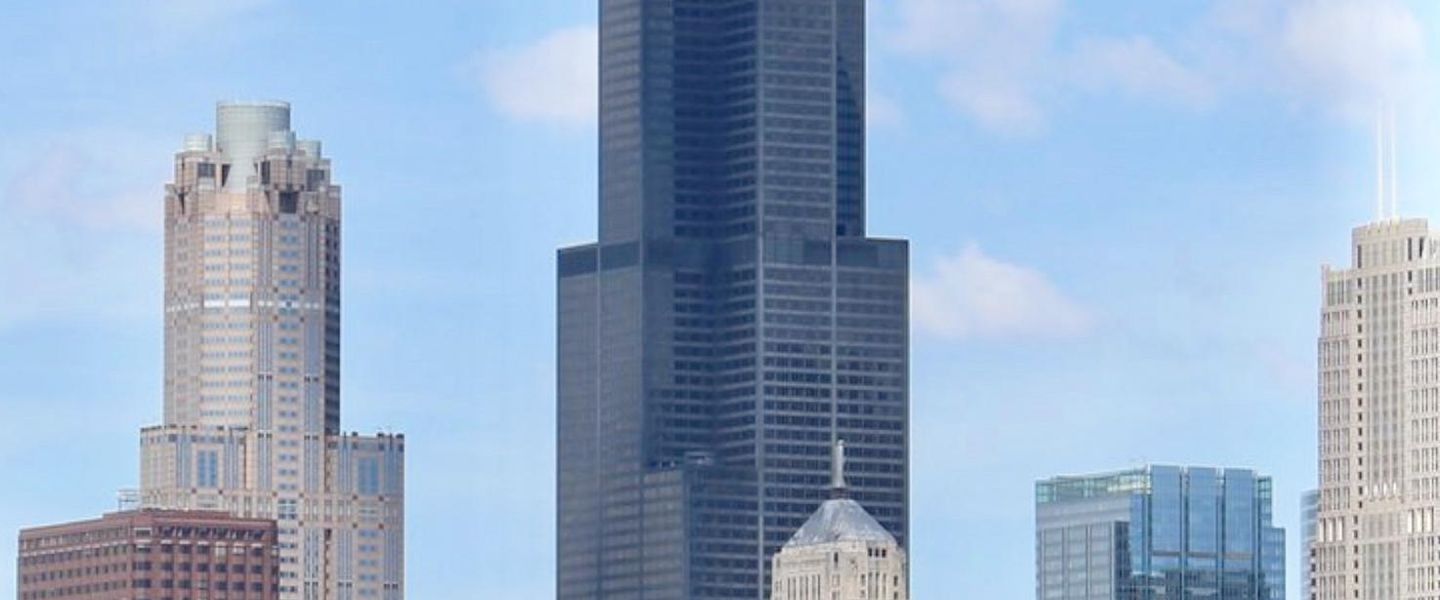


Explore Chicagoland for Chicago architecture, Lake Michigan parks, diverse neighbourhoods, historic suburbs, museums, gardens and Midwestern food.
Read more about Chicagoland
When is the best time to visit Chicagoland?
Best: May–June, September · 21–27°C| Month | High (°C) | Rainfall (mm) |
|---|---|---|
| January | 0 | 43 |
| February | 2 | 42 |
| March | 7 | 66 |
| April | 14 | 92 |
| May (best) | 21 | 104 |
| June (best) | 27 | 109 |
| July | 29 | 114 |
| August | 29 | 110 |
| September (best) | 24 | 96 |
| October | 18 | 82 |
| November | 10 | 71 |
| December | 2 | 60 |
Getting to and around Chicagoland
How to get there
Transportation
Top city travel guides in Chicagoland
The cities of Chicagoland, and the easiest places to base yourself.
-

-

-

-

-

-


Swipe for more cities
Destinations in Chicagoland
Resorts, valleys and scenic spots worth a trip of their own.
-

-

-
-


Swipe for more destinations
Best attractions in Chicagoland
Chicagoland’s attractions range from Chicago’s concentrated cultural institutions to open landscapes and historic communities across northeastern Illinois. In the city, the Art Institute of Chicago, the Field Museum, the Shedd Aquarium, the Museum of Science and Industry and the lakefront parks form a major cultural corridor, while neighbourhood architecture, public art and river cruises reveal a more detailed urban story. The surrounding region offers a different pace: the Chicago Botanic Garden in Glencoe, Brookfield Zoo, the Morton Arboretum in Lisle and the forest preserves provide cultivated landscapes, woodland and prairie habitats. Oak Park is important for Frank Lloyd Wright’s work, and Evanston, Geneva and St Charles combine historic townscapes with independent cultural venues. Families, architecture enthusiasts, walkers and music audiences are particularly well served, although attractions are spread across a large area and should be planned according to rail lines, road conditions and seasonal opening arrangements.
-
Park
Millennium Park
Explore Millennium Park, Chicago's iconic urban space featuring stunning art, beautiful gardens, and a vibrant cultural scene in the heart of the city.
-
 Tourist attraction
Navy Pier
Explore Navy Pier, Chicago's premier attraction, featuring stunning waterfront views, thrilling rides, cultural events, and diverse dining options for every traveler.
-
Museum
The Art Institute of Chicago
Explore the artistic treasures of The Art Institute of Chicago, where centuries of creativity come alive in every corner of this iconic museum.
-
Stadium
Wrigley Field
Explore Wrigley Field, the historic home of the Chicago Cubs, where baseball tradition and vibrant atmosphere create unforgettable experiences.


Best landmarks in Chicagoland
Chicago’s skyline is Chicagoland’s most recognisable landmark landscape, with the Willis Tower, the Wrigley Building, Tribune Tower, the Chicago Board of Trade and the elevated railway around the Loop illustrating different phases of commercial and architectural history. Along the lakefront, Buckingham Memorial Fountain, the graceful curve of the Museum Campus and the steel sculpture known as the Cloud Gate provide prominent civic and visual reference points. Outside the city, Frank Lloyd Wright’s Home and Studio in Oak Park anchors one of the country’s most important Prairie School settings. The Baha’i House of Worship in Wilmette is notable for its intricate ornament and formal gardens, while the Illinois Holocaust Museum in Skokie has powerful contemporary architectural significance. The region’s natural landmarks are quieter but important: Lake Michigan’s broad shoreline, the Chicago River and the prairie and woodland preserves reveal the geography beneath the metropolitan development.
-
Tourist attraction
Navy Pier
Explore Navy Pier, Chicago's premier destination for entertainment, dining, and breathtaking views of Lake Michigan and the city skyline.
-
Tourist attraction
Cloud Gate
Discover Cloud Gate, Chicago's iconic sculpture, reflecting the vibrant skyline and offering a unique artistic experience in Millennium Park.
-
Historical landmark
The Museum Campus
Explore Chicago's Museum Campus, where cultural treasures meet stunning lakefront views, offering a perfect blend of education and leisure for every traveler.
-
Historical landmark
Shedd Aquarium
Immerse yourself in the aquatic wonders at Shedd Aquarium, a historical landmark in Chicago, featuring diverse marine life and engaging educational experiences.


Explore Chicagoland on the map
Plan your trip on one map. See where the top cities, national parks and sights are, and book hotels and experiences in a few clicks.
Best hotels in Chicagoland
Best restaurants in Chicagoland
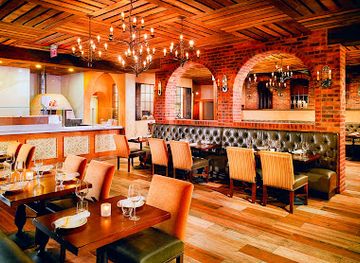
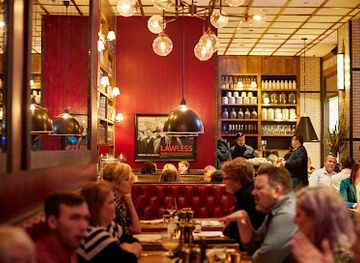
Chicagoland’s dining culture is metropolitan, immigrant-shaped and more varied than its best-known dishes suggest. Deep-dish pizza, Chicago-style hot dogs and Italian beef are strongly associated with the city, while taverns, diners and neighbourhood restaurants give these foods their everyday context. Mexican cooking is especially prominent in areas including Pilsen and Little Village, Polish traditions remain visible in parts of the city and western suburbs, and South Asian, Korean, Chinese, Middle Eastern and Indian restaurants reflect the region’s diverse population. Farmers’ markets and suburban food halls add local produce and prepared foods, while breweries and contemporary restaurants operate across both city neighbourhoods and older suburban centres. Menus may feature Illinois-grown vegetables, Midwestern meat and freshwater fish, but the region’s most distinctive culinary quality is its breadth rather than a single uniform cuisine.
-
Restaurant
Au Cheval
Experience culinary excellence at Au Cheval in Chicago's West Loop—home to gourmet burgers and unforgettable comfort food delights.
-
Mediterranean
The Purple Pig Restaurant
Experience authentic Mediterranean cuisine at The Purple Pig Restaurant in Chicago - where every dish tells a delicious story.
-
New American
Girl & The Goat
Experience innovative New American cuisine at Girl & The Goat in Chicago's West Loop – a true feast for food lovers!
-
American
The Dearborn
Experience exquisite American cuisine at The Dearborn in Chicago – where every meal is crafted with passion and flavor.
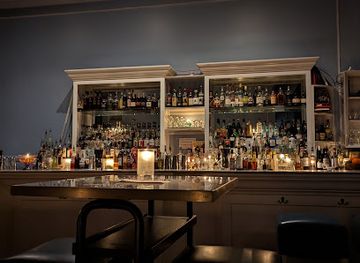
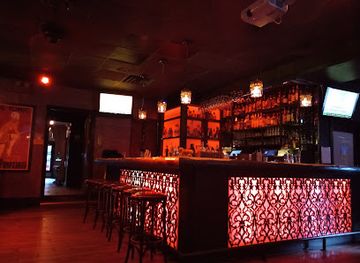
Best bars in Chicagoland
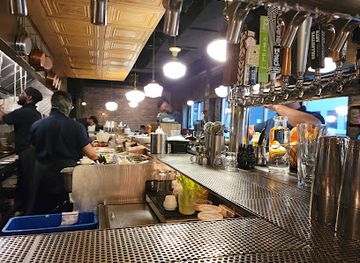
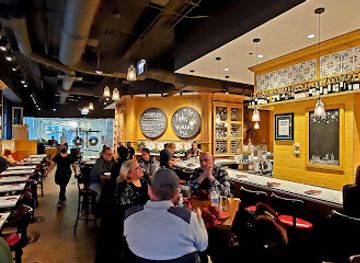
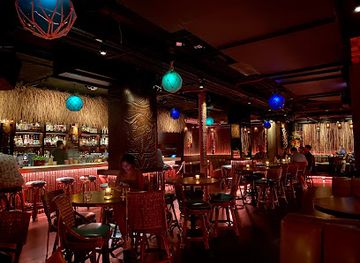
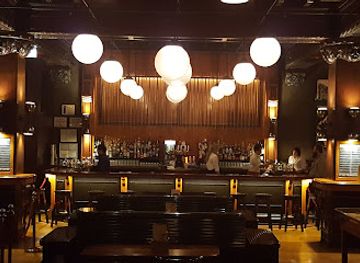
Evening life is concentrated in Chicago but extends through established suburban centres. Neighbourhood taverns, cocktail bars, breweries, blues and jazz venues, comedy clubs and theatre districts provide more of the region’s identity than a single club scene. River North, Wicker Park, Logan Square, Lake View, Andersonville and the West Loop are among the city areas known for varied evening options, while smaller venues and restaurants shape nightlife in Evanston, Oak Park, Naperville and other suburban centres. Summer brings outdoor concerts at Ravinia in Highland Park and performances in city parks, though arrangements vary by season. Outside the main urban corridors, evenings are generally quieter and centred on pubs, restaurants, local music and community events rather than late-night venues.
-
Cocktail bar
Three Dots and a Dash
Experience the vibrant tropical oasis of Three Dots and a Dash, a premier cocktail bar in Chicago, known for inventive drinks and a lively atmosphere.
-
Bar
Cindy's Rooftop
Experience the breathtaking views and upscale dining at Cindy's Rooftop, the perfect spot for tourists in Chicago's vibrant Loop.
-
Cocktail bar
The Violet Hour
Discover The Violet Hour in Wicker Park, Chicago—a cocktail bar where creativity meets elegance in every sip.
-
Karaoke bar
Brando's Speakeasy
Discover Brando's Speakeasy, a vibrant karaoke bar in Chicago Loop offering an unforgettable night of music, drinks, and camaraderie.
Best nightclubs in Chicagoland
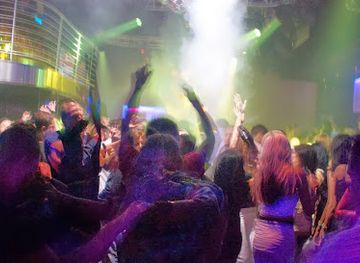
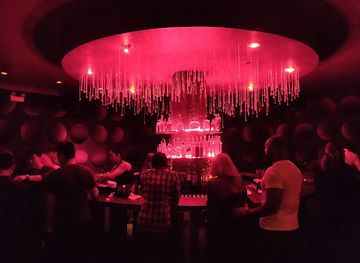
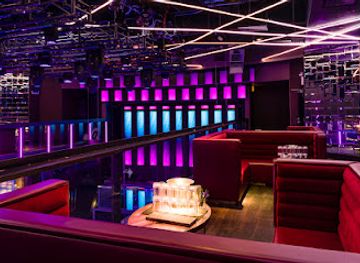
Evening life is concentrated in Chicago but extends through established suburban centres. Neighbourhood taverns, cocktail bars, breweries, blues and jazz venues, comedy clubs and theatre districts provide more of the region’s identity than a single club scene. River North, Wicker Park, Logan Square, Lake View, Andersonville and the West Loop are among the city areas known for varied evening options, while smaller venues and restaurants shape nightlife in Evanston, Oak Park, Naperville and other suburban centres. Summer brings outdoor concerts at Ravinia in Highland Park and performances in city parks, though arrangements vary by season. Outside the main urban corridors, evenings are generally quieter and centred on pubs, restaurants, local music and community events rather than late-night venues.
-
Restaurant
Shore Club Chicago
Discover the perfect blend of culinary excellence and lakeside relaxation at Shore Club Chicago, the ultimate destination for dining and nightlife.
-
Night club
Stereo Nightclub
Stereo Nightclub: Chicago's Premier Destination for Nightlife, Live Music, and Dancing.
-
Night club
Sound Bar
Discover the energy of Chicago's nightlife at Sound Bar, a lively night club offering great music, cocktails, and a vibrant atmosphere.
-
Night club
PRYSM Chicago
Experience the pulse of Chicago nightlife at PRYSM, where electrifying music and vibrant energy come together in a stunning lounge setting.

Best shops in Chicagoland
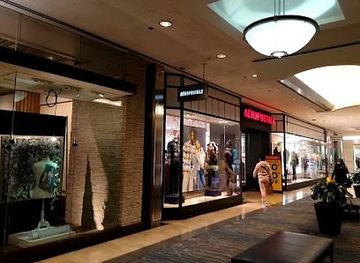
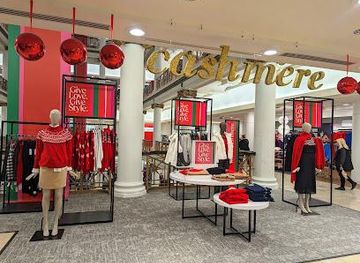
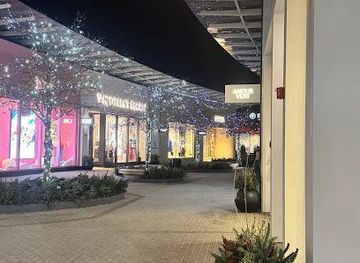
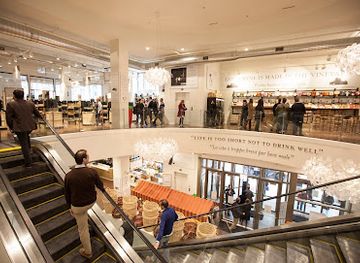
Shopping in Chicagoland ranges from major city retail streets to independent suburban centres and specialist food markets. The Magnificent Mile on North Michigan Avenue is the region’s best-known concentration of department stores, luxury labels and international brands, while State Street, the Loop and neighbourhood corridors offer a wider mixture of national and independent retailers. Wicker Park, Andersonville, Lincoln Square and the Southport Corridor are associated with smaller shops, books, clothing, design and locally made goods. Suburban downtowns such as Oak Park, Evanston, Geneva and St Charles provide independent boutiques, antiques, galleries and cafés in walkable historic settings. Farmers’ markets and specialist grocers are useful places to find Illinois produce, regional baked goods, local beer and foods reflecting the metropolitan area’s immigrant communities. Retail locations and market schedules change, so visitors should check current details before planning a dedicated shopping trip.
-
Shopping mall
Water Tower Place
Explore Water Tower Place, Chicago's premier shopping destination, featuring luxury brands, diverse dining, and a vibrant atmosphere in the heart of the city.
-
Department store
Macy's
Explore Macy's in Chicago - a shopping haven offering fashion, beauty, and unique finds in an iconic architectural setting.
-
Shopping mall
Westfield Old Orchard
Experience a shopper's paradise at Westfield Old Orchard, with diverse stores, gourmet dining, and entertainment options in Skokie, Illinois.
-
Shopping mall
The Shops at North Bridge
Discover a premier shopping destination in Chicago with diverse stores, delightful dining, and an inviting atmosphere at The Shops at North Bridge.
Get your free copy of our complete guide to Chicagoland, delivered straight to you.
Everything on this page, from attractions and restaurants to essentials and local phrases, in one PDF you can read offline, print or share.
Already have an account? Sign in
Your Chicagoland guide is ready.
We'll send it to · Not you? Sign out

Getting your guide ready…
We are putting together a fresh copy of the Chicagoland guide. This can take up to a minute.
This can take a few moments. If your browser asks, choose Allow so the download can start. You'll find the guide in your Downloads folder.
Nothing happened? Download it again
Sorry, the guide is taking longer than usual. Please try again in a minute, or get it by email instead.
Chicagoland essentials
Currency and Payment
Safety
Emergency Situations
Do's and Don'ts
Local Tips
From Eve
Local phrases worth knowing
You don't need to get them perfect. A few words go a long way, and locals appreciate the effort.
Basics
| English | Local | Say it |
|---|---|---|
| Hello | Hey | [Hey] |
| Goodbye | See ya | [See ya] |
| Yes | Yeah | [Yeah] |
| No | Nah | [Nah] |
| Please/You're welcome | No problem | [No problem] |
| Thank you | Thanks | [Thanks] |
| Excuse me/Sorry | Sorry | [Sorry] |
| How are you? | How ya doin'? | [How ya doin'?] |
| Fine. And you? | Good. And you? | [Good. And you?] |
| Do you speak English? | You speak English? | [You speak English?] |
| I don't understand | I don’t get it | [I don’t get it] |
Eating & Drinking
| English | Local | Say it |
|---|---|---|
| I'd like to see the menu, please | Can I see the menu? | [Can I see the menu?] |
| I don't eat meat | I’m a vegetarian | [I’m a vegetarian] |
| Cheers! | Cheers! | [Cheers!] |
| I would like to pay, please | Can I get the check? | [Can I get the check?] |
Emergencies
| English | Local | Say it |
|---|---|---|
| Help! | Help! | [Help!] |
| Go away! | Get lost! | [Get lost!] |
| Call the Police! | Call the cops! | [Call the cops!] |
| Call a doctor! | Call a doc! | [Call a doc!] |
| I'm lost | I’m lost | [I’m lost] |
| I'm ill | I’m sick | [I’m sick] |
Shopping
| English | Local | Say it |
|---|---|---|
| I'd like to buy... | I wanna buy... | [I wanna buy...] |
| I'm just looking | Just browsing | [Just browsing] |
| How much is it? | How much? | [How much?] |
| That's too expensive | That’s too pricey | [That’s too pricey] |
| Can you lower the price? | Can you give me a deal? | [Can you give me a deal?] |
Time & Numbers
| English | Local | Say it |
|---|---|---|
| What time is it? | What time? | [What time?] |
| It's one o'clock | It's one | [It's one] |
| Half past (10) | Half past ten | [Half past ten] |
| Morning | Morning | [Morning] |
| Afternoon | Afternoon | [Afternoon] |
| Evening | Evening | [Evening] |
| Yesterday | Yesterday | [Yesterday] |
| Today | Today | [Today] |
| Tomorrow | Tomorrow | [Tomorrow] |
| 1 | One | [One] |
| 2 | Two | [Two] |
| 3 | Three | [Three] |
| 4 | Four | [Four] |
| 5 | Five | [Five] |
| 6 | Six | [Six] |
| 7 | Seven | [Seven] |
| 8 | Eight | [Eight] |
| 9 | Nine | [Nine] |
| 10 | Ten | [Ten] |
Transport & Directions
| English | Local | Say it |
|---|---|---|
| Where's a/the...? | Where's the...? | [Where's the...?] |
| What's the address? | What’s the address? | [What’s the address?] |
| Can you show me (on the map)? | Can you show me on the map? | [Can you show me on the map?] |
| When's the next (bus)? | When's the next bus? | [When's the next bus?] |
| A ticket (to ....) | A ticket to... | [A ticket to...] |
History of Chicagoland
Indigenous Landscapes and the Treaty of Chicago
The Chicago region developed within a landscape long inhabited and used by Indigenous peoples, including Potawatomi, Odawa and Ojibwe communities associated with the Council of Three Fires. The Chicago River and the portage between the Great Lakes and Mississippi watersheds made the area an important corridor. Through a series of treaties, including the 1833 Treaty of Chicago, the United States acquired extensive lands and Indigenous communities were forcibly removed westwards. This history remains essential to understanding the region’s formation, even though much of the modern metropolitan landscape obscures its earlier geography.
The Canal and Chicago’s Commercial Rise, 1848
The opening of the Illinois and Michigan Canal in 1848 linked the Great Lakes to the Illinois River and established Chicago as a major transport junction between eastern waterways and the developing interior. Grain, timber and other commodities could move through the city, encouraging warehouses, mills, markets and financial institutions. Railways soon reinforced this advantage, and Chicago’s growth spread far beyond its original settlement. The canal corridor is now largely incorporated into later infrastructure and suburbs, but its role explains why the city became the economic centre of northeastern Illinois.
Railways, Stockyards and Industrial Expansion
During the later nineteenth century, Chicago became one of North America’s most important railway centres and a national hub for grain trading, manufacturing and meatpacking. The Union Stock Yard and the surrounding industrial districts attracted workers from Europe and from rural America, while railway suburbs grew along lines radiating from the city. This expansion shaped the region’s transport geography and produced the large working-class communities that remain visible in neighbourhoods such as Bridgeport and Back of the Yards, as well as in older suburban centres connected to the historic rail network.
The Columbian Exposition of 1893
Chicago’s World’s Columbian Exposition, held in Jackson Park in 1893, presented the city as a modern metropolis and influenced architecture, urban planning and popular culture far beyond Illinois. The fair’s neoclassical buildings, formal landscape and electrical displays helped create the image later associated with the ‘White City’. Although most temporary structures disappeared, the fair’s legacy survives in the Museum of Science and Industry’s building, the design of Jackson Park and the wider prominence of Chicago as a centre of architecture and innovation.
The Great Migration and New Urban Cultures
From the early twentieth century, large numbers of African Americans moved from the American South to Chicago and other northern industrial centres during the Great Migration. Bronzeville became a major centre of Black business, journalism, religious life, music and literature, while discriminatory housing practices and restrictive covenants shaped the geography of the city and its suburbs. Chicago’s blues, gospel and jazz traditions developed within this broader social history. The neighbourhood’s surviving landmarks and cultural institutions, together with later civil-rights activity, are central to understanding the region’s modern identity.
Modern Architecture and the Chicago School
Chicago’s rebuilding after the Great Fire of 1871 and its rapid commercial growth made the city a laboratory for tall-building construction. Architects associated with the Chicago School developed structural and visual approaches that helped establish the modern skyscraper, while later figures including Frank Lloyd Wright transformed American residential design through the Prairie School. The metropolitan area contains important examples of these traditions, from early Loop towers to Wright’s Home and Studio in Oak Park. Architecture is therefore not simply an attraction in Chicagoland but one of the region’s defining historical industries.
Post-war Suburbanisation and Metropolitan Change
After the Second World War, population and employment expanded through suburban development, new expressways, shopping centres and corporate campuses. Communities such as Schaumburg, Oak Brook, Naperville and Arlington Heights grew substantially, while older railway suburbs retained more compact town centres. This transformation created the dispersed urban form now known as Chicagoland and changed the relationship between Chicago and its neighbouring municipalities. The region continues to evolve through immigration, redevelopment around rail stations, changing manufacturing patterns and renewed investment in historic urban districts.
Chicagoland in Photos
Browse through our photo collection highlighting the charm and character of the destination.
Neighbouring regions of Chicagoland
The closest regions to Chicagoland, if you have time for more than one.
-

-
-

-

-


Swipe for more regions
Explore more

Explore more of Illinois
Discover Illinois: From Chicago's iconic skyline to the tranquil beauty of its countryside, experience the diverse allure of the Prairie State.
Explore Illinois