

Free Andhra Pradesh Travel Guide & Mobile App
Explore Andhra Pradesh with free travel guides. Discover regional history, expert tips, proposed trips, and audio guides on web or mobile app.


Explore Andhra Pradesh for ancient Buddhist sites, revered temples, Eastern Ghats landscapes, coastal cities and distinctive Telugu cuisine.
Read more about Andhra Pradesh
When is the best time to visit Andhra Pradesh?
Best: December–February · 28–30°C| Month | High (°C) | Rainfall (mm) |
|---|---|---|
| January (best) | 28 | 5 |
| February (best) | 30 | 7 |
| March | 33 | 10 |
| April | 35 | 20 |
| May | 37 | 40 |
| June | 34 | 100 |
| July | 33 | 150 |
| August | 33 | 160 |
| September | 32 | 140 |
| October | 32 | 100 |
| November | 30 | 50 |
| December (best) | 28 | 10 |
Getting to and around Andhra Pradesh
How to get there
Transportation
Top city travel guides in Andhra Pradesh
The cities of Andhra Pradesh, and the easiest places to base yourself.
-

-

-

-

-


Swipe for more cities
Destinations in Andhra Pradesh
Resorts, valleys and scenic spots worth a trip of their own.

Swipe for more destinations
Best attractions in Andhra Pradesh
Andhra Pradesh's attractions range from major pilgrimage centres and Buddhist archaeology to beaches, forests, caves and fortified landscapes. Tirumala above Tirupati draws visitors for its immense temple complex and highly organised devotional culture, while Vijayawada combines the Kanaka Durga Temple with river views and urban heritage. Amaravati and the Nagarjunakonda area provide insight into the region's early Buddhist history through museums and archaeological remains. On the coast, Visakhapatnam offers beaches, hill viewpoints and maritime institutions, while the Godavari delta is best appreciated through its waterways, villages and agricultural scenery. Inland, Gandikota's Pennar gorge and the temple complex at Lepakshi provide contrasting examples of natural drama and Vijayanagara art. Araku Valley and Borra Caves introduce the forested Eastern Ghats, with cooler upland landscapes, coffee cultivation and indigenous cultural traditions. The experience is less about a single concentrated sightseeing circuit than about combining distinct landscapes and historical zones over several journeys.
-
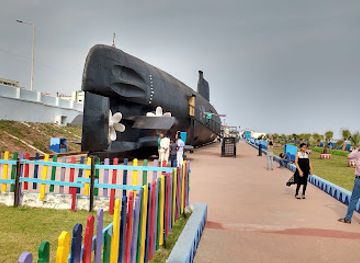
Maritime museum
VMRDA INS Kursura Submarine Museum
Explore a real submarine at Visakhapatnam's INS Kursura Museum, offering a unique glimpse into India's naval history on RK Beach.
-
Bridge
Prakasam Barrage
Experience the iconic Prakasam Barrage in Vijayawada: a blend of engineering, history, and scenic beauty on the Krishna River. Open 24/7, free entry!
-
Tourist attraction
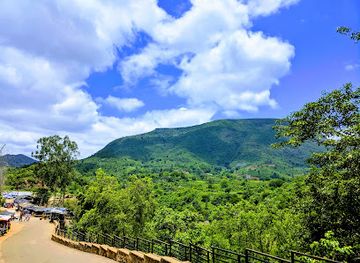
Borra Caves
Explore the mesmerizing Borra Caves in Araku Valley: a million-year-old natural wonder with stunning limestone formations and rich cultural history.
-
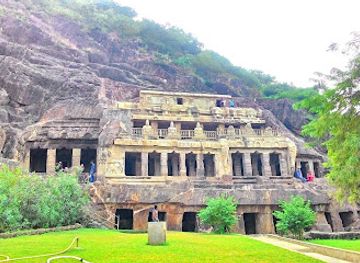
Historical place
Undavalli Cave Temple
Explore the ancient Undavalli Caves near Vijayawada: a blend of Buddhist, Jain, and Hindu rock-cut architecture and intricate sculptures.

Best landmarks in Andhra Pradesh
The Kanaka Durga Temple, set on Indrakeeladri Hill above the Krishna River in Vijayawada, is one of Andhra Pradesh's most recognisable religious landmarks and a defining feature of the city skyline. Tirumala's hilltop Venkateswara Temple is an immense pilgrimage complex whose architecture and ritual organisation have shaped the identity of Tirupati. At Amaravati, the Buddhist archaeological tradition associated with the ancient stupa remains central to the state's historical image, even though much of the original monument survives through excavation and museum collections. The Veerabhadra Temple at Lepakshi is notable for its Vijayanagara carvings, murals and suspended pillar. Gandikota's fort walls follow the edge of a dramatic Pennar gorge, creating one of Rayalaseema's most distinctive landscapes. In the north, the Borra Caves and the forested relief around Araku Valley form a natural landmark of the Eastern Ghats, while Visakhapatnam's coastline and wooded hills provide a more urban maritime symbol of the state.
-
Fortress
Golconda Fort
Explore the majestic Golconda Fort, a historical fortress in Hyderabad, renowned for its architectural beauty and rich cultural heritage.
-
Bridge
Prakasam Barrage
Explore the Prakasam Barrage in Vijayawada, where stunning views meet rich cultural heritage, offering a perfect spot for relaxation and exploration.
-
Tourist attraction
Borra Caves
Explore the enchanting Borra Caves in Andhra Pradesh, a geological marvel featuring stunning limestone formations and rich local folklore.
-
Historical landmark
Konda Reddy Fort
Discover Konda Reddy Fort, a historical landmark in Kurnool, Andhra Pradesh, rich in heritage and offering stunning views of the city.


Explore Andhra Pradesh on the map
Plan your trip on one map. See where the top cities, national parks and sights are, and book hotels and experiences in a few clicks.
Best hotels in Andhra Pradesh
Best restaurants in Andhra Pradesh
Andhra Pradesh cuisine is built around rice, lentils, tamarind, curry leaves, vegetables, seafood and a confident use of chilli. Coastal districts are particularly associated with fish and prawn preparations, while gongura, the sour-leaved plant used in chutneys and curries, appears widely across Telugu cooking. Pesarattu, a savoury green-gram pancake, pulihora, idli, dosa and a broad range of pickles are common choices, though recipes differ between cities and districts. Rayalaseema cooking is often known for strongly seasoned meat dishes, ragi-based foods and hearty meals. Restaurants in Vijayawada, Visakhapatnam, Tirupati and other larger towns range from vegetarian tiffin cafés and family dining rooms to more contemporary establishments. Temple towns have extensive vegetarian cooking, while coastal markets and restaurants provide seafood. Look for regional sweets, Andhra pickles, local rice products and seasonal fruit at markets, and ask about chilli levels if unfamiliar with the cuisine.
-
Andhra
Cross Roads Restaurant
Experience the vibrant flavors of Andhra cuisine at Cross Roads Restaurant in Vijayawada - where every dish tells a story.
-
South Indian
Nellore Vari Mess
Experience the essence of Andhra cuisine at Nellore Vari Mess – where tradition meets flavor in every bite.
-
Andhra
Amaravathi family Restaurant (Highway)
Experience the vibrant flavors of Andhra Pradesh at Amaravathi Family Restaurant - a perfect spot for families and food lovers alike.
-
Indian
Gufha Restaurant, Tirupati
Experience exquisite Indian cuisine at Gufha Restaurant in Tirupati - where every meal feels like an adventure inside a cave.


Best bars in Andhra Pradesh
Nightlife in Andhra Pradesh is centred more on restaurants, cafés, hotel lounges, traditional eateries and city social life than on a single club culture. Visakhapatnam has the broadest urban evening scene, with seafront areas, restaurants, live entertainment and hotel bars, while Vijayawada and Tirupati offer dining, cafés and commercial nightlife aimed at residents, business travellers and pilgrims. In smaller towns, evenings generally revolve around family restaurants, tea stalls and local gathering places, with fewer late-night options. Pubs and alcohol-serving venues are regulated under state licensing rules, and availability can vary by locality and by current policy. Coastal cities may feel more active after dark, whereas rural and pilgrimage areas become quiet earlier. Seasonal festivals and Telugu cultural programmes can provide more locally distinctive evening experiences than nightlife venues alone.
-
Brewery
MYZ - UNO Vizag
Experience the best of craft beer and vibrant nightlife at MYZ - UNO Vizag, a premier brewery and pub in the heart of Visakhapatnam.
-
Live music bar
SOMAA, Siripuram
Discover SOMAA in Siripuram, Visakhapatnam – a lively live music bar combining exquisite dining with thrilling performances for an unforgettable night.
-
Brewery
Ironhill Visakhapatnam
Discover the vibrant brewery experience at Ironhill Visakhapatnam, where craft beers and delicious cuisine create the perfect dining atmosphere.
-
Bar
COCKTAILS RESTAURANT & BAR
Experience Vijayawada's vibrant nightlife at Cocktails Restaurant & Bar, where exquisite drinks and delectable dishes await.


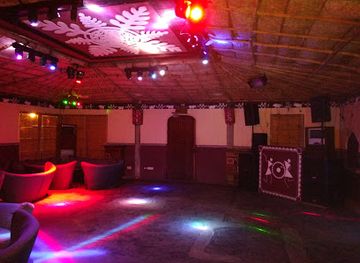
Best nightclubs in Andhra Pradesh
Nightlife in Andhra Pradesh is centred more on restaurants, cafés, hotel lounges, traditional eateries and city social life than on a single club culture. Visakhapatnam has the broadest urban evening scene, with seafront areas, restaurants, live entertainment and hotel bars, while Vijayawada and Tirupati offer dining, cafés and commercial nightlife aimed at residents, business travellers and pilgrims. In smaller towns, evenings generally revolve around family restaurants, tea stalls and local gathering places, with fewer late-night options. Pubs and alcohol-serving venues are regulated under state licensing rules, and availability can vary by locality and by current policy. Coastal cities may feel more active after dark, whereas rural and pilgrimage areas become quiet earlier. Seasonal festivals and Telugu cultural programmes can provide more locally distinctive evening experiences than nightlife venues alone.
-
Night club
Tribe The Night Club @ Park Hotel
Discover the pulsating nightlife at Tribe The Night Club in Visakhapatnam, where music, dining, and dancing merge for an unforgettable evening.
-
Night club
Bavagadi Bungalow
Experience the vibrant nightlife of Visakhapatnam at Bavagadi Bungalow, where music, dance, and great drinks create unforgettable nights.
-
Night club
Chowdary's Night Club
Experience the pulsating nightlife at Chowdary's Night Club in Inkollu, where music, dance, and good vibes come together.
-
Night club
Rocking Boys Addaa
Discover the electrifying nightlife at Rocking Boys Addaa, the ultimate night club in Andhra Pradesh, where music and fun come together for an unforgettable experience.


Best shops in Andhra Pradesh
Shopping in Andhra Pradesh varies between busy city markets, pilgrimage bazaars, handloom centres and rural produce stalls. Visakhapatnam and Vijayawada have the widest choice of modern retail, independent shops and regional food sellers, while Tirupati's commercial streets specialise in devotional goods, brass items, religious images, sweets and travel provisions. Andhra handlooms include cotton and silk traditions from several weaving communities, with fabrics and sari styles differing by locality; buy from established shops or cooperative outlets when provenance matters. Kalamkari textiles and painted fabrics are strongly associated with the broader Andhra region, while leather puppets, woodwork and handicrafts may be found in selected craft markets. Local pickles, spice blends, sweets, coffee from the Eastern Ghats and packaged regional snacks make practical souvenirs. Weekly markets in smaller towns are useful for observing everyday commerce, but product availability and market days vary, so ask locally rather than relying on a fixed schedule.
-
Outlet mall
CMR Central Mall
Discover a vibrant shopping and dining experience at CMR Central Mall in Visakhapatnam, featuring a variety of brands and local flavors.
-
Shopping mall
MGB Felicity Mall
Explore MGB Felicity Mall in Nellore – a shopping paradise with a food court, movie theater, and bowling alley, perfect for family fun and entertainment.
-
Shopping mall
Trendset Mall
Experience the ultimate shopping and entertainment destination at Trendset Mall in Vijayawada, where fashion meets fun and flavors.
-
Clothing store
Style Union - Vijayawada Swarnalok complex
Discover the ultimate fashion destination in Vijayawada at Style Union, offering a diverse range of clothing for all ages and styles.


Get your free copy of our complete guide to Andhra Pradesh, delivered straight to you.
Everything on this page, from attractions and restaurants to essentials and local phrases, in one PDF you can read offline, print or share.
Already have an account? Sign in
Your Andhra Pradesh guide is ready.
We'll send it to · Not you? Sign out

Getting your guide ready…
We are putting together a fresh copy of the Andhra Pradesh guide. This can take up to a minute.
This can take a few moments. If your browser asks, choose Allow so the download can start. You'll find the guide in your Downloads folder.
Nothing happened? Download it again
Sorry, the guide is taking longer than usual. Please try again in a minute, or get it by email instead.
Andhra Pradesh essentials
Currency and Payment
Safety
Emergency Situations
Do's and Don'ts
Local Tips
From Eve
Local phrases worth knowing
You don't need to get them perfect. A few words go a long way, and locals appreciate the effort.
Basics
| English | Local | Say it |
|---|---|---|
| Hello | హలో | [Halo] |
| Goodbye | వీడ్కోలు | [Veedkoolu] |
| Yes | అవును | [Avunu] |
| No | కాదు | [Kaadu] |
| Please/You're welcome | దయచేసి/స్వాగతం | [Dayachesi/Swagatam] |
| Thank you | ధన్యవాదాలు | [Dhanyavaadalu] |
| Excuse me/Sorry | క్షమించండి | [Kshaminchandi] |
| How are you? | మీరు ఎలా ఉన్నారు? | [Meeru Ela Unnaaru?] |
| Fine. And you? | బాగున్నాను. మీరు? | [Baagunnaanu. Meeru?] |
| Do you speak English? | మీకు ఇంగ్లీష్ తెలుసా? | [Meeku English Telusa?] |
| I don't understand | నాకు అర్థం కావడం లేదు | [Naaku Artham Kaavadam Ledu] |
Eating & Drinking
| English | Local | Say it |
|---|---|---|
| I'd like to see the menu, please | దయచేసి మెనూను చూడాలనుకుంటున్నాను | [Dayachesi Menunu Choodalanukuntunnanu] |
| I don't eat meat | నేను మాంసం తినను | [Nenu Maansam Thinanu] |
| Cheers! | జై! | [Jai!] |
| I would like to pay, please | దయచేసి నేను చెల్లించాలనుకుంటున్నాను | [Dayachesi Nenu Chellinchalanukuntunnanu] |
Emergencies
| English | Local | Say it |
|---|---|---|
| Help! | సహాయం! | [Sahaayam!] |
| Go away! | పోతే! | [Pothe!] |
| Call the Police! | పోలీసును పిలవండి! | [Polisunu Pilavandi!] |
| Call a doctor! | డాక్టర్ని పిలవండి! | [Doctor-ni Pilavandi!] |
| I'm lost | నేను కోల్పోయాను | [Nenu Kolpoyaanu] |
| I'm ill | నేను అనారోగ్యంగా ఉన్నాను | [Nenu Anaarogyanga Unnaanu] |
Shopping
| English | Local | Say it |
|---|---|---|
| I'd like to buy... | నేను కొనేందుకు ... | [Nenu Koneenduku ...] |
| I'm just looking | నేను చూస్తున్నాను | [Nenu Choostunnanu] |
| How much is it? | ఇది ఎంత? | [Idi Entha?] |
| That's too expensive | అది చాలా ఖరీదుగా ఉంది | [Adi Chala Khariduga Undi] |
| Can you lower the price? | ధరను తగ్గించగలారా? | [Dharanu Tagginchagalara?] |
Time & Numbers
| English | Local | Say it |
|---|---|---|
| What time is it? | ఇది ఎంత వేళ? | [Idi Entha Vela?] |
| It's one o'clock | ఇది ఒక గంట | [Idi Oka Ganta] |
| Half past (10) | సమయం (10) మినుకు | [Samayam (10) Minuku] |
| Morning | ఉదయం | [Udayam] |
| Afternoon | మధ్యాహ్నం | [Madhyaahnam] |
| Evening | సాయంకాలం | [Saayankaalam] |
| Yesterday | నిన్న | [Ninna] |
| Today | ఈ రోజు | [Ee Roju] |
| Tomorrow | రేపు | [Repu] |
| 1 | 1 | [1] |
| 2 | 2 | [2] |
| 3 | 3 | [3] |
| 4 | 4 | [4] |
| 5 | 5 | [5] |
| 6 | 6 | [6] |
| 7 | 7 | [7] |
| 8 | 8 | [8] |
| 9 | 9 | [9] |
| 10 | 10 | [10] |
Transport & Directions
| English | Local | Say it |
|---|---|---|
| Where's a/the...? | ఒకటి/ఈ ... ఎక్కడ ఉంది? | [Oka/ee ... Ekada Undi?] |
| What's the address? | సమాచారం ఏమిటి? | [Samaacharam Emiti?] |
| Can you show me (on the map)? | మీకు (మ్యాప్లో) చూపించగలారా? | [Meeku (Map-lo) Choopinchagalara?] |
| When's the next (bus)? | తదుపరి (బస్సు) ఎప్పుడు? | [Thadupari (Bussu) Eppudu?] |
| A ticket (to ....) | ఒక టికెట్ (కు ...) | [Oka Ticket (ku ...)] |
History of Andhra Pradesh
Early Settlements and Buddhist Andhra
The Krishna and Godavari river valleys supported settled communities from ancient times, benefiting from fertile soils, waterways and contact with maritime trade routes. By the early historic period, the wider Andhra region had become an important centre of Buddhism. Amaravati was associated with a major stupa and a sophisticated sculptural tradition, while sites around Nagarjunakonda, now in Palnadu district, preserve evidence of monasteries and religious institutions connected with the Ikshvaku period. Sculptural fragments, inscriptions and archaeological remains reveal a culture linked to both inland networks and the wider Indian Ocean world.
Satavahanas and the Growth of Regional Power
The Satavahanas, who ruled large parts of the Deccan from approximately the late first century BC into the third century AD, played an important role in the political and commercial history of the Andhra region. Their authority connected river valleys and inland markets with routes across the Deccan and towards the coast. Buddhism, Hindu traditions and craft production developed alongside established agricultural communities. Although political boundaries shifted, the period helped establish the importance of the Krishna-Godavari zone as a centre of settlement, trade and cultural exchange.
Eastern Chalukyas and the Formation of Telugu Literary Culture
From the seventh century, the Eastern Chalukyas ruled much of the lower Godavari and Krishna country from Vengi, near the modern coastal districts. Their period saw sustained interaction with neighbouring Deccan and Tamil powers and the consolidation of temple-centred authority. Telugu gained increasing literary prominence, and the translation and adaptation of Sanskrit epics helped shape a written cultural tradition that remains fundamental to Andhra identity. The dynasty’s legacy is visible less through a single surviving capital than through inscriptions, temple traditions and the linguistic development of coastal Andhra.
Vijayanagara Influence and the Lepakshi Tradition
The Vijayanagara Empire exerted strong influence across southern Andhra during the fourteenth to sixteenth centuries. Its political and commercial networks supported temple building, irrigation works and fortified settlements, while local governors and landholders commissioned elaborate religious architecture. Lepakshi, in present-day Sri Sathya Sai district, preserves one of the most celebrated artistic legacies of this period, including large murals, intricate carvings and the Veerabhadra Temple’s famous suspended pillar. Vijayanagara traditions also influenced the design and ceremonial culture of many later temples across Rayalaseema.
European Trade, Colonial Rule and the Coastal Economy
European commercial powers established a presence along the Coromandel coast, and parts of present-day Andhra Pradesh later came under British administration through the Madras Presidency. Ports, textile production, agriculture and new systems of revenue collection reshaped coastal society. The development of roads, railways and modern administrative towns connected the deltas more closely with wider markets, while cash crops and irrigation expanded in some districts. Colonial rule also intensified social and political change, creating conditions for new educational institutions, reform movements and participation in India’s independence struggle.
The Andhra Movement and State Reorganisation
Demand for a separate Telugu-speaking state became a major political movement in the twentieth century. Potti Sreeramulu’s 1952 fast and death were followed by the creation of Andhra State in 1953, with Kurnool as its initial capital. In 1956, the Telugu-speaking districts of the former Hyderabad State were merged with Andhra State to form Andhra Pradesh, and Hyderabad became the capital. This reorganisation reflected the growing importance of linguistic identity in independent India and established the political geography that shaped the state for decades.
Bifurcation and Andhra Pradesh Since 2014
The Andhra Pradesh Reorganisation Act divided the former state in 2014, creating the present-day Andhra Pradesh and the separate state of Telangana. Hyderabad remained the primary capital of Telangana, while Andhra Pradesh undertook a long-term process of developing administrative institutions and a new capital region around Amaravati. Visakhapatnam, Vijayawada, Tirupati and other cities have continued to grow as industrial, educational, religious and commercial centres. The post-bifurcation period has therefore brought both administrative change and renewed attention to the state’s varied regional economies.
Andhra Pradesh in Photos
Browse through our photo collection highlighting the charm and character of the destination.
Neighbouring regions of Andhra Pradesh
The closest regions to Andhra Pradesh, if you have time for more than one.
-

-

-

-

-


Swipe for more regions
Explore more

Explore more of India
Discover the magic of India, where diverse landscapes, rich heritage, and vibrant culture come together to create an unforgettable travel experience.
Explore India