

Free County Mayo Travel Guide & Mobile App
Explore County Mayo with free travel guides. Discover regional history, expert tips, proposed trips, and audio guides on web or mobile app.


Explore County Mayo for Atlantic coastlines, Croagh Patrick, ancient fields, island landscapes, historic towns and spacious western-Irish scenery.
Read more about County Mayo
When is the best time to visit County Mayo?
Best: June–August · 18–19°C| Month | High (°C) | Rainfall (mm) |
|---|---|---|
| January | 8 | 100 |
| February | 8 | 80 |
| March | 10 | 80 |
| April | 12 | 70 |
| May | 15 | 70 |
| June (best) | 18 | 70 |
| July (best) | 19 | 70 |
| August (best) | 19 | 80 |
| September | 17 | 90 |
| October | 14 | 100 |
| November | 10 | 100 |
| December | 8 | 100 |
Getting to and around County Mayo
How to get there
Transportation
Top city travel guides in County Mayo
The cities of County Mayo, and the easiest places to base yourself.
-

-

-

-


Swipe for more cities
Destinations in County Mayo
Resorts, valleys and scenic spots worth a trip of their own.
-

-
-


Swipe for more destinations
Best attractions in County Mayo
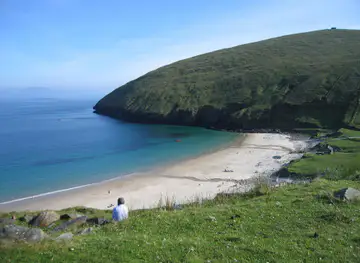
County Mayo’s attractions range from prehistoric archaeology to Atlantic outdoor activities. The Céide Fields near Ballycastle reveal Stone Age field walls beneath the blanket bog, while the National Museum of Ireland—Country Life at Turlough presents rural life, crafts and domestic traditions in an atmospheric setting. Ballintubber Abbey and the pilgrimage mountain of Croagh Patrick provide important religious and historical context. Along the western coast, Achill Island combines beaches, sea cliffs, the deserted village at Slievemore and routes on the Great Western Greenway. Keem Bay, Keel Beach and the Minaun Heights offer different ways to experience the island’s scenery, subject to weather and road conditions. North Mayo brings the dramatic sea stack and cliffs of Downpatrick Head, the Céide coast and broad bogland landscapes. Newport, Mulranny, Belmullet and the Mullet Peninsula provide gateways to walking, cycling, fishing and watersports, while the River Moy around Ballina is associated with salmon angling. The county’s attraction landscape is defined less by a single monumental centre than by the close relationship between archaeology, working communities and expansive coastal terrain.
-
Tourist attraction
Westport House
Explore the breathtaking Westport House, an iconic historical landmark offering beauty, adventure, and rich Irish heritage amidst picturesque landscapes.
-
National museum
National Museum of Ireland - Country Life
Explore Ireland's rural heritage at the National Museum of Ireland - Country Life, showcasing history, culture, and stunning gardens in County Mayo.
-
Island
Achill Island
Explore Achill Island: A natural paradise of stunning cliffs, pristine beaches, and rich Irish heritage in County Mayo.
-
Tourist attraction
Downpatrick Head
Experience the breathtaking beauty and rich history of Downpatrick Head, a gem of County Mayo, Ireland, with stunning coastal views and ancient ruins.


Best landmarks in County Mayo
Croagh Patrick is Mayo’s most recognisable natural and religious landmark, rising above Clew Bay near Murrisk and retaining its long association with Saint Patrick and pilgrimage. On the north coast, Downpatrick Head is marked by dramatic cliffs, sea views and the offshore sea stack known as Dún Briste, while the Céide Fields landscape represents an internationally important Neolithic farming society preserved beneath Atlantic bog. Achill Island’s Minaun Heights, Keem Bay and the deserted village at Slievemore express different aspects of the county’s geography and social history, from highland viewpoints to depopulated rural settlement. Ballintubber Abbey remains a significant medieval religious monument, notable for its continuing use and association with an older Christian foundation. The planned streetscape of Westport, the stone buildings of historic villages and surviving railway structures along the Great Western Greenway add architectural and transport landmarks to the county’s natural sites. Together, these places show Mayo as a landscape shaped by faith, farming, migration, the sea and changing patterns of movement.
-
Historical landmark
Cong Abbey
Explore the historic Cong Abbey in County Mayo, a serene monastic site surrounded by stunning natural beauty, perfect for history buffs and nature lovers.
-
National park
Ballycroy Visitor Centre - Wild Nephin National Park
Discover Ireland's wild side: Explore vast boglands, hike scenic trails, and stargaze in Wild Nephin National Park from the Ballycroy Visitor Centre.
-
Memorial park
Doolough Valley Famine Memorial
Explore the Doolough Valley Famine Memorial in County Mayo, a poignant tribute to resilience amidst breathtaking natural beauty.
-
Historical landmark
Rosserk Friary
Experience the tranquil charm of Rosserk Friary, a historical gem in County Mayo that connects you to Ireland's monastic heritage amidst stunning landscapes.


Explore County Mayo on the map
Plan your trip on one map. See where the top cities, national parks and sights are, and book hotels and experiences in a few clicks.
Best hotels in County Mayo
Best restaurants in County Mayo
Mayo’s dining character reflects its Atlantic coastline, farming districts and small-town social life. Seafood is prominent in coastal communities, with fish, shellfish and smoked products appearing alongside locally sourced meat, vegetables and farmhouse goods. Westport, Castlebar and Ballina offer the broadest choice of restaurants, cafés, bakeries and gastropubs, while villages and coastal settlements tend to favour seasonal menus, traditional pub cooking and informal cafés. Among local food associations are Mayo lamb, Atlantic fish, brown bread, farmhouse cheeses and produce sold through farm shops or markets; these belong within the wider Irish culinary tradition rather than forming a wholly separate cuisine. Visitors can expect everything from modern cooking using regional ingredients to hearty soups, stews and freshly baked goods. In remote areas, evening options may be limited outside summer, so check arrangements locally and avoid assuming that a small coastal village will have late dining.
-
 Restaurant
Nevin's Newfield Inn
Discover authentic Irish flavors at Nevin's Newfield Inn in Co. Mayo – where local ingredients meet culinary artistry.
-
Gastropub
The Towers Bar & Restaurant Westport
Discover exceptional dining at The Towers Bar & Restaurant in Westport - where traditional Irish flavors meet modern gastronomy.
-
Restaurant
The Helm Westport
Discover culinary delights at The Helm in Westport - where delicious food meets stunning views in County Mayo.
-
Gastropub
The Tavern Bar & Restaurant
Experience authentic Irish cuisine at The Tavern Bar & Restaurant in Murrisk - where tradition meets modern flavors amidst stunning scenery.


Best bars in County Mayo
Evening life in County Mayo is centred on traditional pubs, restaurants, live music and the social life of its towns rather than on a large nightclub scene. Westport has the greatest concentration of pubs and evening venues, with Castlebar and Ballina also offering pubs, music and occasional larger events. In smaller communities, a pub may combine conversation, sport on television and traditional sessions, but schedules vary and performances should not be assumed every night. Some coastal towns develop busier summer evenings, while rural districts become quiet once restaurants and pubs close. Breweries, distilleries and contemporary cocktail venues form a smaller part of the scene than in Dublin or Galway. Visitors should respect local etiquette, order at the bar where appropriate and avoid treating traditional music as a staged performance: listen attentively and ask before photographing musicians.
-
Pub
Matt Molloy's
Discover the lively atmosphere and rich Irish culture at Matt Molloy's Pub in Westport, a must-visit for every traveler.
-
Restaurant
Nevin's Newfield Inn
Discover Nevin's Newfield Inn, a delightful restaurant in Newport, Co. Mayo, serving traditional Irish cuisine amid stunning scenery.
-
Gastropub
The Towers Bar & Restaurant Westport
Experience the best of Westport dining at The Towers Bar & Restaurant, a charming gastropub with local flavors and stunning quay views.
-
Pub
The Cot and Cobble
Discover the charm of The Cot and Cobble, a cozy pub and restaurant in Ballina offering delightful Irish cuisine and a vibrant atmosphere.


Best nightclubs in County Mayo
Evening life in County Mayo is centred on traditional pubs, restaurants, live music and the social life of its towns rather than on a large nightclub scene. Westport has the greatest concentration of pubs and evening venues, with Castlebar and Ballina also offering pubs, music and occasional larger events. In smaller communities, a pub may combine conversation, sport on television and traditional sessions, but schedules vary and performances should not be assumed every night. Some coastal towns develop busier summer evenings, while rural districts become quiet once restaurants and pubs close. Breweries, distilleries and contemporary cocktail venues form a smaller part of the scene than in Dublin or Galway. Visitors should respect local etiquette, order at the bar where appropriate and avoid treating traditional music as a staged performance: listen attentively and ask before photographing musicians.
-
Irish pub
McGing's Bar
Discover the charm of McGing's Bar, a beloved Irish pub in Westport offering a cozy atmosphere, local brews, and live music.
-
Pub
The Clock Tavern
Discover the lively atmosphere of The Clock Tavern, a premier pub and event venue in Westport, where live music and delicious food unite.
-
Pub
Blouser's Pub
Discover the heart of Irish culture at Blouser's Pub in Westport, where local brews and live music create an unforgettable atmosphere.
-
Disco club
Henehans Late Bar
Experience the vibrant nightlife of Westport at Henehans Late Bar, where music and dancing come alive until the early hours.


Best shops in County Mayo
Shopping in Mayo is concentrated in the market towns rather than large metropolitan retail districts. Westport combines independent boutiques, bookshops, galleries, craft retailers and food shops with a walkable town centre, while Castlebar provides broader everyday shopping and commercial services. Ballina has long-standing market-town associations and is useful for regional provisions, outdoor equipment and local gifts. In smaller coastal communities, look for craft studios, galleries, farm shops and producers selling woollens, pottery, artwork, preserves, smoked foods and other locally made goods. Foxford Woollen Mills, in County Mayo, is particularly associated with Irish weaving and wool products. Farmers’ markets and seasonal food stalls can offer regional produce, although schedules vary and should be checked locally. Authentic purchases include handcrafts, books about Mayo’s landscape and history, traditional woven goods and food products that travel well. The county is better suited to browsing independent shops and buying practical, locally connected souvenirs than to luxury shopping or large-scale retail.
-
Home goods store
FOXFORD
Experience the unique blend of shopping, dining, and local culture in the picturesque village of Foxford, County Mayo.
-
Restaurant
The Creel Restaurant
Discover the flavors of Westport at The Creel Restaurant, where local ingredients meet coastal charm for an unforgettable dining experience.
-
Wine bar
The Gallery Cafe, Wine & Tapas Bar (Generally open Tues - Sat)
Experience the perfect blend of art and gourmet dining at The Gallery Cafe, Wine & Tapas Bar in Westport, where every visit is a celebration of flavor and creativity.
-
Ice Cream
Krēm Gelateria & Cafe
Savor the finest ice cream, artisanal coffee, and delicious pastries at Krēm Gelateria & Cafe in Westport, Co. Mayo.


Get your free copy of our complete guide to County Mayo, delivered straight to you.
Everything on this page, from attractions and restaurants to essentials and local phrases, in one PDF you can read offline, print or share.
Already have an account? Sign in
Your County Mayo guide is ready.
We'll send it to · Not you? Sign out

Getting your guide ready…
We are putting together a fresh copy of the County Mayo guide. This can take up to a minute.
This can take a few moments. If your browser asks, choose Allow so the download can start. You'll find the guide in your Downloads folder.
Nothing happened? Download it again
Sorry, the guide is taking longer than usual. Please try again in a minute, or get it by email instead.
County Mayo essentials
Currency and Payment
Safety
Emergency Situations
Do's and Don'ts
Local Tips
From Eve
Local phrases worth knowing
You don't need to get them perfect. A few words go a long way, and locals appreciate the effort.
Basics
| English | Local | Say it |
|---|---|---|
| Hello | Dia dhuit | [dee-ah gwitch] |
| Goodbye | Slán | [slawn] |
| Yes | Tá | [taw] |
| No | Níl | [neel] |
| Please/You're welcome | Le do thoil | [leh duh hull] |
| Thank you | Go raibh maith agat | [guh rev mah agat] |
| Excuse me/Sorry | Gabh mo leithscéal | [gav muh lesh-kayl] |
| How are you? | Conas atá tú? | [kun-us ah-taw too] |
| Fine. And you? | Go maith. Agus tusa? | [guh mah. ah-gus toosa?] |
| Do you speak English? | An labhraíonn tú Béarla? | [on law-ree-in too bayr-lah?] |
| I don't understand | Ní thuigim | [nee hig-im] |
Eating & Drinking
| English | Local | Say it |
|---|---|---|
| I'd like to see the menu, please | Ba mhaith liom an menu a fheiceáil, le do thoil | [bah wah lum on men-oo a heh-kil, leh duh hull] |
| I don't eat meat | Ní itheann mé feoil | [nee ee-han may fyole] |
| Cheers! | Sláinte! | [slawn-cha] |
| I would like to pay, please | Ba mhaith liom íoc, le do thoil | [bah wah lum eek, leh duh hull] |
Emergencies
| English | Local | Say it |
|---|---|---|
| Help! | Cabhair! | [kaw-ir!] |
| Go away! | Imigh uait! | [im-ee u-it!] |
| Call the Police! | Glaoigh ar an gCoimisinéir! | [glwee ar on gumm-iss-in-aire!] |
| Call a doctor! | Glaoigh ar dochtúir! | [glwee ar dock-tur!] |
| I'm lost | Táim caillte | [taw-im kilt-eh] |
| I'm ill | Táim tinn | [taw-im tin] |
Shopping
| English | Local | Say it |
|---|---|---|
| I'd like to buy... | Ba mhaith liom a cheannach... | [bah wah lum a khan-ock...] |
| I'm just looking | Táim ag féachaint | [taw-im egg fay-kint] |
| How much is it? | Cé mhéad atá sé? | [kay vayd ah-taw shay?] |
| That's too expensive | Tá sé ró-chostasach | [taw shay roh-koss-tahk] |
| Can you lower the price? | An féidir leat an praghas a laghdú? | [on fay-dur lat on prah-gus a log-doo?] |
Time & Numbers
| English | Local | Say it |
|---|---|---|
| What time is it? | Cén t-am é? | [kane tom ay?] |
| It's one o'clock | Tá sé a haon a chlog | [taw shay a hain a klawg] |
| Half past (10) | Leath i ndiaidh (10) | [lah in yee (10)] |
| Morning | Maidin | [maw-din] |
| Afternoon | Tráthnóna | [traw-no-na] |
| Evening | Tráthnóna | [traw-no-na] |
| Yesterday | Inné | [in-yeh] |
| Today | Inniu | [in-nyoo] |
| Tomorrow | Amárach | [ah-mah-rah] |
| 1 | 1 | [1] |
| 2 | 2 | [2] |
| 3 | 3 | [3] |
| 4 | 4 | [4] |
| 5 | 5 | [5] |
| 6 | 6 | [6] |
| 7 | 7 | [7] |
| 8 | 8 | [8] |
| 9 | 9 | [9] |
| 10 | 10 | [10] |
Transport & Directions
| English | Local | Say it |
|---|---|---|
| Where's a/the...? | Cá bhfuil...? | [caw wil...?] |
| What's the address? | Cad é an seoladh? | [cad ay on shol-adh?] |
| Can you show me (on the map)? | An féidir leat dom a thaispeáint (ar an mapa)? | [on fay-dur lat dum a hash-paynt (ar on mah-pah)?] |
| When's the next (bus)? | Cathain atá an bus eile? | [kha-hin ah-taw on bus el-eh?] |
| A ticket (to ....) | Ticéad (go ....) | [tick-ed (guh ....)] |
History of County Mayo
The Neolithic Céide Fields
The Céide Fields in north Mayo preserve one of the most extensive Stone Age field systems known in the world. Farmers cleared and enclosed land around 5,000 years ago, creating field boundaries, settlement areas and megalithic tombs beneath layers of Atlantic blanket bog. The landscape demonstrates that prehistoric communities were organised agricultural societies rather than merely temporary occupants of the coast. The visitor centre and archaeological remains near Ballycastle explain how pollen, stone walls and bog stratigraphy have revealed this buried landscape.
Early Christianity and Medieval Monastic Mayo
Christian communities shaped Mayo from the early medieval period, leaving churches, burial grounds and monastic sites across the county. Ballintubber Abbey, founded in the thirteenth century on an earlier Christian site, remained an important religious foundation despite periods of political and religious upheaval. Mayo’s medieval landscape also included Gaelic lordships, fortified settlements and pilgrimage routes. These survivals help explain why religious heritage remains visible not only in major monuments but also in small rural church sites and local traditions.
Anglo-Norman Settlement and Gaelic Lordships
From the late twelfth century, Anglo-Norman expansion altered parts of Mayo, particularly around the eastern and southern approaches, while powerful Gaelic families retained control across much of the west. The de Burghs and other Norman families established castles and settlements, but their authority was repeatedly negotiated with local Gaelic dynasties. The resulting landscape was politically fragmented, with fortified sites, abbeys and lordly estates standing alongside communities governed through older Gaelic structures.
Croagh Patrick and Pilgrimage
Croagh Patrick has been associated with Saint Patrick for centuries and became one of Ireland’s most important pilgrimage mountains. Tradition links the summit with the saint’s forty-day fast, while the small chapel at the top dates from the early twentieth century. Pilgrims continue to climb from Murrisk, particularly on Reek Sunday in July, although the mountain is also a demanding hill walk at any time. The route reflects the continuing connection between Mayo’s physical landscape, religious practice and community identity.
Famine, Emigration and Rural Change
The Great Famine of the 1840s had severe consequences in Mayo, where many rural families depended heavily on the potato and lived in difficult economic conditions. Hunger, disease, eviction and emigration transformed communities, while workhouse records, famine roads and abandoned settlements preserve evidence of the crisis. The deserted village on Achill Island is among the county’s most evocative reminders of depopulation, though its history extends beyond the famine alone. Mayo’s population decline continued through later nineteenth-century emigration and shaped the county’s settlement pattern.
Land Reform and the Land League
Mayo played a central role in the nineteenth-century movement for tenant rights and land reform. In 1879, a dispute at the estate of Canon Ulick Burke near Lough Mask helped inspire organised resistance to unfair rents and evictions; Charles Stewart Parnell and local activist Michael Davitt became prominent figures in the wider Land War. The campaign popularised the term “boycott” after Captain Charles Boycott, an estate agent in County Mayo, was socially and economically isolated by local tenants in 1880. These events contributed to major changes in Irish land ownership.
The Westport and Achill Railway Era
Railways transformed travel and commerce in Mayo during the nineteenth and early twentieth centuries. Lines reached towns including Westport, Castlebar, Ballina and Achill Sound, connecting agricultural districts and coastal communities with national markets. Several routes later closed, but railway history remains visible in former stations, bridges and converted tracks. The Great Western Greenway follows much of the former railway between Westport and Achill Sound, turning a transport legacy into one of the county’s best-known cycling and walking routes.
County Mayo in Photos
Browse through our photo collection highlighting the charm and character of the destination.
Neighbouring regions of County Mayo
The closest regions to County Mayo, if you have time for more than one.
-

-

-
-

-


Swipe for more regions
Explore more
Explore more of Ireland
Discover Ireland: A land of enchanting landscapes, rich history, and vibrant culture, where every corner tells a story and every visit feels like coming home.
Explore Ireland