

Aomori Travel Guide - Free Web & App
Your ultimate guide to Aomori. Discover top landmarks, proposed trips, and local tips. Free on the web or via the Evendo companion app.


Aomori, Japan combines apple orchards, volcanic mountains, Lake Towada, Hirosaki Castle, Nebuta culture and northern seafood for memorable year-round journeys.
Landscapes at Japan’s Northern Edge
Aomori is Japan’s northernmost prefecture on Honshu, occupying a broad peninsula between Mutsu Bay, the Sea of Japan and the Pacific Ocean. Its geography ranges from volcanic mountains and beech forests to apple-growing country, remote coastal headlands and snowbound uplands. The Hakkōda Mountains rise south of Aomori City, while Lake Towada and the Oirase Stream form the prefecture’s most celebrated inland landscapes. In the west, part of the UNESCO-listed Shirakami-Sanchi beech forest extends into Aomori, and the Shimokita Peninsula reaches north towards the Tsugaru Strait with a markedly rugged, remote character.Read more about Aomori
Heritage, Festivals and Regional Character
Food and Outdoor Exploration
When is the best time to visit Aomori?
Best: June–July, September · 22–26°C| Month | High (°C) | Rainfall (mm) |
|---|---|---|
| January | 2 | 50 |
| February | 2 | 50 |
| March | 5 | 60 |
| April | 13 | 70 |
| May | 19 | 80 |
| June (best) | 22 | 100 |
| July (best) | 26 | 120 |
| August | 28 | 120 |
| September (best) | 24 | 100 |
| October | 20 | 80 |
| November | 12 | 70 |
| December | 5 | 60 |
Getting to and around Aomori
How to get there
Transportation
Best attractions in Aomori
Aomori’s principal attractions are spread across several distinct landscapes. In Aomori City, the Nebuta Museum WA RASSE introduces the enormous illuminated floats of the summer festival, while the nearby Sannai-Maruyama Archaeological Site presents one of Japan’s most important Jōmon settlements. Hirosaki combines Hirosaki Castle, its park and former samurai-town character with the apple orchards of the surrounding Tsugaru plain. South of the city, the Hakkōda Mountains offer mountain scenery and seasonal outdoor recreation. Lake Towada and the Oirase Stream form the prefecture’s best-known inland excursion, with forested watercourses, cascades and viewpoints. Shirakami-Sanchi provides access to one of Japan’s great beech-forest environments, subject to local route and conservation conditions. On the Shimokita Peninsula, Osorezan’s volcanic landscape and Buddhist associations contrast with the stark coastal scenery around Cape Tappi and the remote northern shoreline.
-
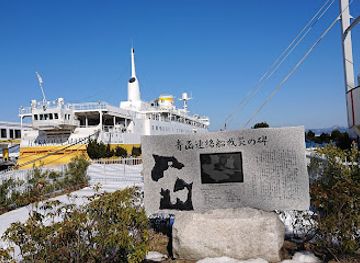
Maritime museum
Seikan Train Ferry Memorial Ship Hakkōda-maru
Explore the Seikan Train Ferry Memorial Ship Hakkōda-maru, a unique maritime museum showcasing Japan's engineering marvels and rich maritime history.
-
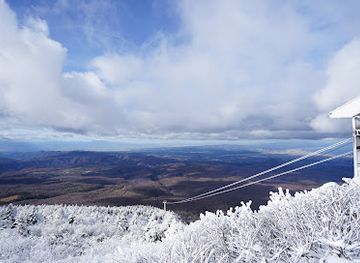
Mountain cable car
Hakkōda Ropeway Sanroku Station
Explore breathtaking views and thrilling hikes at the Hakkōda Ropeway, a premier mountain cable car experience in Aomori, Japan.
-
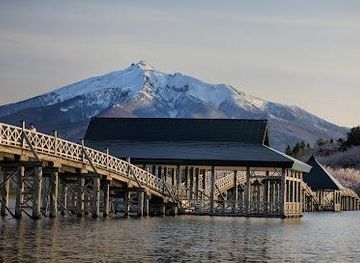
Tourist attraction
Tsuru no Maihashi Bridge
Explore the captivating beauty of Tsuru no Maihashi Bridge, a stunning architectural marvel in Tsuruta, Aomori, Japan, surrounded by nature's splendor.
-
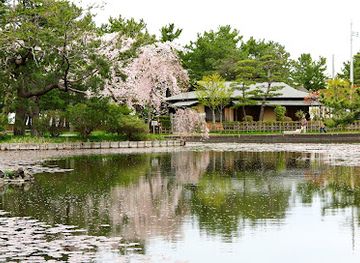
Tourist attraction
Gappo Park
Explore the serene beauty of Gappo Park in Aomori, Japan, a perfect retreat for nature lovers and a peaceful escape from city life.
Best landmarks in Aomori
Aomori’s landmarks include both dramatic natural features and places that preserve northern Japan’s cultural memory. Lake Towada is a volcanic caldera lake shared with Akita Prefecture, while the Oirase Stream is recognised for its wooded ravines and succession of rapids and falls. Mount Iwaki dominates the Tsugaru plain and remains a powerful regional symbol; the Hakkōda Mountains define the landscape south of Aomori City. Hirosaki Castle and its surviving keep are among the most important historic structures in the prefecture, particularly within the former domain town. The Sannai-Maruyama site demonstrates the scale of Jōmon settlement, while Osorezan is a significant Buddhist pilgrimage landscape on the Shimokita Peninsula. Nebuta floats, though temporary rather than architectural monuments, are equally central to Aomori’s cultural identity.
-
Historical landmark
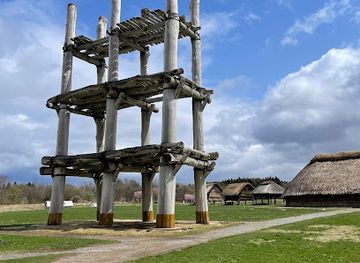
San'nai-Maruyama iseki Special Historical Site
Explore Japan's Jomon past at Sannai-Maruyama Site: Discover ancient dwellings, artifacts, and a culture that thrived for millennia.
Explore Aomori on the map
Plan your trip on one map. See where the top attractions, landmarks, restaurants and hotels are, and book hotels and experiences in a few clicks.
Best hotels in Aomori
Best restaurants in Aomori
Aomori’s food culture reflects its cold northern climate, productive seas and fertile agricultural plains. Apples are the signature local crop, appearing in sweets, juices and other regional products, while Hirosaki and the wider Tsugaru area offer apple-based specialities alongside rice and farm produce. Mutsu Bay is known for scallops, and seafood from the Pacific and Sea of Japan is prominent in markets, sushi restaurants and port-town dining. Hachinohe is associated with a strong fishing tradition and morning-market culture, while local restaurants across the prefecture serve regional noodles, hot pots and mountain vegetables according to season. Dining is concentrated in Aomori City, Hirosaki, Hachinohe and other established towns; around Lake Towada, Shirakami-Sanchi and remote peninsulas, options may be limited to inns, cafés, roadside establishments or provisions purchased before departure.
-
Seafood
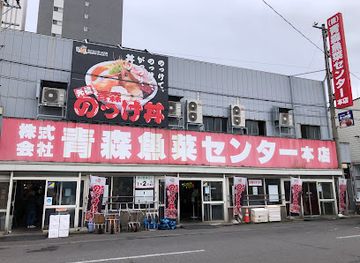
Aomori Gyosai Center (Aomori Nokkedon)
Experience the freshest seafood at Aomori Gyosai Center (Nokkedon), where you can indulge in custom-made bowls filled with oceanic delights.
-
Japanese
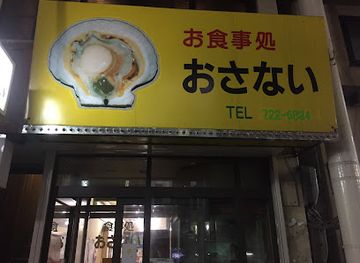
Osanai Shokudō
Experience authentic Japanese ramen at Osanai Shokudō in Aomori - where tradition meets flavor in every bowl.
-
Souvenir store
A-FACTORY
Explore unique souvenirs and savor local delicacies at A-FACTORY in Aomori - where culture meets flavor!
-
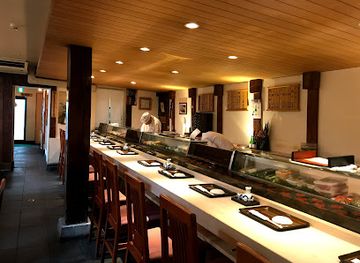
Sushi
Ippachi Sushi
Discover authentic sushi at Ippachi Sushi in Aomori - where tradition meets freshness for an unforgettable dining experience.
Best bars in Aomori
Aomori is not primarily a nightlife destination, and evening entertainment is concentrated in its larger towns rather than in the mountain and coastal landscapes. Aomori City, Hirosaki and Hachinohe have the broadest choice of izakaya, small bars and restaurants where visitors can sample local seafood, sake and regional dishes in an informal setting. Hirosaki’s traditional town atmosphere lends itself to quieter evenings, while Hachinohe’s port identity is reflected in its food-led nightlife and busy drinking areas. In rural parts of the prefecture, evenings usually centre on an accommodation’s dining room, a local inn or a small village establishment, with few late-night options. Festival periods bring temporary crowds and cultural performances, but schedules and venues vary by event and year.
-
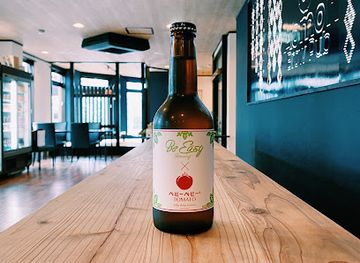
Brewpub
Aomori Brew Pub (ギャレスのアジト青森支店)
Experience the heart of Aomori's craft beer culture at Aomori Brew Pub, where local brews and delicious fare come together in a vibrant setting.
-
Bar
Square
Discover the heart of Aomori's nightlife at Square, a trendy bar offering delicious drinks and a vibrant atmosphere for all visitors.
-
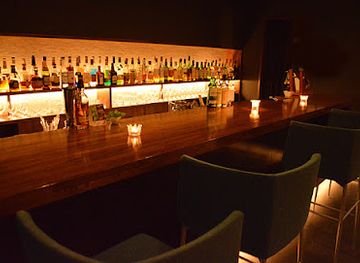
Cocktail bar
会員制BAR Cord
Experience the vibrant nightlife at 会員制BAR Cord, Aomori's exclusive cocktail bar renowned for its exquisite drinks and elegant atmosphere.
-
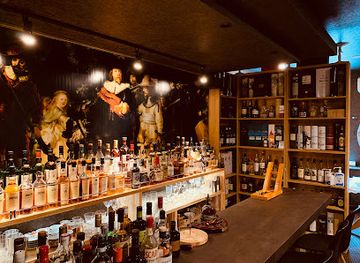
Bar
Crazy Horse Salon
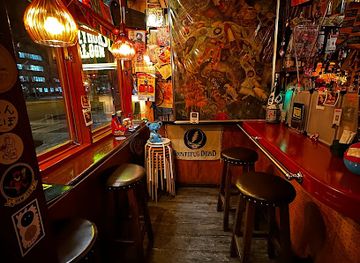
Experience Aomori's nightlife at Crazy Horse Saloon, a lively bar offering great drinks, music, and a vibrant atmosphere for an unforgettable evening out.
Best nightclubs in Aomori
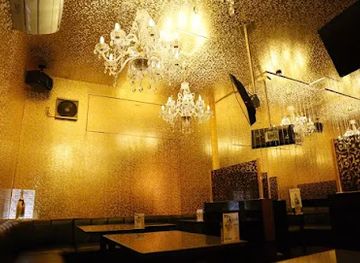
Aomori is not primarily a nightlife destination, and evening entertainment is concentrated in its larger towns rather than in the mountain and coastal landscapes. Aomori City, Hirosaki and Hachinohe have the broadest choice of izakaya, small bars and restaurants where visitors can sample local seafood, sake and regional dishes in an informal setting. Hirosaki’s traditional town atmosphere lends itself to quieter evenings, while Hachinohe’s port identity is reflected in its food-led nightlife and busy drinking areas. In rural parts of the prefecture, evenings usually centre on an accommodation’s dining room, a local inn or a small village establishment, with few late-night options. Festival periods bring temporary crowds and cultural performances, but schedules and venues vary by event and year.
-
Night club
Dice
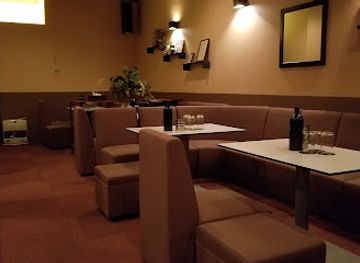
Unleash your night at Dice Night Club in Aomori, where unforgettable parties and vibrant energy await every night of the week.
-
Night club
Dominus
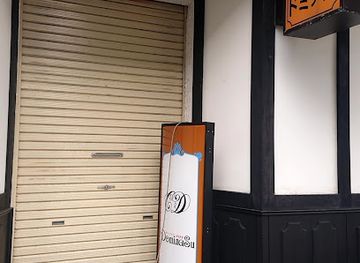
Experience the exhilarating nightlife of Aomori at Dominus, where vibrant beats meet an electrifying atmosphere.
-
Night club
マジェスティック
Discover the vibrant nightlife of Aomori at マジェスティック, the city's top night club for unforgettable music and dancing experiences.
-
Night club
GENTLEMENS CLUB 錦
Discover the essence of Aomori's nightlife at GENTLEMENS CLUB 錦, where music and camaraderie create unforgettable experiences.
Best shops in Aomori
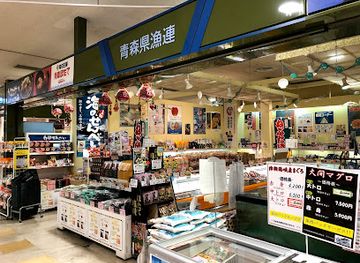
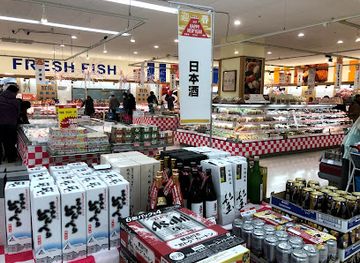
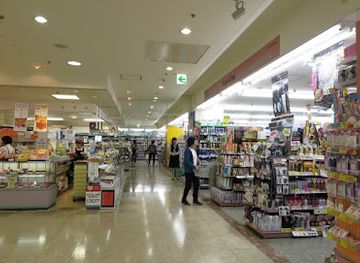
Shopping in Aomori centres on regional food, crafts and practical goods rather than extensive commercial districts. Aomori City and Hirosaki provide the widest selection of department stores, station shops, markets and specialist retailers, while Hachinohe is an important place to look for seafood and products associated with the Pacific coast. Apples, apple sweets, juices and other processed fruit products are widely associated with the Tsugaru region, and local shops also sell rice, sake, preserved foods and seasonal produce. Visitors may find traditional Tsugaru lacquerware, handmade textiles, pottery and other crafts through specialist shops and cultural venues, although availability varies. In rural areas, farm stands, roadside shops and accommodation providers may offer local produce, but opening patterns and payment facilities can be limited.
-
Souvenir store
Aomori Prefecture Tourism Information Center ASPAM
Uncover Aomori's treasures at the ASPAM Tourism Information Center, your gateway for shopping and local insights in this beautiful Japanese prefecture.
-
Grocery store
Ito Yokado Aomori
Experience local shopping and culinary delights at Ito Yokado Aomori – a vibrant hub for groceries, fashion, and family fun.
-
Shopping mall
LOVINA
Explore Lovina in Aomori: A vibrant shopping mall offering unique retail experiences, diverse dining, and engaging entertainment for all visitors.
-
Souvenir store
A-FACTORY
Experience the charm of Aomori at A-FACTORY, where local culture, delicious food, and unique souvenirs come together in a vibrant atmosphere.
Get your free copy of our complete guide to Aomori, delivered straight to you.
Everything on this page, from attractions and restaurants to essentials and local phrases, in one PDF you can read offline, print or share.
Already have an account? Sign in
Your Aomori guide is ready.
We'll send it to · Not you? Sign out

Getting your guide ready…
We are putting together a fresh copy of the Aomori guide. This can take up to a minute.
This can take a few moments. If your browser asks, choose Allow so the download can start. You'll find the guide in your Downloads folder.
Nothing happened? Download it again
Sorry, the guide is taking longer than usual. Please try again in a minute, or get it by email instead.
Aomori essentials
Currency and Payment
Safety
Emergency Situations
Do's and Don'ts
Local Tips
From Eve
Local phrases worth knowing
You don't need to get them perfect. A few words go a long way, and locals appreciate the effort.
Basics
| English | Local | Say it |
|---|---|---|
| Hello | こんにちは | [Konnichiwa] |
| Goodbye | さようなら | [Sayōnara] |
| Yes | はい | [Hai] |
| No | いいえ | [Īe] |
| Please/You're welcome | どうぞ | [Dōzo] |
| Thank you | ありがとうございます | [Arigatōgozaimasu] |
| Excuse me/Sorry | すみません | [Sumimasen] |
| How are you? | 元気ですか? | [Genki desu ka?] |
| Fine. And you? | 元気です。あなたは? | [Genki desu. Anata wa?] |
| Do you speak English? | 英語を話せますか? | [Eigo o hanasemasu ka?] |
| I don't understand | わかりません | [Wakarimasen] |
Eating & Drinking
| English | Local | Say it |
|---|---|---|
| I'd like to see the menu, please | メニューを見せてください | [Menyū o misete kudasai] |
| I don't eat meat | 肉は食べません | [Niku wa tabemasen] |
| Cheers! | 乾杯! | [Kanpai!] |
| I would like to pay, please | お会計をお願いします | [Okaikei o onegaishimasu] |
Emergencies
| English | Local | Say it |
|---|---|---|
| Help! | 助けて! | [Tasukete!] |
| Go away! | 去ってください! | [Satte kudasai!] |
| Call the Police! | 警察を呼んでください! | [Keisatsu o yonde kudasai!] |
| Call a doctor! | 医者を呼んでください! | [Isha o yonde kudasai!] |
| I'm lost | 迷子です | [Maigo desu] |
| I'm ill | 具合が悪いです | [Guai ga warui desu] |
Shopping
| English | Local | Say it |
|---|---|---|
| I'd like to buy... | ...を買いたいです | [... o kaitai desu] |
| I'm just looking | 見てるだけです | [Miteru dake desu] |
| How much is it? | いくらですか? | [Ikura desu ka?] |
| That's too expensive | 高すぎます | [Takasugimasu] |
| Can you lower the price? | 値段を下げてもらえますか? | [Nedan o sagete moraemasu ka?] |
Time & Numbers
| English | Local | Say it |
|---|---|---|
| What time is it? | 今何時ですか? | [Ima nanji desu ka?] |
| It's one o'clock | 一時です | [Ichiji desu] |
| Half past (10) | 十時半です | [Jūji han desu] |
| Morning | 朝 | [Asa] |
| Afternoon | 昼 | [Hiru] |
| Evening | 夕方 | [Yūgata] |
| Yesterday | 昨日 | [Kinō] |
| Today | 今日 | [Kyō] |
| Tomorrow | 明日 | [Ashita] |
| 1 | 一 | [Ichi] |
| 2 | 二 | [Ni] |
| 3 | 三 | [San] |
| 4 | 四 | [Yon] |
| 5 | 五 | [Go] |
| 6 | 六 | [Roku] |
| 7 | 七 | [Nana] |
| 8 | 八 | [Hachi] |
| 9 | 九 | [Kyū] |
| 10 | 十 | [Jū] |
Transport & Directions
| English | Local | Say it |
|---|---|---|
| Where's a/the...? | ...はどこですか? | [... wa doko desu ka?] |
| What's the address? | 住所は何ですか? | [Jūsho wa nan desu ka?] |
| Can you show me (on the map)? | 地図で見せてもらえますか? | [Chizu de misete moraemasu ka?] |
| When's the next (bus)? | 次の(バス)はいつですか? | [Tsugi no (basu) wa itsu desu ka?] |
| A ticket (to ....) | (...)へのチケットをください | [(...) e no chiketto o kudasai] |
History of Aomori
Volcanic Landscapes and Ancient Forests
Aomori’s physical setting was formed over geological timescales by volcanic activity, uplift, erosion and changing sea levels. The Hakkōda Mountains and Mount Iwaki are prominent volcanic features, while Lake Towada occupies a caldera created by major eruptions. The Oirase Stream drains the lake through a forested valley, creating the landscape of cascades and mossy ravines associated with the area today. In western Aomori, the beech forests of Shirakami-Sanchi preserve an extensive temperate woodland ecosystem and have become an important focus of conservation. These geological and ecological foundations continue to shape settlement, agriculture, forestry and tourism across the prefecture.
Early Communities and Northern Exchange
Human communities have lived in Aomori since prehistoric times, with the Sannai-Maruyama site near present-day Aomori City providing important evidence of Jōmon-period settlement. Excavated remains indicate a substantial community engaged in hunting, gathering, fishing and cultivation, challenging older assumptions that prehistoric societies were necessarily small and highly mobile. In later centuries, the northern end of Honshu connected the Japanese mainland with Hokkaido and the wider northern seas. Coastal travel, fishing and exchange helped develop the region’s distinctive relationship with maritime routes, forests and seasonal food resources.
Castles, Domains and the Tsugaru Region
From the early modern period, much of western Aomori was associated with the Tsugaru domain, governed by the Tsugaru family from Hirosaki. Hirosaki Castle and its surrounding town developed as the political centre of the domain, while farming, forestry and regional trade supported the population. Eastern and southern parts of the prefecture were connected with the Nanbu domain, giving Aomori a history of neighbouring political spheres and regional identities. Surviving castle structures, temple districts, traditional buildings and agricultural landscapes reflect the organisation of society during the Edo period, when travel and commerce were tightly regulated but local production flourished.
Ports, Railways and Modern Development
Aomori’s coastal position became increasingly important as transport links connected northern Honshu with Hokkaido. Aomori City developed as a major ferry and railway gateway, while Hachinohe grew as a port and industrial centre on the Pacific side. The Seikan Tunnel, opened in 1988 beneath the Tsugaru Strait, transformed the relationship between Honshu and Hokkaido by providing a rail connection below the sea. Agriculture also became central to the modern prefecture’s identity, with apple cultivation expanding around Hirosaki and other parts of Tsugaru. Fishing, food processing and manufacturing remain important alongside tourism.
Festivals and Conservation Heritage
Aomori’s contemporary cultural profile is strongly associated with its summer lantern-float festivals, including Aomori Nebuta, Hirosaki Neputa and Goshogawara Tachineputa. These events preserve local artistic practices while adapting them for modern civic and tourism life. Conservation has likewise become an important part of the prefecture’s history. Shirakami-Sanchi was designated a UNESCO World Heritage natural site in 1993 for its extensive primeval beech forest, while the Towada-Hachimantai National Park protects volcanic mountains, forests, Lake Towada and related landscapes. Tourism now links historic towns, seasonal festivals and protected environments, although access remains influenced by heavy snowfall and rural geography.
Aomori in Photos
Browse through our photo collection highlighting the charm and character of the destination.
Neighbouring destination travel guides
The closest destinations to Aomori, if you have time for more than one.
-

-

-

-

-


Swipe for more destinations
Explore more

Explore more of Tohoku
Explore Tohoku’s mountain temples, samurai towns, Pacific coast, hot springs, seasonal festivals and finely rooted regional food culture.
Explore Tohoku
Explore more of Japan
Discover the harmony of tradition and modernity in Japan, where ancient temples and cutting-edge technology coexist in perfect balance.
Explore Japan