

Free Dana Travel Guide & Mobile App
Plan your Dana trip with Evendo. Get free guides to top attractions, restaurants, hotels, and bars. Web access or download the mobile app.


Dana, Jordan offers mountain walks, village heritage and wildlife in the Dana Biosphere Reserve, with dramatic Rift Valley scenery and quiet rural stays.
A Village Above the Rift
Dana is a small stone village in southern Jordan, perched on the eastern escarpment of the Great Rift Valley above the Dana Biosphere Reserve. Its setting is the defining feature: steep valleys descend from the village towards Wadi Araba, while the reserve stretches across a dramatic sequence of mountains, plateaux and arid lowlands. Rather than a conventional town with a busy centre, Dana offers a quiet rural settlement, a handful of guesthouses and direct access to some of Jordan’s most varied landscapes.Read more about Dana
Heritage and Landscape
Slow Travel in Southern Jordan
When is the best time to visit Dana?
Best: March, November–December · 20–29°C| Month | High (°C) | Rainfall (mm) |
|---|---|---|
| January | 18 | 10 |
| February | 19 | 8 |
| March (best) | 24 | 5 |
| April | 32 | 3 |
| May | 39 | 0 |
| June | 44 | 0 |
| July | 45 | 0 |
| August | 45 | 0 |
| September | 43 | 0 |
| October | 37 | 0 |
| November (best) | 29 | 2 |
| December (best) | 20 | 8 |
Getting to and around Dana
How to get there
Transportation
Best attractions in Dana
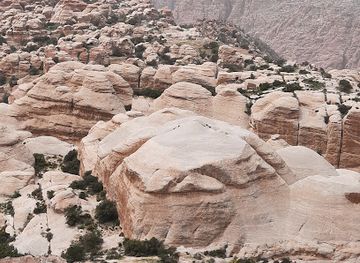
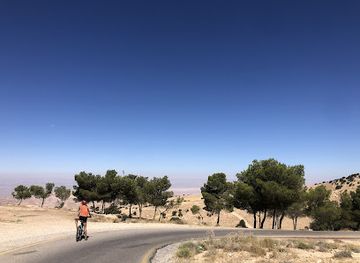
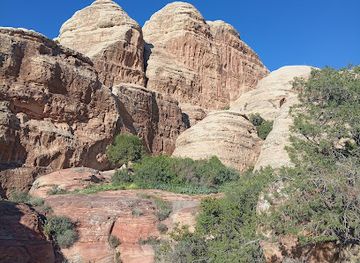
Dana’s principal attraction is the Dana Biosphere Reserve, whose trails move through an exceptional sequence of mountain and desert habitats between the highlands and Wadi Araba. From the village, visitors can explore viewpoints over the escarpment, walk among rocky valleys and terraces, and look for birds and wildlife including Nubian ibex in suitable areas. The old stone settlement of Dana provides a quieter cultural experience, with traditional houses, narrow paths and evidence of a former farming community. Longer routes lead towards lower parts of the reserve, although trailheads, transport and guiding arrangements need local confirmation. The Feynan area, known for its desert scenery and archaeological landscape, is a separate destination within the wider reserve rather than part of the village itself. Nature walks, night-sky observation and opportunities to learn about conservation give Dana a very different character from Jordan’s archaeological cities and Red Sea resorts.
-
National park
Dana Biosphere Reserve
Explore the breathtaking landscapes and rich biodiversity of Dana Biosphere Reserve, Jordan's premier national park and nature preserve.
6 min drive · 1.9 km from city centre
-
Hiking area
Sheq Al-Reesh Trail
Explore the Sheq Al-Reesh Trail in Al-Qadisiya, a stunning hiking area offering breathtaking views and diverse wildlife for all adventure seekers.
9 min drive · 2.9 km from city centre
-
Tourist attraction
Dana Bike Rentals
Discover the beauty of the Dana Biosphere Reserve with Dana Bike Rentals, where adventure meets nature in the heart of Jordan.
9 min drive · 2.9 km from city centre
-
Tourist attraction
Dana Rose tours online only
Experience the breathtaking beauty of Dana Nature Reserve with Dana Rose Tours, offering unforgettable hiking adventures in Jordan's stunning landscapes.
6 min drive · 2.1 km from city centre

Best landmarks in Dana
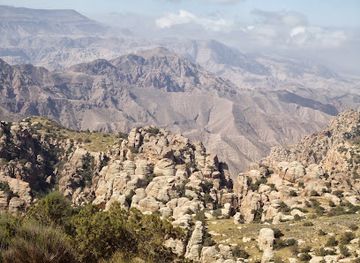
Dana’s most significant built landmark is the historic stone village itself, where surviving houses and terraces express the architecture and agricultural life of a southern Jordanian highland community. Its position on the escarpment is also a geographic landmark, opening wide views towards the deeply cut valleys and the Wadi Araba lowlands. The Dana Biosphere Reserve is a landmark of modern conservation in Jordan, not a single monument but a protected landscape established in 1989 and managed by the Royal Society for the Conservation of Nature. In the wider reserve, the Feynan region carries archaeological importance linked to ancient settlement and copper production, though it lies away from Dana village. These places are significant because they connect rural heritage, geological change and contemporary conservation rather than representing a dense urban collection of monuments.
-
National park
Dana Biosphere Reserve
Discover the breathtaking landscapes and rich biodiversity of Dana Biosphere Reserve, Jordan's premier national park offering unforgettable nature experiences.
6 min drive · 1.9 km from city centre
-
 Hotel
HotelDana Tower Hotel
Unwind in the heart of Dana Nature Reserve with breathtaking views, eco-friendly accommodations, and unforgettable outdoor adventures at Dana Tower Hotel.
6 min drive · 2.0 km from city centre
-
Guest house
Dana Guest House
Discover the tranquility of Dana Guest House, your gateway to the stunning landscapes of Dana Biosphere Reserve and authentic Jordanian culture.
6 min drive · 1.9 km from city centre
-
Nature preserve
Dana Reserve
Experience the breathtaking landscapes and rich biodiversity of Dana Reserve, a pristine nature preserve in Jordan perfect for adventure seekers and nature lovers.
7 min drive · 2.5 km from city centre
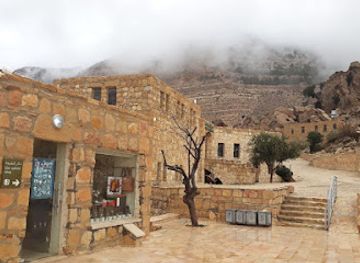

Explore Dana on the map
Plan your Dana trip on one map. See where the top attractions, landmarks, restaurants, bars and hotels are, find what's near where you're staying, and book hotels and experiences in a few clicks.
Best hotels in Dana
Best restaurants in Dana
Dana has a small, accommodation-based dining scene rather than a restaurant district. Guesthouses commonly serve home-style Jordanian meals, often centred on rice, vegetables, lentils, bread, salads, yoghurt and dishes such as mansaf or maqluba according to the household and arrangements available. Bedouin and rural culinary traditions are reflected in the use of tea, herbs and simple ingredients suited to a mountain community, while meals may be prepared for guests through local hospitality initiatives. Visitors should not expect a broad choice of cafés, supermarkets or late-opening eateries, and it is sensible to arrange meals with accommodation in advance. The lower Feynan area has its own lodge-based food service, but it is not a dining option within Dana village. Picnic supplies are best bought before the final mountain approach.
-
Restaurant
Dana luxury huts
Discover tranquility at Dana Luxury Huts - where luxury meets nature in the heart of Jordan's stunning landscapes.
6 min drive · 1.9 km from city centre
-
Restaurant
Fienanas Way Restaurant
Experience authentic Jordanian cuisine amidst breathtaking landscapes at Fienanas Way Restaurant in Dana Valley.
6 min drive · 2.1 km from city centre
-
Breakfast
Dana Tourist Restaurant _ مطعم ضانا السياحي
Savor authentic Jordanian breakfast dishes at Dana Tourist Restaurant in Al-Qadisiya, where tradition meets taste.
15 min drive · 4.9 km from city centre
-
Restaurant
The way to Vinan
Experience authentic Jordanian cuisine amidst stunning landscapes at The Way to Vinan in Dana Village.
6 min drive · 2.1 km from city centre


Best bars in Dana
Dana has no conventional bar or nightclub district, and evening life is shaped by the village’s small scale, conservative social setting and remote location. Nights are more likely to involve tea, conversation and a home-cooked meal at a guesthouse than music venues or late entertainment. Some accommodation may serve drinks privately where permitted, but visitors should not assume that alcohol is available. The reserve’s darkness creates a more characteristic evening experience: clear skies, distant valley lights and the sounds of the surrounding landscape replace urban nightlife. Stargazing, quiet walks near accommodation and informal cultural conversations with hosts are appropriate ways to experience Dana after sunset, while remote trail walking at night should be avoided without local knowledge.
-
Hotel
Dana Tower Hotel
Experience breathtaking views and unparalleled comfort at Dana Tower Hotel, your gateway to the stunning Dana Nature Reserve in Jordan.
6 min drive · 2.0 km from city centre
-
Juice
Coffee juice world
Discover the ultimate juice and coffee experience at Coffee Juice World in Dana, where local flavors meet artistic beverage craftsmanship.
6 min drive · 2.1 km from city centre

Best shops in Dana
Shopping in Dana is modest and closely linked to community tourism. Local initiatives and guesthouses may offer handmade items, woven goods, simple jewellery, dried herbs or food products associated with village livelihoods, although stock and availability vary. The emphasis is on small-scale craft and conservation-supported enterprise rather than a permanent market of shops. There are no major shopping streets, department stores or reliable retail facilities in the village, so visitors should buy medicines, snacks, hiking supplies and substantial provisions before travelling into the mountains. Purchases made directly from local producers can reflect the area’s rural economy, but visitors should distinguish genuine local work from mass-produced souvenirs. Traditional goods and food products may also be found in larger towns along the route, where choice is broader.
-
Grocery store
Shop Sunset Dana
Discover local flavors and genuine hospitality at Shop Sunset Dana, your go-to grocery store in the heart of Dana, Jordan.
6 min drive · 2.0 km from city centre
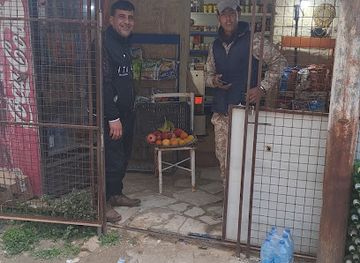
Get your free copy of our complete guide to Dana, delivered straight to you.
Everything on this page, from attractions and restaurants to essentials and local phrases, in one PDF you can read offline, print or share.
Already have an account? Sign in
Your Dana guide is ready.
We'll send it to · Not you? Sign out

Getting your guide ready…
We are putting together a fresh copy of the Dana guide. This can take up to a minute.
This can take a few moments. If your browser asks, choose Allow so the download can start. You'll find the guide in your Downloads folder.
Nothing happened? Download it again
Sorry, the guide is taking longer than usual. Please try again in a minute, or get it by email instead.
Dana essentials
Currency and Payment
Safety
Emergency Situations
Do's and Don'ts
Local Tips
From Eve
Local phrases worth knowing
You don't need to get them perfect. A few words go a long way, and locals appreciate the effort.
Basics
| English | Local | Say it |
|---|---|---|
| Hello | Marhaba | [mar-ha-ba] |
| Goodbye | Ma'a as-salama | [ma-a as-sa-la-ma] |
| Yes | Na'am | [na-am] |
| No | La | [la] |
| Please/You're welcome | Min fadlik | [min fa-dlik] |
| Thank you | Shukran | [shu-kran] |
| Excuse me/Sorry | Aasif | [aa-sif] |
| How are you? | Kif halak? | [keef ha-lak] |
| Fine. And you? | Mni7. Wint? | [mni-h. win-t] |
| Do you speak English? | bet7ki inglizi? | [bet-hki in-gli-zi] |
| I don't understand | Ana mish fahim | [a-na meesh fa-heem] |
Eating & Drinking
| English | Local | Say it |
|---|---|---|
| I'd like to see the menu, please | Biddi ashuf il qaimat, min fadlik | [bi-ddi a-shuf il qai-mat, min fa-dlik] |
| I don't eat meat | Ana ma biakul la7m | [a-na ma bi-a-kul la-hm] |
| Cheers! | Fe sa7teik | [fe sa-h-teik] |
| I would like to pay, please | Biddi asaffar, min fadlik | [bi-ddi a-saf-far, min fa-dlik] |
Emergencies
| English | Local | Say it |
|---|---|---|
| Help! | Musa3ada! | [mu-sa-a-da] |
| Go away! | Ruh halak! | [ruh ha-lak] |
| Call the Police! | Itsal al-shurta! | [itsal al-shur-ta] |
| Call a doctor! | Itsal tabib! | [itsal ta-bib] |
| I'm lost | Tawwalt | [taw-walt] |
| I'm ill | Ana mareed | [a-na ma-reed] |
Shopping
| English | Local | Say it |
|---|---|---|
| I'd like to buy... | Biddi ashtari... | [bi-ddi ash-ta-ri] |
| I'm just looking | Ana bas bi-shuf | [a-na bas bi-shuf] |
| How much is it? | Kam huwa thamanu? | [kam hu-wa tha-ma-nu] |
| That's too expensive | Hatha ghali jiddan | [ha-tha gha-li jid-dan] |
| Can you lower the price? | Momkin takhaf althaman? | [mom-kin ta-khaf al-tha-man] |
Time & Numbers
| English | Local | Say it |
|---|---|---|
| What time is it? | Kam el sa3a? | [kam el sa-a] |
| It's one o'clock | Sa3a wahda | [sa-a wah-da] |
| Half past (10) | Nisf el 3ashra | [nisf el a-shra] |
| Morning | Saba7 | [sa-ba-h] |
| Afternoon | Duhur | [du-hur] |
| Evening | 3asha | [a-sha] |
| Yesterday | Msaa elbari7 | [msa el-ba-rih] |
| Today | El yawm | [el yawm] |
| Tomorrow | Ghadan | [gha-dan] |
| 1 | Wahid | [wa-hid] |
| 2 | Itnain | [it-nain] |
| 3 | Thalatha | [tha-la-tha] |
| 4 | Arba3a | [ar-ba-a] |
| 5 | Khamsa | [kham-sa] |
| 6 | Sitta | [sit-ta] |
| 7 | Saba3a | [sa-ba-a] |
| 8 | Thamania | [tha-ma-ni-a] |
| 9 | Tis3a | [tis-a] |
| 10 | Ashra | [a-shra] |
Transport & Directions
| English | Local | Say it |
|---|---|---|
| Where's a/the...? | Wen el... | [wen el] |
| What's the address? | Shu el 3nwan? | [shu el an-wan] |
| Can you show me (on the map)? | Momkin torini? | [mom-kin to-ri-ni] |
| When's the next (bus)? | Ithani el bas? | [i-tha-ni el bas] |
| A ticket (to ....) | Talat | [ta-lat] |
History of Dana
Ancient Landscapes and Edomite Country
Dana lies within the historic highlands south of the Dead Sea, a region associated in ancient sources with Edom and later crossed by routes linking the Levant, the Arabah and the Red Sea. The area’s importance came less from a single urban centre than from its minerals, grazing grounds, springs and movement corridors. Archaeological evidence across southern Jordan records long periods of settlement and exploitation, including activity connected with copper resources in the wider Wadi Araba and Faynan region. Dana’s surrounding valleys therefore belong to a landscape with a long human history, even though the present village is a much later rural settlement.
Nabataean and Roman Connections
During the Nabataean period, southern Jordan formed part of a kingdom whose prosperity rested on caravan trade, water management and control of routes between Arabia and the Mediterranean. Petra, to the north-east, became the principal Nabataean capital, while the wider region maintained links through passes and valleys. Roman annexation of the Nabataean kingdom in AD 106 incorporated these routes into the province of Arabia. The roads, settlements and agricultural traces of southern Jordan reveal how imperial administration built upon earlier networks, although Dana itself was never a major classical city.
Village Life in the High Highlands
Dana developed as a small agricultural and pastoral community in the highlands, where families used terraces, springs and seasonal grazing areas. Traditional houses were constructed from locally available stone, and the village’s economy depended on farming, livestock and exchange with neighbouring settlements. The steep relationship between the upland village and the lower valleys shaped daily life, with routes descending through the reserve towards warmer climates and different resources. Many buildings later fell into disrepair as residents moved away in search of employment and services, leaving the village’s surviving fabric an important record of rural life in southern Jordan.
The Dana Biosphere Reserve
A major modern transformation came with the establishment of the Dana Nature Reserve in 1989 by the Royal Society for the Conservation of Nature. It was later recognised as the Dana Biosphere Reserve, protecting a large corridor that descends from the highlands towards Wadi Araba and contains several ecological zones. Conservation altered the relationship between local communities and land use, while tourism and environmental projects created new opportunities linked to guiding, accommodation and crafts. The reserve’s significance lies in its unusual ecological range, bringing together habitats and species that are more commonly found far apart.
Conservation and Community-Based Tourism
Since the 1990s, Dana has become associated with community-based conservation and low-impact tourism in Jordan. Restoration of parts of the village, locally operated guesthouses, guided walking and craft initiatives have helped connect visitors with the reserve while supporting residents and conservation work. The nearby Feynan area developed its own ecolodge and guiding economy, but it remains separate from Dana village and is reached through the lower reserve. Today, the character of Dana is shaped by the balance between protecting a biologically important landscape, preserving rural heritage and providing livelihoods in a remote mountain community.
Travel experiences inspired by this city
-
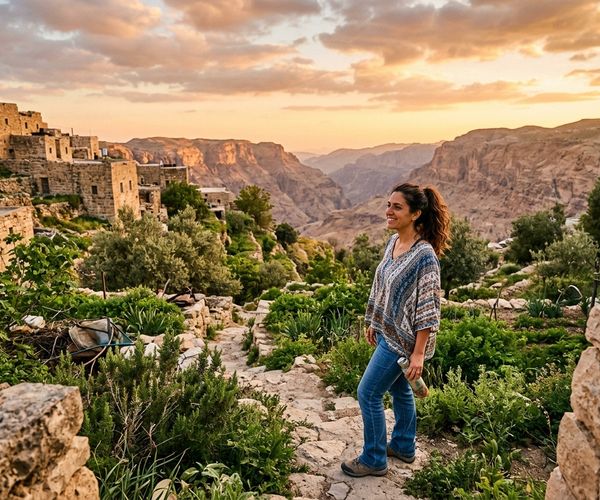 12 Day Trip
Solo Exploration of Dana Village: A Journey into Jordan's Cultural Heart
Discover the captivating beauty and rich culture of Dana Village, Jordan, on a solo journey of exploration and adventure.
12 Day Trip
Solo Exploration of Dana Village: A Journey into Jordan's Cultural Heart
Discover the captivating beauty and rich culture of Dana Village, Jordan, on a solo journey of exploration and adventure.
 1 May 2026
By Yael Cohen-Levi -
 8 Day Trip
Solo Adventure in Dana Biosphere Reserve
Explore the natural wonders of Dana Biosphere Reserve on a solo journey filled with breathtaking landscapes and unique ecosystems.
8 Day Trip
Solo Adventure in Dana Biosphere Reserve
Explore the natural wonders of Dana Biosphere Reserve on a solo journey filled with breathtaking landscapes and unique ecosystems.
 10 Apr 2026
By Giulia Colombo-Tremblay -
 11 Day Trip
Exploring the Wonders of Dana with Friends
Discover the natural beauty and cultural richness of Dana, Jordan, on an unforgettable adventure with friends. Experience wildlife, hiking, and local traditions.
11 Day Trip
Exploring the Wonders of Dana with Friends
Discover the natural beauty and cultural richness of Dana, Jordan, on an unforgettable adventure with friends. Experience wildlife, hiking, and local traditions.
 5 Mar 2026
By Marie Rakotomalala -
 7 Day Trip
Family Adventure in Dana Village: Exploring Jordan's Hidden Gem
Discover the charm of Dana Village with your family, exploring Jordan's rich culture and stunning landscapes in an unforgettable journey.
7 Day Trip
Family Adventure in Dana Village: Exploring Jordan's Hidden Gem
Discover the charm of Dana Village with your family, exploring Jordan's rich culture and stunning landscapes in an unforgettable journey.
 5 Mar 2026
By Ahmed Khatib -
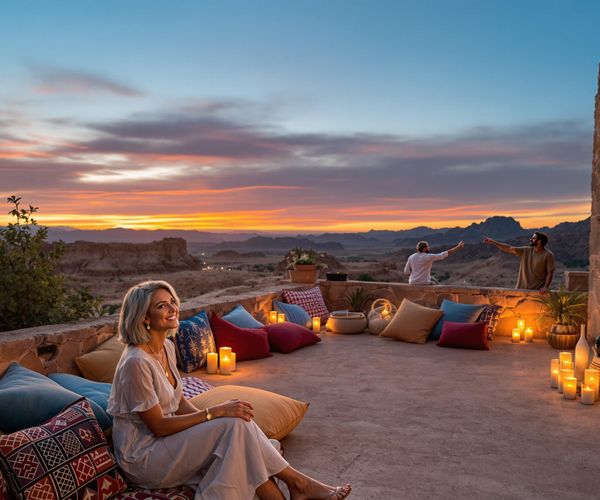 8 Day Trip
Solo Cultural Exploration at Feynan Ecolodge, Jordan
Discover the rich heritage and sustainable beauty of Feynan Ecolodge in Jordan, where cultural immersion meets eco-friendly living.
8 Day Trip
Solo Cultural Exploration at Feynan Ecolodge, Jordan
Discover the rich heritage and sustainable beauty of Feynan Ecolodge in Jordan, where cultural immersion meets eco-friendly living.
 20 Aug 2025
By Farida Al-Harbi -
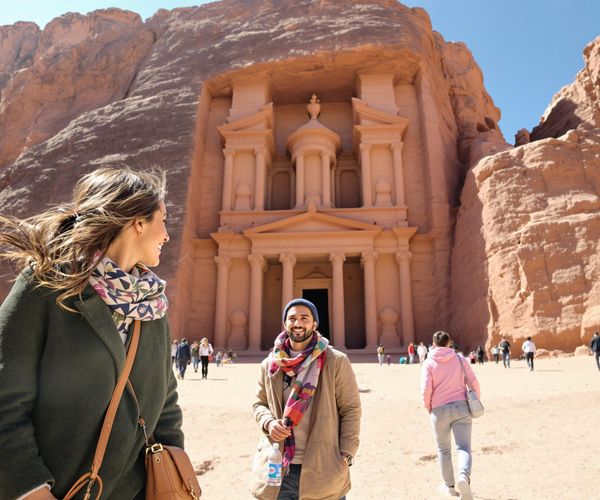 8 Day Trip
Exploring the Timeless Wonders of Petra with Family
Join us on a family adventure to Petra, uncovering the ancient wonders of Jordan with cultural insights and unforgettable experiences.
8 Day Trip
Exploring the Timeless Wonders of Petra with Family
Join us on a family adventure to Petra, uncovering the ancient wonders of Jordan with cultural insights and unforgettable experiences.
 5 Jan 2025
By Fatima Darwish
Swipe for more travel diaries
Dana in Photos
Browse through our photo collection highlighting the charm and character of the destination.
Cities near Dana
The closest cities to Dana, if you have time for more than one stop.
-

-

-

-

-


Swipe for more cities
Explore more

Explore more of Jordan
Discover Jordan: A land of ancient cities, breathtaking deserts, and therapeutic seas. Experience the blend of history and modernity in this Middle Eastern gem.
Explore Jordan