

Batsto Village Travel Guide - Free Web & App
Your ultimate guide to Batsto Village. Discover top landmarks, proposed trips, and local tips. Free on the web or via the Evendo companion app.


Batsto Village in New Jersey reveals a preserved Pine Barrens ironworks, historic buildings, woodland trails, local history and quiet rural scenery near Hammonton.
A Historic Village in the Pine Barrens
Batsto Village lies within Wharton State Forest in southern New Jersey, among the sandy soils, pine woods and wetlands of the New Jersey Pine Barrens. Rather than a conventional town, it is a preserved historic settlement built around an eighteenth-century ironworks. Its buildings, lanes and industrial remains illustrate how natural resources shaped life in one of the United States' most distinctive landscapes.Read more about Batsto Village
Industry, Architecture and Landscape
Exploring Batsto
When is the best time to visit Batsto Village?
Best: May–June, September · 21–26°C| Month | High (°C) | Rainfall (mm) |
|---|---|---|
| January | 5 | 84 |
| February | 5 | 73 |
| March | 10 | 92 |
| April | 16 | 94 |
| May (best) | 21 | 94 |
| June (best) | 26 | 87 |
| July | 29 | 102 |
| August | 29 | 98 |
| September (best) | 25 | 95 |
| October | 19 | 86 |
| November | 12 | 85 |
| December | 6 | 88 |
Getting to and around Batsto Village
How to get there
Transportation
Best attractions in Batsto Village
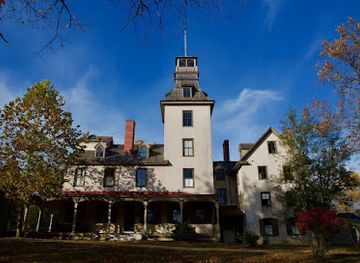
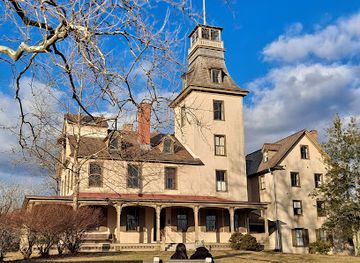
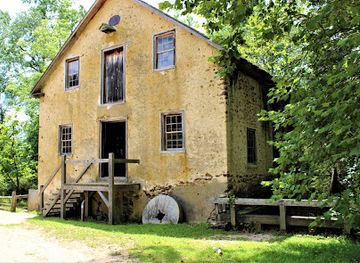
Batsto Village's principal attraction is its preserved historic core, where Batsto Mansion stands among cottages, workshops and civic buildings that reveal the structure of an eighteenth- and nineteenth-century Pine Barrens community. The former industrial landscape includes the furnace area and water-powered works associated with ironmaking, while the sawmill and gristmill illustrate the later importance of timber and agriculture. The visitor centre and interpretive displays provide context for the village, its industries and the surrounding forest. Beyond the buildings, trails and roads lead into Wharton State Forest, where sandy pine woodland, wetlands, streams and ponds create a very different experience from the compact settlement. Visitors interested in local history can combine Batsto with other Pine Barrens communities and cultural sites, but distances are substantial and attractions outside the village should be treated as separate stops rather than walkable extensions of the historic core.
-
Tourist attraction
Batsto Visitors Center
Immerse yourself in history at Batsto Village, a beautifully preserved 19th-century iron-making community in New Jersey's scenic Wharton State Forest.
-
Tourist attraction
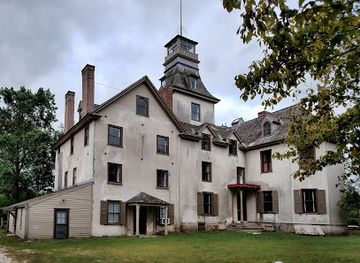
The Batsto Mansion
Explore the breathtaking historic Batsto Mansion in New Jersey's Pine Barrens, where history meets nature in a stunning setting.
-
Nature preserve
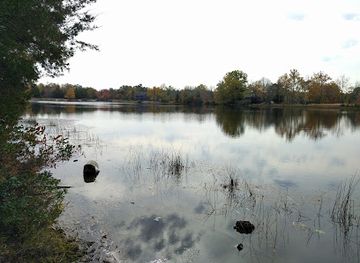
Batsto River
Explore Batsto River, a serene nature preserve in New Jersey, perfect for kayaking, hiking, and experiencing the beauty of the outdoors.
-
Hiking area
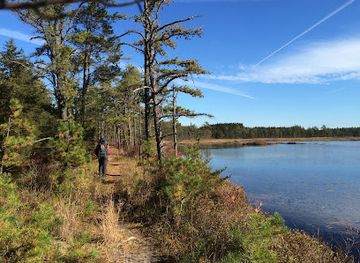
Batona Trail
Immerse yourself in nature on the scenic Batona Trail, a serene hiking experience in New Jersey's beautiful Pine Barrens.
Best landmarks in Batsto Village
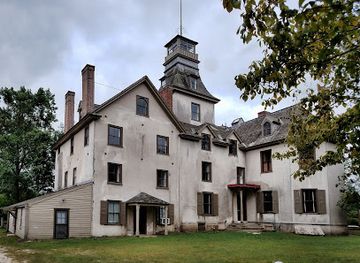
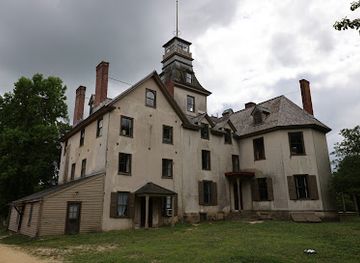
Batsto Mansion is the village's most prominent architectural landmark, a large historic residence that represents the settlement's later prosperity and changing role within the Pine Barrens. Around it stand the furnace and industrial works, the mill buildings, workers' houses, church, post office, blacksmith shop and other structures that give Batsto its unusually coherent historic character. These are significant not simply as individual buildings but as evidence of an organised ironmaking community shaped by water power, bog iron, charcoal and timber. The surrounding wetlands, ponds and pine forest are natural landmarks in their own right, demonstrating the environment that made the ironworks possible and later supported forestry and agriculture. Together, the built and natural features explain why Batsto is an important cultural landscape within Wharton State Forest.
-
Historical landmark
The Batsto Mansion
Explore the captivating history and architecture of Batsto Mansion, a premier historical landmark in New Jersey's stunning Batsto Village.
Explore Batsto Village on the map
Plan your trip on one map. See where the top attractions, landmarks, restaurants and hotels are, and book hotels and experiences in a few clicks.
Best hotels in Batsto Village
Best restaurants in Batsto Village
Batsto Village is not a dining centre, and visitors should plan to eat before arriving, carry suitable provisions where permitted, or use restaurants and cafés in nearby communities. Hammonton, Chatsworth, Tuckerton and other South Jersey settlements provide a broader range of food shops and casual dining than the forest itself. Regional food culture reflects the agricultural character of the Pine Barrens and South Jersey, with local produce, berries, farm products and seafood from the coastal plain appearing in season. Traditional diners, pizzerias, cafés and independent restaurants are more likely to be found in gateway towns than within Wharton State Forest. Food should be transported and disposed of responsibly, with no assumption that picnic facilities, rubbish collection or drinking-water supplies are available at every forest stop.
-
Family-friendly
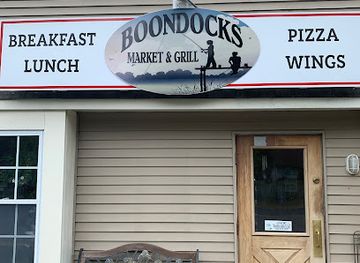
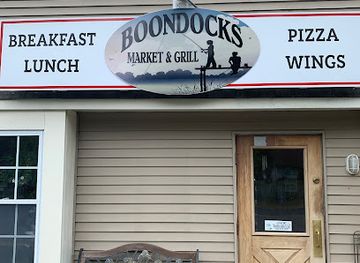
Boondocks Market and Grill
Experience family-friendly dining at Boondocks Market and Grill in Hammonton – where delicious meals meet warm hospitality.
Best bars in Batsto Village
Evening entertainment at Batsto is limited because the village is a historic site within a largely rural forest rather than a resort or town centre. The most characteristic evening atmosphere is quiet, with darkness, woodland sounds and open skies replacing conventional nightlife; any special heritage or community events should be confirmed locally before travelling. Visitors seeking a pub, bar or a wider choice of evening meals will generally need to drive to a nearby settlement such as Hammonton or Tuckerton, depending on their route and accommodation base. These communities offer ordinary local hospitality rather than a concentrated nightlife district, and distances, rural roads and limited late transport make advance planning important. Do not expect nightclubs, frequent taxis or late-opening venues at Batsto itself.
-
Bar
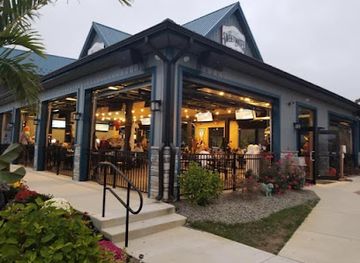
Sweetwater Marina and Riverdeck
Experience the perfect blend of dining, leisure, and stunning river views at Sweetwater Marina and Riverdeck in New Jersey.
-
Museum
Batsto Visitors Center
Uncover the history of Batsto Village at the Batsto Visitors Center, a charming museum in New Jersey's scenic Pine Barrens region.
-
Family-friendly
Boondocks Market and Grill
Experience a delightful family-friendly dining at Boondocks Market and Grill in Hammonton, NJ, where local flavors meet warm hospitality.
-
Historical landmark
The Batsto Mansion
Discover Batsto Mansion, a historical gem in the Pine Barrens of New Jersey, where history, architecture, and nature converge beautifully.
Best shops in Batsto Village
Shopping at Batsto is modest and centred on visitor-oriented purchases rather than a commercial high street. The village visitor facilities may offer interpretive publications, souvenirs or locally themed goods when open, while nearby communities provide practical supplies, food shops and outdoor necessities. Regional products associated with South Jersey may include farm produce, seasonal berries, preserves, honey, crafts and Pine Barrens-themed items, although availability varies by business and time of year. Hammonton, Chatsworth, Tuckerton and other surrounding settlements are more useful bases for everyday shopping than the forest. Visitors should not expect a permanent artisan market or a concentration of boutiques at Batsto, and it is sensible to obtain fuel, provisions and specialist equipment before entering the more remote parts of Wharton State Forest.
-
Historical place
Batsto Village
Explore the rich history and scenic beauty of Batsto Village, a preserved 19th-century industrial site in New Jersey's Pine Barrens.
-
Museum
Batsto Visitors Center
Discover the rich history and scenic beauty of Batsto Village, a captivating museum and historical site in New Jersey.
-
Historical landmark
The Batsto Mansion
Discover the rich history and stunning architecture of the Batsto Mansion, a captivating jewel in New Jersey's Pine Barrens, perfect for all history enthusiasts.
-
Store
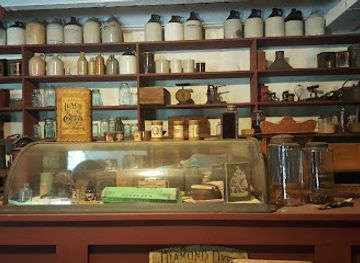
General Store
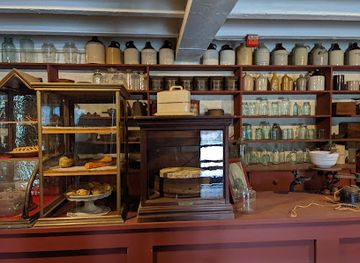
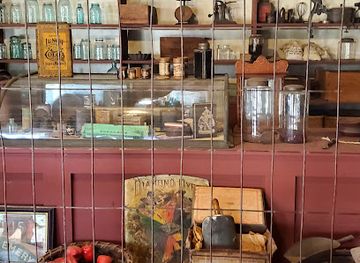
Explore the historic General Store in Batsto for unique local crafts, artisanal foods, and an authentic New Jersey shopping experience.
Get your free copy of our complete guide to Batsto Village, delivered straight to you.
Everything on this page, from attractions and restaurants to essentials and local phrases, in one PDF you can read offline, print or share.
Already have an account? Sign in
Your Batsto Village guide is ready.
We'll send it to · Not you? Sign out

Getting your guide ready…
We are putting together a fresh copy of the Batsto Village guide. This can take up to a minute.
This can take a few moments. If your browser asks, choose Allow so the download can start. You'll find the guide in your Downloads folder.
Nothing happened? Download it again
Sorry, the guide is taking longer than usual. Please try again in a minute, or get it by email instead.
Batsto Village essentials
Currency and Payment
Safety
Emergency Situations
Do's and Don'ts
Local Tips
From Eve
Local phrases worth knowing
You don't need to get them perfect. A few words go a long way, and locals appreciate the effort.
Basics
| English | Local | Say it |
|---|---|---|
| Hello | Howdy | [HAO-dee] |
| Goodbye | See ya | [SEE yuh] |
| Yes | Yup | [YUHP] |
| No | Nah | [NAH] |
| Please/You're welcome | Please | [PLEEZ] |
| Thank you | Thanks a lot | [THANKS uh LAHT] |
| Excuse me/Sorry | Pardon me | [PAHR-dun mee] |
| How are you? | How you doin'? | [HAO yuh DOO-in] |
| Fine. And you? | Jus' fine. You? | [JUHS fain. YUH?] |
| Do you speak English? | Ya speak English? | [Yuh SPEEK Ing-lish?] |
| I don't understand | I ain't gettin' it | [AI-nt GEHT-in it] |
Eating & Drinking
| English | Local | Say it |
|---|---|---|
| I'd like to see the menu, please | I wanna check out the grub, please | [AI wanna chek aouwt thu gruhb, pleez] |
| I don't eat meat | I don't do meat | [Ai dohnt doh meet] |
| Cheers! | Cheers! | [CHEERS] |
| I would like to pay, please | I'll settle up, please | [AI-ll SEH-tl uhp, pleez] |
Emergencies
| English | Local | Say it |
|---|---|---|
| Help! | Help! | [HELP] |
| Go away! | Get lost! | [GEHT lost] |
| Call the Police! | Call the cops! | [Call thu cops] |
| Call a doctor! | Get a doc! | [GEHT a doc] |
| I'm lost | I'm turned around | [Aim TURNED uh-ROUND] |
| I'm ill | I'm feelin' under the weather | [Aim FEE-lin UN-duhr thu WETH-ur] |
Shopping
| English | Local | Say it |
|---|---|---|
| I'd like to buy... | I wanna snag... | [AI wanna snag] |
| I'm just looking | I'm just browsin' | [Aim juhst BROW-zin] |
| How much is it? | How much? | [HAO much] |
| That's too expensive | That's a rip-off | [THATS uh RIP-off] |
| Can you lower the price? | Can ya do betta on the price? | [Can yuh doo BET-uh on thu price] |
Time & Numbers
| English | Local | Say it |
|---|---|---|
| What time is it? | What's the time? | [WHATZ thu TIME] |
| It's one o'clock | It's one | [Its wuhn] |
| Half past (10) | Half past ten | [HAHF past TEHN] |
| Morning | Mornin' | [MORN-in] |
| Afternoon | Afternoon | [Af-ter-NOON] |
| Evening | Evenin' | [EE-ven-in] |
| Yesterday | Yest'day | [YES-tduh] |
| Today | Today | [To-DAY] |
| Tomorrow | Tomorruh | [To-MOR-uh] |
| 1 | One | [Wuhn] |
| 2 | Two | [Too] |
| 3 | Three | [Three] |
| 4 | Four | [Fohr] |
| 5 | Five | [Fahyv] |
| 6 | Six | [Siks] |
| 7 | Seven | [SEHV-uhn] |
| 8 | Eight | [AYT] |
| 9 | Nine | [NAIN] |
| 10 | Ten | [TEHN] |
Transport & Directions
| English | Local | Say it |
|---|---|---|
| Where's a/the...? | Where's the... | [WHEREZ thu] |
| What's the address? | What's the addy? | [WHATZ thu ADD-ee] |
| Can you show me (on the map)? | Can ya point it out (on the map)? | [Can yuh POINT it out (on thu map)] |
| When's the next (bus)? | When's the next bus? | [WHENZ thu NEHKST BUHS] |
| A ticket (to ....) | A ticket (to ....) | [A TICK-uht (to ....)] |
History of Batsto Village
The Pine Barrens Landscape
Batsto's history is inseparable from the Pine Barrens, a sandy coastal plain whose soils and wetlands supported pine forests, streams and deposits of bog iron rather than intensive field agriculture. Bog iron formed in wet environments and could be collected locally, while timber supplied charcoal for furnaces. The landscape's apparent remoteness did not make it empty: Lenape people used the wider region long before European industrial settlement, and later roads, waterways and forest clearings connected small communities and industries across southern New Jersey.
The Ironworks at Batsto
Batsto Iron Works was established in 1766 by Charles Read, taking advantage of nearby bog iron, timber and water power. The furnace and associated workshops produced pig iron and goods cast or forged from it, creating employment and attracting craftsmen, labourers and their families. During the American Revolution, Batsto contributed iron supplies, including shot and other military material, to the colonial cause. The settlement developed as an industrial village whose buildings were arranged around production, administration, housing and transport rather than around a formal town plan.
From Iron to a Rural Community
After the Revolutionary period, Batsto's iron industry faced changing markets and competition from more efficient sources of iron. Under later ownership, including the Richards family, the settlement gradually developed a broader rural economy. Milling, lumbering, charcoal production, agriculture and other activities became increasingly important as the furnace's central role declined. Batsto Mansion and the surviving village buildings reflect this transition from an industrial works to a community supported by several Pine Barrens trades.
Joseph Wharton and the Estate Era
Philadelphia industrialist Joseph Wharton acquired Batsto and extensive surrounding Pine Barrens land in the nineteenth century. His ownership linked the village to wider attempts to manage and develop the region's natural resources, including forestry and agriculture. Batsto continued as a working settlement, although it no longer operated as the major ironmaking centre for which it had first been established. The Wharton estate helped preserve a large tract of land around the village, a circumstance that later became important to the protection of the Pine Barrens landscape.
Preservation within Wharton State Forest
New Jersey acquired the Wharton lands in the mid-twentieth century, and Batsto subsequently became part of the public landscape now associated with Wharton State Forest. Preservation work, interpretation and the care of historic structures have allowed the village to remain a tangible record of Pine Barrens industry and settlement. Today, Batsto is valued both as a historic site and as a gateway to understanding the wider forest, where conservation, recreation and the memory of resource-based communities continue to shape land management.
Batsto Village in Photos
Browse through our photo collection highlighting the charm and character of the destination.
Neighbouring destination travel guides
The closest destinations to Batsto Village, if you have time for more than one.
-

-

-

-

-


Swipe for more destinations
Explore more

Explore more of Pine Barrens
Explore New Jersey’s Pine Barrens for pine forests, blackwater rivers, cranberry country, historic Batsto Village and quiet outdoor adventure.
Explore Pine Barrens
Explore more of New Jersey
Discover New Jersey: From vibrant cities and historic towns to scenic beaches and lush parks, the Garden State offers a rich blend of culture, nature, and adventure.
Explore New Jersey