

Free Trenton Travel Guide & Mobile App
Plan your Trenton trip with Evendo. Get free guides to top attractions, restaurants, hotels, and bars. Web access or download the mobile app.


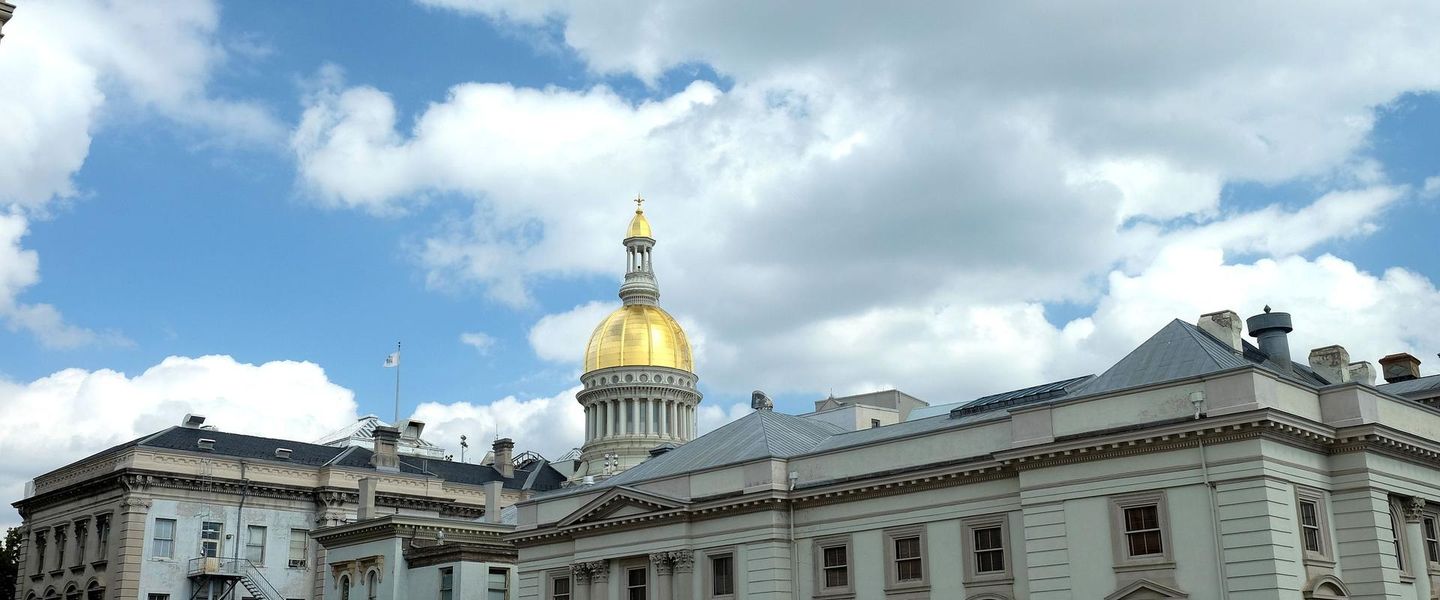


Trenton, New Jersey, pairs Revolutionary history, the State House, museums, riverfront parks and distinctive local culture with accessible capital-city sightseeing.
Capital, River and Revolution
Trenton stands on the Delaware River in central New Jersey, a compact state capital whose identity is closely tied to American history, civic life and industry. The city is best known for the Battles of Trenton, fought during the American Revolutionary War, but its story reaches from Lenape homeland and colonial settlement to the factories, foundries and pottery works that helped shape the industrial Delaware Valley. Today, government buildings, historic houses, museums and neighbourhood parks sit alongside a changing urban landscape.Read more about Trenton
Historic Streets and Civic Institutions
A Working City with Cultural Depth
When is the best time to visit Trenton?
Best: May–June, September · 22–26°C| Month | High (°C) | Rainfall (mm) |
|---|---|---|
| January | 5 | 79 |
| February | 6 | 70 |
| March | 11 | 92 |
| April | 17 | 97 |
| May (best) | 22 | 102 |
| June (best) | 26 | 97 |
| July | 29 | 111 |
| August | 28 | 108 |
| September (best) | 25 | 95 |
| October | 18 | 87 |
| November | 12 | 87 |
| December | 6 | 85 |
Getting to and around Trenton
How to get there
Transportation
Best attractions in Trenton
Trenton’s principal attractions tell the story of a state capital and Revolutionary-era river town. The New Jersey State Museum combines archaeology, natural history, fine art and planetarium programming, while the Old Barracks Museum interprets the colonial military presence and the battles fought during the Revolution. The New Jersey State House offers insight into the workings of one of the oldest state legislatures in the United States, with access arrangements varying by day. At the William Trent House Museum, colonial architecture and domestic history provide a quieter counterpoint to the civic centre. The Trenton Battle Monument commemorates Washington’s 1776 victory, and the Trenton City Museum at Ellarslie Mansion presents local history and exhibitions in Cadwalader Park. Outdoor visitors can add the park’s mature landscape and the Delaware waterfront, while Mill Hill’s historic streets offer a walk through preserved nineteenth-century urban fabric.
-
Tourist attraction
Grounds For Sculpture
Discover the enchanting Grounds For Sculpture, where contemporary art seamlessly intertwines with nature in a picturesque park setting in New Jersey.
13 min drive · 4.3 km from city centre
-
Farmers' market
Trenton Farmers Market
Explore the Trenton Farmers Market for fresh produce, artisanal treats, and a taste of New Jersey's local flavors all year round.
8 min drive · 2.8 km from city centre
-
Tourist attraction
New Jersey State Museum
Discover the rich history and diverse culture of New Jersey at the New Jersey State Museum, a must-visit destination for every traveler.
9 min walk · 0.7 km from city centre
-
Tourist attraction
Cadwalader Park
Explore the beauty and tranquility of Cadwalader Park in Trenton, NJ, a historic park offering lush landscapes and recreational activities for all.
9 min drive · 2.9 km from city centre


Best landmarks in Trenton
Trenton’s landmarks embody its role in the American Revolution, New Jersey government and the industrial Delaware Valley. The New Jersey State House, whose complex has developed through successive expansions and alterations, remains the city’s principal civic building and the seat of state government. The Old Barracks is one of the few surviving colonial military barracks in the United States and recalls the strategic importance of Trenton during the Revolution. On the battlefield site, the Trenton Battle Monument rises as a commemorative column marking the American victory of 26 December 1776. The William Trent House represents the city’s early colonial elite, while the Trenton City Museum occupies Ellarslie Mansion, a nineteenth-century building in Cadwalader Park. The ‘Trenton Makes, The World Takes’ bridge sign is a modern emblem of the city’s manufacturing heritage rather than an ancient monument, but it remains closely tied to local identity.
-
Museum
New Jersey State Museum
Discover New Jersey's heritage at the New Jersey State Museum, where history, art, and science converge in an engaging experience for all ages.
9 min walk · 0.7 km from city centre
-
Park
Cadwalader Park
Discover the natural beauty and historical charm of Cadwalader Park in Trenton, a serene escape for tourists and locals alike.
9 min drive · 2.9 km from city centre
-
Park
John A. Roebling Memorial Park
Experience the natural beauty and rich history of John A. Roebling Memorial Park in Hamilton Township, New Jersey - a perfect escape for nature lovers.
14 min drive · 4.6 km from city centre
-
History museum
Old Barracks Museum
Discover the Old Barracks Museum in Trenton, where history comes alive through engaging exhibits and immersive experiences of the Revolutionary War.
5 min walk · 0.4 km from city centre


Explore Trenton on the map
Plan your Trenton trip on one map. See where the top attractions, landmarks, restaurants, bars and hotels are, find what's near where you're staying, and book hotels and experiences in a few clicks.
Best hotels in Trenton
Best restaurants in Trenton
Trenton’s food culture reflects its history as an industrial and immigrant city. Chambersburg is associated with Italian American restaurants, bakeries and family-run dining traditions, while the wider city offers Latin American cooking, soul food, American comfort dishes and casual cafés shaped by its diverse communities. Tomato pie, a distinctive Trenton speciality in which cheese is often placed beneath the tomato topping, is the city’s best-known culinary marker and is served by long-established pizzerias as well as other local businesses. Italian pastries, sandwiches and traditional red-sauce cooking remain part of the Chambersburg identity, while newer eateries bring Caribbean, Mexican and other influences to the local scene. Dining is generally dispersed rather than concentrated in a single restaurant quarter, so neighbourhood planning matters when combining meals with sightseeing.
-
Restaurant
NJWeedman's Joint Restaurant
Discover NJWeedman's Joint: A unique restaurant blending delicious food with cannabis culture in Trenton's vibrant atmosphere.
6 min walk · 0.5 km from city centre
-
Costa Rican
Pura Vida
Experience authentic Costa Rican cuisine at Pura Vida in Trenton, NJ—where every dish tells a story of flavor and tradition.
7 min drive · 2.2 km from city centre
-
Dominican
Sabor Latino
Experience the rich flavors of Dominican cuisine at Sabor Latino in Trenton - where every meal tells a story.
7 min drive · 2.4 km from city centre
-
Jamaican
Bamboo Grill Jamaican Restaurant
Experience authentic Jamaican flavors at Bamboo Grill Restaurant in Trenton - where every bite tells a story.
7 min drive · 2.4 km from city centre


Best bars in Trenton
Trenton’s evening scene is modest and neighbourhood-based rather than dominated by large clubs. Restaurants and taverns around Chambersburg provide some of the city’s most established social settings, while bars and casual venues near the central districts attract local patrons rather than a large visitor nightlife crowd. Live music, community performances and cultural programming may take place at venues such as the Patriot’s War Memorial and other civic or arts spaces, with schedules varying through the year. The Trenton Battle Monument and riverfront are better appreciated as daytime landmarks than as late-night promenades, and visitors should plan transport between districts instead of assuming that attractions remain active after dark. Evenings often centre on dining, local events, theatre or music rather than a continuous bar-and-club circuit.
-
Restaurant
Trenton Social
Discover Trenton Social - where delicious American cuisine meets a vibrant cocktail bar in South Trenton, New Jersey.
12 min walk · 1.0 km from city centre
-
Grill
Joe's Mill Hill Saloon
Discover the vibrant flavors and sounds of Trenton at Joe's Mill Hill Saloon, a lively grill and live music venue in the heart of Mill Hill.
7 min walk · 0.6 km from city centre
-
Irish pub
Tir na nOg - Trenton's Reel Irish Pub
Discover the heart of Ireland in Trenton at Tir na nOg - where authentic cuisine meets vibrant culture.
9 min drive · 3.0 km from city centre
-
Bar
Sportsmen's Pub
Discover the lively atmosphere of Sportsmen's Pub in Trenton, NJ - your go-to spot for great food, drinks, and local camaraderie.
9 min drive · 2.9 km from city centre


Best nightclubs in Trenton
Trenton’s evening scene is modest and neighbourhood-based rather than dominated by large clubs. Restaurants and taverns around Chambersburg provide some of the city’s most established social settings, while bars and casual venues near the central districts attract local patrons rather than a large visitor nightlife crowd. Live music, community performances and cultural programming may take place at venues such as the Patriot’s War Memorial and other civic or arts spaces, with schedules varying through the year. The Trenton Battle Monument and riverfront are better appreciated as daytime landmarks than as late-night promenades, and visitors should plan transport between districts instead of assuming that attractions remain active after dark. Evenings often centre on dining, local events, theatre or music rather than a continuous bar-and-club circuit.
-
Lounge
Infinity Lounge
Infinity Lounge in Trenton, NJ: Where Flavor Meets Fun in a Lively Nightlife Setting.
19 min walk · 1.5 km from city centre
-
Central American
Tikal Restaurant & Lounge
Experience the vibrant flavors of Central America at Tikal Restaurant & Lounge, where delicious dishes meet a lively atmosphere in Trenton, NJ.
7 min drive · 2.4 km from city centre
-
Bar
Candle Light Events
Discover Trenton's vibrant jazz scene at Candle Light Events, where live music and a cozy atmosphere create unforgettable nights.
7 min walk · 0.6 km from city centre
-
Lounge
El Catador Lounge Restaurant
Discover Trenton's vibrant nightlife at El Catador Lounge, where exquisite cocktails, delicious cuisine, and a lively atmosphere await.
8 min drive · 2.8 km from city centre


Best shops in Trenton
Shopping in Trenton is shaped more by neighbourhood businesses, food specialists and practical retail than by a large central luxury district. Chambersburg is the most recognisable area for Italian American food traditions, with bakeries, delis and restaurants offering regional products and prepared foods that reflect the community’s history. Independent shops and small businesses elsewhere in the city serve local residents, while nearby suburban commercial areas provide broader retail choice outside Trenton proper. Visitors interested in local identity may find food products, books and cultural material more meaningful souvenirs than generic merchandise, particularly items connected with Revolutionary history or New Jersey. Downtown shopping can be combined with visits to civic and museum sites, but retail opening patterns vary, and Trenton is not primarily a destination for department-store or large-scale market browsing.
-
Grocery store
Roebling Market
Explore the vibrant flavors of Trenton at Roebling Market, a community grocery store showcasing local produce and culinary delights.
18 min walk · 1.4 km from city centre
-
Shopping mall
Independence Plaza
Discover a vibrant shopping experience at Independence Plaza in Trenton, NJ, with a diverse selection of stores and delightful dining options.
15 min drive · 4.9 km from city centre
-
Shopping mall
Capital Center
Discover the Capital Center in Trenton, NJ: Your go-to shopping destination with diverse retail options and delightful dining experiences.
1 min walk · 0.1 km from city centre
-
Jeweler
Dioro Jewelry
Explore the exquisite craftsmanship and stunning designs at Dioro Jewelry in Trenton, NJ – a must-visit for jewelry enthusiasts.
1 min walk · 0.1 km from city centre


Get your free copy of our complete guide to Trenton, delivered straight to you.
Everything on this page, from attractions and restaurants to essentials and local phrases, in one PDF you can read offline, print or share.
Already have an account? Sign in
Your Trenton guide is ready.
We'll send it to · Not you? Sign out

Getting your guide ready…
We are putting together a fresh copy of the Trenton guide. This can take up to a minute.
This can take a few moments. If your browser asks, choose Allow so the download can start. You'll find the guide in your Downloads folder.
Nothing happened? Download it again
Sorry, the guide is taking longer than usual. Please try again in a minute, or get it by email instead.
Trenton essentials
Currency and Payment
Safety
Emergency Situations
Do's and Don'ts
Local Tips
From Eve
Local phrases worth knowing
You don't need to get them perfect. A few words go a long way, and locals appreciate the effort.
Basics
| English | Local | Say it |
|---|---|---|
| Hello | Hey | [hey] |
| Goodbye | Later | [lay-tuh] |
| Yes | Yeah | [yeh] |
| No | Nah | [nuh] |
| Please/You're welcome | Please/No problem | [pleez/no prob-lum] |
| Thank you | Thanks | [thanks] |
| Excuse me/Sorry | Sorry | [saw-ree] |
| How are you? | How you doin'? | [how yoo doin'] |
| Fine. And you? | Good. You? | [good. yoo?] |
| Do you speak English? | You speak English? | [yoo speak ing-glish?] |
| I don't understand | I don't get it | [eye don't get it] |
Eating & Drinking
| English | Local | Say it |
|---|---|---|
| I'd like to see the menu, please | Can I see the menu? | [can eye see the menu?] |
| I don't eat meat | I don't eat meat | [eye don't eat meet] |
| Cheers! | Cheers! | [cheers] |
| I would like to pay, please | I'll pay now, please | [eye'll pay now, please] |
Emergencies
| English | Local | Say it |
|---|---|---|
| Help! | Help! | [help] |
| Go away! | Get lost! | [get lost] |
| Call the Police! | Call the cops! | [call the cops] |
| Call a doctor! | Call a doc! | [call a doc] |
| I'm lost | I'm lost | [eye'm lost] |
| I'm ill | I'm sick | [eye'm sick] |
Shopping
| English | Local | Say it |
|---|---|---|
| I'd like to buy... | I wanna buy... | [eye wanna buy] |
| I'm just looking | Just looking | [just look-ing] |
| How much is it? | How much? | [how much?] |
| That's too expensive | That's too much | [that's too much] |
| Can you lower the price? | Can you do better? | [can yoo do bet-tuh] |
Time & Numbers
| English | Local | Say it |
|---|---|---|
| What time is it? | What time is it? | [what time is it] |
| It's one o'clock | It's one | [it's one] |
| Half past (10) | Half past ten | [half past ten] |
| Morning | Morning | [morning] |
| Afternoon | Afternoon | [after-noon] |
| Evening | Evening | [eve-ning] |
| Yesterday | Yesterday | [yes-tuh-day] |
| Today | Today | [to-day] |
| Tomorrow | Tomorrow | [to-mor-row] |
| 1 | One | [wun] |
| 2 | Two | [too] |
| 3 | Three | [three] |
| 4 | Four | [four] |
| 5 | Five | [five] |
| 6 | Six | [six] |
| 7 | Seven | [seven] |
| 8 | Eight | [ate] |
| 9 | Nine | [nine] |
| 10 | Ten | [ten] |
Transport & Directions
| English | Local | Say it |
|---|---|---|
| Where's a/the...? | Where's the...? | [where's the] |
| What's the address? | What's the address? | [what's the address] |
| Can you show me (on the map)? | Show me (on the map) | [show me on the map] |
| When's the next (bus)? | When's the next (bus)? | [when's the next bus] |
| A ticket (to ....) | A ticket (to ....) | [a ticket to] |
History of Trenton
Lenape Homeland and River Settlement
Before European settlement, the Delaware Valley around present-day Trenton was inhabited by Lenape communities whose lives were shaped by the river, forests and fertile floodplain. Dutch, Swedish and English colonial interests later altered the region through land transactions, farming and trade. The Delaware was an important route for movement and commerce, while the settlement that developed at the falls became known as the Falls of the Delaware. The location offered water power and access between Philadelphia and northern New Jersey, foundations that would later support both commercial growth and industrial expansion.
William Trent and Colonial Trenton
Merchant William Trent acquired a substantial property beside the Delaware in the early eighteenth century and built a country house there around 1719. The surrounding settlement gradually took the name Trenton, formalised in the 1720s. Its position on the river and on routes linking Philadelphia with New York encouraged trade, milling and craft production. Colonial Trenton remained a modest river town, but the commercial networks established during this period helped determine its later importance. The surviving William Trent House offers a tangible connection with the city’s colonial origins and the wealth generated by regional commerce.
The Revolutionary Battles of Trenton
Trenton became nationally significant during the American Revolutionary War. On 26 December 1776, George Washington’s Continental Army crossed the Delaware and defeated Hessian troops in the Battle of Trenton, a victory that renewed American morale after a series of defeats. A second engagement took place in Trenton on 2 January 1777, followed by the Battle of Princeton the next day. The Old Barracks, which had housed British troops before the Revolution, survives as a museum and helps explain the military importance of the town. The Trenton Battle Monument marks the American victory’s central battlefield area.
Capital and Industrial Expansion
Trenton became New Jersey’s capital in 1790, although the state government later moved temporarily before returning permanently in the nineteenth century. The city’s location on the Delaware and its access to canals and railways encouraged manufacturing. Iron, steel, wire, rubber and pottery became especially important, and Trenton developed a reputation as an industrial centre. The slogan ‘Trenton Makes, The World Takes’, associated with the city’s manufacturing identity, expressed the reach of its factories. The New Jersey State House, expanded and remodelled over time, reflects Trenton’s growing civic importance during this period.
Migration and Urban Change
Industrial employment attracted migrants from Europe and later from the American South, the Caribbean and Latin America. Italian American communities became particularly prominent in the Chambersburg area, while African American residents established churches, businesses and civic organisations that remain important to the city’s cultural history. Manufacturing supported population growth and neighbourhood development through the early twentieth century, but deindustrialisation, suburbanisation and shifts in regional employment weakened the traditional economic base after the Second World War. Trenton’s present social character is therefore rooted in several successive waves of migration and in the long transformation from factory city to administrative capital.
A Modern State Capital
In the contemporary era, Trenton has continued to serve as New Jersey’s political centre while confronting the economic and urban pressures common to older industrial cities. Government offices, courts, museums and heritage organisations remain major institutions, and preservation work has protected landmarks ranging from the Old Barracks to the William Trent House. The city’s history is presented through the New Jersey State Museum, the Trenton City Museum and battlefield commemorations, while neighbourhood revitalisation and cultural initiatives seek to connect historic identity with present-day community life.
Trenton in Photos
Browse through our photo collection highlighting the charm and character of the destination.
Cities near Trenton
The closest cities to Trenton, if you have time for more than one stop.
-

-

-
-

-


Swipe for more cities
Explore more
Explore more of New Jersey
Discover New Jersey: From vibrant cities and historic towns to scenic beaches and lush parks, the Garden State offers a rich blend of culture, nature, and adventure.
Explore New Jersey