

Free Philadelphia Travel Guide & Mobile App
Plan your Philadelphia trip with Evendo. Get free guides to top attractions, restaurants, hotels, and bars. Web access or download the mobile app.


Philadelphia combines Revolutionary history, world-class museums, cheesesteaks and lively neighbourhoods with riverfront trails and celebrated American landmarks.
History and City Character
Philadelphia occupies a broad stretch between the Delaware and Schuylkill rivers in southeastern Pennsylvania, where colonial streets, grand civic buildings and lively neighbourhoods reveal several centuries of American history. Founded by William Penn in 1682 as a planned city grounded in religious tolerance, it became a major port and the political centre of the American colonies. Independence Hall, the Liberty Bell and the surrounding Old City district remain the clearest expressions of that past, but Philadelphia's history extends well beyond the Revolution.Read more about Philadelphia
Museums, Neighbourhoods and Public Life
Rivers, Parks and Everyday Philadelphia
When is the best time to visit Philadelphia?
Best: May, September–October · 20–26°C| Month | High (°C) | Rainfall (mm) |
|---|---|---|
| January | 5 | 79 |
| February | 7 | 70 |
| March | 12 | 88 |
| April | 18 | 82 |
| May (best) | 24 | 91 |
| June | 29 | 94 |
| July | 31 | 106 |
| August | 31 | 103 |
| September (best) | 26 | 92 |
| October (best) | 20 | 85 |
| November | 14 | 82 |
| December | 8 | 86 |
Getting to and around Philadelphia
How to get there
Transportation
Best attractions in Philadelphia
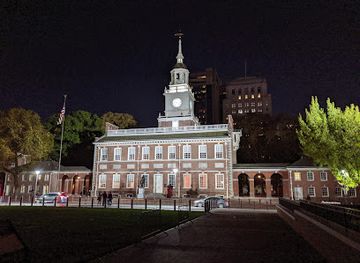
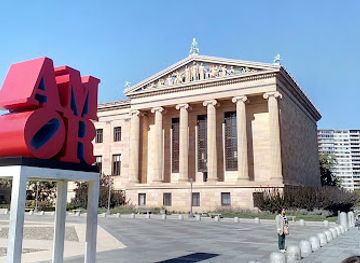
Philadelphia's principal attractions trace both the making of the United States and the city's continuing cultural life. Independence National Historical Park gathers Independence Hall, the Liberty Bell Center and the National Constitution Center around the colonial core, while Elfreth's Alley preserves a narrow residential street lined with eighteenth-century houses. The Philadelphia Museum of Art anchors the Benjamin Franklin Parkway, within walking distance of the Barnes Foundation, Rodin Museum and Franklin Institute. Eastern State Penitentiary offers a compelling look at the history of incarceration in a vast former prison complex, and the Museum of the American Revolution places the independence struggle in wider social context. At Reading Terminal Market, food stalls and long-established vendors create a lively indoor meeting place. Along the Delaware River, Penn's Landing and the waterfront provide open space, seasonal programming and changing views across the water, while the Schuylkill River Trail brings walking and cycling into the city's landscape.
-
Tourist attraction
Independence National Historical Park
Explore the heart of American history at Independence National Historical Park, home to the Liberty Bell and Independence Hall, in Philadelphia.
17 min walk · 1.4 km from city centre
-
Tourist attraction
Independence National Historical Park
Explore Independence National Historical Park in Philadelphia, where the foundations of American democracy were laid, featuring the Liberty Bell and historic Independence Hall.
17 min walk · 1.4 km from city centre
-
 Tourist attraction
Philadelphia Museum of Art
Discover the Philadelphia Museum of Art, where history, culture, and world-class art converge to create an unforgettable experience for every visitor.
6 min drive · 2.0 km from city centre
-
Tourist attraction
Philadelphia Museum of Art
Explore the Philadelphia Museum of Art, where iconic collections and stunning architecture create an unforgettable cultural experience.
6 min drive · 2.0 km from city centre

Best landmarks in Philadelphia
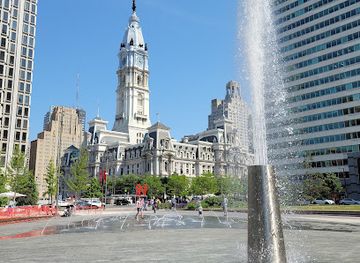
Philadelphia's most consequential landmarks cluster around the places where the American republic was debated and imagined. Independence Hall, with its Georgian design and Assembly Room, is associated with both the Declaration of Independence and the United States Constitution, while the Liberty Bell has become a widely recognised symbol of independence and abolition. The neoclassical United States Mint, Christ Church and Betsy Ross House add layers to the colonial streetscape, though their historical associations should be understood within the broader complexity of the period. Philadelphia City Hall dominates the centre with its monumental Second Empire architecture and statue of William Penn above the tower. The Philadelphia Museum of Art's broad steps and Beaux-Arts setting have become a familiar civic image, while the Benjamin Franklin Bridge links the city visually and physically to New Jersey. The ornate interiors of the Pennsylvania Academy of the Fine Arts and the residential fabric of Society Hill reveal the city's later architectural and cultural development.
-
Market
Reading Terminal Market
Experience the flavors of Philadelphia at Reading Terminal Market, a vibrant hub for food lovers with diverse cuisines and fresh local produce.
7 min walk · 0.6 km from city centre
-
Historical place
Independence National Historical Park
Discover the birthplace of American democracy at Independence National Historical Park, where history comes alive with iconic landmarks and engaging stories.
17 min walk · 1.4 km from city centre
-
Historical landmark
Liberty Bell
Discover the Liberty Bell, an enduring symbol of freedom and justice located in the heart of Philadelphia, inspiring visitors with its rich historical significance.
16 min walk · 1.3 km from city centre
-
Park
JFK Plaza (Love Park)
Discover JFK Plaza, or Love Park, a vibrant urban retreat in Philadelphia, featuring the iconic LOVE sculpture and lush green spaces perfect for relaxation.
2 min walk · 0.2 km from city centre


Explore Philadelphia on the map
Plan your Philadelphia trip on one map. See where the top attractions, landmarks, restaurants, bars and hotels are, find what's near where you're staying, and book hotels and experiences in a few clicks.
Neighbourhoods in Philadelphia
-

-

-

-

-


Swipe for more neighbourhoods
Best hotels in Philadelphia
Best restaurants in Philadelphia
Philadelphia's food culture is shaped by its port history, immigrant neighbourhoods and long tradition of practical, generous cooking. The cheesesteak is the best-known local speciality, but roast pork sandwiches, hoagies, soft pretzels and water ice provide a broader introduction to everyday eating. The Italian Market on South Ninth Street reflects generations of Italian influence while also encompassing Mexican, Vietnamese and other cuisines. Reading Terminal Market brings Pennsylvania Dutch dishes such as scrapple, shoofly pie and soft pretzels together with produce, seafood and prepared meals from across the city. Chinatown, East Passyunk, Fishtown, West Philadelphia and the Northeast offer distinctive restaurant scenes, from family-run establishments to contemporary kitchens. Philadelphia's historic Black communities have also shaped its dining identity through soul food, barbecue and West African influences, while craft bakeries, coffee shops and modern tasting menus add newer layers without displacing the city's famously informal food traditions.
-
Restaurant
Parc
Experience exquisite modern French cuisine at Parc in Rittenhouse Square - where every meal feels like a celebration.
8 min walk · 0.6 km from city centre
-
Restaurant
El Vez
Discover vibrant flavors at El Vez in Philadelphia – where Mexican cuisine meets eclectic dining in a family-friendly atmosphere.
5 min walk · 0.4 km from city centre
-
Restaurant
The Dandelion
Discover The Dandelion: A quintessential British pub offering authentic cuisine and an extensive drink selection in Philadelphia's Rittenhouse Square.
6 min walk · 0.5 km from city centre
-
American
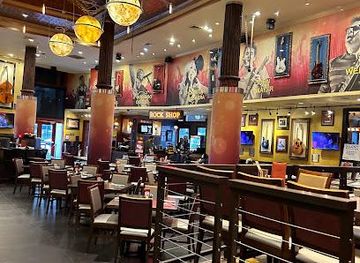
Hard Rock Cafe Philadelphia
Rock out with Legendary Burgers and music icons at Philadelphia's high-energy Hard Rock Cafe, steps from Independence Hall—a must for tourists craving American classics amid electrifying vibes.
6 min walk · 0.5 km from city centre


Best bars in Philadelphia
Philadelphia's nightlife is varied rather than concentrated in a single entertainment district. Old City has long been associated with bars, live music and late-evening socialising, while Rittenhouse Square, Midtown Village, East Passyunk, Northern Liberties and Fishtown offer cocktail bars, breweries, wine bars and small venues. South Street retains a countercultural edge, and neighbourhood taverns remain part of the city's everyday social fabric. Live music ranges from intimate singer-songwriter rooms and jazz spaces to larger venues such as Union Transfer and the Fillmore Philadelphia, while the Kimmel Cultural Campus and Academy of Music provide theatre, dance and classical performances. Evening events at museums, cinemas and cultural institutions broaden the choices beyond drinking. Philadelphia can be energetic on weekends, but its nightlife also includes relaxed bars, neighbourhood restaurants and a substantial programme of concerts and performances.
-
Irish pub
McGillin's Olde Ale House
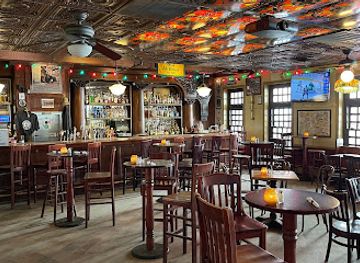
Experience the charm of Philadelphia's oldest Irish pub, McGillin's Olde Ale House, where history meets vibrant culture in a welcoming atmosphere.
4 min walk · 0.3 km from city centre
-
Bar
Time
Experience the vibrant nightlife of Philadelphia at Time, where delicious cuisine meets captivating jazz performances in a cozy atmosphere.
5 min walk · 0.4 km from city centre
-
Bar
The Twisted Tail
Discover The Twisted Tail, a vibrant bar and grill in Philadelphia, offering American cuisine, craft beers, and live music in a unique atmosphere.
6 min drive · 2.1 km from city centre
-
Bar
Standard Tap
Discover the vibrant atmosphere and culinary delights of Standard Tap, a top-rated bar and restaurant in Philadelphia's Northern Liberties.
7 min drive · 2.5 km from city centre


Best nightclubs in Philadelphia
Philadelphia's nightlife is varied rather than concentrated in a single entertainment district. Old City has long been associated with bars, live music and late-evening socialising, while Rittenhouse Square, Midtown Village, East Passyunk, Northern Liberties and Fishtown offer cocktail bars, breweries, wine bars and small venues. South Street retains a countercultural edge, and neighbourhood taverns remain part of the city's everyday social fabric. Live music ranges from intimate singer-songwriter rooms and jazz spaces to larger venues such as Union Transfer and the Fillmore Philadelphia, while the Kimmel Cultural Campus and Academy of Music provide theatre, dance and classical performances. Evening events at museums, cinemas and cultural institutions broaden the choices beyond drinking. Philadelphia can be energetic on weekends, but its nightlife also includes relaxed bars, neighbourhood restaurants and a substantial programme of concerts and performances.
-
Night club
Howl at the Moon Philadelphia
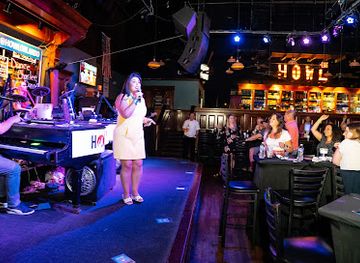
Discover the vibrant nightlife at Howl at the Moon Philadelphia, featuring live music, signature cocktails, and an unforgettable party atmosphere.
7 min walk · 0.6 km from city centre
-
Night club
Concourse
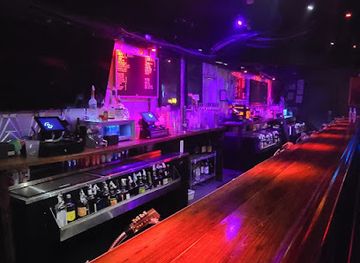
Experience the electric vibe of Concourse, Philadelphia's premier night club, where unforgettable nights and great music await.
3 min walk · 0.2 km from city centre
-
Night club
Raven Lounge
Experience the vibrant nightlife at Raven Lounge, a unique blend of club and lounge in Philadelphia's Rittenhouse Square, perfect for dancing and socializing.
5 min walk · 0.4 km from city centre
-
Night club
The 700
Experience the best of Philadelphia's nightlife at The 700, where comedy, karaoke, and dancing come together for an unforgettable evening.
7 min drive · 2.3 km from city centre
Best shops in Philadelphia
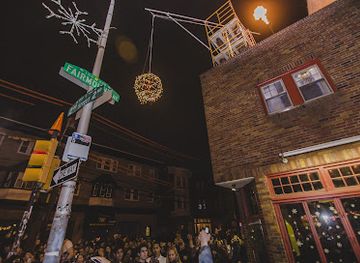
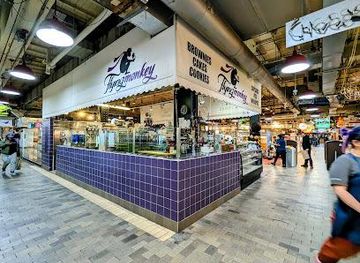
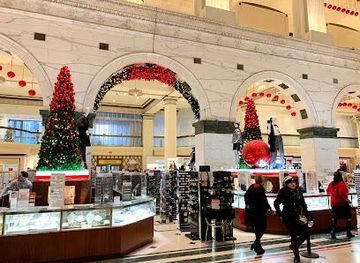
Philadelphia's shopping districts reflect the city's mixture of historic streets, immigrant commerce and independent retail. Rittenhouse Square and Walnut Street contain department stores, fashion businesses and higher-end shops, while Chestnut Street and nearby Centre City provide a broad range of mainstream retail. Old City's cobbled streets are known for galleries, design shops, jewellery and independent boutiques in converted historic buildings. South Street has a more alternative character, with vintage clothing, specialist stores and casual browsing, while East Passyunk combines local boutiques with cafés and restaurants. The Italian Market remains a place to buy cheese, cured meats, produce, bread and other food products, and Reading Terminal Market offers edible gifts and regional specialities as well as meals. Visitors interested in crafts and design will find studios and small retailers in neighbourhoods such as Fishtown and Northern Liberties, though the independent scene changes over time and is best explored street by street.
-
Market
Reading Terminal Market
Explore the vibrant Reading Terminal Market in Philadelphia for an unforgettable culinary journey through local flavors and international delicacies.
7 min walk · 0.6 km from city centre
-
Department store
Macy's
Explore Macy's in Philadelphia: A historic department store offering a unique blend of shopping, culture, and architectural beauty.
4 min walk · 0.3 km from city centre
-
Shopping mall
The Shops at Liberty Place
Experience the vibrant shopping scene at The Shops at Liberty Place in Philadelphia, featuring diverse stores and delightful dining options.
3 min walk · 0.2 km from city centre
-
Shopping mall
Fashion District Philadelphia
Discover the ultimate shopping experience at Fashion District Philadelphia, where fashion meets fun in the heart of the city.
10 min walk · 0.8 km from city centre

Get your free copy of our complete guide to Philadelphia, delivered straight to you.
Everything on this page, from attractions and restaurants to essentials and local phrases, in one PDF you can read offline, print or share.
Already have an account? Sign in
Your Philadelphia guide is ready.
We'll send it to · Not you? Sign out

Getting your guide ready…
We are putting together a fresh copy of the Philadelphia guide. This can take up to a minute.
This can take a few moments. If your browser asks, choose Allow so the download can start. You'll find the guide in your Downloads folder.
Nothing happened? Download it again
Sorry, the guide is taking longer than usual. Please try again in a minute, or get it by email instead.
Philadelphia essentials
Currency and Payment
Safety
Emergency Situations
Do's and Don'ts
Local Tips
From Eve
Local phrases worth knowing
You don't need to get them perfect. A few words go a long way, and locals appreciate the effort.
Basics
| English | Local | Say it |
|---|---|---|
| Hello | Yo | [yo] |
| Goodbye | Later | [lay-ter] |
| Yes | Yea | [yay] |
| No | Nah | [na] |
| Please/You're welcome | Please/No problem | [pleez/ no prob-lem] |
| Thank you | Thanks | [thanks] |
| Excuse me/Sorry | Scuse me/My bad | [skews me/ my bad] |
| How are you? | How you doin'? | [how yoo doin] |
| Fine. And you? | I'm good. You? | [I'm good. yoo] |
| Do you speak English? | You speak English? | [yoo speak eng-lish] |
| I don't understand | I don't get it | [I don't get it] |
Eating & Drinking
| English | Local | Say it |
|---|---|---|
| I'd like to see the menu, please | Let me see the menu | [let me see the menu] |
| I don't eat meat | No meat for me | [no meat for me] |
| Cheers! | Cheers! | [cheers] |
| I would like to pay, please | Can I pay now? | [can I pay now] |
Emergencies
| English | Local | Say it |
|---|---|---|
| Help! | Help! | [help] |
| Go away! | Get lost! | [get lost] |
| Call the Police! | Call the cops! | [call the cops] |
| Call a doctor! | Get a doctor! | [get a doctor] |
| I'm lost | I'm lost | [I'm lost] |
| I'm ill | I'm sick | [I'm sick] |
Shopping
| English | Local | Say it |
|---|---|---|
| I'd like to buy... | I wanna get... | [I wanna get] |
| I'm just looking | Just browsing | [just browse-ing] |
| How much is it? | How much? | [how much] |
| That's too expensive | That's pricey | [that's pricy] |
| Can you lower the price? | Can you give a discount? | [can you give a dis-count] |
Time & Numbers
| English | Local | Say it |
|---|---|---|
| What time is it? | What time is it? | [what time is it] |
| It's one o'clock | It's one | [It's one] |
| Half past (10) | Half past ten | [half past ten] |
| Morning | Morning | [mor-ning] |
| Afternoon | Afternoon | [after-noon] |
| Evening | Evening | [eve-ning] |
| Yesterday | Yesterday | [yes-ter-day] |
| Today | Today | [to-day] |
| Tomorrow | Tomorrow | [to-mor-row] |
| 1 | One | [wun] |
| 2 | Two | [too] |
| 3 | Three | [three] |
| 4 | Four | [four] |
| 5 | Five | [five] |
| 6 | Six | [six] |
| 7 | Seven | [seven] |
| 8 | Eight | [ate] |
| 9 | Nine | [nine] |
| 10 | Ten | [ten] |
Transport & Directions
| English | Local | Say it |
|---|---|---|
| Where's a/the...? | Where's the...? | [where's the] |
| What's the address? | What's the address? | [what's the address] |
| Can you show me (on the map)? | Show me (on the map) | [show me on the map] |
| When's the next (bus)? | When's the next (bus)? | [when's the next bus] |
| A ticket (to ....) | Ticket (to ...) | [ticket to] |
History of Philadelphia
Lenape Homeland and Colonial Foundation
Before European colonisation, the Philadelphia region was inhabited by Lenape communities whose homeland extended across the Delaware Valley. In 1681, King Charles II granted William Penn a large proprietary colony, and Penn established Philadelphia in 1682 as its principal settlement. His plan arranged streets in a grid between the Delaware and Schuylkill rivers, with public squares intended to provide air and green space. Penn promoted religious toleration and attracted Quakers, Germans, Scots-Irish, Welsh and other settlers. The city's regular street plan and its position on navigable rivers helped Philadelphia develop rapidly as a centre of commerce, printing and government, although colonial expansion dispossessed Indigenous peoples and depended on unequal systems of labour and land ownership.
A Colonial Port and Intellectual Centre
During the eighteenth century, Philadelphia became one of British North America's largest and most important cities. Its port connected the Delaware Valley with Atlantic trade, while merchants, craftsmen and farmers supplied a growing urban economy. Institutions founded in this period shaped the city's intellectual life: the Library Company of Philadelphia was established by Benjamin Franklin and associates in 1731, and the College of Philadelphia, precursor of the University of Pennsylvania, followed in 1740. Franklin also helped establish civic institutions including the Union Fire Company and the American Philosophical Society. Christ Church, the Pennsylvania State House and other surviving buildings reflect the city's colonial prosperity, while the population's religious and ethnic diversity distinguished Philadelphia from many contemporary settlements.
Revolution and the Founding Republic
Philadelphia became the central political arena of the American Revolution. The Second Continental Congress met in the Pennsylvania State House, now Independence Hall, where the Declaration of Independence was adopted on 4 July 1776 and the United States Constitution was debated and signed in 1787. The city served as the revolutionary capital for much of the conflict, although British forces occupied it from September 1777 until June 1778. The Liberty Bell, cast for the State House, later acquired its powerful association with American independence and abolitionist movements. Philadelphia was the temporary capital of the United States from 1790 to 1800, when the federal government moved to Washington, DC.
Abolition, Reform and Civil Society
Philadelphia developed a strong tradition of reform alongside the contradictions of a slaveholding nation. The city's Quaker community supported early antislavery campaigns, and the Pennsylvania Abolition Society was founded in 1775, making it one of the earliest such organisations in the United States. Philadelphia also became a significant destination on the Underground Railroad, with figures including William Still documenting the efforts of freedom seekers and their allies. The African American community built churches, schools, businesses and civic organisations despite discrimination and violence. Reform movements in education, prison conditions, health and women's rights further shaped the city's public culture, leaving a legacy visible in historic churches, meeting houses and institutions.
Industrial Expansion and Immigration
The nineteenth century brought canals, railways and industrial growth, transforming Philadelphia from a port city into a major manufacturing centre. Shipbuilding, textiles, metalworking, locomotive production and food processing expanded along the Delaware and Schuylkill waterfronts and in districts such as Kensington and Northern Liberties. Immigration from Ireland, Germany, Italy and Eastern Europe altered the city's language, religion, food and streetscape, while newly arrived African Americans joined the city during the Great Migration in the twentieth century. The vast Philadelphia City Hall, completed over several decades in the late nineteenth and early twentieth centuries, symbolised municipal ambition. Expanding transit and annexation also carried the city far beyond its original colonial grid.
Modern Urban Change
Philadelphia entered the twentieth century as a major industrial and cultural centre, but deindustrialisation after the Second World War brought factory closures, population loss and economic strain. The city also experienced intense racial segregation, housing inequality and civil unrest, particularly during the 1960s. Urban renewal reshaped parts of the central area, sometimes at the cost of established communities, while preservation efforts protected historic districts such as Society Hill and areas around Independence National Historical Park. Universities, hospitals, cultural institutions and service industries became increasingly important to the economy. Public art and community organisations, including the city's celebrated mural programme, contributed to neighbourhood renewal and a broader civic identity.
Philadelphia in the Present Day
Contemporary Philadelphia combines a large metropolitan economy with a strong neighbourhood-based identity. Historic preservation, higher education, healthcare, food production, arts and technology all contribute to the city's character, while long-established Black, Latino, Asian and immigrant communities continue to shape local culture. Former industrial areas have gained new housing, studios, breweries and restaurants, particularly around Northern Liberties, Fishtown and the Delaware waterfront, though development remains uneven and contested. Museums and public spaces on the Benjamin Franklin Parkway, the revitalised Schuylkill riverfront and improved trails connect different parts of the city. Philadelphia's present is therefore not separate from its colonial and industrial past: it is an ongoing negotiation between inherited buildings, social memory and urban change.
Philadelphia in Photos
Browse through our photo collection highlighting the charm and character of the destination.
Cities near Philadelphia
The closest cities to Philadelphia, if you have time for more than one stop.
-

-

-

-
-


Swipe for more cities
Explore more

Explore more of Pennsylvania
Discover Pennsylvania: A blend of rich history, breathtaking nature, and vibrant culture awaits you in the Keystone State.
Explore Pennsylvania