

Old Salem (Winston-Salem) Travel Guide - Free
Explore Old Salem in Winston-Salem with Evendo's free guide. Find the best shops, historic streets, restaurants, and gems on web or mobile.


Old Salem in Winston-Salem, North Carolina, offers Moravian history, restored homes, gardens, museums, traditional baking and walkable heritage streets.
A Planned Moravian Town
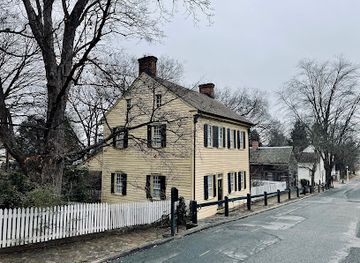
\n\nOld Salem occupies a compact historic district just south of central Winston-Salem, where tree-lined streets, restored eighteenth- and nineteenth-century buildings, gardens and churchyards preserve the character of a Moravian community founded in 1766. Rather than a static collection of façades, it is interpreted as a living history landscape: costumed interpreters, working trades, period kitchens and gardens help explain how the town functioned as a religious, commercial and craft centre.\n\nBuildings, Gardens and Belief
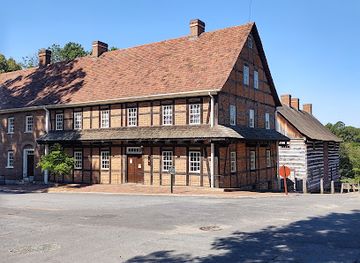
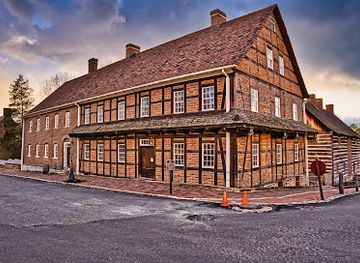
\n\nThe district's most evocative route follows Main Street past the Single Brothers' House, Salem Tavern, Winkler Bakery and the reconstructed Gemeinhaus, with quieter lanes leading towards God's Acre, the Moravian burial ground. The architecture is restrained and practical, reflecting the community's emphasis on order, shared work and worship. Home Moravian Church and St Philips Moravian Church, founded for Salem's Black congregation, also reveal the area's complex religious and social history.\n\nFood, Craft and Museum Culture
\n\nVisitors encounter Moravian baking at Winkler Bakery, early Southern furniture and decorative arts at the Museum of Early Southern Decorative Arts, and demonstrations of historic skills at selected sites. The district has a quieter evening atmosphere than downtown, with its strongest experiences concentrated during the day; nearby restaurants, breweries and cultural venues in central Winston-Salem extend the choice after hours. Old Salem is best explored slowly, allowing time for gardens, interiors, exhibitions and the changing perspectives presented by its museums.Best attractions in Old Salem
Old Salem Museums & Gardens is the district's principal attraction, combining restored buildings, gardens, museum collections and interpreters who explain Moravian domestic, religious and working life. Along Main Street, visitors can explore the Single Brothers' House, Salem Tavern, Miksch House and Winkler Bakery, where the smell of traditional baking adds a sensory dimension to the historic setting. The Museum of Early Southern Decorative Arts, or MESDA, places Salem within the wider history of Southern furniture and decorative arts. God's Acre offers a quieter experience beneath mature trees, while St Philips Moravian Church introduces the history of Salem's Black Moravian congregation. Gardens, workshops and more modest service buildings are equally valuable because they show how the settlement operated as a community rather than simply presenting a row of picturesque façades.
-
History museum
Old Salem Museums & Gardens Administrative Offices
Explore the rich history and vibrant culture of the Moravian settlement at Old Salem Museums & Gardens in Winston-Salem, NC.
1 min walk · 0.1 km from neighbourhood centre
-
Museum
Historic Town of Salem
Explore the Historic Town of Salem, a living museum that showcases the rich history and culture of early Moravian settlers in North Carolina.
1 min walk · 0.1 km from neighbourhood centre
Best landmarks in Old Salem
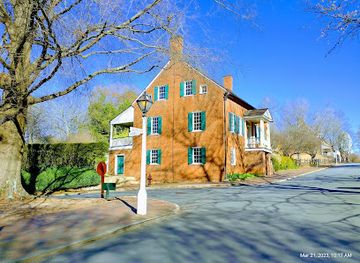
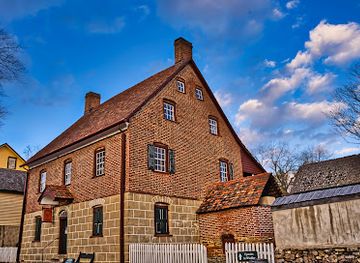
Old Salem's landmarks express the town's Moravian planning, religious life and skilled craftsmanship. Home Moravian Church remains one of the district's defining buildings, while St Philips Moravian Church carries particular importance as the historic church of Salem's Black Moravian congregation. The Single Brothers' House represents communal and craft life, and Salem Tavern recalls the town's role in receiving travellers. God's Acre, the Moravian burial ground, is a significant landscape landmark whose orderly arrangement reflects communal religious practice. Winkler Bakery is smaller in scale but symbolically important for the continuity of Salem's baking traditions. Together with the Gemeinhaus site, workshops and carefully restored domestic buildings, these places create a coherent historic townscape rather than a collection of unrelated monuments.
-
History museum
Old Salem Museums & Gardens Administrative Offices
Experience the rich Moravian history at Old Salem Museums & Gardens, a living history museum that brings the 18th century to life in Winston-Salem, NC.
1 min walk · 0.1 km from neighbourhood centre
-
Local history museum
Old Salem Museums & Gardens
Explore the rich history of the Moravian community at Old Salem Museums & Gardens, a captivating living history museum in Winston-Salem, NC.
6 min walk · 0.5 km from neighbourhood centre
-
Historical place museum
Old Salem Museum & Gardens
Discover the charm of 18th-century Moravian life at Old Salem Museum & Gardens, a historical gem in Winston-Salem, North Carolina.
5 min walk · 0.4 km from neighbourhood centre
-
Museum
Historic Town of Salem
Explore the Historic Town of Salem, where the charm of Moravian heritage meets immersive living history experiences in Winston-Salem, North Carolina.
1 min walk · 0.1 km from neighbourhood centre
Explore Old Salem on the map
A handpicked selection of must-see spots in Old Salem, mapped for you.
Best hotels in Old Salem
Best restaurants in Old Salem
Dining in Old Salem is closely connected to the historic interpretation of the district. Winkler Bakery is known for Moravian baking traditions, including spiced cookies and other items associated with Salem's culinary heritage, while the Tavern in Old Salem presents food in a setting linked to the town's history when operating under its current arrangements. The area is not a large restaurant quarter, so visitors should expect a limited, heritage-focused choice within the historic core rather than a dense evening dining scene. Its food culture is strongest in baked goods, seasonal demonstrations and the relationship between kitchens, gardens and domestic life shown at the museum sites. For broader restaurant choice, central Winston-Salem and nearby districts are a short distance north, with options that extend well beyond the Moravian traditions interpreted inside Old Salem.
-
Brazilian
Lasso Gaucho Brazilian Steakhouse
Discover authentic Brazilian cuisine at Lasso Gaucho Steakhouse in Winston-Salem - a must-visit for food lovers seeking an unforgettable dining experience.
10 min walk · 0.8 km from neighbourhood centre
-
Italian
Di Lisio's Italian Restaurant
Discover authentic Italian flavors at Di Lisio's in Winston-Salem - where every meal is a delightful journey into Italy's rich culinary heritage.
7 min walk · 0.5 km from neighbourhood centre
-
Restaurant
Muddy Creek Cafe & Listening Room
Experience delightful cuisine and captivating live music at Muddy Creek Cafe & Listening Room in Winston-Salem.
1 min walk · 0.1 km from neighbourhood centre
-
Restaurant
Meridian Restaurant
Experience exquisite dining at Meridian Restaurant—Winston-Salem's premier destination for fine cuisine and exceptional service.
6 min walk · 0.5 km from neighbourhood centre


Best bars in Old Salem
Old Salem has a quiet evening character and is not Winston-Salem's principal bar or nightclub district. After the museum buildings and heritage sites close, the streets become noticeably calmer, with occasional evening programmes or cultural events providing a more purposeful reason to return after dark. The district's strength is atmosphere, historic architecture and religious heritage rather than loud nightlife. Visitors seeking craft beer, cocktails, live music or late dining will find a broader selection in downtown Winston-Salem and the nearby Innovation Quarter, both outside Old Salem itself. Those walking between areas should remember that the historic district is primarily arranged for daytime visitation and should use sensible awareness on quieter streets at night.
-
Pub
West Salem Public House
Experience the vibrant atmosphere of West Salem Public House, where craft brews meet cozy coffee culture in the heart of Winston-Salem.
11 min walk · 0.8 km from neighbourhood centre

Best nightclubs in Old Salem
Old Salem has a quiet evening character and is not Winston-Salem's principal bar or nightclub district. After the museum buildings and heritage sites close, the streets become noticeably calmer, with occasional evening programmes or cultural events providing a more purposeful reason to return after dark. The district's strength is atmosphere, historic architecture and religious heritage rather than loud nightlife. Visitors seeking craft beer, cocktails, live music or late dining will find a broader selection in downtown Winston-Salem and the nearby Innovation Quarter, both outside Old Salem itself. Those walking between areas should remember that the historic district is primarily arranged for daytime visitation and should use sensible awareness on quieter streets at night.
-
Night club
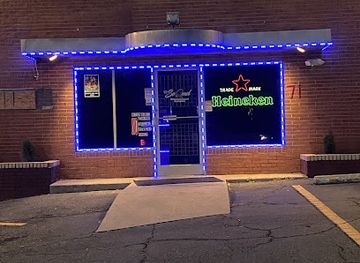
ABSOLUTE ENTERTAINMENT COMPLEX
Discover the pulsating nightlife at Absolute Entertainment Complex, Winston-Salem's premier night club and bar for unforgettable experiences.
12 min walk · 0.9 km from neighbourhood centre
Best shops in Old Salem
Shopping in Old Salem is concentrated on heritage goods, books, crafts and food associated with Moravian traditions rather than mainstream retail. The shops connected with Old Salem Museums & Gardens provide opportunities to browse publications, reproductions, locally relevant gifts and items inspired by the district's collections, while Winkler Bakery is the best-known stop for traditional baked goods. Visitors may also encounter craft demonstrations and interpretations of historic trades, although these should not be confused with a permanent contemporary makers' market. The compact commercial offer suits a visit built around museums and historic buildings; it is not comparable with the larger shopping areas elsewhere in Winston-Salem. For independent boutiques, records, fashion and broader retail choice, continue towards downtown and other central neighbourhoods rather than expecting them within Old Salem's preserved streets.
-
Gift shop
Salem Mercantile
Explore Salem Mercantile: Your Gateway to Unique Local Gifts and Artisan Treasures in Winston-Salem, NC.
1 min walk · 0.1 km from neighbourhood centre
-
Art gallery
Gallery At Old Salem
Discover the rich artistic heritage of North Carolina at the Gallery At Old Salem, showcasing local talent and historical artistry.
5 min walk · 0.4 km from neighbourhood centre


Old Salem essentials
Getting There
Getting Around
Safety
Emergency Situations
Do's and Don'ts
Local Tips

From Eve
Local phrases worth knowing
You don't need to get them perfect. A few words go a long way, and locals appreciate the effort.
Basics
| English | Local | Say it |
|---|---|---|
| Hello | Howdy | [hah-dee] |
| Goodbye | Fare thee well | [fair thee well] |
| Yes | Aye | [ahy] |
| No | Nay | [ney] |
| Please/You're welcome | If you please | [if yoo pleez] |
| Thank you | Much obliged | [muhch uh-blahy-jed] |
| Excuse me/Sorry | Pardon | [pahr-dn] |
| How are you? | How do you fare? | [haw doo yoo fair?] |
| Fine. And you? | Well enough. And yourself? | [well en-uhf. and yur-self?] |
| Do you speak English? | Dost thou speak English? | [dawst th-ow speek ing-glish?] |
| I don't understand | I reckon I don't follow | [ahy reck-en ahy don't fah-low] |
Eating & Drinking
| English | Local | Say it |
|---|---|---|
| I'd like to see the menu, please | Mayhap I could peek at the bill of fare, please | [may-hap ahy kood peek at th-uh bil uhv fair, pleez] |
| I don't eat meat | I don't partake of flesh | [ahy don't pahr-teyk uhv flesh] |
| Cheers! | Huzzah! | [huh-zah] |
| I would like to pay, please | I'd be beholden if I could settle up, please | [ahyd bee bih-hohl-duhn if ahy kood set-l up, pleez] |
Emergencies
| English | Local | Say it |
|---|---|---|
| Help! | Succor! | [suhk-er] |
| Go away! | Be off with thee! | [bee awf with thee] |
| Call the Police! | Summon the Watch! | [suhm-uhn th-uh woch] |
| Call a doctor! | Send for the healer! | [send fawr th-uh hee-ler] |
| I'm lost | I know not where I am | [ahy noht nawt wh-ehr ahy am] |
| I'm ill | I'm taken unwell | [ahy'm tay-kuhn un-wel] |
Shopping
| English | Local | Say it |
|---|---|---|
| I'd like to buy... | I'd fancy purchasing... | [ahyd fan-see pur-chey-sing] |
| I'm just looking | I'm merely gazing | [ahym mer-lee gay-zing] |
| How much is it? | What be the price? | [wut bee th-uh prahys?] |
| That's too expensive | That's more than I'd care to pay | [thats mor than ahyd kair to pay] |
| Can you lower the price? | Might thee lower the cost? | [meyt thee loh-er th-uh kawst?] |
Time & Numbers
| English | Local | Say it |
|---|---|---|
| What time is it? | What hour is it by the sun? | [wut aw-er iz it bay th-uh sun] |
| It's one o'clock | It be one by the hour | [it bee wun bey th-uh aw-er] |
| Half past (10) | Nigh unto (10) | [nahy unto (10)] |
| Morning | Morn | [mawrn] |
| Afternoon | Afternoon | [af-ter-noon] |
| Evening | Evening | [ee-ven-ing] |
| Yesterday | Yestermorn | [yester-mawrn] |
| Today | This day | [this dey] |
| Tomorrow | On the morrow | [awn th-uh mor-row] |
| 1 | One | [wun] |
| 2 | Two | [too] |
| 3 | Three | [three] |
| 4 | Four | [fawr] |
| 5 | Five | [fahyv] |
| 6 | Six | [siks] |
| 7 | Seven | [sev-uhn] |
| 8 | Eight | [eyt] |
| 9 | Nine | [nahyn] |
| 10 | Ten | [ten] |
Transport & Directions
| English | Local | Say it |
|---|---|---|
| Where's a/the...? | Where be a/the...? | [wh-ehr bee a/the] |
| What's the address? | What be the location? | [wut bee th-uh loh-key-shun] |
| Can you show me (on the map)? | Couldst thou guide me (on the chart)? | [koodst th-ow gahyd mee (on th-uh chahrt)] |
| When's the next (bus)? | When doth the next (coach) arrive? | [wen dohth th-uh nekst (coach) uh-ryv] |
| A ticket (to ....) | A billet (to ....) | [a bil-et (to ....)] |
History of Old Salem
Moravian Settlement in 1766
Salem was established in 1766 by Moravians, a Protestant denomination whose North Carolina settlements were administered by the wider community at Bethabara and later Salem. The town was planned rather than allowed to grow haphazardly, with religious, domestic, commercial and craft buildings arranged around a disciplined street pattern. Its position in the central Piedmont made it a useful economic and administrative centre, while communal worship and trades shaped everyday life. The surviving layout and restored buildings are important precisely because they show how belief, work and urban planning were connected in an early Southern town.
A Commercial and Craft Centre
During the late eighteenth and nineteenth centuries, Salem developed a reputation for skilled manufacture, trade, education and hospitality. Buildings such as Salem Tavern served travellers, while bakeries, workshops and shops supplied both residents and customers beyond the Moravian community. The town's institutions included schools and churches, and its carefully managed gardens provided food, medicine and ornamental planting. Salem was not socially uniform: enslaved and free Black people lived and worked in the community, and a separate Black Moravian congregation emerged. That history is reflected especially in the story of St Philips Moravian Church.
St Philips and Black Moravian History
The St Philips congregation was organised in 1822 for Black Moravians in Salem, although Black people had been part of the settlement's life earlier. Its present church building, completed in 1861, stands as a major reminder of African American religious history in the district. The congregation continued through the upheavals of the Civil War and emancipation, preserving a community that had previously operated within a segregated Moravian system. Today, St Philips forms an essential part of Old Salem's interpretation, ensuring that the district's polished architectural story is considered alongside the experiences of the people who built, maintained and worshipped within it.
From Salem to Winston-Salem
Industrial growth and urban expansion gradually connected the historic town with its larger neighbours. Salem and Winston merged in 1913 to form Winston-Salem, and modern development later surrounded the old core with roads, institutions and commercial districts. Many historic buildings survived, but changing uses and neglect threatened the coherence of the original town. Preservation work gathered pace in the mid-twentieth century, leading to the creation of Old Salem as a museum and heritage district. The first restored areas opened to the public in 1966, two centuries after Salem's founding.
Preservation as Living Interpretation
Old Salem Museums & Gardens has continued to restore buildings, conserve collections and interpret Moravian life through demonstrations, exhibitions, gardens and educational programmes. The Museum of Early Southern Decorative Arts broadened the district's significance by presenting furniture, ceramics, textiles and other objects from across the American South, rather than treating Salem as an isolated settlement. Contemporary interpretation also addresses race, labour, religion and the limits of historic preservation narratives. Old Salem therefore functions both as an architectural district and as an evolving public-history project within modern Winston-Salem.
Old Salem in Photos
Browse through our photo collection highlighting the charm and character of the destination.
Neighbourhoods near Old Salem
The closest neighbourhoods to Old Salem, if you have time for more than one stop.

Swipe for more neighbourhoods
Explore more

Explore more of Winston-Salem
Explore Winston-Salem: A charming blend of history, art, outdoor adventures, and culinary delights in the heart of North Carolina.
Explore Winston-Salem