

Røros Travel Guide - Free Web & App
Your ultimate guide to Røros. Discover top landmarks, proposed trips, and local tips. Free on the web or via the Evendo companion app.


Discover Røros, Norway's historic mining town, where heritage, nature, and culinary delights create an unforgettable travel experience.
Read more about Røros
When is the best time to visit Røros?
Best: June–August · 15–19°C| Month | High (°C) | Rainfall (mm) |
|---|---|---|
| January | -8 | 28 |
| February | -6 | 25 |
| March | -1 | 28 |
| April | 4 | 35 |
| May | 10 | 48 |
| June (best) | 15 | 65 |
| July (best) | 19 | 68 |
| August (best) | 17 | 67 |
| September | 11 | 60 |
| October | 6 | 49 |
| November | -1 | 38 |
| December | -3 | 31 |
Getting to and around Røros
How to get there
Transportation
Best attractions in Røros
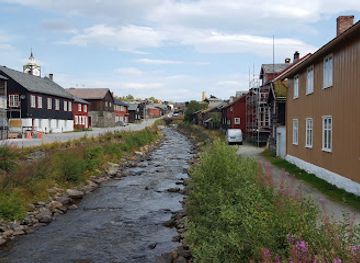
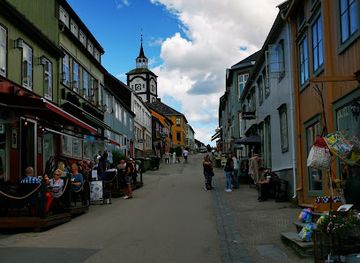
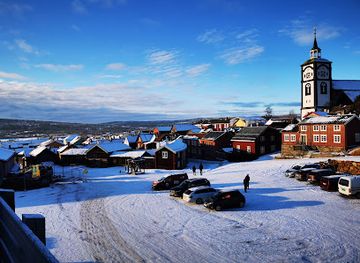
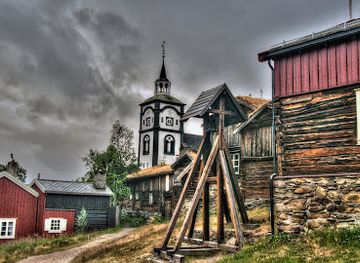
Røros, a charming UNESCO World Heritage site in Norway, welcomes visitors with its picturesque wooden houses, cobblestone streets, and rich mining history. Explore the historic Røros Church, dating back to the 17th century, and learn about the town's past at the Røros Museum. Enjoy outdoor activities like dog sledding, cross-country skiing, and ice fishing in the winter, or hiking, biking, and horseback riding in the summer. Indulge in local delicacies at traditional restaurants and cafes, and shop for handmade crafts and souvenirs. With its unique blend of history, culture, and natural beauty, Røros offers a truly unforgettable experience for every traveler.
-
Heritage museum
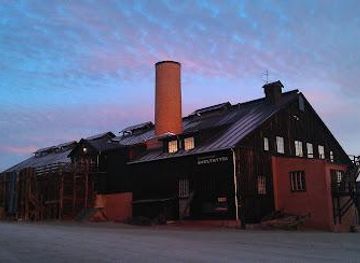
Rørosmuseet Smelthytta
Discover the rich mining heritage of Røros at the Rørosmuseet Smelthytta, a UNESCO World Heritage site showcasing Norway's historical charm.
-
Tourist attraction
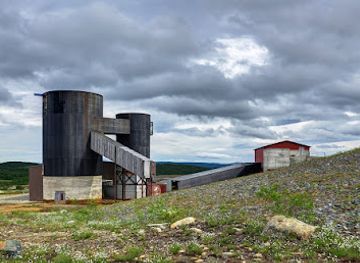
Rørosmuseet Olavsgruva
Explore Norway's mining legacy at Rørosmuseet Olavsgruva, a historical museum in Glåmos showcasing the rich heritage of the region.
-
Tourist attraction
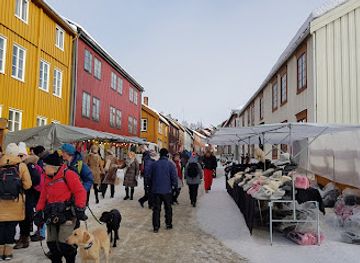
Rørosmartnan
Discover the vibrant Rørosmartnan festival in Røros, Norway, a celebration of culture, crafts, and culinary delights amidst historic charm.
-
Tourist attraction
Kongens Gruve
Explore Kongens Gruve, a UNESCO World Heritage site in Røros, showcasing Norway's rich mining history and captivating museum exhibits.
Best landmarks in Røros
Røros, a UNESCO World Heritage Site, offers visitors a glimpse into Norway's rich mining history with its well-preserved wooden buildings and fascinating museums. Explore the picturesque streets lined with traditional houses, visit the iconic Røros Church, and learn about the town's past at the Røros Museum. Outdoor enthusiasts can enjoy hiking in the surrounding mountains, fishing in the clear waters of the region's lakes, or experiencing the unique winter activities like dog sledding and ice fishing. With its charming atmosphere and historical significance, Røros is a must-visit destination for those looking to immerse themselves in Norwegian culture and heritage.
-
Heritage museum
Rørosmuseet Smelthytta
Explore the rich history of copper mining at Rørosmuseet Smelthytta, a UNESCO World Heritage site showcasing Norway's cultural heritage.
-
Church
Røros kirke
Discover the beauty and history of Røros Kirke, a stunning wooden church in Norway, celebrated for its architecture and serene atmosphere.
-
Tourist attraction
Rørosmartnan
Immerse yourself in the vibrant atmosphere of Rørosmartnan, a historic market festival celebrating local crafts, culture, and cuisine in beautiful Røros, Norway.
-
National park
Kvitsanden landskapsvernområde
Discover the stunning landscapes and diverse wildlife of Kvitsanden Landscape Reserve, a must-visit national park in Røros, Norway.
Explore Røros on the map
Plan your trip on one map. See where the top attractions, landmarks, restaurants and hotels are, and book hotels and experiences in a few clicks.
Best hotels in Røros
Best restaurants in Røros
The dining scene in Røros offers a unique culinary experience for visitors, with a focus on traditional Norwegian cuisine served in charming historic settings. From cozy cafes serving freshly baked pastries to rustic restaurants offering local specialties like reindeer stew and smoked salmon, there is something for every taste. Visitors can enjoy farm-to-table dining experiences, with many restaurants sourcing ingredients from local farms and producers. The atmosphere is warm and welcoming, with friendly staff eager to share the history and traditions of the region through delicious food.
-
 Hotel
HotelRøros Hotell
Experience luxury and heritage at Røros Hotell - your gateway to Norway's scenic beauty and rich culture.
-
Restaurant
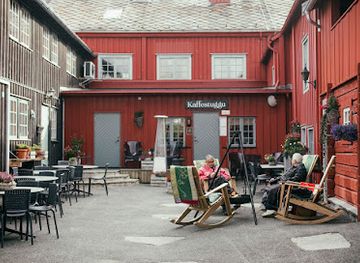
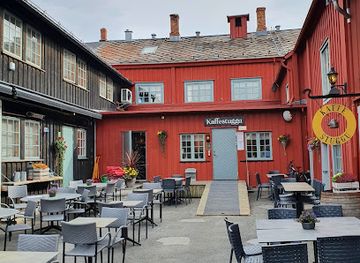
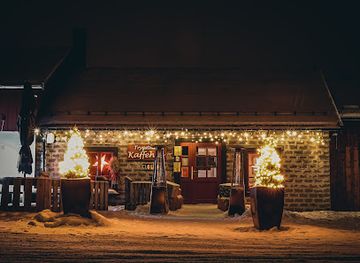
Kaffestuggu
Discover authentic Norwegian cuisine at Kaffestuggu in Røros - where tradition meets taste in a cozy setting.
-
Bakery
Trygstad bakery and confectionery
Experience authentic Norwegian pastries at Trygstad Bakery & Confectionery in historic Røros – a treat for every traveler!
-
Hotel
Bergstadens Hotel
Discover the charm of Røros at Bergstadens Hotel - where comfort meets cultural heritage amidst breathtaking landscapes.
Best bars in Røros
The nightlife scene in Røros offers a unique and cozy experience for visitors, with a variety of charming bars and pubs scattered throughout the historic town. From traditional Norwegian pubs serving local beers and spirits to trendy cocktail lounges with a modern twist, there is something for everyone to enjoy. Live music and cultural events are often held in these establishments, providing a lively and welcoming atmosphere for tourists looking to unwind after a day of exploring the picturesque streets of Røros.
-
Restaurant
Røros Hotell
Experience the perfect blend of comfort, scenic beauty, and local flavors at Røros Hotell, a serene retreat in Norway's historic town.
-
Restaurant
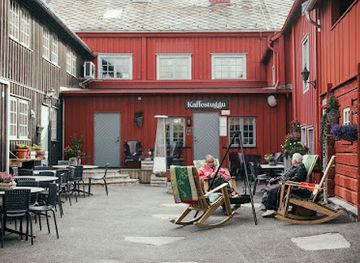
Kaffestuggu
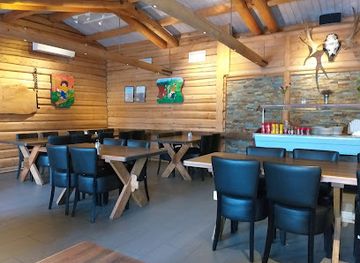
Discover the flavors of Norway at Kaffestuggu, Røros' charming restaurant known for its local ingredients and cozy atmosphere.
-
Restaurant
Bergstadens Hotel
Discover the charm of Røros at Bergstadens Hotel, where traditional Norwegian cuisine meets cozy accommodations.
-
Restaurant
Trollkroa
Experience authentic Norwegian cuisine in a cozy setting at Trollkroa, a must-visit restaurant in Østerdalen for every traveler.
Best nightclubs in Røros
The nightlife scene in Røros offers a unique and cozy experience for visitors, with a variety of charming bars and pubs scattered throughout the historic town. From traditional Norwegian pubs serving local beers and spirits to trendy cocktail lounges with a modern twist, there is something for everyone to enjoy. Live music and cultural events are often held in these establishments, providing a lively and welcoming atmosphere for tourists looking to unwind after a day of exploring the picturesque streets of Røros.
-
Hotel
Røros Hotell
Experience the charm of Røros at Røros Hotell, where comfort meets nature in a historic setting.
-
Bakery
Trygstad bakery and confectionery
Discover the sweet essence of Røros at Trygstad Bakery, where traditional Norwegian pastries and cakes await every visitor.
-
Hotel
Bergstadens Hotel
Experience the charm of Røros at Bergstadens Hotel, a perfect blend of tradition and modern comfort in a UNESCO-listed town.
-
Gastropub
Skanckebua Bar & Restaurant
Explore Røros' culinary scene at Skanckebua Bar & Restaurant, where local flavors and cozy ambiance await every traveler.
Best shops in Røros
Røros offers a unique shopping experience for visitors, with its charming streets lined with traditional wooden buildings housing a variety of shops selling locally-made crafts, souvenirs, and traditional Norwegian goods. Visitors can explore the town's artisan workshops, where skilled craftsmen create beautiful handcrafted items such as wool products, pottery, and jewelry. The Røros region is also known for its high-quality food products, including local cheeses, cured meats, and baked goods, which can be found in specialty food shops throughout the town. With its rich history and picturesque surroundings, shopping in Røros is a delightful way to immerse oneself in Norwegian culture and bring home a special memento of the trip.
-
Shopping mall
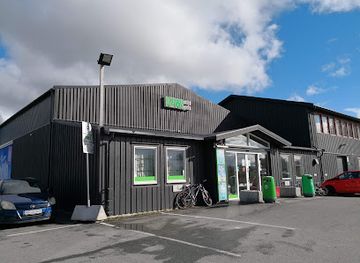
Domus Shopping Roros
Explore the heart of Røros shopping at Domus Shopping Mall, where local charm meets modern retail in a delightful atmosphere.
-
Grocery store
KIWI Røros
Discover the local flavors of Røros at KIWI Røros, your go-to grocery store for fresh produce and Norwegian specialties.
-
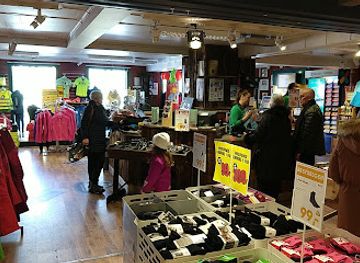
Sporting goods store
G-Sport Røros - Røros Sport
Explore the great outdoors of Røros with quality gear from G-Sport Røros, your trusted sporting goods destination in Norway.
-
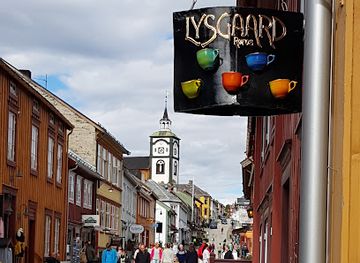
Pottery
Lysgaard Ceramics
Discover the exquisite craftsmanship of Lysgaard Ceramics in Røros, where tradition meets artistry in stunning handmade pottery.
Get your free copy of our complete guide to Røros, delivered straight to you.
Everything on this page, from attractions and restaurants to essentials and local phrases, in one PDF you can read offline, print or share.
Already have an account? Sign in
Your Røros guide is ready.
We'll send it to · Not you? Sign out

Getting your guide ready…
We are putting together a fresh copy of the Røros guide. This can take up to a minute.
This can take a few moments. If your browser asks, choose Allow so the download can start. You'll find the guide in your Downloads folder.
Nothing happened? Download it again
Sorry, the guide is taking longer than usual. Please try again in a minute, or get it by email instead.
Røros essentials
Currency and Payment
Safety
Emergency Situations
Do's and Don'ts
Local Tips
From Eve
Local phrases worth knowing
You don't need to get them perfect. A few words go a long way, and locals appreciate the effort.
Basics
| English | Local | Say it |
|---|---|---|
| Hello | Hei | [hay] |
| Goodbye | Ha det bra | [ha deh bra] |
| Yes | Ja | [yah] |
| No | Nei | [nay] |
| Please/You're welcome | Vær så snill | [ver so snill] |
| Thank you | Takk | [tahk] |
| Excuse me/Sorry | Unnskyld | [oon-skyld] |
| How are you? | Hvordan har du det? | [vor-dan har doo deh] |
| Fine. And you? | Bra. Og du? | [bra oh doo] |
| Do you speak English? | Snakker du engelsk? | [snah-ker doo eng-elsk] |
| I don't understand | Jeg forstår ikke | [yay for-stor eek-keh] |
Eating & Drinking
| English | Local | Say it |
|---|---|---|
| I'd like to see the menu, please | Jeg vil gjerne se menyen, takk | [yay veal year-neh seh men-yen tahk] |
| I don't eat meat | Jeg spiser ikke kjøtt | [yay spee-ser eek-keh shyoot] |
| Cheers! | Skål! | [skawl] |
| I would like to pay, please | Jeg vil gjerne betale, takk | [yay veal year-neh beh-tah-leh tahk] |
Emergencies
| English | Local | Say it |
|---|---|---|
| Help! | Hjelp! | [yelp] |
| Go away! | Gå bort! | [goh bohrt] |
| Call the Police! | Ring politiet! | [ring poh-lee-tee-eh] |
| Call a doctor! | Ring en lege! | [ring en lay-geh] |
| I'm lost | Jeg er mistet | [yay air mees-tet] |
| I'm ill | Jeg er syk | [yay air seek] |
Shopping
| English | Local | Say it |
|---|---|---|
| I'd like to buy... | Jeg vil kjøpe... | [yay veal shoop-eh] |
| I'm just looking | Jeg bare ser | [yay bah-reh sair] |
| How much is it? | Hvor mye koster det? | [vor myeh kost-er deh] |
| That's too expensive | Det er for dyrt | [deh air for deert] |
| Can you lower the price? | Kan du senke prisen? | [kahn doo sen-keh prees-en] |
Time & Numbers
| English | Local | Say it |
|---|---|---|
| What time is it? | Hva er klokka? | [vah air klok-ah] |
| It's one o'clock | Klokken er ett | [klok-ken air eht] |
| Half past (10) | Halv ti | [halv tee] |
| Morning | Morgen | [mohr-gen] |
| Afternoon | Ettermiddag | [et-ter-mee-dag] |
| Evening | Kveld | [kveld] |
| Yesterday | I går | [ee gor] |
| Today | I dag | [ee dahg] |
| Tomorrow | I morgen | [ee mohr-gen] |
| 1 | En | [en] |
| 2 | To | [too] |
| 3 | Tre | [treh] |
| 4 | Fire | [feer-eh] |
| 5 | Fem | [fem] |
| 6 | Seks | [seks] |
| 7 | Syv | [siv] |
| 8 | Åtte | [oh-teh] |
| 9 | Ni | [nee] |
| 10 | Ti | [tee] |
Transport & Directions
| English | Local | Say it |
|---|---|---|
| Where's a/the...? | Hvor er en/et...? | [vor air en/et] |
| What's the address? | Hva er adressen? | [vah air ah-dress-en] |
| Can you show me (on the map)? | Kan du vise meg (på kartet)? | [kahn doo vee-seh may (poh kart-et)] |
| When's the next (bus)? | Når går neste (buss)? | [norr gor nest-eh (booss)] |
| A ticket (to ....) | En billett (til ....) | [en bee-let (teel)] |
History of Røros
The Founding of Røros
Røros was established as a mining town in 1644 following the discovery of copper ore by a farmer named Hans Aasen. The town quickly grew around the mining industry, which became the backbone of the local economy.
The Great Fire of 1678
In 1678, a devastating fire swept through Røros, destroying almost the entire town. The residents rebuilt Røros, and the new buildings were designed with fire prevention in mind, using more stone and brick instead of wood.
UNESCO World Heritage Site
In 1980, Røros was designated a UNESCO World Heritage Site due to its well-preserved wooden buildings and its unique cultural landscape shaped by centuries of mining activities. The town is an outstanding example of how the community adapted to harsh climatic conditions to create a thriving mining settlement.
Rørosmartnan: The Traditional Winter Fair
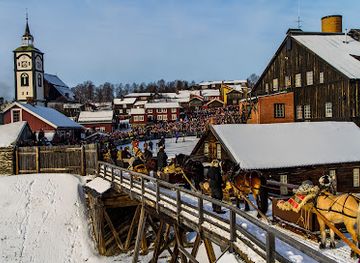
Rørosmartnan, an annual winter fair held in Røros since 1854, attracts thousands of visitors every February. The fair showcases traditional Sami culture, local crafts, and regional food, preserving and promoting the town's rich cultural heritage.
The Mining Museum and Olavsgruva
The Røros Mining Museum offers a deep dive into the history of mining in the region, featuring exhibits on the techniques and tools used over the centuries. Visitors can also tour Olavsgruva, a historic mine where they can experience the conditions miners worked in and see the impressive underground chambers.
Preservation of Traditional Architecture
Røros is renowned for its traditional wooden architecture, with many buildings dating back to the 18th and 19th centuries. Efforts to preserve these structures have maintained the town's historic charm, making it a living museum of Norwegian heritage.
The Role of the Sami People
The indigenous Sami people have played a crucial role in the history of Røros, particularly in reindeer herding and trade. Their presence is still felt today, with many cultural events and festivals celebrating Sami traditions and contributions to the region.
Røros Church: The Stone Church
Røros Church, also known as the Stone Church, was completed in 1784 and is one of the largest wooden churches in Norway. Its striking architecture and historical significance make it a key landmark in the town's cultural landscape.
The Impact of World War II
During World War II, Røros was occupied by German forces. The town served as a strategic location due to its railway connections, which were crucial for transporting resources. The war left its mark on the town, with several memorials commemorating those who suffered and resisted during the occupation.
Røros in Photos
Browse through our photo collection highlighting the charm and character of the destination.
Neighbouring destination travel guides
The closest destinations to Røros, if you have time for more than one.
-

-

-

-
-


Swipe for more destinations
Explore more
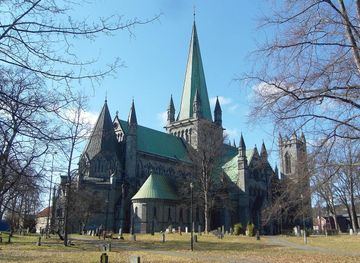
Explore more of Sør-Trøndelag
Discover Sør-Trøndelag: A Norwegian Haven of Natural Beauty, Rich History, and Vibrant Culture Awaiting Your Exploration.
Explore Sør-Trøndelag
Explore more of Norway
Explore Norway's spectacular fjords, vibrant cities, and natural wonders. Experience the Northern Lights, Midnight Sun, and rich cultural heritage in this Scandinavian gem.
Explore Norway