

Free Sør-Trøndelag Travel Guide & Mobile App
Explore Sør-Trøndelag with free travel guides. Discover regional history, expert tips, proposed trips, and audio guides on web or mobile app.


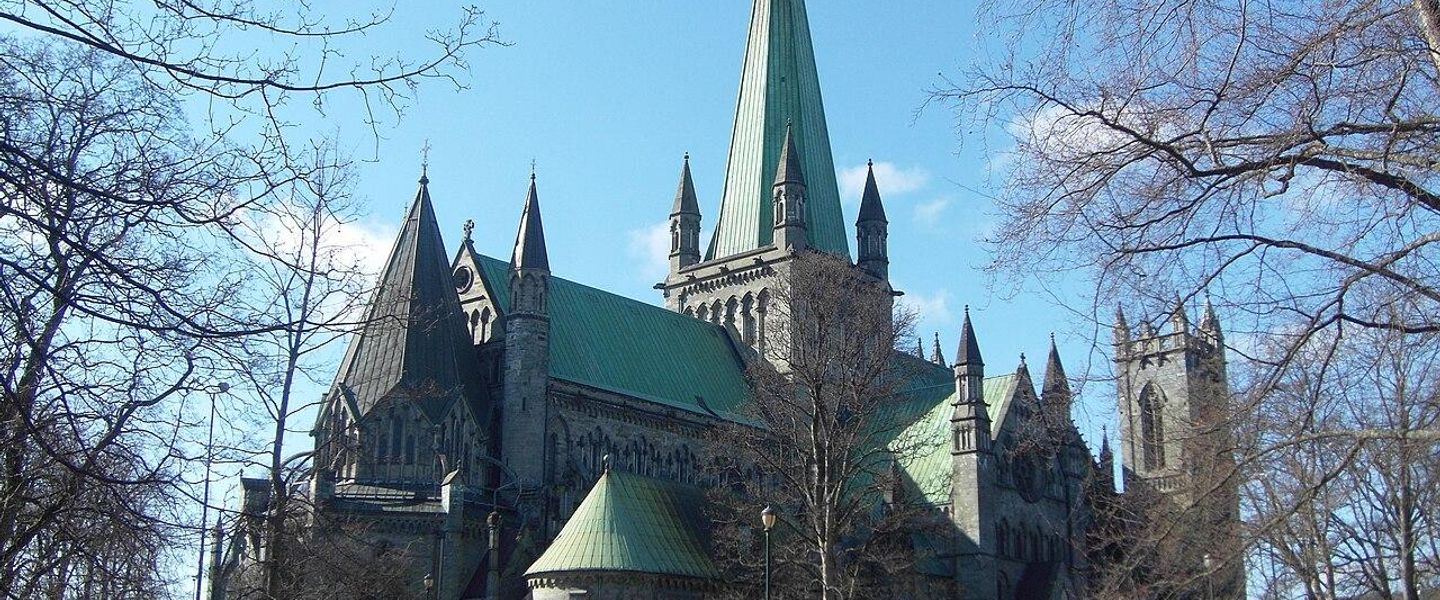


Explore Sør-Trøndelag through Trondheim’s heritage, Røros mining history, island coasts, fjords, mountain valleys and generous outdoor landscapes.
Read more about Sør-Trøndelag
When is the best time to visit Sør-Trøndelag?
Best: June–August · 18–20°C| Month | High (°C) | Rainfall (mm) |
|---|---|---|
| January | -1 | 75 |
| February | -1 | 65 |
| March | 3 | 60 |
| April | 7 | 55 |
| May | 14 | 50 |
| June (best) | 18 | 55 |
| July (best) | 20 | 70 |
| August (best) | 19 | 75 |
| September | 15 | 80 |
| October | 10 | 90 |
| November | 4 | 95 |
| December | 1 | 85 |
Getting to and around Sør-Trøndelag
How to get there
Transportation
Top city travel guides in Sør-Trøndelag
The cities of Sør-Trøndelag, and the easiest places to base yourself.

Swipe for more cities
Destinations in Sør-Trøndelag
Resorts, valleys and scenic spots worth a trip of their own.
-

-


Swipe for more destinations
Best attractions in Sør-Trøndelag
Sør-Trøndelag’s attractions range from Trondheim’s major cultural institutions and medieval heritage to remote coastal landscapes and highland recreation. In Trondheim, Nidaros Cathedral, the Archbishop’s Palace, the wooden streets of Bakklandet, Ringve Museum and Rockheim provide different perspectives on religious history, music and modern Norwegian culture. The islands and peninsulas of Fosen, Hitra and Frøya offer sea-based activities, birdwatching, fishing heritage and open coastal scenery, while Ørland is notable for its maritime setting and bird habitats. Inland, Røros combines a UNESCO-listed mining town with museums, craft traditions and industrial landscapes. Oppdal provides access to hiking, skiing and mountain cycling, and the valleys around Rennebu, Meldal, Holtålen and Tydal offer quieter walks, farms and viewpoints. River landscapes, forests and high plateaux create opportunities for fishing, canoeing and wildlife observation, but many experiences are seasonal and dispersed. The region is best understood as a collection of contrasting environments rather than a single sightseeing circuit.
-
Shopping mall
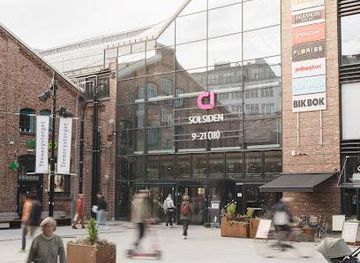
Solsiden Senter
Explore Solsiden Senter: Trondheim's premier shopping destination with a blend of shops, restaurants, and waterfront views.
-
Tourist attraction
Pirbadet
Experience the ultimate aquatic adventure at Pirbadet in Trondheim, Norway's largest indoor water park, offering fun for all ages in a stunning setting.
-
History museum
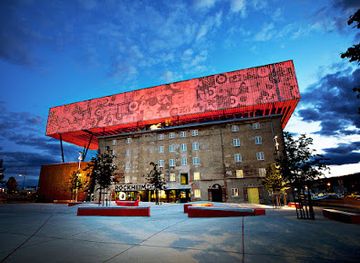
Rockheim
Explore Norway's musical roots at Rockheim, the National Museum of Popular Music, showcasing the vibrant history of pop and rock culture.
-
Tourist attraction
Rørosmuseet Olavsgruva
Discover the captivating history of Norway's mining industry at Rørosmuseet Olavsgruva, where past meets present in a stunning setting.
Best landmarks in Sør-Trøndelag
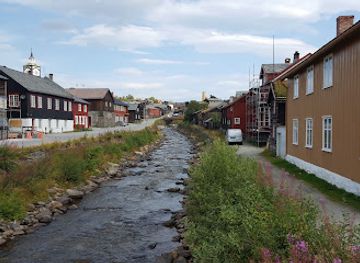
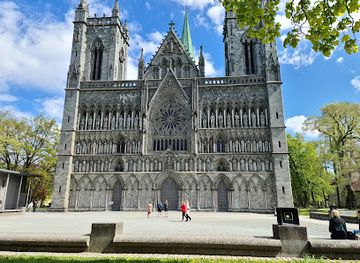
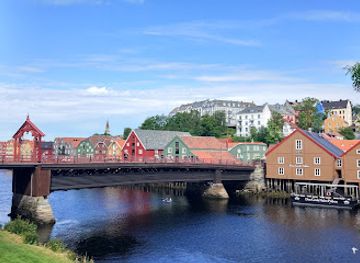
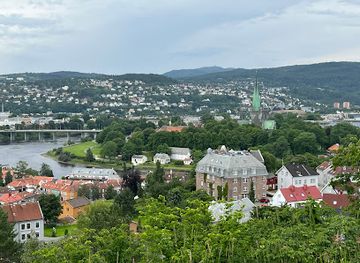
Nidaros Cathedral is Sør-Trøndelag’s defining landmark, its Gothic stone architecture marking Trondheim’s medieval importance as the centre of the cult of Saint Olav and Norway’s Catholic archdiocese. Beside it, the Archbishop’s Palace preserves the institutional setting of that ecclesiastical power. Trondheim’s wooden riverfront and Bakklandet provide a contrasting urban landmarkscape, shaped by commerce, fires and repeated rebuilding. In Røros, the dense timber town, church, smelting-related remains and surrounding mining landscape form an unusually coherent industrial heritage environment; the town’s appearance is inseparable from the copper industry that created it. Munkholmen, the island in Trondheimsfjord, is recognisable for its former monastery, fortress and prison history. Further south, the mountain horizons around Oppdal and the open uplands near Tydal are natural landmarks rather than single monuments, expressing the region’s transition from settled valleys to highland terrain. Along the coast, the low islands, skerries and exposed headlands of Hitra, Frøya and Fosen provide a visual identity rooted in the sea.
-
Cathedral
Nidaros Cathedral
Discover the architectural splendor and historical significance of Nidaros Cathedral, Norway's most important church and a must-visit destination for travelers.
-
Bridge
Old Town Bridge
Discover the historic Old Town Bridge in Trondheim, Norway, an architectural gem offering stunning views and a glimpse into the city's vibrant past.
-
Fortress
Kristiansten Fortress
Explore Kristiansten Fortress in Trondheim, a historic military stronghold offering stunning views and a glimpse into Norway's rich heritage.
-
Museum
Sverresborg Trøndelag Folk Museum
Explore Norway's rich history and stunning landscapes at Sverresborg Trøndelag Folk Museum, where Viking heritage comes alive.
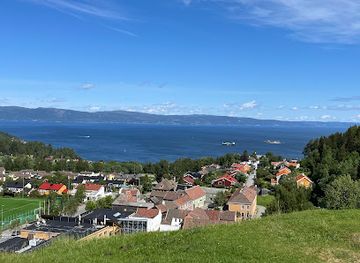
Explore Sør-Trøndelag on the map
Plan your trip on one map. See where the top cities, national parks and sights are, and book hotels and experiences in a few clicks.
Best hotels in Sør-Trøndelag
Best restaurants in Sør-Trøndelag
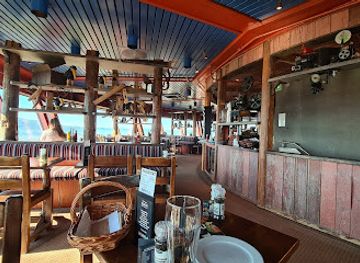
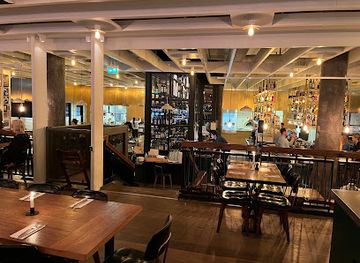
Dining in Sør-Trøndelag reflects the meeting of Trondheimsfjord, productive valleys and mountain farms. Trondheim has the widest range, from cafés and bakeries to contemporary restaurants using Norwegian seafood, vegetables, grains and preserved ingredients. Along the coast, fish, shellfish and locally farmed seafood are central, while island communities often combine casual dining with small food businesses and seasonal sales. Inland menus may feature lamb, game, dairy products, mushrooms, berries and traditional baking. The Røros area is particularly associated with agricultural produce from mountain farms, including distinctive cheeses, meats and baked goods sold through specialist shops, markets and restaurants. Rural inns, farm cafés and community cafés can be as useful for encountering local food as formal dining rooms, although opening patterns vary outside the main towns. Trondheim’s markets and food shops are practical places to compare products from across the wider Trøndelag region, while coastal villages often provide the freshest sense of the area’s maritime food culture.
-
Restaurant
Egon Tårnet
Discover Egon Tårnet in Trondheim: A remarkable restaurant offering stunning views and diverse dishes in an inviting atmosphere.
-
Italian
Frati restaurant
Experience authentic Italian cuisine at Frati Restaurant in Trondheim, where every dish is crafted with passion and fresh ingredients.
-
Pizza restaurant
Una pizzeria e bar
Authentic Italian pizzas and pasta in Trondheim's lively Solsiden riverside district—thin crusts, fresh toppings, and warm service since 2014.
-
Pizza
Grano Trondheim
Discover Grano Trondheim: Where Authentic Italian Pizza Meets Cozy Atmosphere in Norway's Historic City.
Best bars in Sør-Trøndelag
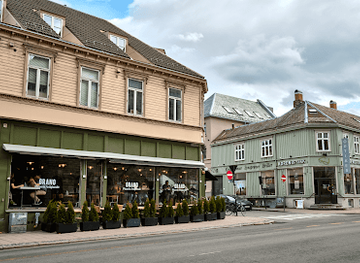
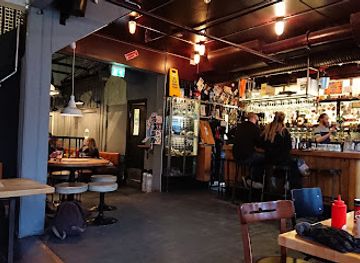
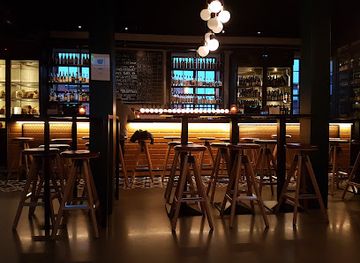
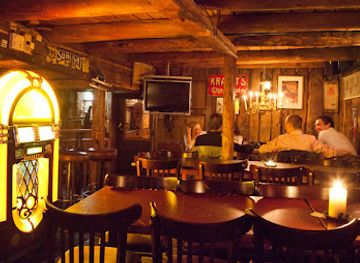
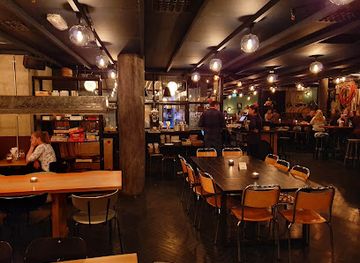
Trondheim is the centre of Sør-Trøndelag’s evening life, with pubs, cafés, cocktail bars, live-music venues and student-oriented places concentrated around the central streets, Bakklandet and the areas near the university. The city also has theatres and concert venues, so an evening need not revolve around drinking. Røros offers historic hotel bars, pubs and restaurants in timber buildings, with a quieter atmosphere shaped by its heritage setting and seasonal events. In Oppdal, evening activity is linked to skiing, outdoor tourism, pubs and restaurants rather than a large club scene. Coastal communities such as Hitra, Frøya and Fosen generally favour local pubs, hotel bars, community events and occasional live music; nightlife is limited and dispersed compared with Trondheim. Check current arrangements before travelling, particularly outside the larger towns, and do not rely on late-night transport in rural districts.
-
Grill
Bror
Savor the essence of Norwegian cuisine at Bror, a grill restaurant in Trondheim renowned for its quality dishes and inviting atmosphere.
-
Bar
E.C.Dahls bryggeri pub og kjøkken
Explore Trondheim's brewing heritage at E.C.Dahls Bryggeri, where craft beer meets delicious local cuisine in a welcoming ambiance.
-
Bar
Den Gode Nabo AS
Explore Trondheim's vibrant nightlife at Den Gode Nabo AS, a charming riverside bar and pub with local brews and a unique atmosphere.
-
Bar
ØX Tap Room
Experience the vibrant atmosphere and craft beer delights at ØX Tap Room, Trondheim's premier brewing bar.
Best nightclubs in Sør-Trøndelag
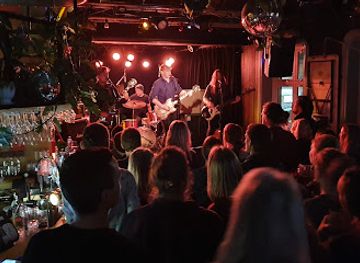
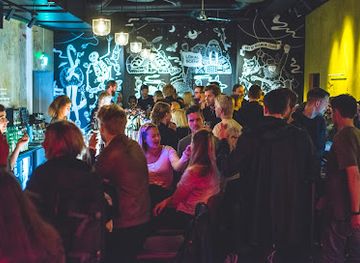
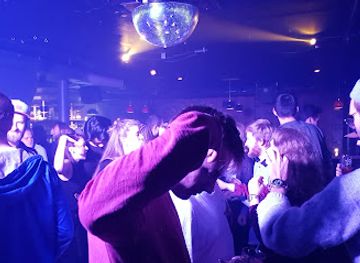
Trondheim is the centre of Sør-Trøndelag’s evening life, with pubs, cafés, cocktail bars, live-music venues and student-oriented places concentrated around the central streets, Bakklandet and the areas near the university. The city also has theatres and concert venues, so an evening need not revolve around drinking. Røros offers historic hotel bars, pubs and restaurants in timber buildings, with a quieter atmosphere shaped by its heritage setting and seasonal events. In Oppdal, evening activity is linked to skiing, outdoor tourism, pubs and restaurants rather than a large club scene. Coastal communities such as Hitra, Frøya and Fosen generally favour local pubs, hotel bars, community events and occasional live music; nightlife is limited and dispersed compared with Trondheim. Check current arrangements before travelling, particularly outside the larger towns, and do not rely on late-night transport in rural districts.
-
Bar
Tyven
Discover the energetic nightlife of Trondheim at Tyven, a vibrant bar and club known for cocktails, music, and unforgettable experiences.
-
Night club
Lokal Bar — Scene — Klubb
Experience Trondheim's vibrant nightlife at Lokal Bar, a trendy night club featuring live performances and a lively bar scene.
-
Night club
Diskoteket
Discover the ultimate nightlife experience at Diskoteket, Trondheim's premier night club, where music and fun unite for an unforgettable evening.
-
Bar
Fire fine
Discover the vibrant nightlife at Fire Fine in Trondheim, featuring a stylish bar atmosphere and an extensive drink selection for an unforgettable night out.
Best shops in Sør-Trøndelag
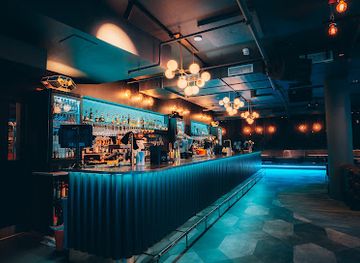
Trondheim has the broadest shopping choice in Sør-Trøndelag, combining central high-street retailers with independent design shops, bookshops, galleries, food stores and craft businesses around the older city streets and Bakklandet. Market events and specialist shops are useful for finding Norwegian food products, woollen goods, ceramics and locally made gifts, although schedules vary. Røros is particularly well suited to heritage-oriented shopping, with crafts, textiles, pottery, jewellery, books, traditional foods and products connected with its mining-town identity. In coastal districts, small shops and farm or fish-producer outlets may sell seafood, preserves, wool, artworks and practical maritime products, but availability is seasonal and opening hours can be limited. Visitors seeking regional produce should look for cheeses, cured meats, bakery items, berries and other goods from Trøndelag rather than assuming every souvenir is locally made. Larger everyday retail centres are concentrated in and around Trondheim, while smaller towns offer more personal, locally focused shopping.
-
Shopping mall
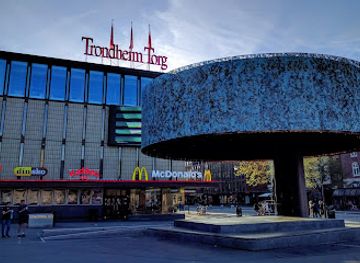
Trondheim Torg
Discover the vibrant shopping experience at Trondheim Torg, where local culture meets modern retail in the heart of Trondheim.
-
Shopping mall
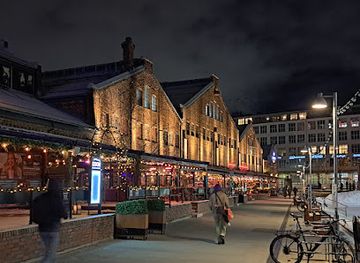
Solsiden Senter
Explore Solsiden Senter, Trondheim's premier shopping mall featuring diverse stores, restaurants, and an inviting atmosphere for all visitors.
-
Shopping mall
City Syd
Explore City Syd in Tiller: Your ultimate shopping destination with diverse stores, dining options, and family-friendly entertainment.
-
Shopping mall
Lade Arena
Discover a diverse shopping experience at Lade Arena, Trondheim's premier mall for all your retail needs.
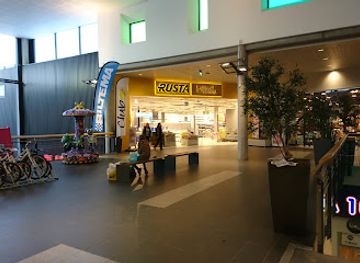
Get your free copy of our complete guide to Sør-Trøndelag, delivered straight to you.
Everything on this page, from attractions and restaurants to essentials and local phrases, in one PDF you can read offline, print or share.
Already have an account? Sign in
Your Sør-Trøndelag guide is ready.
We'll send it to · Not you? Sign out

Getting your guide ready…
We are putting together a fresh copy of the Sør-Trøndelag guide. This can take up to a minute.
This can take a few moments. If your browser asks, choose Allow so the download can start. You'll find the guide in your Downloads folder.
Nothing happened? Download it again
Sorry, the guide is taking longer than usual. Please try again in a minute, or get it by email instead.
Sør-Trøndelag essentials
Currency and Payment
Safety
Emergency Situations
Do's and Don'ts
Local Tips
From Eve
Local phrases worth knowing
You don't need to get them perfect. A few words go a long way, and locals appreciate the effort.
Basics
| English | Local | Say it |
|---|---|---|
| Hello | Hei | [hay] |
| Goodbye | Ha det | [ha deh] |
| Yes | Ja | [ya] |
| No | Nei | [nay] |
| Please/You're welcome | Vær så snill/Ingen årsak | [vair so snill/een-yen or-sahk] |
| Thank you | Takk | [tahk] |
| Excuse me/Sorry | Unnskyld | [oon-shild] |
| How are you? | Hvordan har du det? | [vor-dahn har doo deh] |
| Fine. And you? | Bra. Og du? | [brah. oh doo?] |
| Do you speak English? | Snakker du engelsk? | [snah-kker doo eng-elsk?] |
| I don't understand | Jeg forstår ikke | [yay for-stor ee-keh] |
Eating & Drinking
| English | Local | Say it |
|---|---|---|
| I'd like to see the menu, please | Jeg vil gjerne se menyen, vær så snill | [yay vil yair-na seh men-yen, vair so snill] |
| I don't eat meat | Jeg spiser ikke kjøtt | [yay spee-ser ee-keh shutt] |
| Cheers! | Skål! | [skawl] |
| I would like to pay, please | Jeg vil gjerne betale, vær så snill | [yay vil yair-na be-ta-leh, vair so snill] |
Emergencies
| English | Local | Say it |
|---|---|---|
| Help! | Hjelp! | [yelp] |
| Go away! | Gå bort! | [gaw bort] |
| Call the Police! | Ring politiet! | [ring po-li-teh] |
| Call a doctor! | Ring en lege! | [ring en lay-geh] |
| I'm lost | Jeg er tapt | [yay air tahpt] |
| I'm ill | Jeg er syk | [yay air seek] |
Shopping
| English | Local | Say it |
|---|---|---|
| I'd like to buy... | Jeg vil kjøpe... | [yay vil shuh-peh...] |
| I'm just looking | Jeg bare ser | [yay bah-reh sehr] |
| How much is it? | Hvor mye koster det? | [vor mye kos-ter deh] |
| That's too expensive | Det er for dyrt | [deh air for deert] |
| Can you lower the price? | Kan du senke prisen? | [kan doo sen-ke pree-sen?] |
Time & Numbers
| English | Local | Say it |
|---|---|---|
| What time is it? | Hva tid er det? | [vah teed air deh] |
| It's one o'clock | Klokka er ett | [klok-ka air ett] |
| Half past (10) | Halv etter (10) | [halv et-ter (10)] |
| Morning | Morgen | [mor-gen] |
| Afternoon | Ettermiddag | [et-ter-mid-dahg] |
| Evening | Kveld | [kveld] |
| Yesterday | I går | [ee gorr] |
| Today | I dag | [ee dahg] |
| Tomorrow | I morgen | [ee mor-gen] |
| 1 | 1 | [1] |
| 2 | 2 | [2] |
| 3 | 3 | [3] |
| 4 | 4 | [4] |
| 5 | 5 | [5] |
| 6 | 6 | [6] |
| 7 | 7 | [7] |
| 8 | 8 | [8] |
| 9 | 9 | [9] |
| 10 | 10 | [10] |
Transport & Directions
| English | Local | Say it |
|---|---|---|
| Where's a/the...? | Hvor er en/den...? | [vor air en/den...?] |
| What's the address? | Hva er adressen? | [vah air ad-res-sen?] |
| Can you show me (on the map)? | Kan du vise meg (på kartet)? | [kan doo vee-seh mai (poh kar-tet)?] |
| When's the next (bus)? | Når går neste (buss)? | [nor gor nes-teh (boos)?] |
| A ticket (to ....) | En billett (til ....) | [en bee-lett (til ....)] |
History of Sør-Trøndelag
Early settlement and the Trøndelag landscape
People have lived around the Trondheim basin, the coast and the inland valleys since the Stone Age, using a combination of farming, fishing, hunting and seasonal movement. Rock art, burial remains and other archaeological evidence show that the region’s landscape was already culturally organised long before written history. The sheltered fjord, productive river valleys and access to mountain hunting grounds supported communities with different but interconnected economies. Archaeological sites around Trondheim and the wider Trøndelag area help explain how seafaring, agriculture and regional exchange developed across central Norway.
Nidaros and the medieval religious centre
Trondheim, known in the Middle Ages as Nidaros, became one of Norway’s most important religious and political centres. The cult of Saint Olav developed around his burial place, and Nidaros Cathedral grew into a major pilgrimage church visited by travellers from across northern Europe. The Archbishop’s Palace nearby was the administrative centre of a powerful ecclesiastical institution. Medieval Trondheim’s influence extended far beyond the city, and the cathedral, palace complex and surviving street pattern remain the clearest physical reminders of the region’s central role in Norwegian Christianity.
Royal power, trade and the growth of Trondheim
Trondheim retained importance as a royal, commercial and administrative centre after the medieval period, even as political power shifted between Norwegian towns and Danish-Norwegian authorities. Its position on Trondheimsfjord connected inland producers, coastal communities and overseas trade. Timber buildings, warehouses and streets were repeatedly rebuilt after fires, creating the layered urban character visible in areas such as Bakklandet and along the river. The city’s institutions, harbour and markets helped make it the principal gateway to central Norway and the cultural capital of the Trøndelag region.
Røros copper mining and the mountain economy
Copper ore discovered near Røros in the seventeenth century led to the establishment of one of Norway’s most important mining communities. Røros Copper Works organised extraction, smelting, transport and woodland use across a demanding mountain environment. The industry transformed settlement patterns and created a distinctive town of timber houses, workshops, storehouses and industrial remains. Mining placed considerable pressure on forests and local resources, but it also generated a durable cultural landscape. Røros and its surrounding industrial heritage are recognised by UNESCO for their historical significance.
Agriculture, coastal livelihoods and modern communications
Alongside mining, the region developed through farming in the Gaula, Orkla and Nea valleys, fishing along the coast and trading links across the fjords. Coastal settlements depended on boats, seasonal fisheries and later mechanised fishing, while inland farms combined livestock, haymaking and woodland resources. Roads, steamship routes and railways gradually connected communities that had previously relied heavily on water and mountain tracks. The opening and expansion of railway lines through Trondheim, Røros and Oppdal strengthened the region’s links with Oslo and eastern Norway and helped establish modern travel patterns.
War, occupation and reconstruction
Norway’s experience of German occupation during the Second World War affected Trondheim, its harbour and the wider region. Military installations, transport routes and coastal positions acquired strategic importance, while resistance activity and restrictions shaped civilian life. Trondheim was also associated with German naval and military construction, leaving difficult remnants of twentieth-century history alongside older heritage. After 1945, reconstruction, improved roads, electrification and expanding public services altered rural and urban communities. The period marked a transition from predominantly local economies towards greater mobility and regional integration.
From Sør-Trøndelag to modern Trøndelag
Sør-Trøndelag existed as a separate Norwegian county until 2018, when it merged with Nord-Trøndelag to form the present Trøndelag county. The administrative change reflected efforts to coordinate transport, public services and regional development across central Norway, but the historic distinction remains familiar in local identity and travel planning. Contemporary Sør-Trøndelag combines Trondheim’s universities, culture and technology sector with coastal aquaculture, established farming districts, mountain tourism and heritage industries. Its older geographical character therefore continues to influence both everyday life and visitor experiences.
Sør-Trøndelag in Photos
Browse through our photo collection highlighting the charm and character of the destination.
Neighbouring regions of Sør-Trøndelag
The closest regions to Sør-Trøndelag, if you have time for more than one.
-

-

-

-
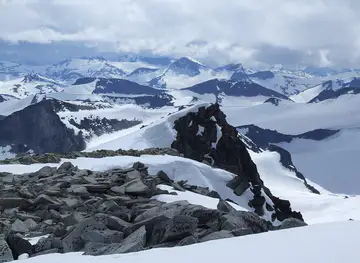
-


Swipe for more regions
Explore more

Explore more of Norway
Explore Norway's spectacular fjords, vibrant cities, and natural wonders. Experience the Northern Lights, Midnight Sun, and rich cultural heritage in this Scandinavian gem.
Explore Norway