

Little Sahara State Park Travel Guide - Free Web & App
Your ultimate guide to Little Sahara State Park. Discover top landmarks, proposed trips, and local tips. Free on the web or via the Evendo companion app.


Little Sahara State Park in Oklahoma offers vast dunes, off-road riding, camping and sunset views near Waynoka, with space for adventure and quiet.
Wind-shaped Oklahoma
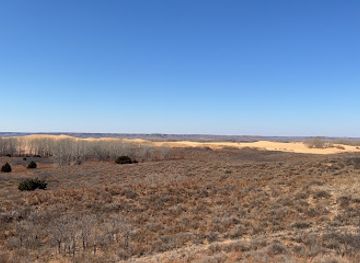
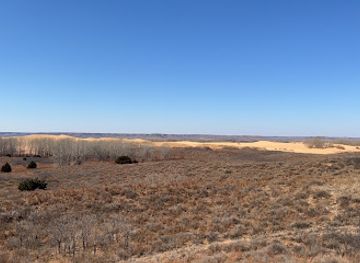
Little Sahara State Park spreads across approximately 1,600 acres of shifting sand in north-western Oklahoma, just south of Waynoka. Its dunes are remnants of extensive sand deposits associated with the Cimarron River, remodelled over time by prevailing winds into ridges, bowls and open slopes. Rather than a desert in the conventional sense, this is a compact Great Plains dunefield surrounded by grassland and rural farmland.Read more about Little Sahara State Park
A Landscape Built for Riding
Waynoka and the Wider Region
When is the best time to visit Little Sahara State Park?
Best: March–April, October · 19–24°C| Month | High (°C) | Rainfall (mm) |
|---|---|---|
| January | 11 | 29 |
| February | 14 | 31 |
| March (best) | 19 | 47 |
| April (best) | 24 | 61 |
| May | 28 | 104 |
| June | 33 | 90 |
| July | 36 | 71 |
| August | 35 | 74 |
| September | 32 | 71 |
| October (best) | 24 | 56 |
| November | 17 | 40 |
| December | 11 | 29 |
Getting to and around Little Sahara State Park
How to get there
Transportation
Best attractions in Little Sahara State Park
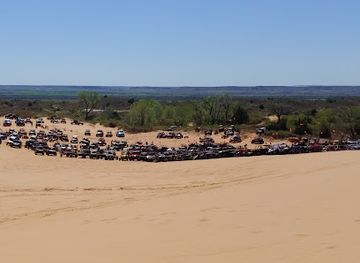
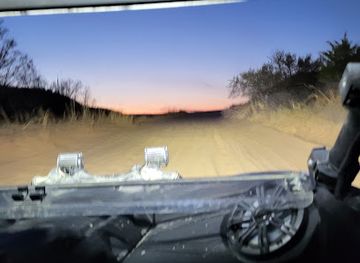
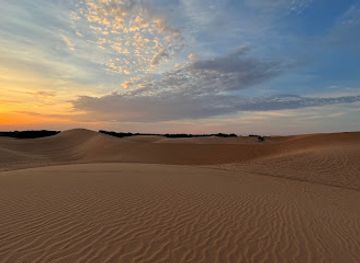
The principal attraction at Little Sahara State Park is its broad dunefield, where wind-shaped ridges, bowls and open sand faces create a changing landscape for off-highway vehicle recreation. Designated riding areas allow visitors with suitable machines to explore terrain that feels markedly different from the surrounding grassland plains, while non-riders can appreciate the dune forms from quieter edges and day-use areas. The park’s camping and picnic facilities make it possible to experience the landscape beyond a brief drive-through visit, and the low horizon offers expansive views at sunrise and sunset. Waynoka, immediately north of the park, provides the closest community and adds a Route 66-related historical dimension to the excursion. The surrounding north-west Oklahoma countryside is also part of the experience: agricultural land, open prairie and the Cimarron River region place the dunes within a broader Great Plains setting rather than an isolated desert environment.
-
Park
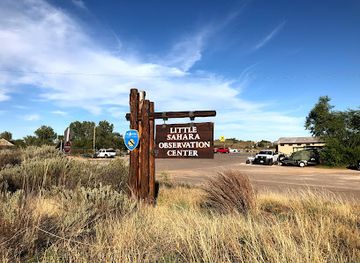
Little Sahara State Park Observation deck
Experience the stunning panoramic views of Little Sahara State Park's unique sand dunes from the Observation Deck in Waynoka, Oklahoma.
-
Park
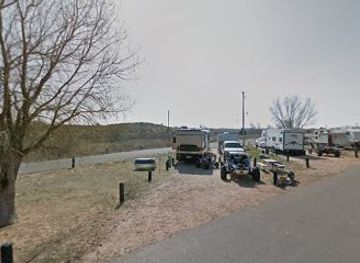
Buttercup Campground (Little Sahara State Park)
Discover the serene landscapes and thrilling adventures at Buttercup Campground in Little Sahara State Park, Oklahoma's hidden gem for outdoor enthusiasts.
-
 Park
ParkOasis Campground (Little Sahara State Park)
Experience the natural beauty and adventure of Oasis Campground at Little Sahara State Park, a perfect getaway for outdoor enthusiasts in Oklahoma.
-
Park
Cowboy Campground (Little Sahara State Park)
Experience the beauty of Cowboy Campground at Little Sahara State Park, an outdoor paradise filled with stunning sand dunes and endless adventures in Oklahoma.

Best landmarks in Little Sahara State Park
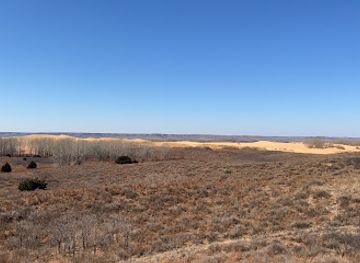
The defining landmark of Little Sahara State Park is the dunefield itself: a broad accumulation of wind-shaped sand rising above the surrounding plains and giving the park its name. Its significance lies in the contrast between mobile sand, stabilising grasses and the agricultural landscape of north-west Oklahoma. The Cimarron River region provides the geological context for the deposits from which the dunes developed, although the park is experienced chiefly through its ridges, hollows and open horizons rather than through monumental rock formations. Waynoka is the principal human landmark nearby, combining the practical role of park gateway with an association with historic Route 66. Within the park, camping areas, picnic facilities and designated riding zones are functional visitor landmarks, while the constantly changing contours of the sand remain the most recognisable natural feature.
-
Observation deck
Little Sahara State Park Observation deck
Experience the stunning views and unique landscapes of Little Sahara State Park Observation Deck in Oklahoma, a perfect destination for nature lovers and photographers.
-
Park
Oasis Campground (Little Sahara State Park)
Experience the beauty and adventure of Oasis Campground at Little Sahara State Park, where stunning sand dunes meet endless outdoor fun.
-
Park
Walking Hills Campground (Little Sahara State Park)
Explore the serene beauty of Walking Hills Campground at Little Sahara State Park, a paradise for outdoor enthusiasts and families in Oklahoma.
Explore Little Sahara State Park on the map
Plan your trip on one map. See where the top attractions, landmarks, restaurants and hotels are, and book hotels and experiences in a few clicks.
Best hotels in Little Sahara State Park
Best restaurants in Little Sahara State Park
Little Sahara State Park is primarily an outdoor recreation area, so dining is concentrated in Waynoka and other nearby communities rather than within the dunefield. Visitors should expect a modest rural selection of cafés, casual eateries and convenience provisions rather than a large restaurant district, with availability varying by day and season. Local dining reflects the practical food culture of north-west Oklahoma, where straightforward American meals, breakfast fare, sandwiches and familiar road-trip options are more characteristic than a specialised destination cuisine. Travellers staying in the park often bring food for campsites and picnics, while those arriving by off-highway vehicle should plan meals around riding and carry water and snacks. Farm shops and food outlets may be encountered elsewhere in the region, but visitors should confirm current opening arrangements and stock before relying on a particular stop.
-
State park
Little Sahara State Park
Explore breathtaking sand dunes and endless outdoor adventures at Little Sahara State Park in Oklahoma.
Best bars in Little Sahara State Park
Little Sahara State Park does not have a developed nightlife scene or a cluster of nightclubs, and evenings are generally shaped by camping, quiet conversation and the changing light over the dunes. Waynoka provides the nearest community atmosphere, with rural hospitality venues and local social life rather than a late-night entertainment district. Evening options can be limited, especially outside busier recreation periods, so visitors should not assume that food, drink or organised entertainment will be available after dark. The park’s open setting offers clear sunsets and broad skies, but visitors should follow camping rules, keep noise considerate and remember that vehicle activity may be subject to designated hours or current park regulations.
-
Observation deck
Little Sahara State Park Observation deck
Explore the stunning Little Sahara State Park Observation Deck, where breathtaking views of majestic sand dunes await visitors in Waynoka, Oklahoma.
-
Campground
North Hill Campground (Little Sahara State Park)
Experience the beauty of nature at North Hill Campground in Little Sahara State Park, where adventure meets tranquility in Oklahoma's great outdoors.
-
Park
Walking Hills Campground (Little Sahara State Park)
Discover the serenity and adventure of Walking Hills Campground at Little Sahara State Park, Oklahoma's outdoor paradise for nature lovers.
Best shops in Little Sahara State Park
Shopping at Little Sahara State Park is limited and practical, with the main opportunities found in Waynoka and other nearby rural communities rather than in a dedicated retail area inside the park. Visitors should obtain fuel, groceries, drinking water, camping supplies and vehicle essentials before entering the dunes, particularly when travelling with a trailer or staying overnight. Waynoka’s connection with Route 66 may provide opportunities to browse local memorabilia or small-town keepsakes, although the range and opening arrangements of individual businesses can change. Outdoor and off-highway vehicle equipment is not guaranteed locally, so specialist parts, protective gear and spare supplies are best arranged before arrival. Regional food products and handmade goods may appear through small businesses or seasonal events, but Little Sahara is not primarily a craft-shopping destination.
-
State park
Little Sahara State Park
Experience the unique landscapes and thrilling activities at Little Sahara State Park, Oklahoma's gem for outdoor adventure and nature exploration.
-
Observation deck
Little Sahara State Park Observation deck
Discover stunning vistas and thrilling adventures at Little Sahara State Park Observation Deck in Waynoka, Oklahoma, a paradise for outdoor lovers.
-
Auto parts store
Little Sahara Sandsports
Discover the thrill of sand sports at Little Sahara Sandsports in Waynoka, Oklahoma, where adventure meets stunning natural landscapes.
-
Park
Oasis Campground (Little Sahara State Park)
Experience the serene beauty of Oasis Campground in Little Sahara State Park, a paradise for campers and adventure enthusiasts in Oklahoma.
Get your free copy of our complete guide to Little Sahara State Park, delivered straight to you.
Everything on this page, from attractions and restaurants to essentials and local phrases, in one PDF you can read offline, print or share.
Already have an account? Sign in
Your Little Sahara State Park guide is ready.
We'll send it to · Not you? Sign out

Getting your guide ready…
We are putting together a fresh copy of the Little Sahara State Park guide. This can take up to a minute.
This can take a few moments. If your browser asks, choose Allow so the download can start. You'll find the guide in your Downloads folder.
Nothing happened? Download it again
Sorry, the guide is taking longer than usual. Please try again in a minute, or get it by email instead.
Little Sahara State Park essentials
Currency and Payment
Safety
Emergency Situations
Do's and Don'ts
Local Tips
From Eve
Local phrases worth knowing
You don't need to get them perfect. A few words go a long way, and locals appreciate the effort.
Basics
| English | Local | Say it |
|---|---|---|
| Hello | Howdy | [haw-dee] |
| Goodbye | See ya | [see yuh] |
| Yes | Yup | [yup] |
| No | Nah | [nah] |
| Please/You're welcome | Please | [pleez] |
| Thank you | Much obliged | [muhch uh-blahy-did] |
| Excuse me/Sorry | Pardon me | [pahr-dn mee] |
| How are you? | Howdy | [haw-dee] |
| Fine. And you? | Just dandy. You? | [juhst dan-dee. yuh?] |
| Do you speak English? | Ya speak English? | [yuh speak ing-glish?] |
| I don't understand | I'm plum confused | [ahym pluhm kuhnf-yoosed] |
Eating & Drinking
| English | Local | Say it |
|---|---|---|
| I'd like to see the menu, please | Show me the grub list, please | [shoh mee thee gruhb list, pleez] |
| I don't eat meat | I ain't a meat eater | [ahynt eyt uh meet ee-ter] |
| Cheers! | Bottoms up! | [bot-uhms uhp] |
| I would like to pay, please | I'll settle up, please | [ahyl set-l up, pleez] |
Emergencies
| English | Local | Say it |
|---|---|---|
| Help! | SOS! | [ess-oh-ess!] |
| Go away! | Git! | [git!] |
| Call the Police! | Ring the Sheriff! | [ring thee sher-iff!] |
| Call a doctor! | Fetch the Doc! | [fetch thee dawk!] |
| I'm lost | I'm all turned around | [ahym awl turnd uh-round] |
| I'm ill | I'm feelin' poorly | [ahym fee-lin pawr-lee] |
Shopping
| English | Local | Say it |
|---|---|---|
| I'd like to buy... | I'm fixin' to purchase... | [ahym fiks-in tuh pur-chuhs...] |
| I'm just looking | Just browsin' | [juhst brow-zin'] |
| How much is it? | What's the damage? | [whats thee dam-ij?] |
| That's too expensive | That's pricey | [thats prahy-see] |
| Can you lower the price? | Can ya cut a deal? | [kan yuh kuht uh deel?] |
Time & Numbers
| English | Local | Say it |
|---|---|---|
| What time is it? | Howdy | [haw-dee] |
| It's one o'clock | It's high noon | [its hahy noon] |
| Half past (10) | Half past ten | [hahf past ten] |
| Morning | Mornin' | [mawr-nin'] |
| Afternoon | Afternoon | [ahf-ter-noon] |
| Evening | Evenin' | [eev-nin'] |
| Yesterday | Yest'day | [yest-duh] |
| Today | Today | [tuh-day] |
| Tomorrow | Tomorrer | [tuh-mawr-er] |
| 1 | One | [wuhn] |
| 2 | Two | [too] |
| 3 | Three | [three] |
| 4 | Four | [fawr] |
| 5 | Five | [fahyv] |
| 6 | Six | [siks] |
| 7 | Seven | [sev-uhn] |
| 8 | Eight | [eyt] |
| 9 | Nine | [nahyn] |
| 10 | Ten | [ten] |
Transport & Directions
| English | Local | Say it |
|---|---|---|
| Where's a/the...? | Where's the... | [whairs thee...] |
| What's the address? | What's the location? | [whats thee loh-key-shun?] |
| Can you show me (on the map)? | Can ya point it out (on the map)? | [kan yuh point it out (on thee map)?] |
| When's the next (bus)? | When's the next ride? | [whens thee nekst ryd?] |
| A ticket (to ....) | A pass (to ....) | [uh pas (tuh ....)] |
History of Little Sahara State Park
Cimarron River Sand Deposits
The physical history of Little Sahara begins with sand deposited across the Cimarron River valley and adjacent plains. Over geological time, wind reworked these sediments into dunes, creating a mobile landscape within the wider grassland country of north-western Oklahoma. The dunes are therefore not a conventional desert and were not created by a single recent event; they are part of a longer interaction between river sediments, climate and wind. Their persistence reflects the continuing movement of loose sand across the site, while grasses and other plants stabilise sections of the surrounding terrain.
Plains Settlement and Waynoka
Human history around the dunefield is closely linked with the settlement of the north-west Oklahoma plains and the nearby community of Waynoka. Agriculture, ranching and transport shaped the region beyond the sand, while the Cimarron country remained a distinctive natural feature within a working rural landscape. Waynoka later became associated with the east-west Route 66 corridor, whose alignment brought travellers through the community and connected it with the larger history of twentieth-century automobile travel across the United States. The town remains the practical gateway to Little Sahara State Park.
From Local Landscape to State Park
Little Sahara became part of Oklahoma’s state park system in 1958, bringing public management to a landscape that had long been recognised locally for its unusual dunes. The park’s development introduced designated camping, day-use facilities and an organised setting for visitors, while preserving the sand hills as the central feature. As off-highway vehicles became an important form of recreation, management increasingly had to balance access and riding with erosion, vegetation and visitor safety. The result is a park whose identity is closely tied to active outdoor use rather than passive scenic touring.
Modern Recreation and Stewardship
Today, Little Sahara State Park is managed as a specialised sand-recreation destination within Oklahoma’s wider state park network. Its history is visible less through monumental buildings than through the continuing relationship between people, machines and a mobile landscape. Designated riding areas, camping facilities and visitor rules help concentrate use and reduce unnecessary pressure on surrounding vegetation and terrain. Weather remains an important force in the park’s character: wind can reshape exposed sand, while heat and storms affect both the experience and the practical demands of visiting.
Little Sahara State Park in Photos
Browse through our photo collection highlighting the charm and character of the destination.
Neighbouring destination travel guides
The closest destinations to Little Sahara State Park, if you have time for more than one.
-

-

-
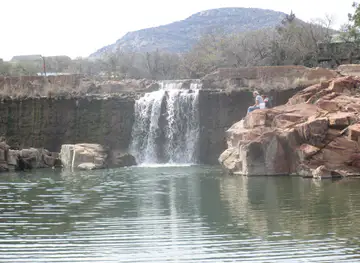
 Roman Nose State Park
 in Oklahoma combines gypsum hills, wooded canyons, spring-fed lakes, CCC heritage, trails, fishing and quiet stays near Watonga.
Roman Nose State Park
Roman Nose State Park in Oklahoma combines gypsum hills, wooded canyons, spring-fed lakes, CCC heritage, trails, fishing and quiet stays near Watonga.
-

-


Swipe for more destinations
Explore more

Explore more of Northwestern Oklahoma
Explore Northwestern Oklahoma for red mesas, salt plains, wildlife refuges, historic frontier towns, dark skies and wide-open Great Plains scenery.
Explore Northwestern Oklahoma
Explore more of Oklahoma
Discover Oklahoma: Where the spirit of the Old West meets modern charm, offering a rich mix of history, nature, and vibrant culture in the heart of the United States.
Explore Oklahoma