

Free Gilgit-Baltistan Travel Guide & Mobile App
Explore Gilgit-Baltistan with free travel guides. Discover regional history, expert tips, proposed trips, and audio guides on web or mobile app.


Explore Gilgit-Baltistan’s glacier-carved valleys, historic forts, high plateaux and mountaineering routes across northern Pakistan.
Read more about Gilgit-Baltistan
When is the best time to visit Gilgit-Baltistan?
Best: May–June, September · 23–28°C| Month | High (°C) | Rainfall (mm) |
|---|---|---|
| January | 4 | 15 |
| February | 7 | 20 |
| March | 12 | 25 |
| April | 18 | 20 |
| May (best) | 23 | 15 |
| June (best) | 28 | 10 |
| July | 31 | 10 |
| August | 30 | 15 |
| September (best) | 25 | 15 |
| October | 18 | 10 |
| November | 12 | 10 |
| December | 6 | 15 |
Getting to and around Gilgit-Baltistan
How to get there
Transportation
Top city travel guides in Gilgit-Baltistan
The cities of Gilgit-Baltistan, and the easiest places to base yourself.
-

-

-

-

-

-


Swipe for more cities
Destinations in Gilgit-Baltistan
Resorts, valleys and scenic spots worth a trip of their own.
-

-

-

-

-

-


Swipe for more destinations
Best attractions in Gilgit-Baltistan
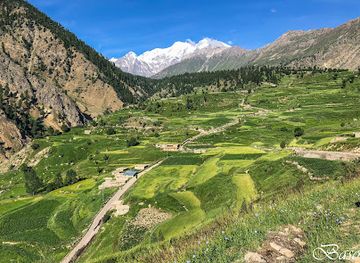
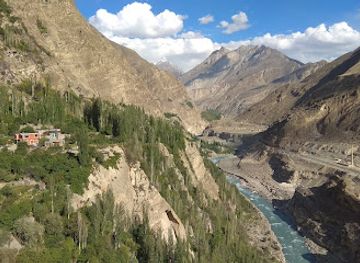
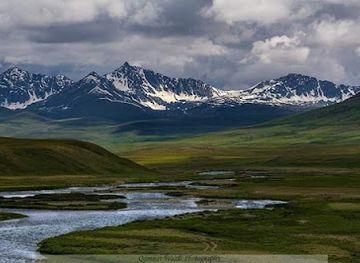
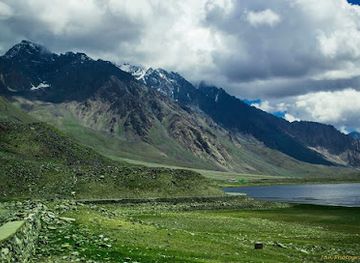
Gilgit-Baltistan’s attractions combine high-altitude landscapes with historic settlements and living mountain culture. Hunza offers valley walks, orchards, views towards Rakaposhi and the restored forts of Baltit and Altit, while nearby Nagar provides a contrasting landscape of glaciers, peaks and traditional villages. Around Gilgit, Naltar Valley is known for forested mountain scenery and lakes, and the wider district provides access to river valleys and rock-art sites. Skardu is the gateway to Satpara Lake, Kachura lakes, Shigar and major trekking approaches in Baltistan. Deosai National Park, reached seasonally from the Skardu and Astore sides, protects a broad high plateau famous for open grassland and Himalayan brown bear habitat. Astore leads towards mountain valleys and the trailhead for Fairy Meadows, accessed from Raikot before a demanding walk towards views of Nanga Parbat. Ghizer and Kharmang offer quieter lakes, rivers and pastoral landscapes, while Khaplu and Shigar combine heritage with access to eastern mountain routes. Walking, jeep excursions, rock climbing, trekking and mountaineering are the principal activities, but road journeys, village visits and seasonal agricultural landscapes are attractions in their own right.
-
Tourist attraction
Rama Meadows
Explore Rama Meadows, a serene hiking paradise in Astore Valley, Pakistan, where breathtaking views and natural beauty await every traveler.
-
Lake
Rama Lake
Discover the tranquil beauty of Rama Lake, a hidden gem offering stunning views, adventure, and a serene escape into nature's embrace.
-
Historical landmark
Yadgar Chowk
Discover the vibrant Yadgar Chowk, a historical landmark in Gilgit, where culture, community, and local cuisine come together in a lively atmosphere.
-
Tourist attraction
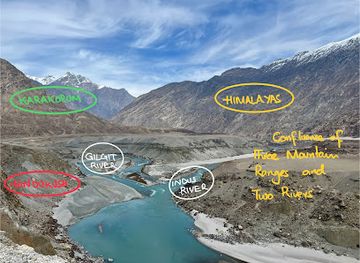
The Three Mountains Junction View Point
Experience the stunning views at The Three Mountains Junction View Point in Gilgit-Baltistan, where nature's beauty captivates every visitor.

Best landmarks in Gilgit-Baltistan
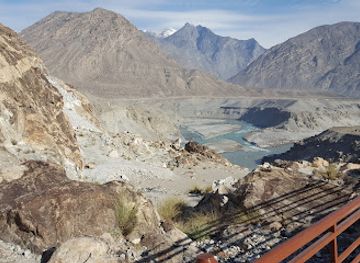
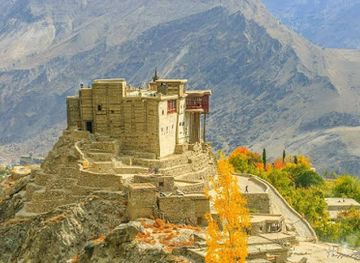
The forts of Gilgit-Baltistan are among its most recognisable landmarks. Baltit Fort stands above Karimabad in Hunza and reflects the valley’s former political order, while nearby Altit Fort occupies an older strategic position above the Hunza River. Shigar Fort, restored as a heritage property near Skardu, illustrates the architectural traditions of Baltistan; Khaplu Palace provides a similar historic reference in the eastern part of the region. The Karakoram Highway is itself a major engineered landmark, crossing the Indus and following the Hunza valley towards the Khunjerab Pass. At the natural scale, Rakaposhi’s immense rise above the Hunza landscape, Nanga Parbat viewed from Fairy Meadows and the broad, high terrain of Deosai define three very different mountain settings. Satpara Lake and the Kachura lakes lend Skardu distinctive waterside landmarks, while the carved rocks and inscriptions along ancient routes preserve evidence of earlier travellers and religious cultures. These places are significant not simply for their appearance, but for the way they reveal the region’s relationship with altitude, trade, defence, water and seasonal movement.
-
Tourist attraction
Baltit Fort Hunza
Explore Baltit Fort in Hunza Valley, a historic marvel offering breathtaking views, rich culture, and a glimpse into Pakistan's storied past.
-
Tourist attraction
Altit Fort
Experience the allure of Altit Fort, a historical gem in Hunza Valley, showcasing ancient architecture and breathtaking views.
-
National park
Deosai National Park
Discover the breathtaking beauty of Deosai National Park, home to stunning landscapes, diverse wildlife, and rich cultural heritage in Pakistan.
-
Mountain pass
Babusar Pass
Explore the stunning beauty of Babusar Pass, a high mountain pass in northern Pakistan, perfect for adventure seekers and nature lovers.
Explore Gilgit-Baltistan on the map
Plan your trip on one map. See where the top cities, national parks and sights are, and book hotels and experiences in a few clicks.
Best hotels in Gilgit-Baltistan
Best restaurants in Gilgit-Baltistan
Dining in Gilgit-Baltistan is closely connected to altitude, agriculture and the practical cuisine of mountain households. In Gilgit, Hunza and Skardu, guesthouses and restaurants serve chapshoro, a filled pastry associated with the northern valleys, along with noodle dishes, dumplings, soups and breads influenced by the region’s diverse communities. Balti food often features hearty broths, buckwheat or wheat-based staples and locally available meat and vegetables, while Hunza is well known for apricots, walnuts, cherries, mulberries and other orchard produce. In remote valleys, meals may be simple and seasonal, with rice, pulses, potatoes, eggs, flatbreads and preserved foods forming useful staples for travellers. Tea, apricot juice, jams and dried fruit are widely encountered, and some accommodation providers offer home-cooked menus by arrangement. Markets in the larger towns are useful for buying fruit, bread and snacks before a road journey or trek. Vegetarian dishes are often available, but visitors with dietary restrictions should explain them clearly because menus and kitchen facilities can be limited outside the main centres.
-
Hotel
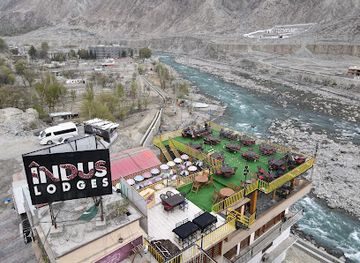
Indus Lodges Gilgit
Experience unparalleled comfort and breathtaking scenery at Indus Lodges Gilgit – your gateway to adventure in beautiful Gilgit-Baltistan.
-
Restaurant
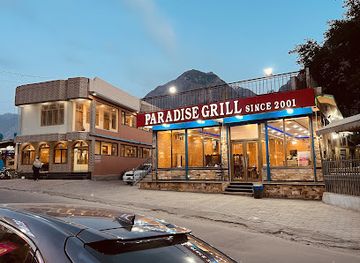
Paradise Hotel & Restaurant, Gilgit
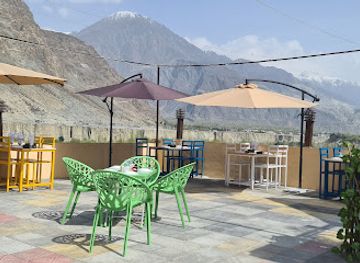
Experience authentic Pakistani flavors at Paradise Hotel & Restaurant with stunning views of the Gilgit River – a culinary gem in Gilgit-Baltistan.
-
Pizza
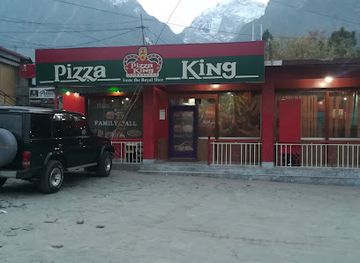
Pizza King GB
Discover mouth-watering pizzas and fast food delights at Pizza King GB in Gilgit-Baltistan – A must-visit culinary stop for every traveler.
-
Restaurant
Dawat Restaurant
Experience the rich flavors of Gilgit-Baltistan at Dawat Restaurant - where tradition meets exquisite taste.
Best bars in Gilgit-Baltistan
Gilgit-Baltistan does not have a conventional bar and nightclub culture. Pakistan is a predominantly Muslim society, and alcohol is restricted; visitors should never assume that licensed drinking venues or nightlife districts exist. Evening life is more likely to centre on family restaurants, hotel dining rooms, tea shops, guesthouse courtyards and informal gatherings. In Gilgit, Skardu and larger towns, cafés and restaurants may remain active after sunset, while Hunza has a modest traveller-oriented food and café scene. In rural valleys, nights are quiet and dark, with conversation, local music or early rest more common than late entertainment. Some hotels organise cultural performances or music for guests, but these arrangements are seasonal and should not be presumed. Dress modestly, observe local regulations and avoid public intoxication or disruptive behaviour, particularly in villages and around religious sites.
-
Restaurant
Paradise Hotel & Restaurant, Gilgit
Discover culinary bliss at Paradise Hotel & Restaurant in the heart of Gilgit-Baltistan, where exquisite flavors meet stunning mountain views.
-
Restaurant
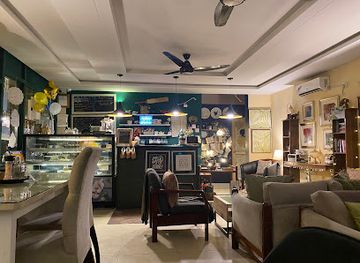
The CherryTree Café
Discover the flavors of Gilgit at The CherryTree Café, where local ingredients meet comfort food in a cozy atmosphere.
-
Restaurant
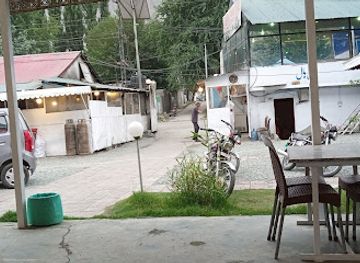
The Food Corridor
Discover the flavors of Gilgit at The Food Corridor, where local ingredients meet culinary creativity in a vibrant dining atmosphere.
-
Restaurant
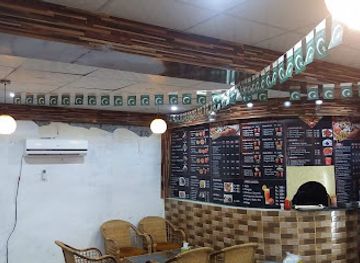
Gilgit Food Yard
Discover the vibrant flavors of Gilgit-Baltistan at Gilgit Food Yard, where traditional dishes meet a warm and welcoming atmosphere.
Best nightclubs in Gilgit-Baltistan
Gilgit-Baltistan does not have a conventional bar and nightclub culture. Pakistan is a predominantly Muslim society, and alcohol is restricted; visitors should never assume that licensed drinking venues or nightlife districts exist. Evening life is more likely to centre on family restaurants, hotel dining rooms, tea shops, guesthouse courtyards and informal gatherings. In Gilgit, Skardu and larger towns, cafés and restaurants may remain active after sunset, while Hunza has a modest traveller-oriented food and café scene. In rural valleys, nights are quiet and dark, with conversation, local music or early rest more common than late entertainment. Some hotels organise cultural performances or music for guests, but these arrangements are seasonal and should not be presumed. Dress modestly, observe local regulations and avoid public intoxication or disruptive behaviour, particularly in villages and around religious sites.
-
Resort hotel
Shangrila Resort Skardu
Experience the serenity and breathtaking beauty of Shangrila Resort Skardu, where luxury meets nature in the heart of the Karakoram range.
-
 Hotel
HotelSerena Shigar Fort
Experience the charm of Serena Shigar Fort, a luxurious hotel blending history, culture, and stunning natural landscapes in Gilgit-Baltistan.
-
Hotel
Indus Lodges Gilgit
Experience the beauty of Gilgit-Baltistan at Indus Lodges Gilgit, where comfort meets local charm in a breathtaking natural setting.
-
Hotel
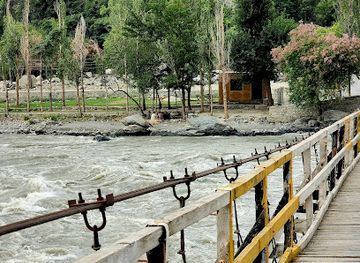
Gilgit Serena Hotel
Experience luxury and breathtaking views at Gilgit Serena Hotel in the heart of Gilgit-Baltistan.

Best shops in Gilgit-Baltistan
Shopping in Gilgit-Baltistan is modest in scale but closely linked to the region’s landscapes and craft traditions. Gilgit, Karimabad, Skardu, Shigar and Khaplu have small markets and independent shops selling dried apricots, cherries, mulberries, walnuts, honey, jams and other orchard products. Hunza is particularly associated with fruit-based foods and locally made preserves, while Baltistan offers woollens, embroidered textiles, caps, shawls, carved woodwork and selected handmade household items. Gemstones and mineral specimens are sold in some markets, but buyers should use reputable dealers and ask about provenance, export rules and documentation. Traditional fabrics, baskets and locally produced handicrafts make more meaningful purchases than mass-produced souvenirs, although quality and availability vary. Market shopping is generally informal, and cash in Pakistani rupees is useful outside larger hotels and established businesses. Pack fragile food and craft items carefully, and check current customs requirements before attempting to take minerals, antiques, archaeological material or animal products out of Pakistan.
-
Mountain peak
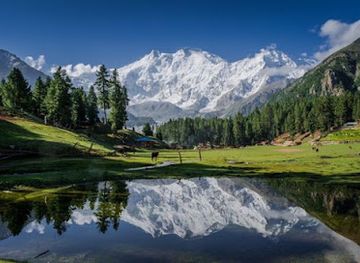
Nanga Parbat
Discover the breathtaking beauty and adventure of Nanga Parbat, one of the world's highest peaks in the heart of Pakistan's stunning landscapes.
-
Tourist attraction
The Three Mountains Junction View Point
Experience the breathtaking convergence of three majestic mountain ranges at The Three Mountains Junction View Point in Gilgit-Baltistan.
-
Shopping mall
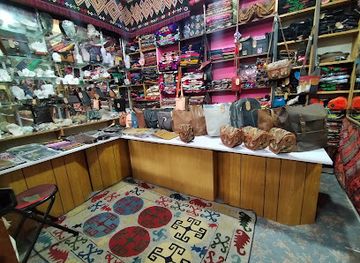
Gilgit Hunza Arts & Crafts International
Discover the rich artistic heritage of Gilgit-Baltistan at Gilgit Hunza Arts & Crafts International, a must-visit shopping destination for authentic crafts.
-
Carpet wholesaler
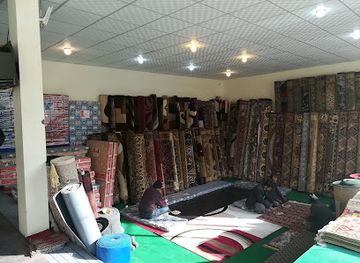
Dj Carpets and foam center
Explore the exquisite craftsmanship at Dj Carpets and Foam Center in Gilgit, a destination for unique carpets and quality foam products.
Get your free copy of our complete guide to Gilgit-Baltistan, delivered straight to you.
Everything on this page, from attractions and restaurants to essentials and local phrases, in one PDF you can read offline, print or share.
Already have an account? Sign in
Your Gilgit-Baltistan guide is ready.
We'll send it to · Not you? Sign out

Getting your guide ready…
We are putting together a fresh copy of the Gilgit-Baltistan guide. This can take up to a minute.
This can take a few moments. If your browser asks, choose Allow so the download can start. You'll find the guide in your Downloads folder.
Nothing happened? Download it again
Sorry, the guide is taking longer than usual. Please try again in a minute, or get it by email instead.
Gilgit-Baltistan essentials
Currency and Payment
Safety
Emergency Situations
Do's and Don'ts
Local Tips
From Eve
Local phrases worth knowing
You don't need to get them perfect. A few words go a long way, and locals appreciate the effort.
Basics
| English | Local | Say it |
|---|---|---|
| Hello | سلام | [Salam] |
| Goodbye | خدا حافظ | [Khuda Hafiz] |
| Yes | جی ہاں | [Ji Haan] |
| No | نہیں | [Nahin] |
| Please/You're welcome | براہ کرم/خوش آمدید | [Barah-e-Karam/Khush Aamdeed] |
| Thank you | شکریہ | [Shukriya] |
| Excuse me/Sorry | معاف کرنا/معاف کیجیے | [Maaf Karna/Maaf Kijiye] |
| How are you? | آپ کیسے ہیں؟ | [Aap Kaise Hain?] |
| Fine. And you? | ٹھیک ہوں۔ اور آپ؟ | [Theek Hoon. Aur Aap?] |
| Do you speak English? | کیا آپ انگریزی بولتے ہیں؟ | [Kya Aap Angrezi Bolte Hain?] |
| I don't understand | مجھے سمجھ نہیں آتا | [Mujhe Samaj Nahin Aata] |
Eating & Drinking
| English | Local | Say it |
|---|---|---|
| I'd like to see the menu, please | براہ کرم مینو دکھائیں | [Barah-e-Karam Menu Dikhain] |
| I don't eat meat | میں گوشت نہیں کھاتا | [Main Gosht Nahin Khaata] |
| Cheers! | چینج! | [Cheers!] |
| I would like to pay, please | براہ کرم، میں ادا کرنا چاہتا ہوں | [Barah-e-Karam, Main Ada Karna Chahta Hoon] |
Emergencies
| English | Local | Say it |
|---|---|---|
| Help! | مدد! | [Madad!] |
| Go away! | چلے جاؤ! | [Chalay Jao!] |
| Call the Police! | پولیس کو بلائیں! | [Police Ko Bulain!] |
| Call a doctor! | ڈاکٹر کو بلائیں! | [Doctor Ko Bulain!] |
| I'm lost | میں کھو گیا ہوں | [Main Kho Gaya Hoon] |
| I'm ill | میں بیمار ہوں | [Main Bimaar Hoon] |
Shopping
| English | Local | Say it |
|---|---|---|
| I'd like to buy... | میں خریدنا چاہتا ہوں... | [Main Kharidna Chahta Hoon...] |
| I'm just looking | میں صرف دیکھ رہا ہوں | [Main Sirf Dekh Raha Hoon] |
| How much is it? | یہ کتنے کا ہے؟ | [Yeh Kitne Ka Hai?] |
| That's too expensive | یہ بہت مہنگا ہے | [Yeh Bohat Mehnga Hai] |
| Can you lower the price? | کیا آپ قیمت کم کر سکتے ہیں؟ | [Kya Aap Qeemat Kam Kar Sakte Hain?] |
Time & Numbers
| English | Local | Say it |
|---|---|---|
| What time is it? | کیا وقت ہوا ہے؟ | [Kya Waqt Hua Hai?] |
| It's one o'clock | یہ ایک بجے ہیں | [Yeh Aik Baje Hain] |
| Half past (10) | ساڑھے (10) | [Saadhe (10)] |
| Morning | صبح | [Subah] |
| Afternoon | دوپہر | [Dopahar] |
| Evening | شام | [Shaam] |
| Yesterday | کل | [Kal] |
| Today | آج | [Aaj] |
| Tomorrow | کل | [Kal] |
| 1 | ایک | [Aik] |
| 2 | دو | [Do] |
| 3 | تین | [Teen] |
| 4 | چار | [Chaar] |
| 5 | پانچ | [Paanch] |
| 6 | چھ | [Chay] |
| 7 | سات | [Saat] |
| 8 | آٹھ | [Aath] |
| 9 | نو | [Nau] |
| 10 | دس | [Das] |
Transport & Directions
| English | Local | Say it |
|---|---|---|
| Where's a/the...? | کہاں ہے...؟ | [Kahan Hai...?] |
| What's the address? | پتہ کیا ہے؟ | [Pata Kya Hai?] |
| Can you show me (on the map)? | کیا آپ مجھے دکھا سکتے ہیں؟ | [Kya Aap Mujhe Dikha Sakte Hain?] |
| When's the next (bus)? | اگلی (بس) کب ہے؟ | [Agli (Bus) Kab Hai?] |
| A ticket (to ....) | ایک ٹکٹ (....) کے لئے | [Aik Ticket (....) Ke Liye] |
History of Gilgit-Baltistan
Ancient Rock Art and the Silk Roads
Gilgit-Baltistan has been inhabited and traversed for thousands of years. Rock carvings and inscriptions found along the Indus and other valleys record hunters, animals, religious symbols and travellers from different periods. The region’s position between Central Asia, the Tibetan plateau, Kashmir and the plains made it a significant corridor for trade and cultural exchange. Parts of the ancient route network later associated with the Silk Roads carried merchants, pilgrims and armies through mountain passes, leaving an inheritance of multilingual communities and overlapping artistic and religious influences.
Buddhist and Early Islamic Influences
Before Islam became dominant, Buddhism was influential across parts of the northern mountain region, particularly along routes linking Gandhara and Central Asia. Rock carvings, manuscript traditions and archaeological traces reflect this earlier religious landscape, although interpretation varies between sites. Islam spread gradually through trade, missionary activity and the work of religious scholars, rather than through one single event. Over time, different valleys developed distinct Islamic traditions, including the Ismaili communities prominent in parts of Hunza, Nagar and Ghizer and the Shia and Sunni communities found elsewhere.
Fortified Valley States and Local Rulers
For centuries, mountain valleys were organised around local rulers, hereditary leaders and fortified settlements. The forts at Baltit and Altit in Hunza, Shigar in Baltistan and Khaplu near the eastern valleys are enduring reminders of this political order. Their positions allowed rulers to oversee agricultural land, water channels and routes through the mountains. These small states maintained relationships, rivalries and trading links with neighbouring valleys and larger powers, while local architecture adapted to earthquakes, harsh winters and limited building materials.
Dogra Expansion and Imperial Frontier Politics
During the nineteenth century, the Dogra kingdom of Jammu and Kashmir expanded into the northern mountain territories, bringing several valleys into a wider political framework. The British later administered the region through arrangements connected with the princely state and their frontier policy, while local rulers retained varying degrees of authority. This period intensified strategic interest in routes towards Xinjiang, Afghanistan and Central Asia. Forts, administrative remnants and changing patterns of trade reflect the political importance that outside powers attached to the mountain frontier.
Partition and the Formation of Northern Administration
The political upheaval surrounding the 1947 Partition of British India transformed the administration of the northern territories. Gilgit-Baltistan subsequently developed under Pakistan-administered arrangements distinct from the provinces of Pakistan, with constitutional and political questions remaining contested in the broader Kashmir dispute. For travellers, the practical result is a region administered separately from Pakistan’s provinces, with its own local institutions and access procedures. The area’s strategic position has continued to influence roads, security planning and cross-border policy.
The Karakoram Highway
Constructed between Pakistan and China from the 1960s and opened to public traffic in the late twentieth century, the Karakoram Highway reshaped access to Gilgit-Baltistan. It follows major river valleys and links the lowland road network with Hunza, Gilgit and the Khunjerab Pass. The highway brought new opportunities for trade, education, tourism and health access, while also exposing remote communities to greater traffic and commercial change. Its bridges, tunnels and cliffside sections remain among the clearest modern expressions of the region’s strategic geography.
Mountaineering and Contemporary Tourism
International mountaineering brought new attention to Gilgit-Baltistan during the twentieth century, particularly to the Baltoro region and peaks around K2, Broad Peak and the Gasherbrums. Expeditions rely on specialist porters, guides and service communities from the mountain valleys, making climbing part of the region’s modern economy as well as its global image. Trekking, jeep travel, cultural tourism and domestic holidays have expanded as roads and accommodation improved. Tourism remains seasonal and vulnerable to weather, access constraints and changing security conditions.
Gilgit-Baltistan in Photos
Browse through our photo collection highlighting the charm and character of the destination.
Neighbouring regions of Gilgit-Baltistan
The closest regions to Gilgit-Baltistan, if you have time for more than one.
-

-

-

-

-


Swipe for more regions
Explore more

Explore more of Pakistan
Discover Pakistan: A land of majestic mountains, rich history, and delicious cuisine, where every journey is an adventure and every moment is filled with wonder.
Explore Pakistan