

Free Douro Travel Guide & Mobile App
Explore Douro with free travel guides. Discover regional history, expert tips, proposed trips, and audio guides on web or mobile app.


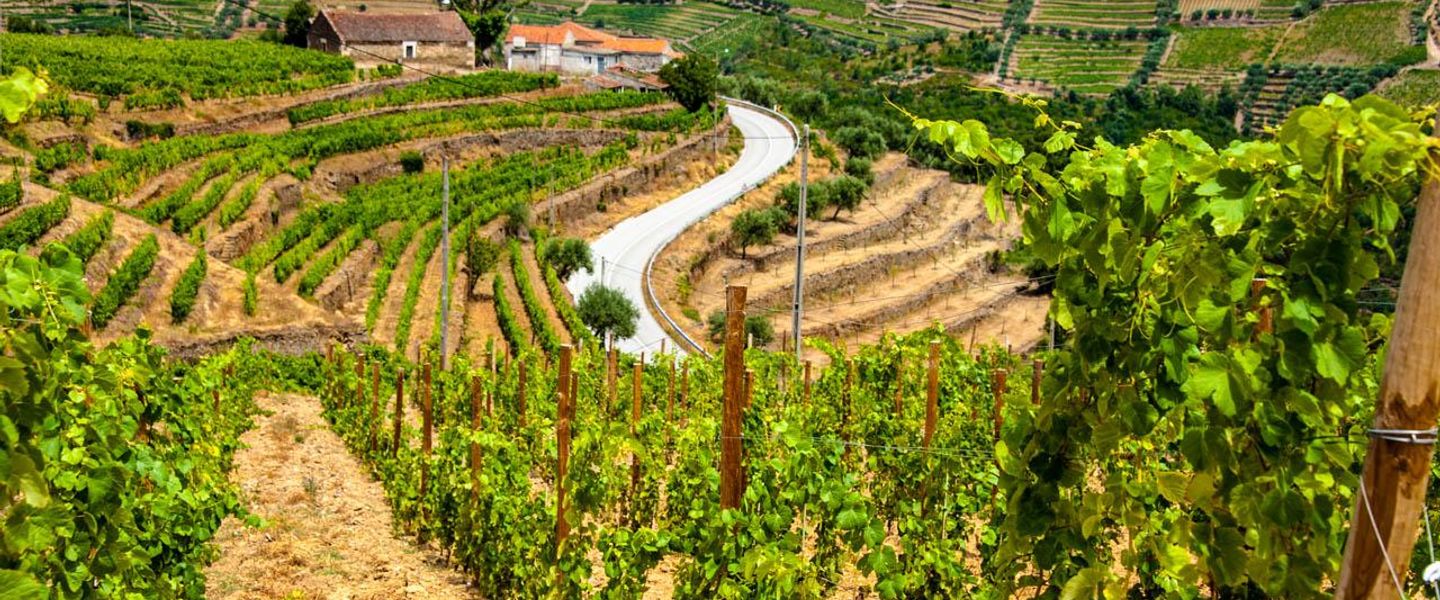


Explore Portugal’s Douro through terraced vineyards, Port wine estates, river cruises, historic towns and winding scenic roads.
Read more about Douro
When is the best time to visit Douro?
Best: May–June, October · 23–30°C| Month | High (°C) | Rainfall (mm) |
|---|---|---|
| January | 14 | 80 |
| February | 15 | 75 |
| March | 19 | 85 |
| April | 22 | 90 |
| May (best) | 26 | 70 |
| June (best) | 30 | 50 |
| July | 33 | 30 |
| August | 33 | 35 |
| September | 29 | 65 |
| October (best) | 23 | 80 |
| November | 16 | 90 |
| December | 13 | 95 |
Getting to and around Douro
How to get there
Transportation
Top city travel guides in Douro
The cities of Douro, and the easiest places to base yourself.
-

-

-

-


Swipe for more cities
Destinations in Douro
Resorts, valleys and scenic spots worth a trip of their own.
-

-

-


Swipe for more destinations
Best attractions in Douro
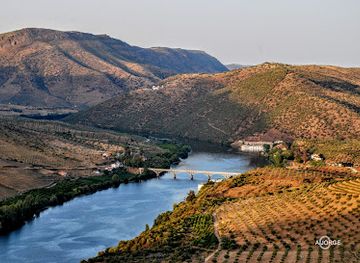
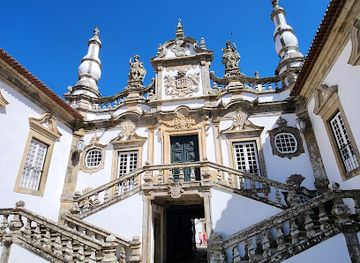
The Douro’s attractions are inseparable from its cultivated landscape. Wine estates around Pinhão, Régua, São João da Pesqueira, Sabrosa and Tabuaço offer tastings, cellar visits and views across patterned hills, though advance arrangements are often needed. The Museu do Douro in Peso da Régua explains how vineyards, river transport, labour and Port commerce shaped the valley. River cruises reveal the scale of the terraces from below, while the railway journey from Porto towards Régua and Pinhão provides a slower scenic approach. Historic Lamego combines the cathedral, old streets and the Baroque staircase of the Nossa Senhora dos Remédios sanctuary; nearby villages and rural chapels add quieter architectural interest. Viewpoints such as São Leonardo de Galafura frame the river and vineyard slopes, while eastern destinations offer more open scenery, olive groves and the Côa Valley Archaeological Park near Vila Nova de Foz Côa. Walking, birdwatching, cycling and carefully planned scenic drives broaden the experience, although steep ground and summer heat make preparation important.
-
Catholic church
Santuário de Nossa Senhora dos Remédios
Discover the stunning Santuário de Nossa Senhora dos Remédios in Lamego, a beautiful Catholic sanctuary with breathtaking views and rich history.
-
Foundation
Fundação da Casa de Mateus
Discover the baroque beauty and rich history of Casa de Mateus in Vila Real, surrounded by enchanting gardens and stunning landscapes.
-
Amusement park
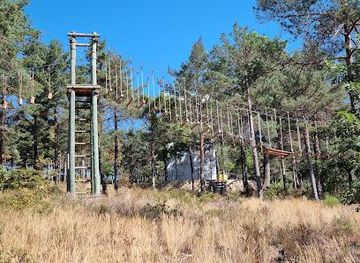
Pena Aventura
Experience the ultimate family adventure at Pena Aventura, a stunning amusement park with thrilling rides and beautiful natural landscapes in Ribeira de Pena.
-
Nature preserve
Parque Arqueológico do Vale do Côa
Explore the stunning archaeological wonders of Parque Arqueológico do Vale do Côa, where ancient rock art meets breathtaking natural landscapes in Portugal.



Best landmarks in Douro
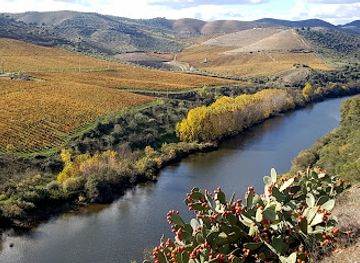
The Douro’s most recognisable landmarks are often landscapes rather than isolated monuments. The terraced slopes of the Alto Douro Wine Region, with their retaining walls, quintas and river-facing vineyards, form a cultural landscape shaped by centuries of labour and wine production. In Pinhão, the railway station is notable for its extensive blue-and-white tile panels depicting rural life, harvest scenes and river traffic. Peso da Régua’s riverfront and wine warehouses reflect its historic role in organising and shipping the valley’s production, while the Museu do Douro occupies a former wine company building. Above the river, the São Leonardo de Galafura viewpoint provides one of the most memorable panoramas of the central valley. Lamego’s Nossa Senhora dos Remédios sanctuary is a major Baroque landmark, reached by an imposing ornamental staircase, and the town’s cathedral anchors its historic centre. Farther east, the Côa Valley’s engraved schist surfaces are landmarks of prehistoric art rather than conventional architecture, while borderland towns such as Freixo de Espada à Cinta retain fortified and religious features shaped by their frontier history.
-
Country park
Arribes del Duero Natural Park
Explore Arribes del Duero Natural Park, a natural gem in Spain with stunning landscapes, rich biodiversity, and endless outdoor adventures.
-
Archaeological museum
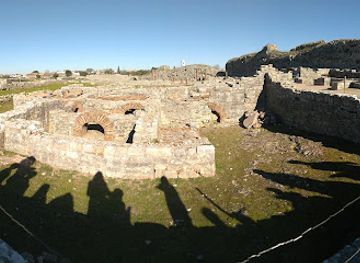
Conimbriga Ruins
Explore the breathtaking Conimbriga Ruins, a captivating archaeological site that reveals the wonders of ancient Roman civilization in Portugal.
-
Country park
Parque Natural do Douro Internacional
Explore the stunning landscapes and rich biodiversity of Parque Natural do Douro Internacional, a must-visit destination for nature lovers in Portugal.
-
Foundation
Fundação da Casa de Mateus
Explore the baroque beauty of Casa de Mateus, a historic foundation with captivating gardens in the stunning Douro Valley, Portugal.
Explore Douro on the map
Plan your trip on one map. See where the top cities, national parks and sights are, and book hotels and experiences in a few clicks.
Best hotels in Douro
Best restaurants in Douro
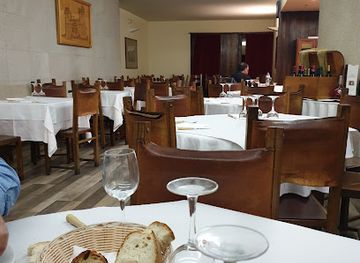
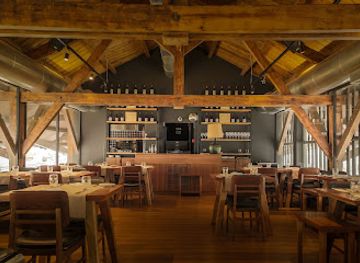
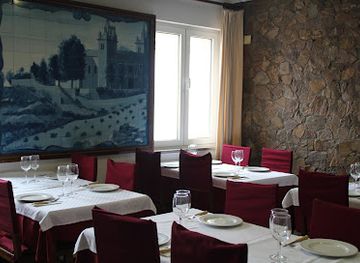
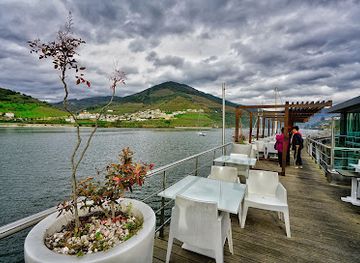
Douro dining reflects the substantial cooking of northern and inland Portugal, with menus shaped by local agriculture rather than a single signature dish. Restaurants and rural inns commonly serve grilled or roasted meats, kid, sausages, cured pork, river fish where available, seasonal vegetables and hearty soups. In the eastern districts, olive oil, almonds, honey and regional cheeses are especially relevant, while Lamego is associated with local sausages and the celebrated presunto of the wider Trás-os-Montes and northern interior food culture. Desserts may include convent-style sweets and cakes made with eggs, sugar, nuts or almonds. Wine is central: ask about the difference between Port and dry Douro wines, and consider tasting several styles rather than treating Port only as an after-dinner drink. Régua, Pinhão and Lamego offer the broadest choice of restaurants and cafés, while a quinta meal can provide a more agricultural setting when booked in advance. Markets and small food shops are useful for bread, fruit, cheese and cured products for a picnic.
-
Restaurant
Restaurante O Mirandês
Discover authentic Portuguese cuisine at Restaurante O Mirandês in Miranda do Douro - a must-visit for food lovers seeking local flavors.
-
Restaurant
Castas e Pratos
Experience authentic Portuguese cuisine paired with exquisite Douro Valley wines at Castas e Pratos in Peso da Régua.
-
Portuguese
São Pedro
Experience authentic Portuguese cuisine at São Pedro in Miranda do Douro – where every dish tells a story.
-
Restaurant
DOC - Chef Rui Paula
Experience exquisite dining at DOC - Chef Rui Paula in Douro Valley with breathtaking views and culinary artistry.
Best bars in Douro
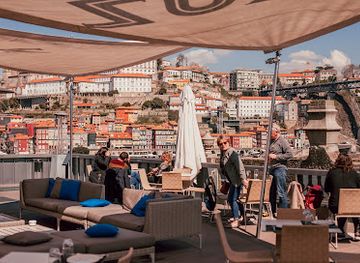
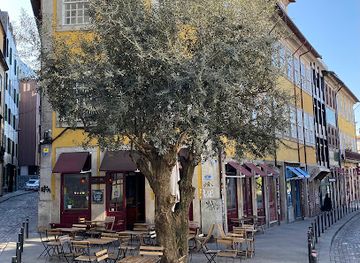
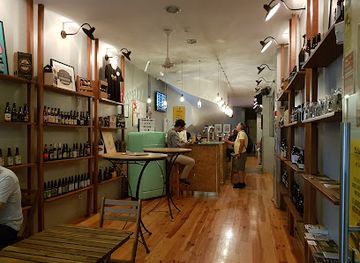
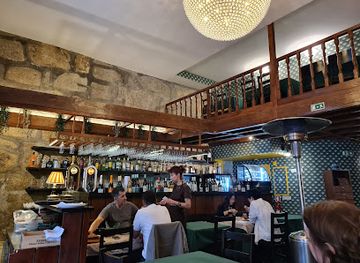
Evenings in the Douro are generally quiet and centred on wine, food and conversation rather than a large club scene. Régua and Pinhão have the greatest concentration of cafés, hotel bars and places serving Port or Douro wine, while Lamego provides a broader local evening circuit with restaurants, cafés and traditional bars. In smaller villages, the social focus is usually a café, tasca or family-run restaurant, and rural estates may offer tastings or dinners by arrangement rather than regular late-night entertainment. Seasonal events and summer gatherings can enliven town squares, but schedules vary and should be checked locally. Visitors interested in wine can explore producer tastings, cellar experiences and wine-focused accommodation, remembering that these are commercial visits rather than a substitute for nightlife. Taxi planning is important after tastings because accommodation and villages may be separated by winding roads with limited late transport.
-
Restaurant
Espaço Porto Cruz
Experience the essence of Portuguese wine culture at Espaço Porto Cruz, where exquisite flavors and stunning views await every visitor.
-
Bar
Aduela
Experience the vibrant nightlife of Porto at Aduela, a local bar known for its cozy atmosphere and eclectic drink selection.
-
Brewpub
Catraio Craft Beer Shop & Bar
Discover Catraio Craft Beer Shop & Bar in Porto, where craft beer lovers gather for an exceptional selection and vibrant atmosphere.
-
Bar
Espaço 77
Discover the lively atmosphere of Espaço 77, Porto's beloved bar offering a diverse drink selection and welcoming vibes.
Best nightclubs in Douro
Evenings in the Douro are generally quiet and centred on wine, food and conversation rather than a large club scene. Régua and Pinhão have the greatest concentration of cafés, hotel bars and places serving Port or Douro wine, while Lamego provides a broader local evening circuit with restaurants, cafés and traditional bars. In smaller villages, the social focus is usually a café, tasca or family-run restaurant, and rural estates may offer tastings or dinners by arrangement rather than regular late-night entertainment. Seasonal events and summer gatherings can enliven town squares, but schedules vary and should be checked locally. Visitors interested in wine can explore producer tastings, cellar experiences and wine-focused accommodation, remembering that these are commercial visits rather than a substitute for nightlife. Taxi planning is important after tastings because accommodation and villages may be separated by winding roads with limited late transport.
-
Night club
Moreclub, Lda.
Discover the electric atmosphere of Moreclub, Porto's premier night club where music and dancing come alive every night.
-
Night club
Plano B
Experience Porto’s nightlife at Plano B, a unique nightclub and art space that blends culture, music, and vibrant energy.
-
Night club
Rendez Vous - Discoteca
Discover the vibrant nightlife at Rendez Vous, Porto's top destination for music, dance, and unforgettable experiences in the heart of the city.
-
Night club
The View
Experience electrifying nightlife at The View, a premier nightclub in Vila Nova de Gaia with stunning views of the Douro River.


Best shops in Douro
Shopping in the Douro is focused on regional produce, wine and small-town retail rather than large commercial centres. Régua and Pinhão are the most convenient places to buy Port and Douro wines, with producer shops and specialist outlets offering bottles from established houses and smaller estates; ask about transport arrangements if purchasing several bottles. Lamego has a broader traditional high-street selection, including food shops, bakeries, ceramics and regional products. Across the valley, look for olive oil, almonds, honey, preserves, cured meats, cheeses and locally made sweets, while vineyard estates often sell gift packs linked to their own production. Craft and souvenir choices may include cork goods, pottery, embroidered textiles and decorative items, though quality varies. Weekly markets in larger towns can be useful for observing everyday trade and buying fruit or provisions, but market days differ by municipality. Rural shops may close during the middle of the day, and opening arrangements are less predictable than in Portugal’s major cities, so buy essential supplies before heading into the hills.
-
Shopping mall
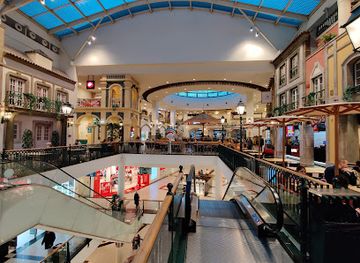
ViaCatarina Shopping
Explore the diverse shopping and dining experiences at ViaCatarina Shopping in Porto, where local charm meets modern retail.
-
Hotel
Six Senses Douro Valley
Experience luxury and tranquility at Six Senses Douro Valley, where stunning landscapes and exceptional amenities create an unforgettable retreat.
-
Tour operator
DailyTours - Porto and Douro Valley excursions
Explore Porto and the Douro Valley with DailyTours for an unforgettable journey through Portugal's breathtaking landscapes and rich culture.
-
Hotel
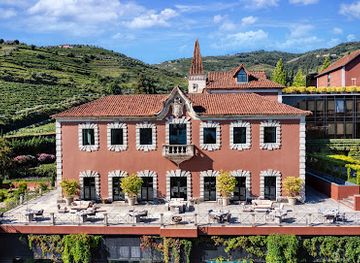
The Vintage House Hotel, Douro
Discover luxury and tranquility at The Vintage House Hotel, nestled in the breathtaking Douro Valley with stunning river views and fine dining.
Get your free copy of our complete guide to Douro, delivered straight to you.
Everything on this page, from attractions and restaurants to essentials and local phrases, in one PDF you can read offline, print or share.
Already have an account? Sign in
Your Douro guide is ready.
We'll send it to · Not you? Sign out

Getting your guide ready…
We are putting together a fresh copy of the Douro guide. This can take up to a minute.
This can take a few moments. If your browser asks, choose Allow so the download can start. You'll find the guide in your Downloads folder.
Nothing happened? Download it again
Sorry, the guide is taking longer than usual. Please try again in a minute, or get it by email instead.
Douro essentials
Currency and Payment
Safety
Emergency Situations
Do's and Don'ts
Local Tips
From Eve
Local phrases worth knowing
You don't need to get them perfect. A few words go a long way, and locals appreciate the effort.
Basics
| English | Local | Say it |
|---|---|---|
| Hello | Olá | [oh-LAH] |
| Goodbye | Adeus | [ah-DEH-ooz] |
| Yes | Sim | [seem] |
| No | Não | [now] |
| Please/You're welcome | Por favor | [poor fah-VOR] |
| Thank you | Obrigado | [oh-bree-GAH-doo] |
| Excuse me/Sorry | Desculpe | [deh-SKOOL-peh] |
| How are you? | Como está? | [KOH-moo es-TAH] |
| Fine. And you? | Estou bem. E você? | [es-TOH behm. eh voh-SEH] |
| Do you speak English? | Você fala inglês? | [voh-SEH FAH-lah een-GLEZ] |
| I don't understand | Não entendo | [now en-TEN-doo] |
Eating & Drinking
| English | Local | Say it |
|---|---|---|
| I'd like to see the menu, please | Gostaria de ver o menu, por favor | [goh-stah-REE-ah jeh veh-ROH meh-NOO, poor fah-VOR] |
| I don't eat meat | Não como carne | [now KOH-moo KAR-nee] |
| Cheers! | Saúde! | [sah-OO-deh] |
| I would like to pay, please | Gostaria de pagar, por favor | [goh-stah-REE-ah jeh pah-GAR, poor fah-VOR] |
Emergencies
| English | Local | Say it |
|---|---|---|
| Help! | Ajuda! | [ah-ZHOO-dah] |
| Go away! | Vá embora! | [vah em-BOH-rah] |
| Call the Police! | Chame a polícia! | [SHAH-mee ah poh-LEE-syah] |
| Call a doctor! | Chame um médico! | [SHAH-mee oom MEH-dee-ko] |
| I'm lost | Estou perdido | [es-TOH pehr-DEE-doo] |
| I'm ill | Estou doente | [es-TOH do-EHN-tay] |
Shopping
| English | Local | Say it |
|---|---|---|
| I'd like to buy... | Gostaria de comprar... | [goh-stah-REE-ah jeh kom-PRAR] |
| I'm just looking | Estou só a ver | [es-TOH soh ah VEHR] |
| How much is it? | Quanto custa? | [KWAN-toh KOOS-tah] |
| That's too expensive | Isso é muito caro | [EE-soh eh MOY-toh KAH-roh] |
| Can you lower the price? | Pode baixar o preço? | [POH-deh bye-SHAR oo PREH-soh] |
Time & Numbers
| English | Local | Say it |
|---|---|---|
| What time is it? | Que horas são? | [keh OR-as sah-ooh] |
| It's one o'clock | É uma hora | [eh OO-mah OR-ah] |
| Half past (10) | Dez e meia | [dehz eh MAY-ah] |
| Morning | Manhã | [mahn-YAH] |
| Afternoon | Tarde | [TAR-deh] |
| Evening | Noite | [NOY-tay] |
| Yesterday | Ontem | [ON-tem] |
| Today | Hoje | [OH-zheh] |
| Tomorrow | Amanhã | [ah-mahn-YAH] |
| 1 | Um | [oom] |
| 2 | Dois | [doyz] |
| 3 | Três | [trehz] |
| 4 | Quatro | [KWAH-troh] |
| 5 | Cinco | [SEEN-koh] |
| 6 | Seis | [saze] |
| 7 | Sete | [SEH-teh] |
| 8 | Oito | [OY-toh] |
| 9 | Nove | [NOH-veh] |
| 10 | Dez | [dehz] |
Transport & Directions
| English | Local | Say it |
|---|---|---|
| Where's a/the...? | Onde fica um/a...? | [ON-deh FEE-kah oom/ah] |
| What's the address? | Qual é o endereço? | [kwal eh oo en-deh-REH-soo] |
| Can you show me (on the map)? | Pode me mostrar (no mapa)? | [POH-deh meh mohs-TRAR (no MAH-pah)] |
| When's the next (bus)? | Quando é o próximo (autocarro)? | [KWAN-doo eh oo PROH-seem-o (ow-toh-KAH-roo)] |
| A ticket (to ....) | Um bilhete (para ....) | [oom bee-LYEH-tay (PAH-rah)] |
History of Douro
Prehistoric engravings in the Côa Valley
The eastern Douro preserves one of Europe’s most important concentrations of open-air Palaeolithic rock art in the Côa Valley, near Vila Nova de Foz Côa. Engravings of animals and abstract forms were made on schist surfaces beside the river and its tributaries over many thousands of years. Their survival demonstrates that the Douro landscape has long been used, observed and given cultural meaning. The Côa Valley Archaeological Park, created after the protection of the sites, presents this heritage through guided visits and interpretation rather than treating the engravings as isolated curiosities.
Roman roads, farms and river crossings
Roman rule connected the Douro interior more closely to the wider Iberian world. Roads, bridges, agricultural settlements and administrative networks supported the movement of people and goods through a difficult landscape, while river valleys provided routes between upland communities. Archaeological remains across the wider Douro testify to the cultivation of land and the extraction or movement of resources during and after the Roman period. Later settlements often reused these corridors, helping explain why several modern towns and historic routes occupy long-established positions above or beside the river.
Medieval settlement and fortified frontiers
During the medieval period, Christian kingdoms, Muslim polities and local lordships contested territory across northern and eastern Portugal. Monasteries, parish churches, hilltop settlements and fortified towns helped consolidate Christian rule and organise agriculture. The eastern Douro’s proximity to the Spanish border gave places such as Freixo de Espada à Cinta and Torre de Moncorvo strategic importance, while Lamego developed as a religious and political centre. The period left a layered built heritage of granite villages, churches, chapels and defensive structures rather than a single uniform medieval landscape.
The formation of the Port-wine landscape
Port production connected the Douro valley to Atlantic commerce and especially to the merchants of Porto, whose companies exported wine to Britain and other markets. To protect quality and regulate production, the Portuguese crown established the first officially demarcated wine region in 1756 under the Marquês de Pombal. Vineyards were classified, production controlled and the boundaries of the Douro wine territory defined. The terraces, walls, farm buildings and river transport routes visible today are the physical result of this long interaction between commercial regulation, estate ownership and intensive vineyard labour.
Railways and the modernisation of the valley
The construction of the Douro railway transformed movement through the valley in the nineteenth and early twentieth centuries. Instead of relying chiefly on the river and difficult roads, wine and other goods could travel more efficiently towards Porto, while passengers gained improved access to inland communities. Stations such as Pinhão became notable gateways to the vineyard country, and decorated ceramic panels at Pinhão railway station later acquired their own cultural importance. Although parts of the original railway network have closed, the line along the river remains one of the most memorable ways to reach the central Douro.
Terraces, mechanisation and wine diversification
The twentieth century brought economic pressure, rural depopulation and changes in wine production, but it also strengthened the Douro’s international identity. Traditional terraces were supplemented in some areas by newer planting systems designed to support mechanisation, while producers increasingly developed dry Douro wines alongside Port. The region’s agricultural economy remains labour-intensive, especially during vintage, yet tourism, wine interpretation and heritage conservation now form important complements to farming. UNESCO recognition of the Alto Douro Wine Region in 2001 acknowledged the continuing cultural landscape created by generations of vineyard cultivation.
Douro in Photos
Browse through our photo collection highlighting the charm and character of the destination.
Neighbouring regions of Douro
The closest regions to Douro, if you have time for more than one.
-

-

-

-

-


Swipe for more regions
Explore more
Explore more of Portugal
Discover Portugal: A blend of historic charm, stunning coastlines, and delightful cuisine awaits in this captivating European gem.
Explore Portugal