

Free Argeș Travel Guide & Mobile App
Explore Argeș with free travel guides. Discover regional history, expert tips, proposed trips, and audio guides on web or mobile app.


Explore Argeș in Romania for royal heritage, medieval churches, Transfăgărășan mountain roads, river valleys and traditional Wallachian food.
Read more about Argeș
When is the best time to visit Argeș?
Best: June–August · 23–25°C| Month | High (°C) | Rainfall (mm) |
|---|---|---|
| January | 2 | 30 |
| February | 3 | 32 |
| March | 9 | 40 |
| April | 15 | 50 |
| May | 20 | 60 |
| June (best) | 23 | 70 |
| July (best) | 25 | 60 |
| August (best) | 25 | 50 |
| September | 20 | 40 |
| October | 14 | 30 |
| November | 7 | 35 |
| December | 2 | 38 |
Getting to and around Argeș
How to get there
Transportation
Top city travel guides in Argeș
The cities of Argeș, and the easiest places to base yourself.
-

-


Swipe for more cities
Destinations in Argeș
Resorts, valleys and scenic spots worth a trip of their own.
-

-

-

-

-

-


Swipe for more destinations
Best attractions in Argeș
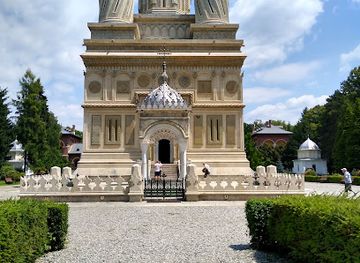
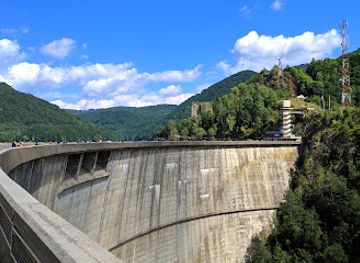
Argeș combines historic monuments with a substantial mountain and rural offering. Curtea de Argeș provides the county’s strongest concentration of cultural attractions, including the Episcopal Cathedral, the Princely Church of Saint Nicholas and the remains of the medieval court. North of the city, Poenari Castle occupies a steep ridge above the Argeș valley, while Vidraru Dam and Lake introduce a striking twentieth-century engineering landscape. The Transfăgărășan leads towards high mountain scenery and seasonal walking routes, although access depends on weather and road conditions. In the eastern part of the county, Câmpulung, Rucăr and the Dâmbovicioara valley offer historic streets, limestone formations, caves and rural scenery. Pitești has museums, parks and cultural institutions suited to a town-based visit, while the countryside provides opportunities for hiking, cycling, fishing and photography. The attraction landscape is defined by contrasts: princely and royal heritage in the south-west, industrial and urban life around Pitești and Mioveni, and increasingly wild valleys and high roads towards the Făgăraș Mountains.
-
Monastery
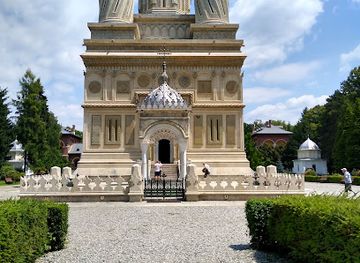
"Curtea de Argeș" Monastery
Explore the architectural marvel of Curtea de Argeș Monastery, a historical landmark steeped in Romanian culture and spirituality.
-
Historical landmark
Poenari Citadel
Discover the enchanting Poenari Citadel, a historical gem in Romania's Transfăgărășan region, rich in legends and breathtaking views.
-
Zoo
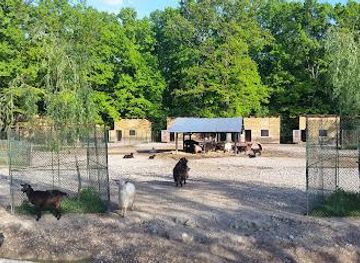
Zoo Pitesti
Experience the beauty of wildlife at Zoo Pitesti, where education meets conservation in a family-friendly environment.
-
Tourist attraction
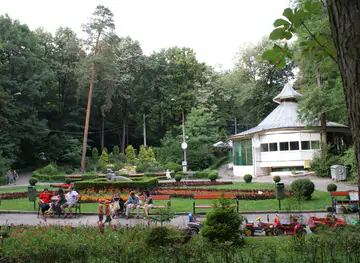
Fountain of Manole
Discover the captivating story behind the Fountain of Manole in Curtea de Argeș, a serene blend of folklore, beauty, and history.

Best landmarks in Argeș
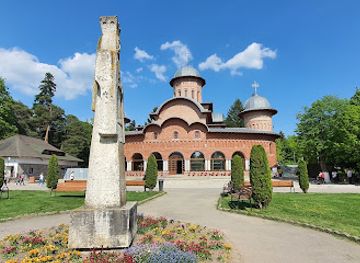
The Episcopal Cathedral of Curtea de Argeș is Argeș’s most recognisable architectural landmark, known for its elaborate stonework, twisted domes and role as the burial church of Romania’s royal family. The nearby Princely Church of Saint Nicholas is older and more restrained, representing the medieval foundations of Wallachian statehood. Poenari Castle forms a powerful landmark in the upper Argeș valley, its ruined walls standing on a high, wooded ridge associated with Vlad III. Vidraru Dam is a landmark of a different kind: its massive concrete structure and reservoir represent the county’s communist-era hydropower programme. In the east, Câmpulung’s historic churches and urban fabric recall its long importance as a Wallachian settlement, while the Rucăr and Dâmbovicioara valleys provide natural landmarks through limestone gorges, caves and mountain passes. Together these places show how religion, monarchy, defence, engineering and geology have shaped the visual identity of the county.
-
Monastery
"Curtea de Argeș" Monastery
Explore the stunning Curtea de Argeș Monastery, a historical and architectural gem in Romania, showcasing exquisite art and profound heritage.
-
Weir
Vidraru Dam
Experience the breathtaking views and adventure at the stunning Vidraru Dam, a must-visit destination in Romania's natural splendor.
-
Monastery
Stone Ravens Monastery
Discover the serene beauty of Stone Ravens Monastery, a unique architectural gem carved into the mountains, offering spiritual solace and breathtaking views.
-
Historical landmark
Poenari Citadel
Explore the legendary Poenari Citadel, a historical landmark steeped in the tales of Vlad the Impaler, surrounded by breathtaking Carpathian vistas.

Explore Argeș on the map
Plan your trip on one map. See where the top cities, national parks and sights are, and book hotels and experiences in a few clicks.
Best hotels in Argeș
Best restaurants in Argeș
Dining in Argeș reflects the food culture of southern Romania, with menus built around soups, stews, grilled meats, polenta, fresh cheese, cabbage, seasonal vegetables and preserved fruit. In Pitești and the larger towns, restaurants range from Romanian family dining to contemporary venues and international cuisine, while Curtea de Argeș and Câmpulung offer cafés, bakeries and traditional restaurants convenient for visitors. Rural guesthouses are particularly valuable for tasting home-style cooking, often featuring sour soups, baked dishes, local dairy products, jams and honey; arrangements may need to be made ahead. The foothill and mountain areas are associated with orchard produce, forest products and hearty food suited to cooler weather. Markets and small producers are useful places to look for apples, plums, honey, cheese and seasonal preserves. Romanian wine and beer are widely available, while fruit brandies may appear in village hospitality and should be treated as a local product rather than an automatic part of every meal.
-
Restaurant
Mici La Dedulesti
Discover Mici La Dedulesti - A Culinary Haven for Authentic Romanian Flavors
-
Restaurant
Curtea Veche
Discover authentic Romanian flavors at Curtea Veche in Curtea de Argeș – where tradition meets modern dining.
-
Restaurant
Hotel Posada Vidraru
Discover tranquility at Hotel Posada Vidraru with stunning views, gourmet dining, and rejuvenating spa services nestled by the picturesque Vidraru Dam.
-
 Hotel
HotelCabana La Cetate
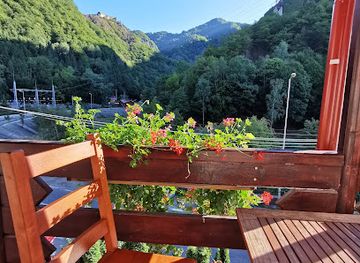
Discover the breathtaking beauty of Romania at Cabana La Cetate—your mountain retreat on the scenic Transfăgărășan road.

Best bars in Argeș
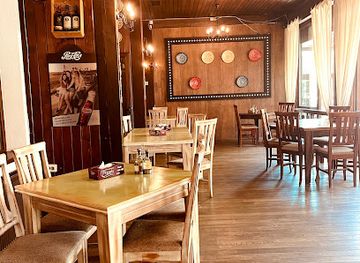
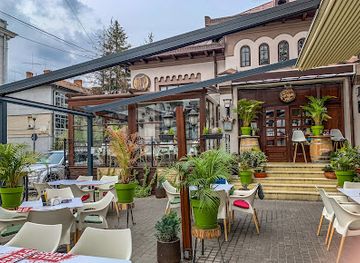
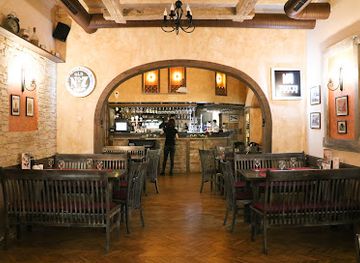
Nightlife in Argeș is concentrated in Pitești, where students, residents and visitors find cafés, pubs, restaurants, live-music evenings and a limited selection of clubs. The centre and principal commercial areas are the most practical places to look for evening venues, though businesses and opening arrangements change over time. Curtea de Argeș and Câmpulung have a quieter scene based on cafés, restaurants, hotel bars and traditional pubs rather than a large club circuit. In the mountain valleys, evenings generally centre on guesthouse dining, fireside conversations and small local establishments, with activity varying by season and weekend. Some breweries, wine bars and modern cafés can be found in the larger towns, but Argeș is not primarily a late-night destination. Plan transport back to rural accommodation in advance, since taxis and public services are less readily available outside the urban centres.
-
Restaurant
Garden Pub
Experience the vibrant atmosphere and delectable cuisine at Garden Pub, a must-visit restaurant in the heart of Pitești, Romania.
-
Restaurant
Trattoria by Garden Pub
Discover the authentic flavors of Romanian cuisine at Trattoria by Garden Pub in Pitești, where every meal is a delightful experience.
-
Bar
Urban Home
Experience the vibrant nightlife of Pitești at Urban Home, where live music and affordable drinks create unforgettable memories.
-
Restaurant
Restaurant La Cetate
Experience authentic Romanian cuisine with stunning mountain views at Restaurant La Cetate along the Transfăgărășan highway.
Best nightclubs in Argeș
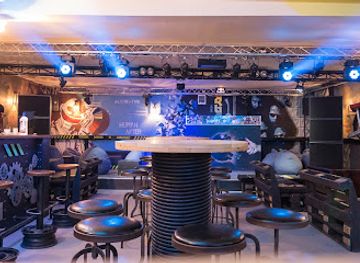
Nightlife in Argeș is concentrated in Pitești, where students, residents and visitors find cafés, pubs, restaurants, live-music evenings and a limited selection of clubs. The centre and principal commercial areas are the most practical places to look for evening venues, though businesses and opening arrangements change over time. Curtea de Argeș and Câmpulung have a quieter scene based on cafés, restaurants, hotel bars and traditional pubs rather than a large club circuit. In the mountain valleys, evenings generally centre on guesthouse dining, fireside conversations and small local establishments, with activity varying by season and weekend. Some breweries, wine bars and modern cafés can be found in the larger towns, but Argeș is not primarily a late-night destination. Plan transport back to rural accommodation in advance, since taxis and public services are less readily available outside the urban centres.
-
Bar
Urban Home
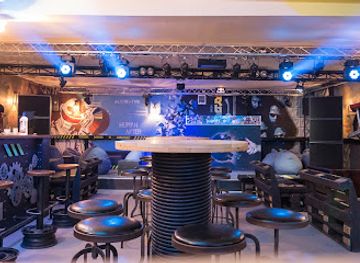
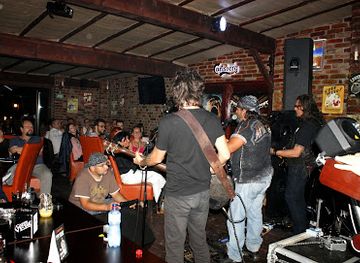
Experience the vibrant nightlife at Urban Home, Pitești's popular bar and club, known for its live music, karaoke, and friendly atmosphere.
-
Club
The Place by Radu Mendez
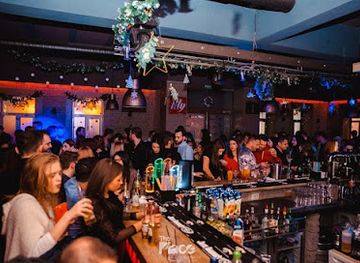
Discover the ultimate nightlife experience at The Place by Radu Mendez in Pitești, where exquisite dining meets vibrant clubbing.
-
Entertainment
My Club Pub
Experience the vibrant nightlife of Curtea de Argeș at My Club Pub, your destination for karaoke and live music.
-
Bar
La Casute
Experience the charm of La Casute, a delightful bar on the Transfăgărășan road, where relaxation and stunning views await every traveler.
Best shops in Argeș
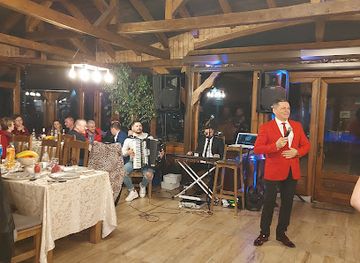
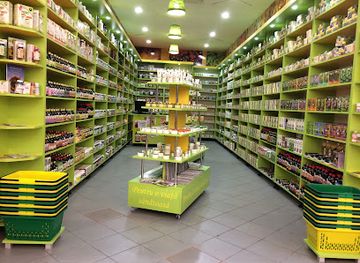
Shopping in Argeș is strongest in Pitești, whose central streets, markets and commercial areas provide the widest choice of clothing, books, household goods and Romanian food products. Curtea de Argeș and Câmpulung are more suited to smaller-scale browsing, with independent shops, bakeries, cafés and practical supplies for onward travel. In villages and mountain valleys, look for honey, jams, fruit preserves, cheese, herbal products and seasonal produce rather than a formal craft-shopping scene. Farm shops and local stalls vary with the season and may accept cash only. Traditional textiles, carved wooden objects, ceramics and religious items can sometimes be found near heritage attractions, but quality and provenance differ, so ask questions before buying. Markets are useful for experiencing everyday commerce and sourcing picnic ingredients, while supermarkets in the larger towns offer a reliable selection of Romanian packaged foods and regional products.
-
Shopping mall
Mall VIVO!
Explore the vibrant VIVO! Mall in Pitești - your ultimate shopping and entertainment destination in Romania, boasting shops, dining, and exciting attractions.
-
Hypermarket
Auchan
Explore Auchan in Geamăna for a diverse shopping experience, featuring local produce, gourmet foods, and unique Romanian specialties.
-
Sporting goods store
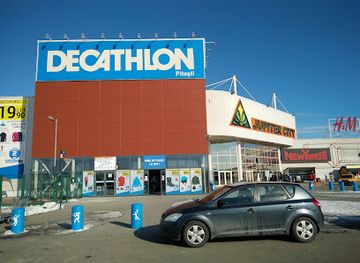
Decathlon
Discover Decathlon in Pitești for all your sporting goods needs, offering quality apparel and gear for every sport and activity.
-
Supermarket
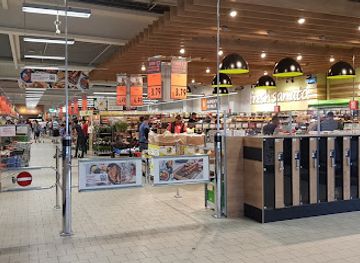
Kaufland
Discover local flavors and quality products at Kaufland, Curtea de Argeș's go-to supermarket for tourists and locals alike.

Get your free copy of our complete guide to Argeș, delivered straight to you.
Everything on this page, from attractions and restaurants to essentials and local phrases, in one PDF you can read offline, print or share.
Already have an account? Sign in
Your Argeș guide is ready.
We'll send it to · Not you? Sign out

Getting your guide ready…
We are putting together a fresh copy of the Argeș guide. This can take up to a minute.
This can take a few moments. If your browser asks, choose Allow so the download can start. You'll find the guide in your Downloads folder.
Nothing happened? Download it again
Sorry, the guide is taking longer than usual. Please try again in a minute, or get it by email instead.
Argeș essentials
Currency and Payment
Safety
Emergency Situations
Do's and Don'ts
Local Tips
From Eve
Local phrases worth knowing
You don't need to get them perfect. A few words go a long way, and locals appreciate the effort.
Basics
| English | Local | Say it |
|---|---|---|
| Hello | Salut | [sah-loot] |
| Goodbye | La revedere | [lah reh-veh-deh-reh] |
| Yes | Da | [dah] |
| No | Nu | [noo] |
| Please/You're welcome | Te rog/Cu plăcere | [teh rohg/koo plah-cheh-reh] |
| Thank you | Mulțumesc | [mool-tsoo-mesk] |
| Excuse me/Sorry | Scuză-mă/Îmi pare rău | [skoo-zah-mah/im pah-reh rah-oo] |
| How are you? | Ce mai faci? | [cheh my fahch?] |
| Fine. And you? | Bine. Și tu? | [bee-neh. shee too?] |
| Do you speak English? | Vorbești engleză? | [vor-besht eng-leh-zah?] |
| I don't understand | Nu înțeleg | [noo in-tzeh-leg] |
Eating & Drinking
| English | Local | Say it |
|---|---|---|
| I'd like to see the menu, please | Aș dori să văd meniul, te rog | [ahsh doh-ree sah vehd meh-nee-ul, teh rohg] |
| I don't eat meat | Nu mănânc carne | [noo mah-nank kar-neh] |
| Cheers! | Noroc! | [noh-rok] |
| I would like to pay, please | Aș dori să plătesc, te rog | [ahsh doh-ree sah plah-tesk, teh rohg] |
Emergencies
| English | Local | Say it |
|---|---|---|
| Help! | Ajutor! | [ah-zhoo-tor] |
| Go away! | Du-te departe! | [doo-teh deh-par-teh] |
| Call the Police! | Sună Poliția! | [soo-nah poh-lee-tsee-ah] |
| Call a doctor! | Sună un doctor! | [soo-nah oon dok-tor] |
| I'm lost | M-am pierdut | [mahm pee-air-doot] |
| I'm ill | Sunt bolnav | [soont bol-nahv] |
Shopping
| English | Local | Say it |
|---|---|---|
| I'd like to buy... | Aș dori să cumpăr... | [ahsh doh-ree sah koom-pair...] |
| I'm just looking | Mă uit doar | [muh oo-it do-ar] |
| How much is it? | Cât costă? | [kuht koh-stah?] |
| That's too expensive | Asta e prea scump | [ahs-tah eh preh-ah skoomp] |
| Can you lower the price? | Poți să scazi prețul? | [pots sah skahz preh-tsool?] |
Time & Numbers
| English | Local | Say it |
|---|---|---|
| What time is it? | Ce oră e? | [cheh oh-rah eh?] |
| It's one o'clock | Este o oră | [yeh-steh oh oh-rah] |
| Half past (10) | Jumătate peste (10) | [joo-mah-tah-teh pes-teh (10)] |
| Morning | Dimineața | [dee-mee-neh-ah-tsah] |
| Afternoon | După-amiază | [doo-pah-ah-mee-ah-zah] |
| Evening | Seara | [seh-ah-rah] |
| Yesterday | Ieri | [yehr] |
| Today | Astăzi | [ahs-tahz] |
| Tomorrow | Mâine | [mee-neh] |
| 1 | 1 | [unu] |
| 2 | 2 | [doi] |
| 3 | 3 | [trei] |
| 4 | 4 | [patru] |
| 5 | 5 | [cinci] |
| 6 | 6 | [șase] |
| 7 | 7 | [șapte] |
| 8 | 8 | [opt] |
| 9 | 9 | [nouă] |
| 10 | 10 | [zece] |
Transport & Directions
| English | Local | Say it |
|---|---|---|
| Where's a/the...? | Unde este un/... | [oon-deh yeh-steh oon/...] |
| What's the address? | Care este adresa? | [kah-reh yeh-steh ah-dreh-sah?] |
| Can you show me (on the map)? | Poți să-mi arăți (pe hartă)? | [pots sahm ah-rah-ts (peh hahr-tah)?] |
| When's the next (bus)? | Când vine următorul (autobuz)? | [kuhnd vee-neh oor-mah-tor-ul (ow-toh-booz)?] |
| A ticket (to ....) | O bilet (la ...) | [oh bee-let (lah ...)] |
History of Argeș
Prehistoric and Dacian Landscapes
The Argeș basin and its surrounding foothills have been occupied since prehistoric times, with archaeological evidence from settlements and burial sites across southern Romania. Later communities associated with the Dacian world used the Carpathian valleys and passes that connect the Wallachian plain with Transylvania. Much of this early history is encountered through museum collections and archaeological research rather than monumental ruins, but it established patterns of settlement, farming and movement that continued through later periods.
The Medieval Rise of Wallachia
Argeș became central to the formation of medieval Wallachia in the fourteenth century. Curtea de Argeș served as an early princely residence and political centre under rulers including Basarab I, traditionally regarded as the founder of the principality. The Princely Church of Saint Nicholas, associated with this period, is an important surviving example of early Wallachian architecture. The town’s position beside routes into the Carpathians also gave it strategic value.
Curtea de Argeș and the Princely Court
During the fourteenth and fifteenth centuries, Curtea de Argeș developed as a courtly and ecclesiastical centre. The princely complex included religious buildings, residences and defensive elements, while the town became associated with the earliest phases of Wallachian state formation. The court later moved to Târgoviște and eventually to Bucharest, but Argeș retained exceptional symbolic importance through its churches, monastic traditions and connection with the medieval rulers of Wallachia.
Mountain Fortresses and Border Routes
The mountain corridors north of Curtea de Argeș formed a difficult but important link between Wallachia and Transylvania. Poenari Castle, dramatically positioned above the Argeș valley, is particularly associated with Vlad III during the fifteenth century. Its purpose was defensive and its location controlled movement through the valley. Although the surviving ruins are limited, the fortress illustrates how geography shaped medieval politics, trade and military planning in the region.
The Modern Kingdom and Royal Mausoleum
The modern history of Argeș is strongly represented by the Episcopal Cathedral at Curtea de Argeș. Built in the early twentieth century in a distinctive Romanian architectural style, it became the necropolis of Romania’s royal family after the establishment of the kingdom. The cathedral reflects the period’s effort to create nationally meaningful institutions and monuments by combining Orthodox traditions with architectural interpretations of medieval Wallachian forms.
Roads, Hydropower and the Transfăgărășan
Twentieth-century infrastructure transformed the upper Argeș valley. Vidraru Dam and its reservoir were constructed during Romania’s communist period as part of a major hydropower project, while the Transfăgărășan road was built across the Făgăraș Mountains in the 1970s. The works were technically ambitious and strategically motivated, linking southern Romania with Transylvania across difficult terrain. Today, the dam and road remain among the county’s most recognisable examples of modern engineering.
Industrial Argeș and the Dacia Era
The county’s modern economic identity also rests on manufacturing. The Dacia automobile plant at Mioveni began production in the late 1960s and became one of Romania’s most significant industrial enterprises. Its development encouraged population growth, technical education and supporting industries in the surrounding area. Pitești and Mioveni now form an important urban and industrial corridor, contrasting with the mountain villages and agricultural communities further north.
Argeș in Photos
Browse through our photo collection highlighting the charm and character of the destination.
Neighbouring regions of Argeș
The closest regions to Argeș, if you have time for more than one.
-

-
-

-

-


Swipe for more regions
Explore more

Explore more of Romania
Discover Romania's blend of mystical castles, enchanting landscapes, and vibrant culture. Experience the rich history and natural beauty that make Romania a unique travel destination.
Explore Romania