

Free St. George Central Travel Guide & Mobile App
Explore St. George Central with free travel guides. Discover regional history, expert tips, proposed trips, and audio guides on web or mobile app.


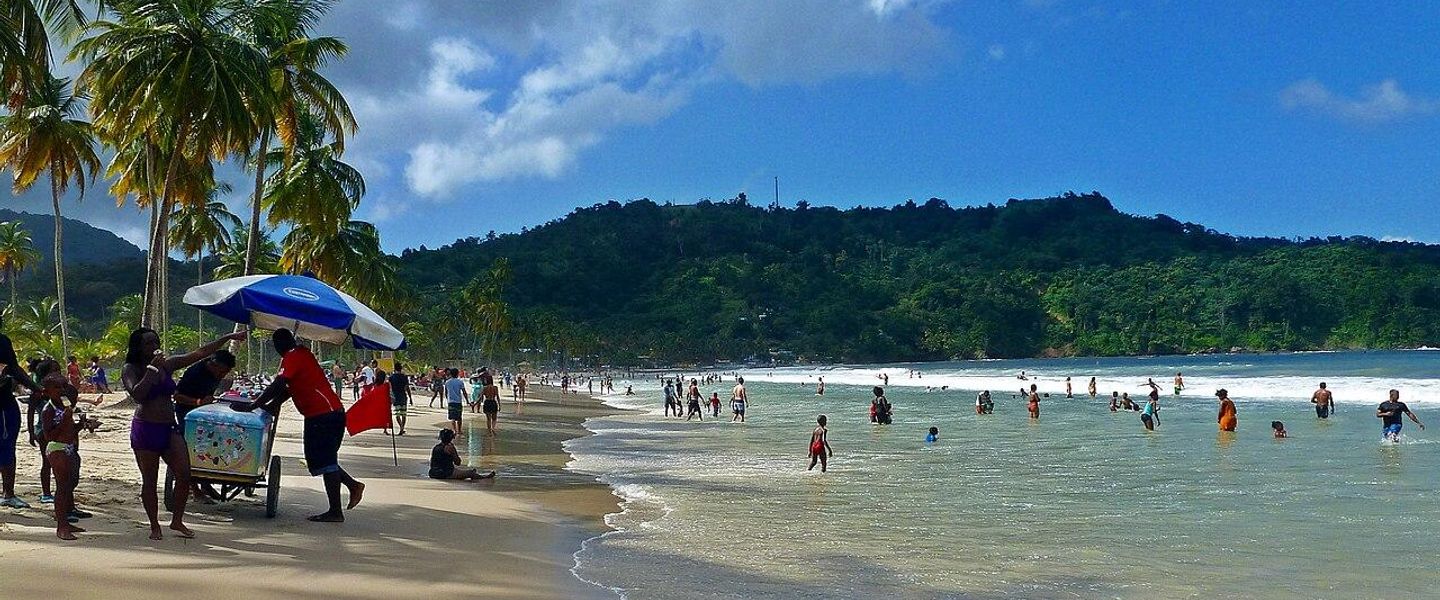


Explore St George Central in Trinidad for Northern Range foothills, historic St Joseph, lively food culture, heritage and rainforest excursions.
Read more about St. George Central
When is the best time to visit St. George Central?
Best: January–March · 32°C| Month | High (°C) | Rainfall (mm) |
|---|---|---|
| January (best) | 32 | 100 |
| February (best) | 32 | 90 |
| March (best) | 32 | 100 |
| April | 33 | 120 |
| May | 33 | 160 |
| June | 33 | 200 |
| July | 33 | 220 |
| August | 33 | 240 |
| September | 32 | 260 |
| October | 32 | 280 |
| November | 32 | 240 |
| December | 31 | 160 |
Getting to and around St. George Central
How to get there
Transportation
Top city travel guides in St. George Central
The cities of St. George Central, and the easiest places to base yourself.
-

-

-
-

-


Swipe for more cities
Destinations in St. George Central
Resorts, valleys and scenic spots worth a trip of their own.
-

-

-

-

-


Swipe for more destinations
Best attractions in St. George Central
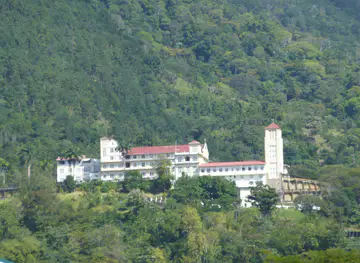
St George Central’s attractions are varied because the region moves from busy corridor towns into the Northern Range foothills. Historic St Joseph offers a window onto Trinidad’s Spanish beginnings, while St Augustine combines university life, religious heritage and access to hillside viewpoints. Mount St Benedict is valued for its monastic setting and broad views across the settled plains. The University of the West Indies campus adds cultural, botanical and architectural interest, although visitors should respect its working academic environment. In the direction of Arima, the Santa Rosa First Peoples community provides an important perspective on Indigenous heritage, subject to the arrangements and sensitivities of its cultural programme. Forested valleys and foothill roads support birdwatching, short walks and guided nature excursions, with the region’s climate making sturdy footwear and rain protection useful. Markets, bakeries, food stalls and local sporting facilities are attractions in a more everyday sense, revealing how residents use the corridor beyond formal sightseeing. St George Central is not primarily a resort area or a concentrated museum district; its appeal lies in combining layered history, ordinary urban life, education, religion and access to Trinidad’s greener northern interior.
-
Beach
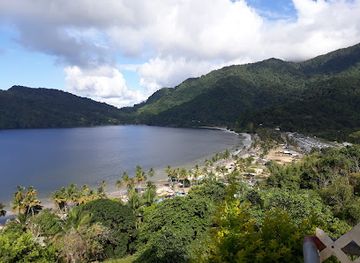
Maracas Beach
Experience the vibrant beauty of Maracas Beach, Trinidad's tropical gem with golden sands, thrilling water sports, and delicious local cuisine.
-
Performing arts theater
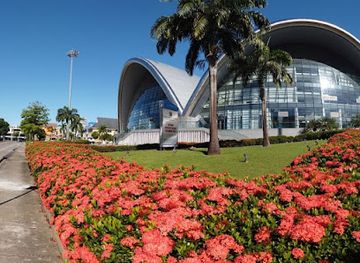
National Academy for the Performing Arts
Discover the vibrant arts scene at the National Academy for the Performing Arts in Port of Spain, a hub of culture and creativity in Trinidad and Tobago.
-
National park
Caroni Bird Sanctuary
Explore the vibrant ecosystem of Caroni Bird Sanctuary, Trinidad's premier destination for birdwatching and nature lovers.
-
Historical place
Fort Milford
Explore the historical beauty of Fort Milford in Crown Point, where Caribbean views meet rich heritage and captivating ruins.

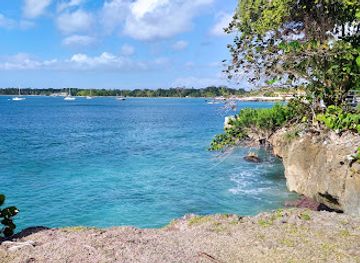
Best landmarks in St. George Central
St Joseph’s historic importance is the defining landmark story of St George Central: founded as San José de Oruña in 1592, it marks the earliest permanent Spanish settlement in Trinidad. The town’s surviving urban fabric and religious associations are reminders of a colonial past that also brought profound disruption to Indigenous societies. Mount St Benedict is a prominent hillside landmark, recognisable for its monastic presence and elevated outlook towards the central plains. The St Augustine campus of The University of the West Indies is another important regional marker, representing the post-colonial development of higher education in the English-speaking Caribbean and lending the area a distinctive institutional character. Around Arima, Indigenous heritage is represented through the continuing presence of the Santa Rosa First Peoples community rather than through a single monumental building. The Northern Range foothills provide the region’s principal natural landmarks: steep green slopes, forested valleys and winding roads that contrast sharply with the dense East–West Corridor. These landmarks are significant not only for their appearance but for the historical, religious, educational and environmental relationships they embody.
-
Park
Queen's Park Savannah
Explore the lush beauty and vibrant culture of Queen's Park Savannah, a must-visit park in Port of Spain, Trinidad, perfect for relaxation and exploration.
-
Shopping mall
The Falls at Westmall
Explore the vibrant shopping and dining experience at The Falls at Westmall in Port of Spain, Trinidad—a paradise for every shopper and food lover.
-
Beach
Maracas Beach
Unwind at Maracas Beach, Trinidad's ultimate tropical escape with stunning views, delicious local cuisine, and endless fun in the sun.
-
International airport
Piarco International Airport
Experience the vibrant spirit of Trinidad at Piarco International Airport, your gateway to the Caribbean's natural beauty and rich culture.
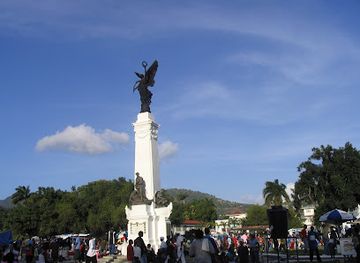
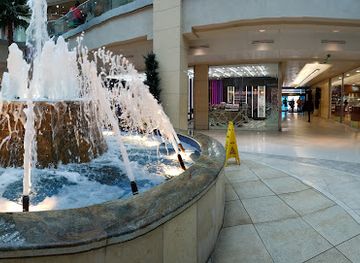
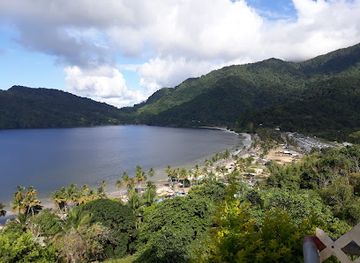

Explore St. George Central on the map
Plan your trip on one map. See where the top cities, national parks and sights are, and book hotels and experiences in a few clicks.
Best hotels in St. George Central
Best restaurants in St. George Central
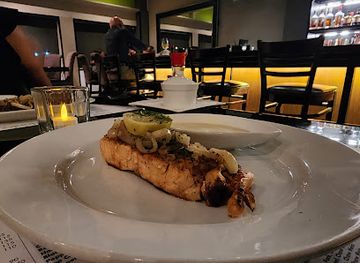
Dining in St George Central reflects Trinidad’s combined African, Indian, Indigenous, European and wider Caribbean influences. Roti shops and daytime food counters are central to the local eating scene, alongside stalls selling doubles, sada roti, bake, pelau, callaloo, corn soup and seasoned snacks. Bakeries and cafés around the East–West Corridor are useful for breakfast and quick meals, while family restaurants offer more leisurely plates of curry, rice, stewed meats, fish and vegetable dishes. Food in the region is generally more about everyday accessibility than a single signature cuisine, and recipes vary between households and communities. Fresh fruit, coconut-based drinks and pepper sauces are common accompaniments, although visitors should ask about heat levels. Market areas and roadside vendors can provide an informal introduction to local flavours; established restaurants and larger shopping areas offer more predictable seating and card payment. Local produce from Trinidad’s agricultural districts also appears seasonally, so menus may change rather than follow a fixed regional pattern.
-
Restaurant
Town Restaurant & Bar
Discover authentic Trinidadian flavors at Town Restaurant & Bar in Port of Spain, where every dish tells a story.
-
Restaurant
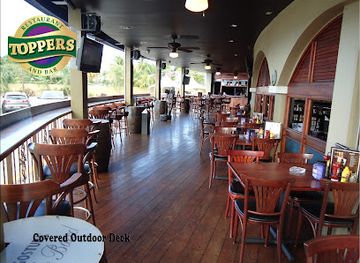
Toppers Restaurant & Bar
Discover delightful Caribbean flavors at Toppers Restaurant & Bar in Valsayn's Grand Bazaar - a must-visit culinary experience!
-
Italian
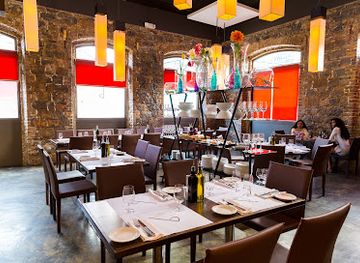
Buzo Osteria Italiana
Experience authentic Italian cuisine at Buzo Osteria Italiana in Port of Spain – where every meal is a celebration of flavor.
-
Asian Fusion
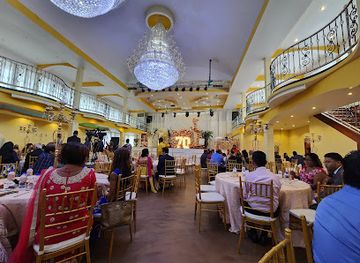
Passage To Asia
Discover authentic Asian fusion cuisine at Passage To Asia in Chaguanas - where tradition meets innovation on every plate.
Best bars in St. George Central
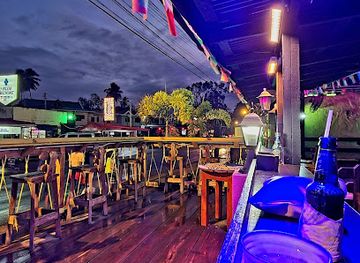
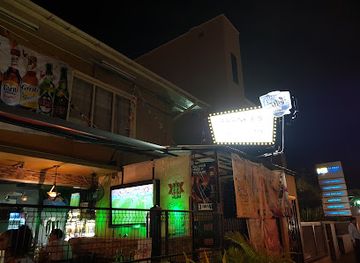
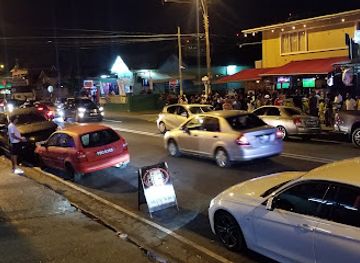
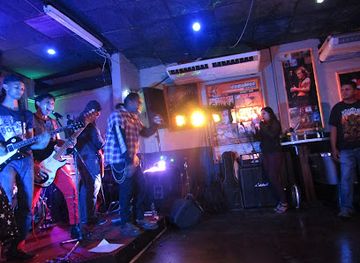
Evening life in St George Central is concentrated along the larger corridor towns, around student and commercial areas, and in restaurants, rum shops, lounges and neighbourhood bars rather than a single major club district. Tunapuna, Curepe, St Augustine and Arima offer the broadest choice of informal social venues, while smaller foothill communities tend to become quiet after dark. Live music, Carnival-related events, calypso and soca performances, sports screenings and occasional cultural programmes may shape the evening scene, but schedules are changeable and should be checked locally. Traditional rum shops are social spaces, yet visitors should not assume that drinking is necessary to participate in local life. Taxis or pre-arranged transport are preferable after late outings, especially when staying away from the main corridor. During Carnival and other festival periods, public celebrations can substantially alter normal nightlife patterns.
-
Grill
Jade Monkey Casino Bar and Grill
Discover a delightful fusion of flavors and vibrant social atmosphere at Jade Monkey Casino Bar and Grill in Crown Point.
-
Bar
Frankie’s Bar
Discover the vibrant nightlife at Frankie’s Bar in Port of Spain, where drinks flow and good times roll amid a lively atmosphere.
-
Bar
The Avenue Pub House
Discover the vibrant nightlife at The Avenue Pub House, where drinks, good food, and lively music create an unforgettable experience in Port of Spain.
-
Pub
Brooklyn Bar
Experience the vibrant nightlife of Port of Spain at Brooklyn Bar, where great drinks and a lively atmosphere await every visitor.
Best nightclubs in St. George Central
Evening life in St George Central is concentrated along the larger corridor towns, around student and commercial areas, and in restaurants, rum shops, lounges and neighbourhood bars rather than a single major club district. Tunapuna, Curepe, St Augustine and Arima offer the broadest choice of informal social venues, while smaller foothill communities tend to become quiet after dark. Live music, Carnival-related events, calypso and soca performances, sports screenings and occasional cultural programmes may shape the evening scene, but schedules are changeable and should be checked locally. Traditional rum shops are social spaces, yet visitors should not assume that drinking is necessary to participate in local life. Taxis or pre-arranged transport are preferable after late outings, especially when staying away from the main corridor. During Carnival and other festival periods, public celebrations can substantially alter normal nightlife patterns.
-
Night club
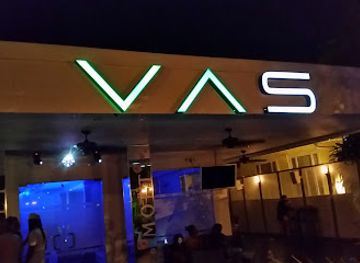
VAS Lounge
Discover the lively atmosphere and vibrant nightlife at VAS Lounge in Port of Spain, the perfect spot for music, dancing, and socializing.
-
Bar
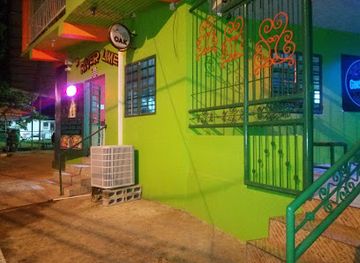
River Lime Bar
Discover vibrant nightlife at River Lime Bar in Arouca, where cold beers meet Caribbean charm and friendly locals create an unforgettable experience.
-
Bar
Phoenix Bar
Experience the vibrant nightlife at Phoenix Bar, Chaguanas – where drinks flow and music fills the air in a welcoming atmosphere.
-
Bar
Bacchanal Sports Bar & Lounge
Discover the lively Bacchanal Sports Bar & Lounge in Saint George, where refreshing drinks and vibrant entertainment await every visitor.

Best shops in St. George Central
Shopping in St George Central is practical, local and closely tied to everyday life on the East–West Corridor. Tunapuna, Curepe, St Augustine and Arima have busy commercial streets where small shops, pharmacies, clothing retailers, mobile-phone businesses, bakeries and food outlets sit alongside larger supermarkets and modern retail premises. Markets and roadside sellers are useful for seasonal fruit, vegetables, spices, snacks and prepared food, though trading arrangements can vary by day. Visitors looking for regional gifts should consider packaged pepper sauces, cocoa products, local sweets, spices, rum-based products and small craft items, checking customs rules before taking food or agricultural products overseas. Independent businesses and market stalls provide a stronger sense of place than standardised retail, while university and suburban areas offer books, clothing and practical goods rather than luxury shopping. Bargaining is not universal; ask politely whether a price is negotiable instead of assuming it. The area is best approached as a source of Trinidadian food products and everyday commerce, not as a specialist designer-shopping destination.
-
Shopping mall
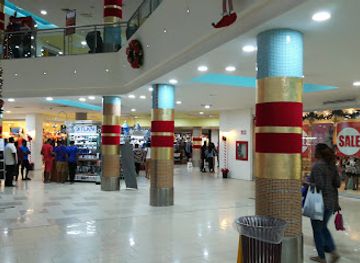
Trincity Mall
Explore Trincity Mall: A shopping paradise in Trinidad offering diverse stores, delightful dining, and vibrant entertainment for every visitor.
-
Shopping mall
The City of Grand Bazaar
Discover the vibrant shopping and culinary paradise of the City of Grand Bazaar in San Juan, Trinidad and Tobago.
-
Shopping mall
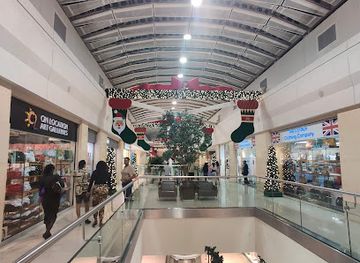
The Falls at Westmall
Explore The Falls at Westmall in Trinidad: A vibrant shopping mall with unique stores, delightful dining, and a lively atmosphere for all ages.
-
Shopping mall
Long Circular Mall
Discover Long Circular Mall, the ultimate shopping and dining destination in Port of Spain, Trinidad, offering a vibrant atmosphere for all visitors.

Get your free copy of our complete guide to St. George Central, delivered straight to you.
Everything on this page, from attractions and restaurants to essentials and local phrases, in one PDF you can read offline, print or share.
Already have an account? Sign in
Your St. George Central guide is ready.
We'll send it to · Not you? Sign out

Getting your guide ready…
We are putting together a fresh copy of the St. George Central guide. This can take up to a minute.
This can take a few moments. If your browser asks, choose Allow so the download can start. You'll find the guide in your Downloads folder.
Nothing happened? Download it again
Sorry, the guide is taking longer than usual. Please try again in a minute, or get it by email instead.
St. George Central essentials
Currency and Payment
Safety
Emergency Situations
Do's and Don'ts
Local Tips
From Eve
Local phrases worth knowing
You don't need to get them perfect. A few words go a long way, and locals appreciate the effort.
Basics
| English | Local | Say it |
|---|---|---|
| Hello | Hello | [Heh-lo] |
| Goodbye | Bye | [Bai] |
| Yes | Yes | [Yes] |
| No | No | [No] |
| Please/You're welcome | Please/No problem | [Pleez/No prob-lem] |
| Thank you | Thank you | [Thank yuh] |
| Excuse me/Sorry | Excuse me/Sorry | [Ex-cuse me/Sor-ree] |
| How are you? | How yuh doing? | [How yuh do-ing?] |
| Fine. And you? | I good. And yuh? | [I guhd. And yuh?] |
| Do you speak English? | Yuh does speak English? | [Yuh dez speak English?] |
| I don't understand | I eh understand | [I eh un-der-stand] |
Eating & Drinking
| English | Local | Say it |
|---|---|---|
| I'd like to see the menu, please | Ah would like to see the menu, please | [Ah wud like to see de men-yu, pleez] |
| I don't eat meat | I eh eat meat | [I eh eet meet] |
| Cheers! | Cheers! | [Cheers!] |
| I would like to pay, please | Ah would like to pay, please | [Ah wud like to pay, pleez] |
Emergencies
| English | Local | Say it |
|---|---|---|
| Help! | Help! | [Help!] |
| Go away! | Go 'way! | [Go 'way!] |
| Call the Police! | Call de Police! | [Call de Po-lees!] |
| Call a doctor! | Call a doctor! | [Call a doc-tor!] |
| I'm lost | Ah lost | [Ah lost] |
| I'm ill | Ah sick | [Ah sik] |
Shopping
| English | Local | Say it |
|---|---|---|
| I'd like to buy... | Ah would like to buy... | [Ah wud like to bai...] |
| I'm just looking | Ah just looking | [Ah just luk-ing] |
| How much is it? | How much it cost? | [How much it cost?] |
| That's too expensive | Dat too expensive | [Dat too ex-pen-sive] |
| Can you lower the price? | Yuh could lower de price? | [Yuh kud lower de prais?] |
Time & Numbers
| English | Local | Say it |
|---|---|---|
| What time is it? | Wha time it is? | [Wha time it is?] |
| It's one o'clock | It one o'clock | [It wan o'clock] |
| Half past (10) | Half past (10) | [Half past (10)] |
| Morning | Morning | [Morn-ing] |
| Afternoon | Afternoon | [Af-ter-noon] |
| Evening | Evening | [Eve-ning] |
| Yesterday | Yesterday | [Yes-ter-day] |
| Today | Today | [To-day] |
| Tomorrow | Tomorrow | [To-mor-row] |
| 1 | 1 | [1] |
| 2 | 2 | [2] |
| 3 | 3 | [3] |
| 4 | 4 | [4] |
| 5 | 5 | [5] |
| 6 | 6 | [6] |
| 7 | 7 | [7] |
| 8 | 8 | [8] |
| 9 | 9 | [9] |
| 10 | 10 | [10] |
Transport & Directions
| English | Local | Say it |
|---|---|---|
| Where's a/the...? | Wha place de...? | [Wha place de...?] |
| What's the address? | Wha de address? | [Wha de ad-dress?] |
| Can you show me (on the map)? | Yuh could show me (on de map)? | [Yuh kud show me (on de map)?] |
| When's the next (bus)? | When de next (bus)? | [When de next (bus)?] |
| A ticket (to ....) | A ticket (to ....) | [A tick-et (to ....)] |
History of St. George Central
First Peoples and the Northern Range
Long before European settlement, Indigenous communities used the valleys, rivers and forested slopes of northern Trinidad for movement, hunting, cultivation and trade. The Northern Range was not an empty wilderness but part of a living landscape shaped by Amerindian knowledge. The Santa Rosa First Peoples community in Arima maintains an important contemporary connection with this heritage. Archaeological evidence across Trinidad is often fragmentary, yet the survival of Indigenous cultural practice gives the St George Central area a historical depth that predates the Spanish and British colonial periods.
Spanish Mission Settlement at St Joseph
St Joseph, established by the Spanish in 1592 as San José de Oruña, is widely regarded as Trinidad’s first permanent European settlement. Its position near the foothills made it a useful base for colonial administration and missionary activity. The settlement’s history involved contact, conflict and profound disruption for Indigenous communities, as well as the gradual introduction of colonial agriculture and Catholic institutions. Later development altered the town considerably, but St Joseph’s name and historic importance preserve a direct link with Trinidad’s early Spanish period.
British Rule and Estate Agriculture
Trinidad became a British colony in the late eighteenth century, and the nineteenth century brought major changes to landholding, labour and production. Sugar estates expanded across the plains and foothill margins, while cocoa and coffee became important in suitable districts. Estate agriculture connected the communities of St George Central to export markets and imported labour systems. The region’s present mixture of suburban development, former agricultural land and surviving estate landscapes reflects this transformation, although much of the original plantation economy has disappeared beneath roads, housing and institutional growth.
Indian Indenture and Cultural Change
After the abolition of slavery, workers from India were brought to Trinidad under indenture between 1845 and 1917. Many later settled permanently, establishing families, religious institutions, businesses and agricultural communities. The East–West Corridor and surrounding districts became part of the broader social landscape shaped by Indo-Trinidadian life, alongside Afro-Trinidadian, European, Indigenous and other communities. Hindu and Muslim observances, roti-making, tassa drumming, chutney music and distinctive family businesses remain visible expressions of this history throughout north-central Trinidad.
Railways, Roads and the East–West Corridor
Transport development changed the region’s geography during the nineteenth and early twentieth centuries. Trinidad’s railway connected agricultural districts with Port of Spain and other markets, while roads later became the dominant means of movement. Settlements such as St Joseph, Tunapuna, Curepe and Arima grew in importance as transport links improved. The modern East–West Corridor follows this long pattern of linear development, combining commerce, education, housing and heavy daily traffic along routes that once served a more agricultural and railway-oriented economy.
Education, Religion and Modern Urbanisation
The twentieth century brought rapid urbanisation and the expansion of public institutions across north-central Trinidad. The St Augustine campus of The University of the West Indies, founded in 1960 as part of the regional university system, strengthened the area’s role in higher education and professional life. Religious institutions, schools and commercial centres expanded alongside new housing. Today, St George Central is less an isolated rural district than a transitional landscape between the metropolitan corridor, historic towns and the Northern Range, with older cultural patterns continuing within a modern suburban setting.
St. George Central in Photos
Browse through our photo collection highlighting the charm and character of the destination.
Neighbouring regions of St. George Central
The closest regions to St. George Central, if you have time for more than one.
-

-

-

-

-


Swipe for more regions
Explore more
Explore more of Trinidad and Tobago
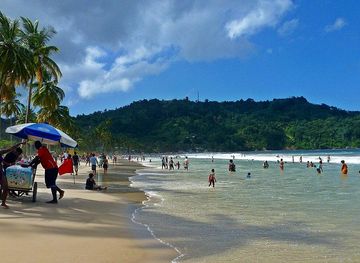
Discover Trinidad and Tobago: A Caribbean paradise where vibrant culture meets stunning natural beauty, offering unique experiences from lively festivals to serene beaches.
Explore Trinidad and Tobago