

Vorokhta Travel Guide - Free Web & App
Your ultimate guide to Vorokhta. Discover top landmarks, proposed trips, and local tips. Free on the web or via the Evendo companion app.


Vorokhta, Ukraine combines Hutsul culture, Carpathian mountain scenery, historic railway viaducts, hiking, skiing and access to Hoverla trails.
Mountain Landscape and Character
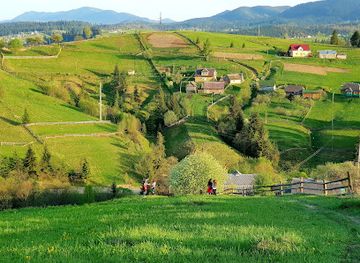
Vorokhta is a mountain settlement in Ukraine’s Ivano-Frankivsk Oblast, set in the upper Prut valley among the forested ridges of the Eastern Carpathians. Its altitude, cool climate and position beneath the Gorgany and Chornohora ranges have made it one of the best-known mountain resorts in the region. The village is surrounded by spruce-covered slopes, meadows, rushing streams and viewpoints towards some of Ukraine’s highest summits, including Hoverla, which lies beyond Vorokhta and is generally approached from established trailheads farther into the mountains.Read more about Vorokhta
Hutsul Culture and Railway Heritage
Exploring the Surrounding Mountains
When is the best time to visit Vorokhta?
Best: June–August · 21–23°C| Month | High (°C) | Rainfall (mm) |
|---|---|---|
| January | -1 | 32 |
| February | 0 | 28 |
| March | 4 | 31 |
| April | 10 | 49 |
| May | 16 | 74 |
| June (best) | 21 | 88 |
| July (best) | 23 | 79 |
| August (best) | 22 | 70 |
| September | 16 | 52 |
| October | 10 | 52 |
| November | 3 | 47 |
| December | 1 | 36 |
Getting to and around Vorokhta
How to get there
Transportation
Best attractions in Vorokhta
Vorokhta’s most recognisable attractions are its historic railway viaducts, including the large stone bridge spanning the valley, and the surrounding Carpathian landscape of spruce forest, pasture and mountain streams. The settlement provides access to walking routes in the upper Prut valley and serves as one of the approaches to the Chornohora range and Mount Hoverla, although the highest-summit routes normally begin beyond the village and require proper planning. The nearby hamlets and valleys around Tatariv and Yablunytsia offer additional views and rural scenery, while Yaremche, outside Vorokhta itself, adds a larger concentration of shops, restaurants and visitor services. In winter, Vorokhta’s slopes and nearby ski facilities attract visitors for snow sports when conditions permit. The appeal lies less in a collection of formal attractions than in combining railway heritage, Hutsul settlement character and access to a broad mountain environment.
-
Tourist attraction
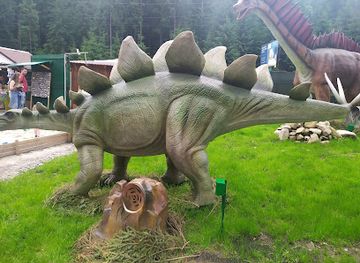
Upside Down House
Discover the enchanting Upside Down House in Polyanytsya, where gravity-defying architecture meets playful creativity for an unforgettable experience.
-
Bridge
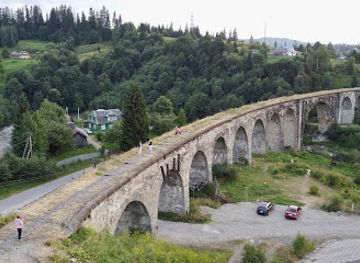
Railway Bridge-Viaduct
Explore the breathtaking Railway Bridge-Viaduct over the Prut River in Vorokhta, a perfect blend of natural beauty and engineering marvel.
-
Tourist attraction
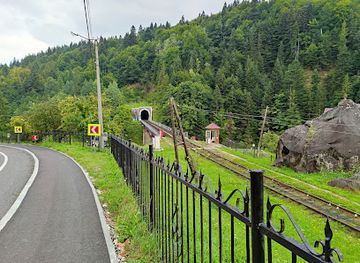
Stezhka Dovbusha
Explore the stunning natural beauty and cultural legends of Stezhka Dovbusha, a must-visit tourist attraction in Ukraine's picturesque Carpathian Mountains.
-
Tourist attraction
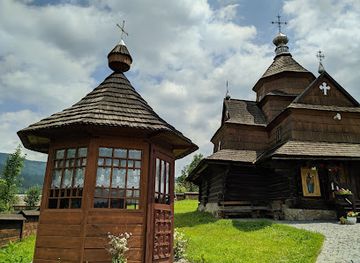
Church of the Nativity of the Blessed Virgin
Explore the stunning Church of the Nativity of the Blessed Virgin in Vorokhta, a serene spiritual haven amidst the breathtaking Carpathian landscape.
Best landmarks in Vorokhta
The stone railway viaducts are Vorokhta’s defining built landmarks, reflecting the late nineteenth-century engineering works that brought rail transport through the difficult upper Prut valley. Their arches and elevated track remain closely tied to the settlement’s development as a mountain resort. The surrounding Carpathian ridges, forested slopes and open polonyna pastures are the area’s principal natural landmarks, expressing the transition from settled valley to upland landscape. Vorokhta also has wooden and modern buildings associated with Hutsul regional character, although the wider cultural landscape is often more significant than any single monument. Mount Hoverla, Ukraine’s highest summit, is an important nearby mountain landmark and a major objective for visitors, but it is not within the built-up settlement and should be approached through the appropriate trail network and local conditions.
-
Ukrainian
Stara Vorokhta
Experience the heart of Ukrainian cuisine at Stara Vorokhta – where tradition meets taste in a picturesque setting.
-
Guest house
Zaroslyak
Discover the enchanting Zaroslyak guest house in Vorokhta, your perfect base for exploring the stunning Carpathian Mountains and immersing in local culture.
-
Hotel
Koruna
Discover the serene beauty of Tatariv at Koruna, a perfect blend of comfort and adventure in the heart of the Carpathians.
-
Hotel
Oksamyt
Experience the serene beauty of Oksamyt, a charming retreat in Vorokhta, Ukraine, surrounded by the majestic Carpathian Mountains and offering premium spa and dining services.
Explore Vorokhta on the map
Plan your trip on one map. See where the top attractions, landmarks, restaurants and hotels are, and book hotels and experiences in a few clicks.
Best hotels in Vorokhta
Best restaurants in Vorokhta
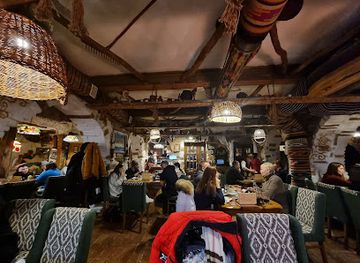
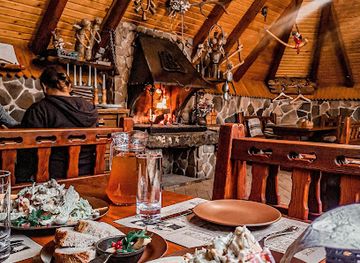
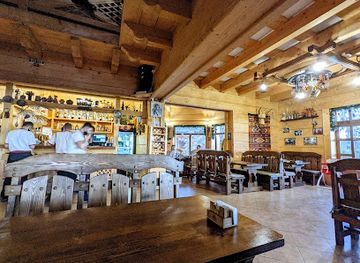
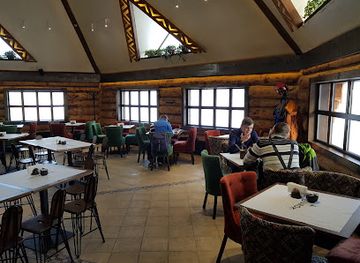
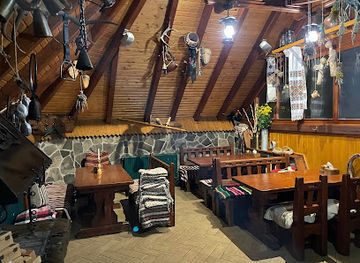
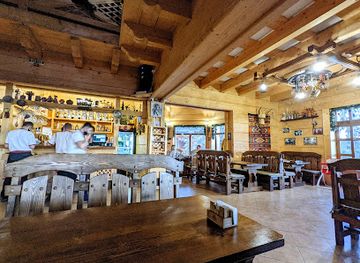
Dining in Vorokhta is centred on guesthouses, cafés, small restaurants and traditional-style establishments serving visitors travelling through the Prut valley. Hutsul-influenced cooking commonly features potatoes, mushrooms, cabbage, buckwheat, cheese, smoked meats and hearty soups, with regional dishes such as banosh appearing in mountain-area menus, although availability varies. Trout and other local produce may be offered, but visitors should not assume that every establishment serves the same specialities. Food options are more concentrated in Vorokhta, Tatariv, Yablunytsia and the larger nearby centre of Yaremche than on mountain routes. Accommodation hosts can often explain where meals are available locally, while self-catering visitors should buy provisions before longer excursions and remember that small rural businesses may have limited opening arrangements or card facilities.
-
Ukrainian
Mushroom House
Experience authentic Ukrainian flavors at the enchanting Mushroom House in Polyanytsya – where tradition meets taste amidst stunning natural beauty.
-
Ukrainian
Stara Vorokhta
Savor authentic Ukrainian cuisine at Stara Vorokhta in the heart of the Carpathians – where every meal tells a story.
-
Restaurant
Vysokyy Pereval
Discover authentic Ukrainian cuisine at Vysokyy Pereval—where traditional flavors meet stunning mountain views.
-
Restaurant
Filvarok 2
Experience authentic Ukrainian cuisine amidst the stunning landscapes of Polyanytsya at Filvarok 2.
Best bars in Vorokhta
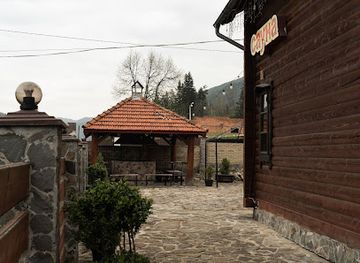
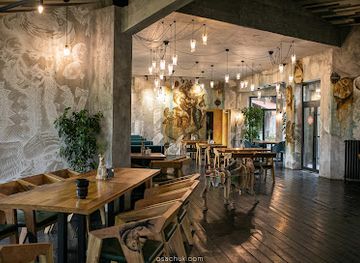
Vorokhta does not have a major nightclub scene, and evenings are generally quiet, shaped by mountain accommodation, seasonal tourism and village hospitality. Visitors may find bars, cafés or traditional-style restaurants attached to guesthouses and hotels, particularly along the central road and in the surrounding resort settlements, but venue choice and opening arrangements can vary. Yaremche, outside Vorokhta, offers a broader selection of places for an evening meal or drink, while ski-oriented areas may be livelier during winter holidays without functioning as urban nightlife districts. In warmer months, evenings are more commonly spent on accommodation terraces or in communal dining spaces, with local music and cultural events appearing occasionally rather than forming a permanent entertainment programme.
-
Ukrainian
Stara Vorokhta
Explore the heart of Ukrainian cuisine at Stara Vorokhta, where traditional flavors meet stunning mountain views for an unforgettable dining experience.
-
Restaurant
Vysokyy Pereval
Experience the flavors of Ukraine at Vysokyy Pereval, a cozy restaurant-cafe in Yablunytsya, perfect for tourists seeking local cuisine.
-
Restaurant
Oksamyt
Experience the best of Ukrainian hospitality at Oksamyt, a restaurant and hotel nestled in the breathtaking Carpathian Mountains.
-
Restaurant
Грань гриль ресторан
Experience exquisite dining at Грань Гриль Ресторан, where fresh ingredients meet culinary artistry in Yablunytsya.
Best nightclubs in Vorokhta
Vorokhta does not have a major nightclub scene, and evenings are generally quiet, shaped by mountain accommodation, seasonal tourism and village hospitality. Visitors may find bars, cafés or traditional-style restaurants attached to guesthouses and hotels, particularly along the central road and in the surrounding resort settlements, but venue choice and opening arrangements can vary. Yaremche, outside Vorokhta, offers a broader selection of places for an evening meal or drink, while ski-oriented areas may be livelier during winter holidays without functioning as urban nightlife districts. In warmer months, evenings are more commonly spent on accommodation terraces or in communal dining spaces, with local music and cultural events appearing occasionally rather than forming a permanent entertainment programme.
-
Night club
Buka
Experience the vibrant nightlife at Buka, a premier night club in Polyanytsya, combining the best of bars, disco, and hookah lounges.
-
Night club
Club Hollywood
Unleash your energy at Club Hollywood, Yablunytsya's prime night club for an unforgettable nightlife experience in the Carpathian Mountains.
-
Disco club
Klub
Discover the vibrant nightlife at Klub, a premier disco club in Vorokhta, Ivano-Frankivsk Oblast, where unforgettable moments await.


Best shops in Vorokhta
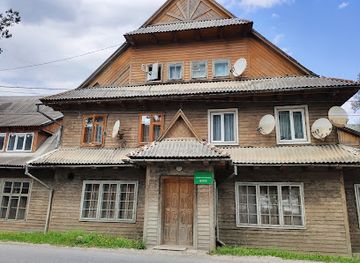
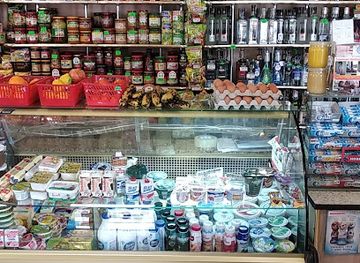
Shopping in Vorokhta is practical and small-scale rather than extensive. Local shops provide everyday food and travel necessities, while guesthouses and roadside businesses may offer regional products, souvenirs and handmade goods associated with the Carpathians. Hutsul-inspired items can include carved wooden objects, woven textiles, embroidered clothing, ceramics and decorative craftwork, though quality and provenance vary and visitors should ask sellers about the maker and materials. Regional cheeses, honey, preserves and other farm products may also be encountered, subject to season and local availability. A wider selection of shops, market-style stalls and artisan souvenirs is found in nearby Yaremche, outside Vorokhta, which is a common stop for visitors exploring the valley. Supplies for longer walks are best purchased before leaving the settled corridor.
-
Food store
Na piatachku
Discover the flavors of Ivano-Frankivsk Oblast at Na Piatachku, a charming food store in Vorokhta offering local delicacies and international treats.
-
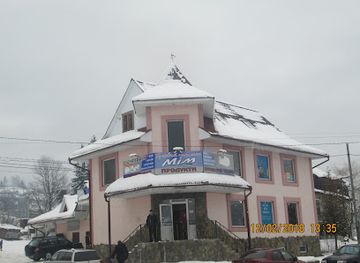
Grocery store
Mahazyn Mim
Experience the essence of Ukrainian culture at Mahazyn Mim, Vorokhta's charming grocery store offering local flavors and fresh produce.
-
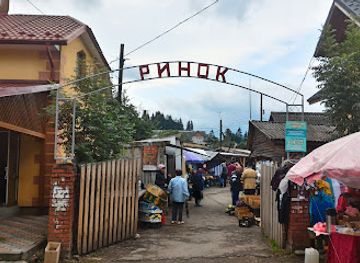
Shopping mall
Vorokhta food market
Explore the vibrant Vorokhta Food Market, a culinary hub showcasing fresh local produce and traditional Ukrainian dishes in a lively atmosphere.
-
Grocery store
Shop 24h Non Stop
Shop 24h Non Stop in Vorokhta: Your round-the-clock grocery destination for local delights and essentials in the heart of the Carpathians.
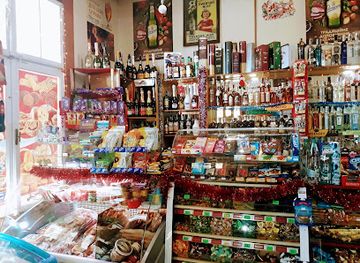
Get your free copy of our complete guide to Vorokhta, delivered straight to you.
Everything on this page, from attractions and restaurants to essentials and local phrases, in one PDF you can read offline, print or share.
Already have an account? Sign in
Your Vorokhta guide is ready.
We'll send it to · Not you? Sign out

Getting your guide ready…
We are putting together a fresh copy of the Vorokhta guide. This can take up to a minute.
This can take a few moments. If your browser asks, choose Allow so the download can start. You'll find the guide in your Downloads folder.
Nothing happened? Download it again
Sorry, the guide is taking longer than usual. Please try again in a minute, or get it by email instead.
Vorokhta essentials
Currency and Payment
Safety
Emergency Situations
Do's and Don'ts
Local Tips
From Eve
Local phrases worth knowing
You don't need to get them perfect. A few words go a long way, and locals appreciate the effort.
Basics
| English | Local | Say it |
|---|---|---|
| Hello | Привіт | [Pryvit] |
| Goodbye | До побачення | [Do pobachennya] |
| Yes | Так | [Tak] |
| No | Ні | [Ni] |
| Please/You're welcome | Будь ласка | [Budʹ laska] |
| Thank you | Дякую | [Dyakuyu] |
| Excuse me/Sorry | Вибачте | [Vybachte] |
| How are you? | Як справи? | [Yak spravy?] |
| Fine. And you? | Добре. А ви? | [Dobre. A vy?] |
| Do you speak English? | Ви говорите англійською? | [Vy hovoryte anhliysʹkoyu?] |
| I don't understand | Я не розумію | [Ya ne rozumiyu] |
Eating & Drinking
| English | Local | Say it |
|---|---|---|
| I'd like to see the menu, please | Я б хотів побачити меню, будь ласка | [Ya b khotiv pobachyty menyoo, budʹ laska] |
| I don't eat meat | Я не їм м'ясо | [Ya ne yim m'yaso] |
| Cheers! | Будьмо! | [Budʹmo!] |
| I would like to pay, please | Я б хотів заплатити, будь ласка | [Ya b khotiv zaplatyty, budʹ laska] |
Emergencies
| English | Local | Say it |
|---|---|---|
| Help! | Допоможіть! | [Dopomozhitʹ!] |
| Go away! | Піди геть! | [Pidi hetʹ!] |
| Call the Police! | Викличте поліцію! | [Vyklychte politsiyu!] |
| Call a doctor! | Викличте лікаря! | [Vyklychte likarya!] |
| I'm lost | Я заблукав | [Ya zabukav] |
| I'm ill | Я хворий | [Ya khvoryy] |
Shopping
| English | Local | Say it |
|---|---|---|
| I'd like to buy... | Я б хотів купити... | [Ya b khotiv kupity...] |
| I'm just looking | Я просто дивлюсь | [Ya prosto dyvlyusʹ] |
| How much is it? | Скільки це коштує? | [Skilʹky tse koshtuye?] |
| That's too expensive | Це занадто дорого | [Tse zanadto doroho] |
| Can you lower the price? | Чи можете ви знизити ціну? | [Chy mozhete vy znyzyty tsinu?] |
Time & Numbers
| English | Local | Say it |
|---|---|---|
| What time is it? | Котра година? | [Kotra hodyna?] |
| It's one o'clock | Одна година | [Odnа hodyna] |
| Half past (10) | Пів на 10 | [Piv na 10] |
| Morning | Ранок | [Ranok] |
| Afternoon | Полудень | [Poludеnʹ] |
| Evening | Вечір | [Vechir] |
| Yesterday | Вчора | [Vchora] |
| Today | Сьогодні | [Sogodni] |
| Tomorrow | Завтра | [Zavtra] |
| 1 | один | [odyn] |
| 2 | два | [dva] |
| 3 | три | [try] |
| 4 | чотири | [chotyry] |
| 5 | п'ять | [pʹyatʹ] |
| 6 | шість | [shistʹ] |
| 7 | сім | [sim] |
| 8 | вісім | [visim] |
| 9 | дев'ять | [devʹyatʹ] |
| 10 | десять | [desyatʹ] |
Transport & Directions
| English | Local | Say it |
|---|---|---|
| Where's a/the...? | Де є ...? | [De ye ...?] |
| What's the address? | Яка адреса? | [Yaka adresa?] |
| Can you show me (on the map)? | Чи можете ви показати мені (на карті)? | [Chy mozhete vy pokazaty meni (na karti)?] |
| When's the next (bus)? | Коли наступний (автобус)? | [Koly nastupnyy (avtobus)?] |
| A ticket (to ....) | Квиток (до ....) | [Kvytok (do ....)] |
History of Vorokhta
Carpathian Landscape and Early Settlement
Vorokhta developed in a mountain environment shaped by the Prut river valley, dense forests and high summer pastures. The surrounding region was inhabited and used by highland communities long before the modern resort emerged, with seasonal grazing, forestry and small-scale agriculture forming important parts of local life. Hutsul culture developed across the upper Carpathians rather than within a single political unit, and Vorokhta’s identity remains connected to this wider cultural area. The settlement’s name is commonly associated with the Vorokha family, although local historical explanations vary.
The Railway and Austro-Hungarian Development
A decisive change came in the late nineteenth century, when the railway was extended through the upper Prut valley during the Austro-Hungarian period. The line connected mountain settlements with regional centres and required substantial bridges and viaducts across the difficult terrain. Vorokhta’s stone railway structures date from this era and remain important evidence of the region’s transport history. Improved access also encouraged visitors from outside the mountains, helping the settlement develop as a climatic and recreational resort while retaining its rural character.
War, Borders and Changing Administration
The twentieth century brought repeated changes of state administration and difficult political circumstances to the Carpathian borderlands. After the First World War, the area became part of the Second Polish Republic, before being incorporated into the Ukrainian Soviet Socialist Republic during the upheavals of the Second World War. These changes affected transport, land administration and local economic life, while Hutsul customs continued within family and village traditions. The railway remained central to Vorokhta’s connection with larger towns and to the movement of visitors into the mountains.
Resort Development and Mountain Conservation
During the Soviet period, Vorokhta expanded as a health, holiday and winter-sports destination, with accommodation and facilities serving visitors to the surrounding Carpathians. After Ukrainian independence, tourism increasingly combined skiing, hiking, guesthouse accommodation and interest in Hutsul heritage. Conservation has become an important part of the wider regional story, particularly through the Carpathian National Nature Park and other protected mountain landscapes near Vorokhta. Modern tourism still depends on balancing recreation, road and building development, forestry, local livelihoods and the protection of fragile upland habitats.
Vorokhta in Photos
Browse through our photo collection highlighting the charm and character of the destination.
Neighbouring destination travel guides
The closest destinations to Vorokhta, if you have time for more than one.
-

-

-

-

-


Swipe for more destinations
Explore more
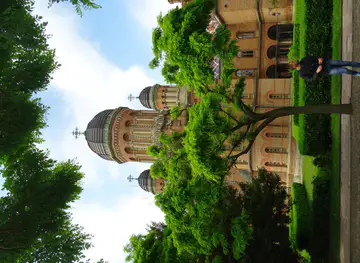
Explore more of Bukovina
Discover Bukovina: A blend of natural beauty, rich traditions, and stunning architecture in the heart of Ukraine.
Explore Bukovina
Explore more of Ukraine
Explore Ukraine: From Kyiv's golden domes to the Carpathian Mountains, discover a country rich in history, culture, and natural beauty in the heart of Eastern Europe.
Explore Ukraine