

Free Lviv Travel Guide & Mobile App
Plan your Lviv trip with Evendo. Get free guides to top attractions, restaurants, hotels, and bars. Web access or download the mobile app.


Lviv, Ukraine, pairs UNESCO-listed historic streets with Austro-Hungarian architecture, coffeehouses, museums and Galician culture near Poland's border.
Old Town and Architectural Heritage
Lviv occupies a distinctive place in western Ukraine, close to the Polish border and shaped by centuries of Central European exchange. Its compact historic centre, recognised by UNESCO, gathers medieval streets, Renaissance courtyards, Baroque churches and ornate nineteenth-century façades around Ploshcha Rynok, the Market Square. The city’s architecture reflects the successive influence of Ruthenian, Polish, Jewish, Armenian, Austrian and Ukrainian communities, while the surrounding hills and leafy boulevards give the centre a human scale suited to exploration on foot.Read more about Lviv
Coffee, Culture and City Life
Beyond the Historic Core
When is the best time to visit Lviv?
Best: June–August · 25–26°C| Month | High (°C) | Rainfall (mm) |
|---|---|---|
| January | 2 | 29 |
| February | 2 | 26 |
| March | 6 | 23 |
| April | 15 | 21 |
| May | 21 | 20 |
| June (best) | 25 | 22 |
| July (best) | 26 | 24 |
| August (best) | 25 | 22 |
| September | 21 | 19 |
| October | 14 | 22 |
| November | 7 | 26 |
| December | 3 | 29 |
Getting to and around Lviv
How to get there
Transportation
Best attractions in Lviv
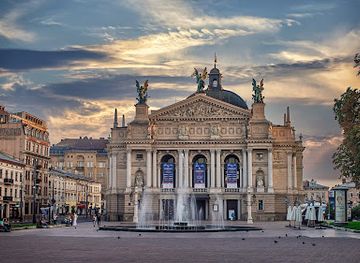
Lviv’s principal attractions cluster around the UNESCO-listed historic centre, where Ploshcha Rynok is surrounded by grand merchant houses, courtyards and museums. The Town Hall tower provides an elevated view when access is operating, while the Italian Courtyard and the Pharmacy Museum illuminate different aspects of urban life. The Armenian Cathedral retains an atmosphere of medieval and early modern Lviv, and the Opera House anchors the broad green space of Svobody Avenue. For art and history, the Andrey Sheptytsky National Museum and Lviv National Art Gallery offer substantial collections in historic settings. Lychakiv Cemetery, with its sculpted tombs and tree-lined paths, presents a quieter account of the city’s multicultural past, while Vysokyi Zamok Park gives a wide panorama over rooftops and surrounding hills. The former Jewish quarter, churches and independent bookshops reward slower exploration between the better-known sights.
-
Opera house
Lviv National Opera
Experience the grandeur of Lviv National Opera, a historic gem showcasing the finest of Ukrainian performing arts in a stunning architectural masterpiece.
8 min walk · 0.7 km from city centre
-
Tourist attraction
Stryiskyi Park
Discover the lush landscapes, historical charm, and serene beauty of Stryiskyi Park, a must-visit attraction in Lviv, Ukraine.
5 min drive · 1.7 km from city centre
-
Museum
Museum-Arsenal
Explore Lviv's rich military heritage at the Museum-Arsenal, a stunning showcase of arms and artifacts from Ukraine's past.
12 min walk · 0.9 km from city centre
-
Cathedral
St. George's Cathedral
Discover the architectural beauty and serene atmosphere of St. George's Cathedral, a UNESCO World Heritage Site in Lviv, Ukraine.
9 min walk · 0.7 km from city centre

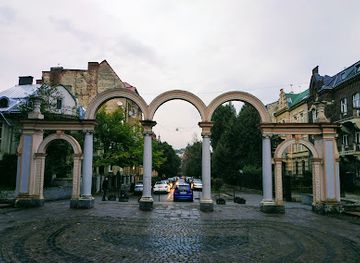


Best landmarks in Lviv
Ploshcha Rynok and its Town Hall form Lviv’s civic centre, framed by Renaissance, Baroque and later façades that record the city’s commercial history. The Latin Cathedral represents the long-standing Roman Catholic presence, while the nearby Bernardine Church and Monastery and Dominican Cathedral add distinctive Baroque silhouettes to the old town. The Armenian Cathedral preserves the memory of one of Lviv’s historic communities, and the Church of the Transfiguration reflects the city’s Ukrainian Christian traditions. The Lviv Opera House, completed in 1900, is a major landmark of the Habsburg-era city and dominates Prospekt Svobody. Outside the centre, Lychakiv Cemetery is significant for its sculptural funerary art and layered national histories, while the Golden Rose Square and surviving fragments around the former Jewish quarter invite reflection on communities devastated during the Second World War.
-
Opera house
Lviv National Opera
Explore the Lviv National Opera, a stunning architectural gem in Ukraine known for its captivating performances and rich cultural history.
8 min walk · 0.7 km from city centre
-
Ukrainian
Kryivka
Discover Kryivka in Lviv, where traditional Ukrainian cuisine meets an immersive cultural experience in a unique military-themed setting.
9 min walk · 0.7 km from city centre
-
 Museum
Museum-Arsenal
Explore Lviv's military history at the Museum-Arsenal, home to a stunning collection of arms and armor that narrates the tales of the past.
12 min walk · 0.9 km from city centre
-
Museum
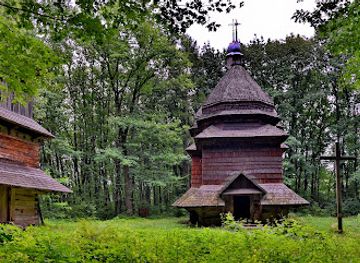
Shevchenkivskyi Hai Park Museum
Explore the rich cultural heritage of Ukraine at Shevchenkivskyi Hai Park Museum, an open-air museum filled with traditional architecture and stunning landscapes.
9 min drive · 3.1 km from city centre
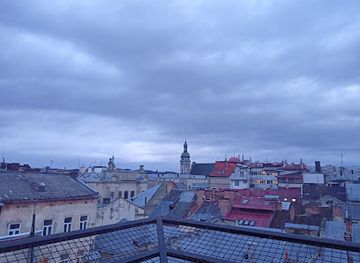
Explore Lviv on the map
Plan your Lviv trip on one map. See where the top attractions, landmarks, restaurants, bars and hotels are, find what's near where you're staying, and book hotels and experiences in a few clicks.
Neighbourhoods in Lviv
-

-

-

-
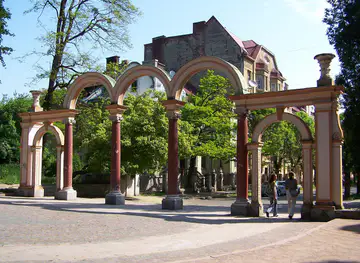


Swipe for more neighbourhoods
Best hotels in Lviv
Best restaurants in Lviv
Lviv’s cuisine belongs to the broader Galician tradition, combining Ukrainian staples with Polish, Jewish, Austrian and regional Carpathian influences. Menus commonly feature borshch, varenyky, holubtsi, deruny, banosh and richly flavoured meat or mushroom dishes, while local pastries and cheesecakes reflect Central European tastes. Coffee is central to the city’s identity, with cafés occupying historic ground-floor rooms and courtyards across the old centre. The area around Ploshcha Rynok offers the greatest concentration of restaurants, bakeries and coffeehouses, while markets and neighbourhood eateries provide a less formal introduction to everyday food. Contemporary kitchens increasingly reinterpret regional ingredients without abandoning traditional soups, pickles, grains and dumplings. As wartime supply and operating conditions can change, menus and opening arrangements may be more limited than pre-war descriptions suggest.
-
Ukrainian
Kryivka
Experience authentic Ukrainian cuisine in an immersive historical setting at Kryivka – Lviv's hidden gem.
9 min walk · 0.7 km from city centre
-
Chocolate shop
Lviv Handmade Chocolate
Artisan chocolate paradise in Lviv's old town: watch creation, taste hundreds of handmade flavors, sip velvety hot cocoa in a cozy cafe amid historic charm.
10 min walk · 0.8 km from city centre
-
Restaurant
Baczewski Restaurant
Experience modern Ukrainian cuisine at Baczewski Restaurant in Lviv—where tradition meets innovation amidst a charming atmosphere.
8 min walk · 0.7 km from city centre
-
Restaurant
Gas Lamp
Discover Gas Lamp in Lviv: A cozy restaurant offering traditional Ukrainian cuisine with an enchanting ambiance and exceptional service.
10 min walk · 0.8 km from city centre
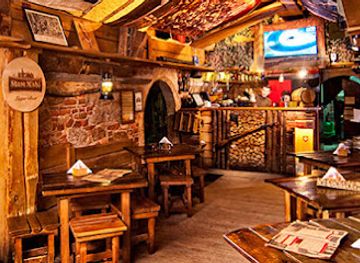
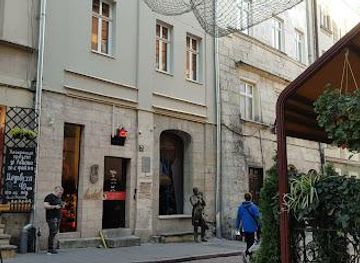
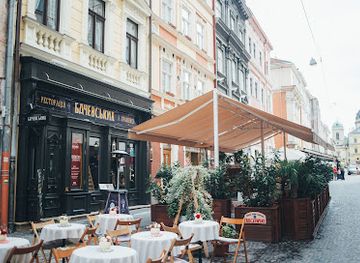
Best bars in Lviv
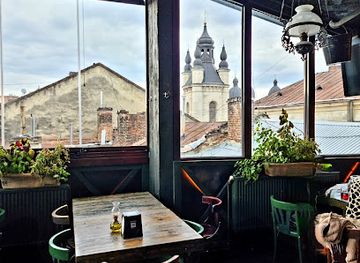
Lviv’s evening life is concentrated around the historic centre, where atmospheric cafés, beer houses, cocktail bars and small music venues occupy former cellars and old town buildings. The city has a strong coffee-and-conversation culture, while local beer and Ukrainian spirits appear alongside more contemporary cocktail menus. Theatre performances, chamber concerts, galleries and cultural events provide important alternatives to clubbing, particularly during periods when nightlife is restricted. The scale is sociable rather than enormous, and venues must follow wartime regulations, including curfews and temporary closures during air alerts. Visitors should check current arrangements directly, plan their return before curfew and move promptly to shelter when instructed. Drinking in public, photographing sensitive sites and treating military-related activity as entertainment are inappropriate.
-
Pub
Good Friend
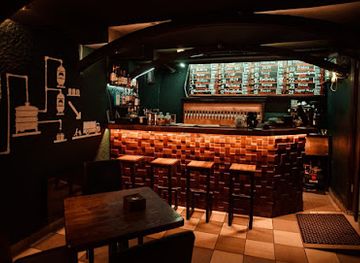
Discover the essence of Lviv at Good Friend, a cozy brewpub offering local beers, ciders, and delightful cuisine in a welcoming atmosphere.
10 min walk · 0.8 km from city centre
-
Hookah bar
Hashtag
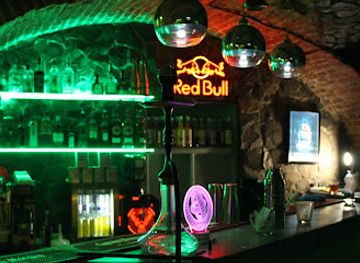
Immerse yourself in the vibrant atmosphere of Hashtag Hookah Bar in Lviv, where cocktails, cuisine, and hookah create an unforgettable experience.
8 min walk · 0.6 km from city centre
-
Pub
Bigos
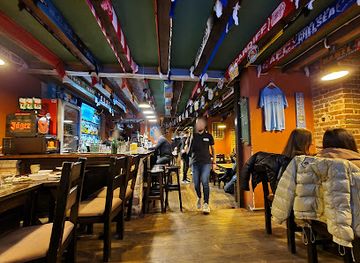
Discover the heart of Ukrainian cuisine at Bigos in Lviv, where tradition meets a vibrant pub ambiance, perfect for a memorable dining experience.
10 min walk · 0.8 km from city centre
-
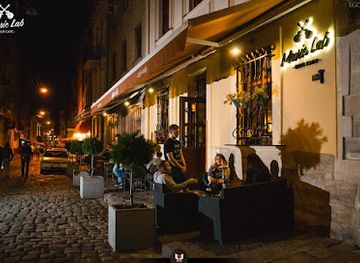
Bar
Music Lab
Experience the lively nightlife of Lviv at Music Lab, a bar where great music meets a vibrant atmosphere.
9 min walk · 0.7 km from city centre
Best nightclubs in Lviv
Lviv’s evening life is concentrated around the historic centre, where atmospheric cafés, beer houses, cocktail bars and small music venues occupy former cellars and old town buildings. The city has a strong coffee-and-conversation culture, while local beer and Ukrainian spirits appear alongside more contemporary cocktail menus. Theatre performances, chamber concerts, galleries and cultural events provide important alternatives to clubbing, particularly during periods when nightlife is restricted. The scale is sociable rather than enormous, and venues must follow wartime regulations, including curfews and temporary closures during air alerts. Visitors should check current arrangements directly, plan their return before curfew and move promptly to shelter when instructed. Drinking in public, photographing sensitive sites and treating military-related activity as entertainment are inappropriate.
-
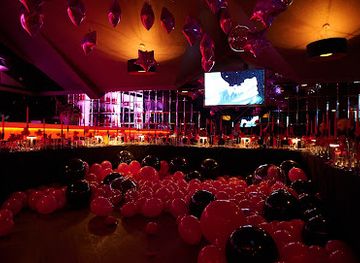
Night club
Клуб на !FESTrepublic
Discover the lively atmosphere of Клуб на !FESTrepublic, Lviv's ultimate night club and concert hall for unforgettable entertainment experiences.
7 min drive · 2.5 km from city centre
-
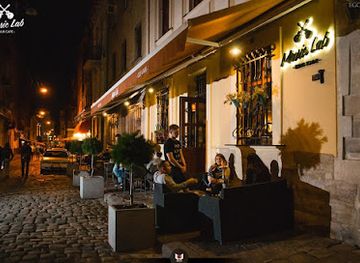
Bar
Music Lab
Discover the vibrant nightlife of Lviv at Music Lab, where great music and a lively atmosphere await every visitor.
9 min walk · 0.7 km from city centre
-
Concert hall
Malevich Concert Arena
Discover the vibrant atmosphere of Malevich Concert Arena in Lviv, where music and nightlife come alive in a spectacular setting.
13 min walk · 1.0 km from city centre
-
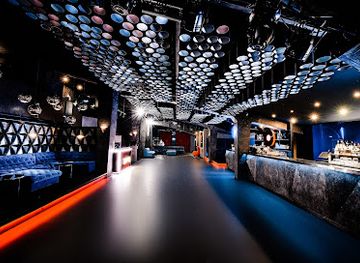
Night club
Fashion Club
Experience the vibrant nightlife of Lviv at Fashion Club, where music, dining, and energy unite for an unforgettable evening.
7 min walk · 0.5 km from city centre

Best shops in Lviv
Shopping in Lviv ranges from central craft and souvenir shops to everyday markets, bookshops and independent retailers. The lanes around Ploshcha Rynok and Prospekt Svobody contain Ukrainian design, ceramics, illustrated books, embroidered goods and small galleries, while the Vernissage market is associated with arts, crafts and traditional-style souvenirs. Visitors may encounter vyshyvanka embroidery, woodwork, painted items, regional food products and Carpathian-inspired handicrafts, but quality and provenance vary, so purchasing from established makers is preferable. Lviv’s coffee culture also makes locally roasted beans, chocolate and confectionery practical gifts. The city has modern shopping centres and supermarkets for ordinary needs, yet the most distinctive retail experience remains the mix of historic premises, specialised bookshops and contemporary Ukrainian products found within walking distance of the old centre.
-
Shopping mall
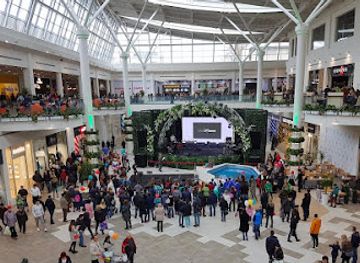
Forum Lviv
Discover Forum Lviv: A vibrant shopping mall offering diverse retail, dining, and entertainment experiences in the heart of Lviv, Ukraine.
16 min walk · 1.3 km from city centre
-
Shopping mall
Victoria Gardens
Explore Lviv's vibrant shopping and entertainment hub at Victoria Gardens, where fashion meets fun and culinary delights await!
14 min drive · 4.7 km from city centre
-
Chocolate shop
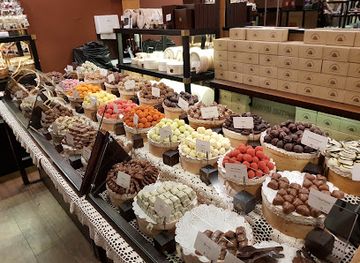
Lviv Handmade Chocolate
Experience the magical taste of handcrafted chocolates and coffee at Lviv Handmade Chocolate, the sweetest spot in Lviv.
10 min walk · 0.8 km from city centre
-
Shopping mall
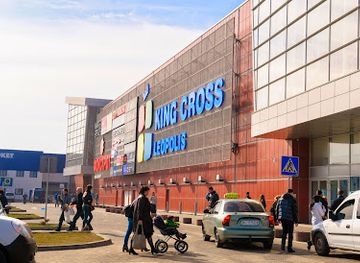
King Cross Leopolis SEC
Explore King Cross Leopolis SEC – a vibrant shopping mall in Sokilnyky offering diverse shopping, dining, and entertainment experiences.
22 min drive · 7.3 km from city centre
Get your free copy of our complete guide to Lviv, delivered straight to you.
Everything on this page, from attractions and restaurants to essentials and local phrases, in one PDF you can read offline, print or share.
Already have an account? Sign in
Your Lviv guide is ready.
We'll send it to · Not you? Sign out

Getting your guide ready…
We are putting together a fresh copy of the Lviv guide. This can take up to a minute.
This can take a few moments. If your browser asks, choose Allow so the download can start. You'll find the guide in your Downloads folder.
Nothing happened? Download it again
Sorry, the guide is taking longer than usual. Please try again in a minute, or get it by email instead.
Lviv essentials
Currency and Payment
Safety
Emergency Situations
Do's and Don'ts
Local Tips
From Eve
Local phrases worth knowing
You don't need to get them perfect. A few words go a long way, and locals appreciate the effort.
Basics
| English | Local | Say it |
|---|---|---|
| Hello | Привіт | [Privit] |
| Goodbye | До побачення | [Do pobachennia] |
| Yes | Так | [Tak] |
| No | Ні | [Ni] |
| Please/You're welcome | Будь ласка | [Bud laska] |
| Thank you | Дякую | [Dyakuyu] |
| Excuse me/Sorry | Вибачте | [Vybachte] |
| How are you? | Як справи? | [Yak spravy?] |
| Fine. And you? | Добре. А ви? | [Dobre. A vy?] |
| Do you speak English? | Ви розмовляєте англійською? | [Vy rozmovlyayete anhliysʹkoyu?] |
| I don't understand | Я не розумію | [Ya ne rozumiyu] |
Eating & Drinking
| English | Local | Say it |
|---|---|---|
| I'd like to see the menu, please | Я б хотів подивитися меню, будь ласка | [Ya b khotiv podvytysya menyoo, bud laska] |
| I don't eat meat | Я не їм м'ясо | [Ya ne yim m'yaso] |
| Cheers! | На здоров'я! | [Na zdorov'ya!] |
| I would like to pay, please | Я б хотів заплатити, будь ласка | [Ya b khotiv zaplatyty, bud laska] |
Emergencies
| English | Local | Say it |
|---|---|---|
| Help! | Допоможіть! | [Dopomozhitʹ!] |
| Go away! | Іди геть! | [Idy hetʹ!] |
| Call the Police! | Покличте поліцію! | [Poklychte politsiyu!] |
| Call a doctor! | Покличте лікаря! | [Poklychte likarya!] |
| I'm lost | Я загубився | [Ya zahubyvsya] |
| I'm ill | Я хворий | [Ya khvoryy] |
Shopping
| English | Local | Say it |
|---|---|---|
| I'd like to buy... | Я б хотів купити... | [Ya b khotiv kupity...] |
| I'm just looking | Я просто дивлюся | [Ya prosto dyvlyusya] |
| How much is it? | Скільки це коштує? | [Skilʹky tse koshtuye?] |
| That's too expensive | Це занадто дорого | [Tse zanadto doroho] |
| Can you lower the price? | Чи можете ви знизити ціну? | [Chy mozhete vy znyzyty tsinu?] |
Time & Numbers
| English | Local | Say it |
|---|---|---|
| What time is it? | Котра година? | [Kotra hodyna?] |
| It's one o'clock | Одна година | [Odna hodyna] |
| Half past (10) | Пів на (десять) | [Piv na (desyatʹ)] |
| Morning | Ранок | [Ranok] |
| Afternoon | Полудень | [Poludenʹ] |
| Evening | Вечір | [Vechir] |
| Yesterday | Вчора | [Vchora] |
| Today | Сьогодні | [Sʹohodni] |
| Tomorrow | Завтра | [Zavtra] |
| 1 | Один | [Odin] |
| 2 | Два | [Dva] |
| 3 | Три | [Try] |
| 4 | Чотири | [Chotyry] |
| 5 | П'ять | [P'yatʹ] |
| 6 | Шість | [Shistʹ] |
| 7 | Сім | [Sim] |
| 8 | Вісім | [Visim] |
| 9 | Дев'ять | [Devyatʹ] |
| 10 | Десять | [Desyatʹ] |
Transport & Directions
| English | Local | Say it |
|---|---|---|
| Where's a/the...? | Де є/знаходиться...? | [De ye/znakhodytsya...?] |
| What's the address? | Яка адреса? | [Yaka adresa?] |
| Can you show me (on the map)? | Чи можете показати мені (на карті)? | [Chy mozhete pokazaty meni (na karti)?] |
| When's the next (bus)? | Коли наступний (автобус)? | [Koly nastupnyy (avtobus)?] |
| A ticket (to ....) | Квиток (до ....) | [Kvytok (do ....)] |
History of Lviv
Foundations of Medieval Lviv
Lviv emerged in the thirteenth century within the historical region of Red Ruthenia, traditionally associated with King Danylo of Galicia-Volhynia and named after his son Lev. The settlement developed on elevated ground near important routes linking the Carpathian region with lands to the west and east. After the extinction of the Galician-Volhynian ruling line, Lviv became part of the Polish crown in the fourteenth century and received urban privileges that encouraged trade and immigration. Ruthenian, Polish, Armenian, Jewish and other communities helped shape its commercial and religious life, laying the foundations for the multicultural city represented by the historic centre today.
Trade and the Polish-Lithuanian City
Under Polish rule and later within the Polish-Lithuanian Commonwealth, Lviv—known in Polish as Lwów—grew as a major trading centre. Merchants connected the city with Kraków, the Black Sea region, the Ottoman world and markets farther east. The Market Square became the civic and commercial focus, while separate religious communities established churches, synagogues and institutions in surrounding quarters. Renaissance and Baroque construction transformed the medieval town, including the Armenian and Latin religious complexes. Political upheavals, fires and military conflicts repeatedly affected the city, but its role as a regional centre of commerce and culture continued.
Habsburg Lemberg and Modernisation
The First Partition of Poland in 1772 brought Lviv, then called Lemberg, into the Habsburg monarchy. As the capital of the Kingdom of Galicia and Lodomeria, it acquired administrative importance and underwent substantial modernisation. Austrian institutions, railways, new boulevards and public buildings altered the medieval urban fabric, while the University of Lviv and theatres strengthened intellectual and cultural life. Polish, Jewish, Ruthenian and German-speaking communities contributed to a complex social landscape. By the late nineteenth century, the city had become a prominent Central European centre, with the architecture of Svobody Avenue and the Opera House reflecting its imperial-era ambitions.
National Movements and a Multicultural Society
The nineteenth and early twentieth centuries saw competing national movements develop in Lviv. Ukrainian cultural and political organisations promoted language, education and national consciousness, while Polish institutions remained influential and the Jewish community formed a major part of the city’s economic and cultural life. The city’s Jewish heritage included synagogues, schools, charitable organisations and publishing. In 1908, Lviv hosted the first major exhibition of Ukrainian modern art, associated with the development of a distinct Ukrainian artistic identity. These overlapping traditions produced a sophisticated but politically tense urban society on the eve of the First World War.
War, Borders and Population Change
Lviv changed hands repeatedly during the First World War and the conflicts that followed the collapse of the Austro-Hungarian Empire. It became part of the Second Polish Republic in 1919 and was known as Lwów until the outbreak of the Second World War. Soviet occupation began in 1939, followed by German occupation in 1941 and the destruction of the city’s Jewish community during the Holocaust. Soviet forces returned in 1944, and post-war border changes brought a profound population transformation as many Polish residents left and Ukrainians from other regions arrived. Streets, institutions and monuments were subsequently interpreted through Soviet historical policy.
Independent Ukraine and Cultural Renewal
With Ukraine’s independence in 1991, Lviv became an important centre of Ukrainian civic, cultural and political life. The historic centre gained international recognition when it was inscribed on the UNESCO World Heritage List in 1998, encouraging conservation and a renewed study of the city’s layered heritage. Museums, universities, creative organisations and restored religious buildings have helped recover histories that were suppressed or fragmented during the twentieth century. Since Russia’s full-scale invasion of Ukraine in 2022, Lviv has served as a major western hub for displaced people, humanitarian work and cultural preservation while continuing to maintain its public institutions under wartime conditions.
Lviv in Photos
Browse through our photo collection highlighting the charm and character of the destination.
Cities near Lviv
The closest cities to Lviv, if you have time for more than one stop.
-

-
-

-

-


Swipe for more cities
Explore more

Explore more of Ukraine
Explore Ukraine: From Kyiv's golden domes to the Carpathian Mountains, discover a country rich in history, culture, and natural beauty in the heart of Eastern Europe.
Explore Ukraine