Falls Rd, Belfast Travel Guide
Free Guide: Political murals, peace walls, and powerful stories of resilience in West Belfast's iconic Republican heartland.


A brief summary of Falls Rd
Political murals, peace walls, and powerful stories of resilience in West Belfast's iconic Republican heartland.
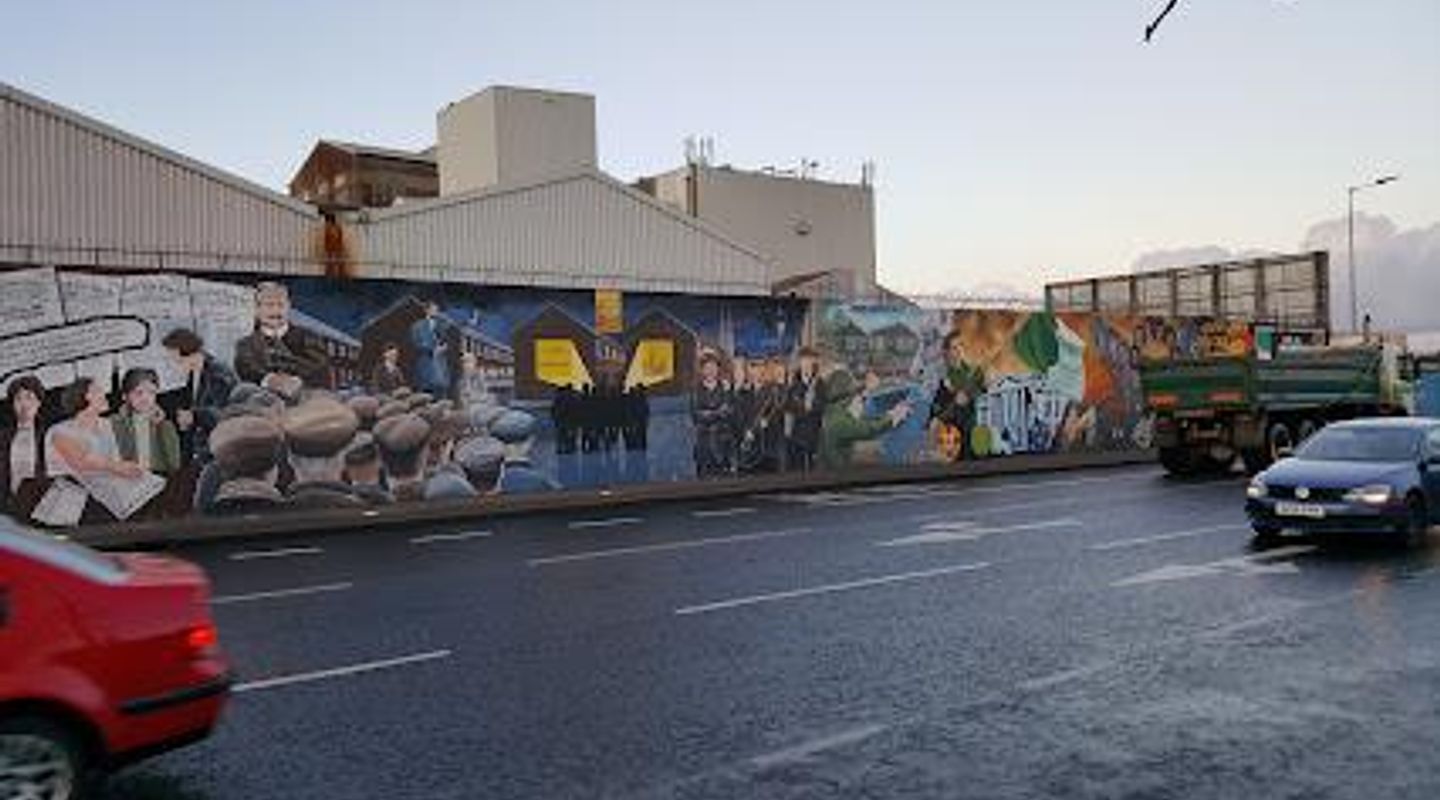
Falls Road is the main artery through West Belfast's Catholic and Republican community, stretching nearly two miles from Divis Street to Andersonstown. Famous for its powerful political murals, including the iconic Bobby Sands mural, and its role as a focal point of the Troubles conflict, the road has transformed into a significant heritage tourism destination. Visitors encounter vivid street art, memorial gardens, and the Peace Wall that once divided this neighborhood from the adjacent Loyalist Shankill Road. Guided tours led by former activists and political ex-prisoners offer deeply personal insights into this turbulent period of Irish history.
On-site amenities
 Restrooms
 Food options
 Drink options
 Seating areas
 Information boards
 Visitor centre
- Address
- Belfast, UK
Getting there
Walking from Belfast City Centre
Public Bus Service
Black Cab Taxi Tour
Organized Walking Tours
Discover more about Falls Rd
A Road Shaped by Industrial Growth and Community Identity
The Falls Road derives its name from the Irish *túath na bhFál*, meaning "territory of the enclosures," referring to an ancient Irish petty kingdom. Originally a country lane leading from Belfast's city centre, the road's character transformed dramatically during the Industrial Revolution of the 19th century. As large linen mills proliferated across West Belfast, the area became a magnet for workers seeking employment. The Catholic population, swelled by refugees from rural poverty and those displaced by the Irish Potato Famine, established themselves around the mills and formed a tightly knit community. Housing expanded rapidly into networks of narrow streets lined with small terraced houses, creating the densely populated residential neighborhoods that define the area today.
The Troubles and Sectarian Violence
The Falls Road's proximity to the Loyalist Shankill Road made it a flashpoint during the Troubles, the period of violent conflict that gripped Northern Ireland from the late 1960s onward. The infamous riots of August 1969 marked the beginning of the worst violence in West Belfast, with six Catholics killed and several streets burned out near the Falls Road. The British Army's arrival, intended to protect Catholics, instead alienated the community through heavy-handed tactics. The notorious Falls Curfew of 1970 became one of the conflict's most infamous incidents. Over the following three decades, the Falls Road witnessed some of the most intense fighting of the entire conflict, with bullet holes still visible on buildings and the scars of violence embedded in the streetscape. The Peace Wall, erected along Cupar Way and between the Falls and Shankill Roads, physically divided the two communities and remains a stark reminder of the sectarian divide.
Murals, Memory, and Political Expression
Today, the Falls Road is renowned as the primary focal point for Troubles tourism in Belfast, distinguished by its extraordinary collection of political murals and street art. The most iconic is the Bobby Sands mural, erected in 1998 on the corner of Sevastopol Street, depicting the smiling face of the IRA hunger striker who died in 1981. The International Wall stretches along the road, featuring dozens of murals painted to show solidarity with people engaged in struggles worldwide, while also commemorating those who died during the conflict. These vivid artworks transform the street into an open-air gallery of political expression, pride, and remembrance, attracting thousands of visitors annually who come to understand the community's resilience and identity through its visual narrative.
Memorial Spaces and Sites of Remembrance
The Falls Road is dotted with solemn memorial spaces dedicated to those who lost their lives during the Troubles. The Garden of Remembrance, officially opened in 2001 and commissioned by the Falls Cultural Society, honors members of the IRA's D Company and civilians from the Falls Road community who died in the conflict, as well as hunger strikers from 1981. The Clonard Martyrs Memorial Garden, located on Bombay Street where some of the worst violence occurred in August 1969, features a black marble Celtic cross and inscribed slabs bearing the names of all those from the Clonard area who perished. Milltown Cemetery, which opened in 1869, serves as the final resting place of Bobby Sands and other hunger strikers, making it a pilgrimage site for many visitors seeking to pay respects to those who died for their political beliefs.
Guided Tours and Living History
The most authentic way to experience the Falls Road is through guided walking tours led by former activists and political ex-prisoners who weave their own personal stories into the narrative of the conflict. These tours, typically lasting three hours, begin at Divis Tower and traverse the Lower Falls, visiting the International Wall, Republican Memorial gardens, the Irish Republican History Museum, and the Bobby Sands mural before concluding at Milltown Cemetery. Guides provide in-depth insights into both local and wider Irish history, offering perspectives that cannot be found in conventional guidebooks. Many tours include a complimentary drink at the nearby Felons Club, creating a space for dialogue and reflection. The authenticity of these guides—people who lived through the Troubles and often spent time as political prisoners—gives visitors an unparalleled understanding of the community's experiences and the ongoing peace process.
Contemporary Culture and Community Hub
Beyond its historical significance, the Falls Road remains a vibrant cultural and social center for West Belfast. The Cultúrlann McAdam Ó Fiaich, an Irish language cultural centre opened in 1991, anchors the Gaeltacht Quarter on the Falls Road and serves as a hub for Irish language learning and cultural events. Local businesses, restaurants, and community organizations line the street, demonstrating that the Falls Road is not merely a museum of the past but a living, breathing neighborhood where residents continue to build their futures. The area's transformation from a zone of conflict to a destination for heritage tourism and cultural engagement reflects the broader peace process and the community's determination to reclaim their narrative and identity on their own terms.
Evendo Review Centre
 Google
Guest reviews
Best time to go
Quietest: Jan, Feb & Dec · before 6am or from 11pm
Busy times are Evendo estimates for a typical year, to help you plan. Actual crowds vary with events, school holidays and the weather.
Explore Falls Rd on the map
A handpicked selection of must-see spots near Falls Rd, mapped for you.
Get your free copy of our complete guide to Falls Rd, delivered straight to you.
Everything on this page, from opening hours and how to get there to Eve’s tips and the best time to go, in one PDF you can read offline, print or share.
Already have an account? Sign in
Your Falls Rd guide is ready.
We'll send it to · Not you? Sign out

Getting your guide ready…
We are putting together a fresh copy of the Falls Rd guide. This can take up to a minute.
This can take a few moments. If your browser asks, choose Allow so the download can start. You'll find the guide in your Downloads folder.
Nothing happened? Download it again
Sorry, the guide is taking longer than usual. Please try again in a minute, or get it by email instead.
Unlock the best of Falls Rd
Skip-the-line tickets, guided tours with entry, and walking tours of the area, booked in a few clicks.



Other nearby places you may find interesting
The closest places of the same kind, if this one is not quite what you had in mind.
-
-
-
-
-


Swipe for more places
More to explore near Falls Rd

 Best experiences near Falls Rd
 Best hotels near Falls Rd
 Best landmarks near Falls Rd
 Best attractions near Falls Rd
 Best shops near Falls Rd
 Best restaurants near Falls Rd
 Best bars near Falls Rd
Do you manage this location?
Take control to get all the benefits, like improved information, better appearance, and stronger visibility across AI-powered discovery.
Explore more

Explore more of Belfast
Discover Belfast, a city of history, culture, and modern charm, where the legacy of the Titanic meets vibrant street life and stunning natural beauty.
Explore Belfast
Explore more of United Kingdom
Discover the United Kingdom: A blend of rich history, stunning landscapes, and vibrant cities, offering a unique travel experience for every visitor.
Explore United Kingdom