

Harbourside (Bristol) Travel Guide - Free
Explore Harbourside in Bristol with Evendo's free guide. Find the best shops, historic streets, restaurants, and gems on web or mobile.


Harbourside Bristol combines Floating Harbour waters, M Shed, SS Great Britain, contemporary dining, galleries and waterfront walks in the heart of the city.
A Waterfront Shaped by Trade
Harbourside occupies the central stretch of Bristol’s Floating Harbour, where former docks and warehouses have evolved into one of the city’s most recognisable public quarters. The waterway curves between Prince Street, Welsh Back, Redcliffe and the western end of the harbour, giving the area a spacious character unusual for a city centre. Walking routes follow the quays, bridges and promenades rather than a conventional street grid, with boats, historic dock structures and broad views across the water providing constant orientation.Read more about Harbourside
Museums, Art and Maritime Bristol
Quayside Life and Everyday Visits
Best attractions in Harbourside
Harbourside’s attractions are concentrated within a walkable sequence around the Floating Harbour. M Shed, housed in a former transit shed, presents Bristol’s social, industrial and maritime stories through objects, vehicles and personal accounts. Across the water, the SS Great Britain offers access to Brunel’s pioneering iron steamship and the dockyard where it was built. Arnolfini contributes contemporary art, performance and exhibitions, while Watershed provides independent cinema and cultural events in a former industrial building. Bristol Aquarium introduces underwater habitats to the waterfront, particularly appealing to families. Millennium Square, Pero’s Bridge and the broad Promenade are attractions in their own right, providing open views over the harbour and opportunities to watch boats. At the southern edge, Wapping Wharf combines public quayside space with adapted dock buildings and shipping-container businesses, adding a newer layer to the former working-port landscape.
-
Maritime museum
Brunel's SS Great Britain
Step aboard Brunel’s SS Great Britain in Bristol to experience Victorian maritime innovation and the genius of a pioneering steamship designer.
12 min walk · 1.0 km from neighbourhood centre
-
Tourist attraction
Bristol Museum & Art Gallery
Explore Bristol’s rich art, history, and natural wonders in a stunning Edwardian Baroque museum with free entry and diverse exhibits for all ages.
5 min drive · 1.5 km from neighbourhood centre
-
Museum
M Shed
Explore Bristol’s vibrant history and industrial heritage in a unique harbourside museum with panoramic views and interactive exhibits.
5 min drive · 1.6 km from neighbourhood centre
-
Aquarium
Bristol Aquarium
Discover vibrant marine life and interactive conservation experiences in the heart of Bristol’s harbourside at Bristol Aquarium.
5 min drive · 1.6 km from neighbourhood centre


Best landmarks in Harbourside
The Floating Harbour itself is Harbourside’s defining landmark: an engineered nineteenth-century dock that transformed Bristol’s tidal waterfront and still determines the neighbourhood’s shape. The SS Great Britain is the most prominent historic object on the water, preserving Brunel’s iron steamship and its Great Western Dockyard setting. M Shed occupies a former transit shed, giving an industrial structure a new civic role, while the old dock walls, warehouse forms and working harbour details retain evidence of the area’s commercial past. Pero’s Bridge, named after Pero Jones, a man enslaved by the Pinney family who lived in Bristol, crosses the harbour near the city centre and has become a recognisable part of the public realm. Arnolfini’s former warehouse setting and the modern Millennium Square show how maritime buildings and open dock spaces have been adapted for cultural use.
-
Historical landmark
Cascade Steps
Historic Cascade Steps in Bristol offer scenic waterfront views and a tranquil urban retreat steeped in maritime heritage.
5 min drive · 1.8 km from neighbourhood centre
-
Historical landmark
Statue of Cary Grant
Celebrate Hollywood legend Cary Grant with a lifelike bronze statue in Bristol’s vibrant Millennium Square, capturing his timeless charm and local roots.
19 min walk · 1.5 km from neighbourhood centre


Explore Harbourside on the map
A handpicked selection of must-see spots in Harbourside, mapped for you.
Best hotels in Harbourside
Best restaurants in Harbourside
Eating around Harbourside ranges from cafés and casual counters to restaurants overlooking the Floating Harbour, with the strongest concentration at Wapping Wharf and its Cargo development on the southern edge. Here, compact premises and converted shipping containers accommodate independent food businesses serving varied international and contemporary styles, while the quayside around Millennium Square and Prince Street provides more conventional sit-down dining. Watershed’s café-bar is closely linked to the area’s cinema and cultural programme, and nearby venues often suit a meal before an exhibition, film or performance. The setting is the main unifying feature: waterside terraces, dockside views and former industrial buildings create a dining environment distinct from Bristol’s inland shopping streets. Menus and businesses change more quickly than the harbour’s architecture, so visitors should check current listings and opening arrangements rather than rely on old restaurant guides.
-
Pub
The Bristol Stable
Sourdough pizzas, West Country ciders, and lively Harbourside vibes combine at The Bristol Stable for a quintessential Bristol dining experience.
5 min drive · 1.7 km from neighbourhood centre
-
Bar
Las Iguanas - Bristol - Harbourside
Sizzling Latin flavors meet Bristol's vibrant harborside at Las Iguanas, where tapas, burritos, and cocktails fuel endless fiestas by the water.
5 min drive · 1.6 km from neighbourhood centre
-
Restaurant
No.1 Harbourside
Lively waterfront dining with acclaimed burgers, diverse drinks, and a relaxed harbourside vibe in the heart of Bristol.
5 min drive · 1.7 km from neighbourhood centre
-
Tapas
Under the Stars
A charming floating tapas bar on Bristol’s Harbourside, blending Mediterranean flavors with stunning waterfront views and a lively rooftop atmosphere.
5 min drive · 1.8 km from neighbourhood centre


Best bars in Harbourside
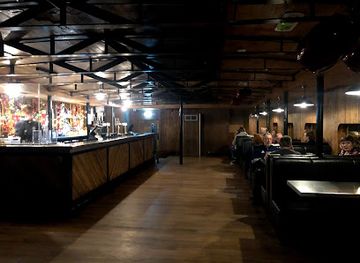
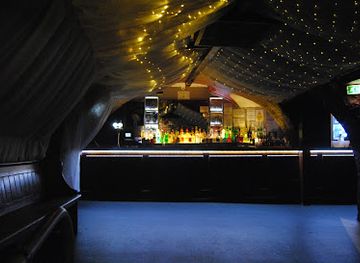
Harbourside is an evening cultural and dining quarter rather than a concentrated nightclub district. Watershed’s café-bar gives the waterfront a dependable film-and-conversation focus, while restaurants and bars around Millennium Square, Prince Street and Wapping Wharf provide places to meet before or after exhibitions, screenings and performances. Arnolfini’s programme can extend into evening events, adding a gallery-based social atmosphere rather than conventional club nightlife. The quayside is most animated when major cultural events are taking place, but activity becomes quieter along the water once venues close. Visitors should expect varied evening dining, cinema, arts programming and harbour walks rather than a strip of late-night clubs, and should be considerate of residents and other pedestrians when leaving busy venues.
-
Cocktail bar
Slug & Lettuce - Harbourside Bristol
Bristol harbourside cocktail haven with 2-for-1 drinks, bottomless brunches, and waterfront terrace vibes for unforgettable nights out.
18 min walk · 1.4 km from neighbourhood centre
-
Bar
Mackenzies Bar & Kitchen
A relaxed, all-day cafe-bar in the W Shed offering casual meals and drinks beside Bristol’s harbourside.
5 min drive · 1.7 km from neighbourhood centre
-
Pub
Shakespeare Tavern
Waterside Bristol pub pouring cask ales, pub classics, and community cheer in a dog-friendly haven with garden vibes.
5 min drive · 1.7 km from neighbourhood centre
-
Bar
Under the Stars
Sail into flavour on Bristol Harbour's moored tapas boat, where creative small plates, craft cocktails, and waterfront views create unforgettable evenings under the stars.
5 min drive · 1.8 km from neighbourhood centre


Best nightclubs in Harbourside
Harbourside is an evening cultural and dining quarter rather than a concentrated nightclub district. Watershed’s café-bar gives the waterfront a dependable film-and-conversation focus, while restaurants and bars around Millennium Square, Prince Street and Wapping Wharf provide places to meet before or after exhibitions, screenings and performances. Arnolfini’s programme can extend into evening events, adding a gallery-based social atmosphere rather than conventional club nightlife. The quayside is most animated when major cultural events are taking place, but activity becomes quieter along the water once venues close. Visitors should expect varied evening dining, cinema, arts programming and harbour walks rather than a strip of late-night clubs, and should be considerate of residents and other pedestrians when leaving busy venues.
-
Nightclub
Thekla
Bristol's legendary floating nightclub: cargo ship vibes meet thunderous beats in the Floating Harbour for unforgettable nights.
6 min drive · 1.9 km from neighbourhood centre
-
Nightclub
Antix
Bristol's enduring late-night haven on Park Street: cocktails till 1am, DJ beats till 6am, dancing into dawn with house, R&B, and reggaeton vibes.
5 min drive · 1.6 km from neighbourhood centre
-
Nightclub
Popworld - Bristol
Dance to 90s and 00s pop anthems under neon lights at Bristol's ultimate nostalgic nightclub, where cheesy hits and POPTAIL cocktails fuel epic nights out.
6 min drive · 1.9 km from neighbourhood centre
-
Nightclub
Basement 45
Bristol's intimate basement bunker where underground beats, raw comedy, and late-night energy collide in exposed-brick ecstasy.
5 min drive · 1.6 km from neighbourhood centre


Best shops in Harbourside
Harbourside is not primarily a shopping district, but its retail offer is distinctive where food, design and leisure overlap. Wapping Wharf is the main focus, with independent food businesses, small-scale retail and creative enterprises arranged through converted dockside spaces and the Cargo shipping-container development. The emphasis is on eating, browsing and meeting rather than department stores or a continuous high-street selection. Museum shops at M Shed and the SS Great Britain provide books, gifts and maritime-themed items connected to Bristol’s history, while cultural venues may offer exhibition-related publications and design goods. For broader fashion, book and commercial shopping, visitors need to continue into Bristol city centre, which lies immediately beyond the harbour but is a separate retail environment. The contrast is part of Harbourside’s character: its commercial spaces sit within former industrial settings and beside public water rather than along a conventional shopping avenue.
-
Gift shop
Fig1
Discover Scandinavian-inspired homewares and unique gifts at this independent Bristol gem, where clean lines meet creative curation in the heart of Wapping Wharf.
5 min drive · 1.6 km from neighbourhood centre
-
Gift shop
Blaze
Discover handcrafted artistry and unique gifts at Blaze Studio, Bristol's gem on Colston Street where local creativity shines.
6 min drive · 2.0 km from neighbourhood centre
-
Shop
Will's doss pit
Dive into Bristol's quirky underbelly at Will's Doss Pit, where vintage treasures and bohemian finds await in historic Queen Square.
6 min drive · 1.9 km from neighbourhood centre
-
Gift shop
Alices Secret Empourium
Uncover Bristol's quirk-filled gift haven on Park Street, where eclectic treasures and whimsical wonders await every curious explorer.
5 min drive · 1.6 km from neighbourhood centre


Harbourside essentials
Getting There
Getting Around
Safety
Emergency Situations
Do's and Don'ts
Local Tips

From Eve
Local phrases worth knowing
You don't need to get them perfect. A few words go a long way, and locals appreciate the effort.
Basics
| English | Local | Say it |
|---|---|---|
| Hello | Alright mate | [al-right mayt] |
| Goodbye | Ta-ra | [ta-rah] |
| Yes | Aye | [aye] |
| No | Nah | [nah] |
| Please/You're welcome | Cheers | [cheers] |
| Thank you | Ta | [ta] |
| Excuse me/Sorry | Sorry mate | [sor-ry mayt] |
| How are you? | You alright? | [yu al-right] |
| Fine. And you? | Not bad. You? | [not bad. yu] |
| Do you speak English? | Do you speak English? | [do yu speak ing-glish] |
| I don't understand | I ain't got a scooby | [I aint got a scoo-bee] |
Eating & Drinking
| English | Local | Say it |
|---|---|---|
| I'd like to see the menu, please | Can I see the menu, mate? | [can ai see the menu, mayt] |
| I don't eat meat | I'm veggie | [aim ve-ggie] |
| Cheers! | Cheers! | [cheers] |
| I would like to pay, please | Can I settle up, mate? | [can ai set-tle up, mayt] |
Emergencies
| English | Local | Say it |
|---|---|---|
| Help! | Help! | [help] |
| Go away! | Sling yer 'ook | [sling yer ook] |
| Call the Police! | Ring the bizzies! | [ring the biz-zies] |
| Call a doctor! | Ring the quack! | [ring the quack] |
| I'm lost | I'm lost | [aim lost] |
| I'm ill | I'm poorly | [aim poor-ly] |
Shopping
| English | Local | Say it |
|---|---|---|
| I'd like to buy... | I wanna get... | [ai wan-na get] |
| I'm just looking | Just browsing, mate | [just browse-ing, mayt] |
| How much is it? | How much? | [how much] |
| That's too expensive | That's a bit steep | [that-s a bit steep] |
| Can you lower the price? | Can you do a deal? | [can yu do a deal] |
Time & Numbers
| English | Local | Say it |
|---|---|---|
| What time is it? | What's the time? | [what-s the time] |
| It's one o'clock | It's one | [it-s one] |
| Half past (10) | Half ten | [half ten] |
| Morning | Mornin' | [morn-in] |
| Afternoon | Arvo | [ar-vo] |
| Evening | Evening | [even-ing] |
| Yesterday | Yesterday | [yes-ter-day] |
| Today | Today | [to-day] |
| Tomorrow | Tomorrow | [to-mor-row] |
| 1 | One | [wun] |
| 2 | Two | [too] |
| 3 | Three | [three] |
| 4 | Four | [four] |
| 5 | Five | [five] |
| 6 | Six | [six] |
| 7 | Seven | [seven] |
| 8 | Eight | [eight] |
| 9 | Nine | [nine] |
| 10 | Ten | [ten] |
Transport & Directions
| English | Local | Say it |
|---|---|---|
| Where's a/the...? | Where's...? | [where-s] |
| What's the address? | What's the address? | [what-s the ad-dress] |
| Can you show me (on the map)? | Can you show me? | [can yu show me] |
| When's the next (bus)? | When's the next (bus)? | [when-s the next bus] |
| A ticket (to ....) | A ticket, please | [a ticket, please] |
History of Harbourside
The Medieval Port and Tidal Avon
Bristol’s historic port developed around the lower Avon and the sheltered waterways that reached the medieval town, supporting trade with Ireland, continental Europe and the Atlantic world. The harbour’s fortunes were tied to the river’s extreme tidal range: ships could be left on muddy banks when the water ebbed, making loading and unloading difficult. The waterfront around today’s Harbourside was therefore part of a much wider working-port landscape rather than a leisure district. Warehouses, quays and industrial yards gradually pressed closer to the city as Bristol’s maritime commerce expanded, while the streets around Prince Street and the old docks became important routes between the commercial centre and the water.
Creation of the Floating Harbour
The most important physical transformation came in the early nineteenth century, when the Floating Harbour was created so that ships could remain afloat regardless of the Avon’s tide. Engineer William Jessop’s scheme involved diverting the river through a new channel and enclosing the harbour, which opened in 1809. The project changed the waterfront’s working conditions and produced the broad, controlled waterway still visible through Harbourside. New quays, warehouses and dock facilities followed, allowing Bristol to handle increasingly large volumes of goods. The Floating Harbour also established the distinctive relationship between the city and water that defines the neighbourhood today.
Warehouses, Shipbuilding and Steam Power
During the nineteenth century, the harbour supported a dense network of shipping, storage and manufacturing. Cargoes passed through warehouses and transit sheds, while shipbuilding and marine engineering became central to Bristol’s industrial identity. The Great Western Dockyard, now associated with SS Great Britain, operated from the mid-nineteenth century and linked the port to Isambard Kingdom Brunel’s experiments in iron shipbuilding and steam navigation. Although Harbourside’s present cafés and cultural venues occupy a very different setting, surviving dock buildings, quay walls and the ship itself preserve evidence of this commercial and technological era.
Decline of the Central Docks
The port’s location within the city eventually became a disadvantage as vessels grew larger and modern cargo handling required deeper water and more extensive land. Commercial shipping moved downstream to Avonmouth, which developed as Bristol’s principal modern port, and many central dock activities declined during the twentieth century. Former warehouses and industrial premises around the Floating Harbour lost their original functions, leaving underused waterfront land. The area’s later importance lies partly in this transition: regeneration did not replace an intact working port, but adapted fragments of a maritime landscape whose buildings, basins and routes remained deeply embedded in Bristol’s urban form.
Cultural Regeneration on the Water
From the late twentieth century onwards, central harbour redevelopment introduced museums, galleries, visitor attractions, public art, restaurants and improved walking routes. The opening of attractions such as the Bristol Industrial Museum, now M Shed, and the arrival of venues including Arnolfini and Watershed helped reposition the waterfront as a cultural quarter. Later development at Wapping Wharf added housing, independent food businesses and new public spaces around former dock edges. This regeneration brought substantial investment and a different pattern of movement and use, while the continuing presence of historic vessels, warehouses and working harbour infrastructure keeps industrial Bristol visible within the area’s newer identity.
Harbourside in Photos
Browse through our photo collection highlighting the charm and character of the destination.
Neighbourhoods near Harbourside
The closest neighbourhoods to Harbourside, if you have time for more than one stop.
-

-


Swipe for more neighbourhoods
Explore more
Explore more of Bristol
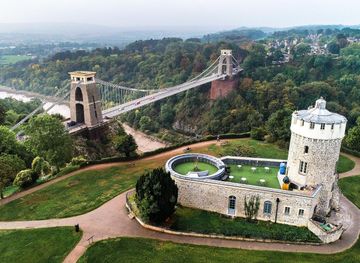
Bristol blends maritime history, street art, culture and harbourside attractions, from Clifton Suspension Bridge to SS Great Britain and the city’s museums.
Explore Bristol