Newton's Apple Tree, Cambridge Travel Guide
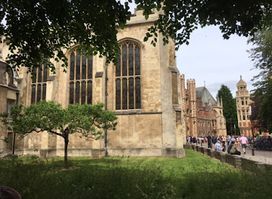
A living graft of Newton's Woolsthorpe apple tree stands outside Trinity College Great Gate on a small Cambridge lawn.
A grafted descendant of the Woolsthorpe Manor apple tree stands on a compact lawn beside Trinity College's Great Gate on Trinity Street. The Flower of Kent variety commemorates Isaac Newton's time at the college and the gravity anecdote that originated during the 1665 plague closure. Visitors pause on the public pavement for photographs against the historic stone facade and college entrance. The site forms a quick, free stop within Cambridge's central walking routes, with no entry fee or dedicated facilities. The small planted area includes recent Cambridgeshire wildflowers and a hazel fence, set amid pedestrian traffic and university buildings.
A brief summary to Newton's Apple Tree
- Porters Lodge, Trinity St, Cambridge, CB2 1TQ, GB
- Click to display
- Duration: 0.08 to 0.5 hours
- Free
-
 Outdoor
- Mobile reception: 4 out of 5

Know before you go
Hi, I'm Eve. Here are a few practical things to know before exploring Newton's Apple Tree.
- Stand on the public pavement for the clearest view; the fence prevents stepping onto the grass.
- Combine the stop with a walk along Trinity Street and King's Parade to view other college façades.
- Visit on a clear day for better photographs against the stone gate.
Do you manage this location?
Take control to get all the benefits, like improved information, better appearance, and stronger visibility across AI-powered discovery. Learn more about listing your business on Evendo
Activate your presenceOther nearby places you may find interesting
The closest places of the same kind, if this one is not quite what you had in mind.

Explore Newton's Apple Tree on the Map
A handpicked selection of must-see spots near Newton's Apple Tree, mapped for you.
Unlock the Best of Newton's Apple Tree
Buy tickets
-
No tickets available
Book tours with entry


Getting There
-
Walk
From Market Square or King's Parade, follow pedestrian streets north for two to five minutes to Trinity Street.
-
Cycle
Cycle to the vicinity of Trinity Street then dismount for the final approach due to restricted vehicle access.
-
Bus
Take any city-centre bus service and alight at stops near Market Square, then walk the remaining distance.
-
Park and Ride
Use Cambridge park-and-ride facilities outside the historic core and continue by bus or on foot into the centre.
Discover more about Newton's Apple Tree
Historical Background
Isaac Newton attended Trinity College from 1661. The apple anecdote dates to his time at Woolsthorpe Manor during the 1665-66 plague closure of Cambridge, not this Cambridge site. The present tree is a 1954 graft from the original Woolsthorpe tree, which survived an 1820 storm and remains under National Trust care. It was planted to mark Newton's Trinity association. The adjacent lawn once formed part of botanist John Ray's 1650s garden; recent replanting added local wildflowers and a hazel fence.Physical Setting
The tree occupies a small outdoor lawn immediately outside the Porters Lodge and Great Gate on Trinity Street. The stone college facade rises directly behind it, creating a clear visual contrast between the living tree and the seventeenth-century architecture. The patch measures only a few metres across, bordered by a low fence that prevents public access to the grass. Pedestrian movement on the street provides constant background activity without requiring visitors to enter college grounds.Visitor Experience
Most people approach on foot from Market Square or King's Parade, a walk of two to five minutes along pedestrian-priority streets. They stop on the pavement, take photographs, and read any personal context or tour commentary before continuing. Lingering rarely exceeds twenty minutes. The atmosphere mixes scholarly calm with tourist footfall; students, guided groups, and independent travellers pass steadily. No indoor space or seating belongs to the tree itself.Access and Practical Details
Trinity Street carries restricted vehicle traffic, making walking or cycling the most direct options. Public buses stop nearby in the city centre. Park-and-ride facilities lie outside the historic core; driving into the centre is discouraged. The pavement view remains open at all times with no seasonal closures or fees. Wheelchair users can reach the street edge, though the fence limits proximity to the trunk.Seasonal and Crowd Patterns
Peak visitor numbers occur during university term time, summer months, weekends, and school holidays. Winter weekdays are quieter. Rain shortens stays and reduces photograph quality, while clear days improve both comfort and image results. The tree itself shows little seasonal change beyond the wildflower underplanting visible mainly from spring through autumn.Facilities and Surroundings
No restrooms, information boards, or visitor centre exist at the tree. Cafés, pubs, and shops line Trinity Street and King's Parade within a short walk. Public toilets are available at nearby shopping areas such as Lion Yard. Any college interior visit requires separate paid entry and is unrelated to the tree.












Your all‑in‑one travel companion app
Explore expert travel guides, compare and book tours, experiences, hotels, and more—all from the palm of your hand. Download now for seamless trip planning wherever your wanderlust takes you.


Explore More of Cambridge
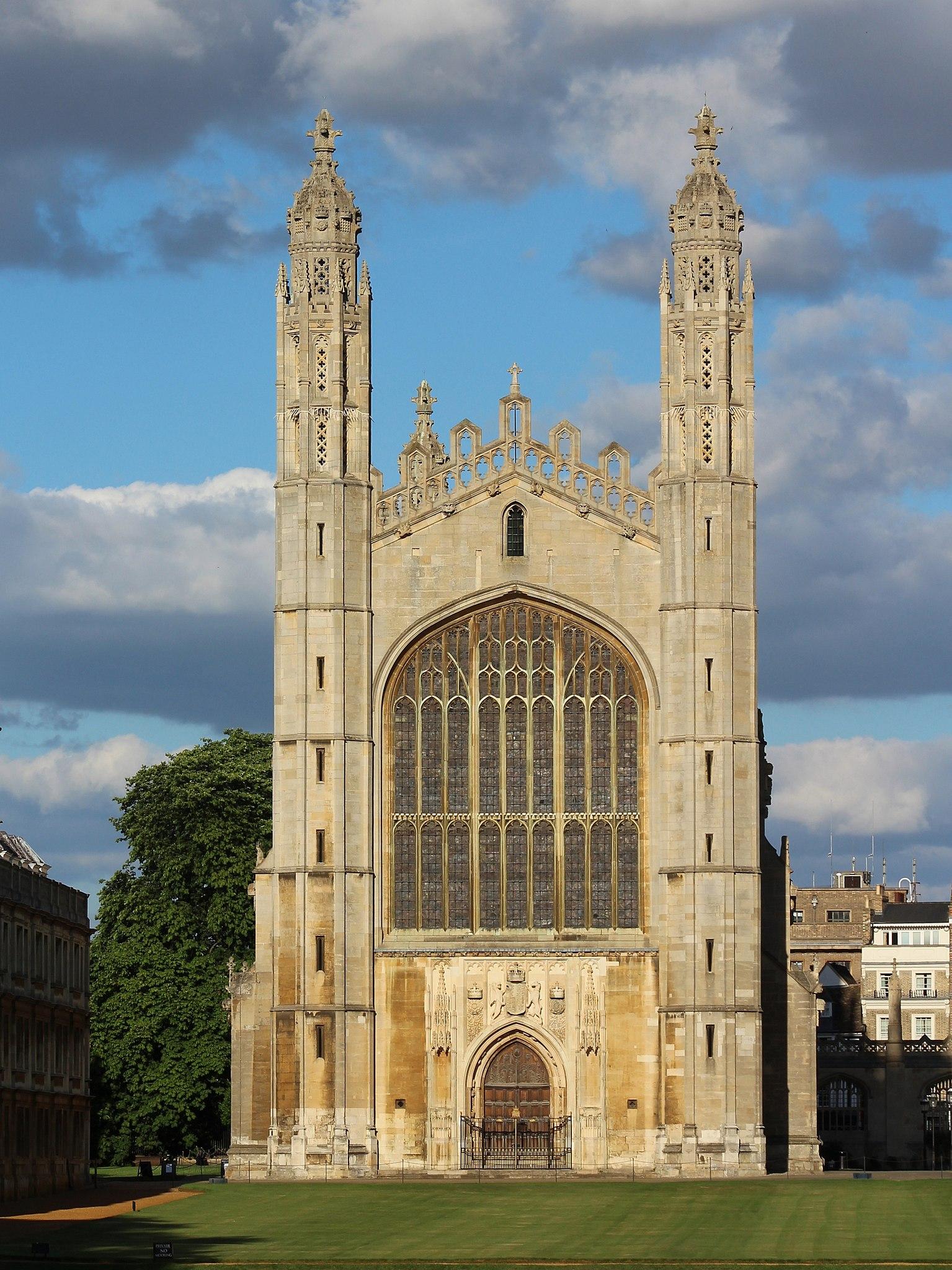
Looking beyond Newton's Apple Tree? Discover Cambridge for broader travel guides, local hot-spots, and regional highlights.
Explore Cambridge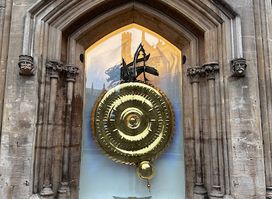
A captivating golden clock with a mechanical grasshopper that 'devours' time, blending art, science, and philosophy in the heart of Cambridge.
Discover the historic apple tree at Trinity College that inspired Newton’s law of gravity, a living symbol of scientific discovery and Cambridge heritage.